
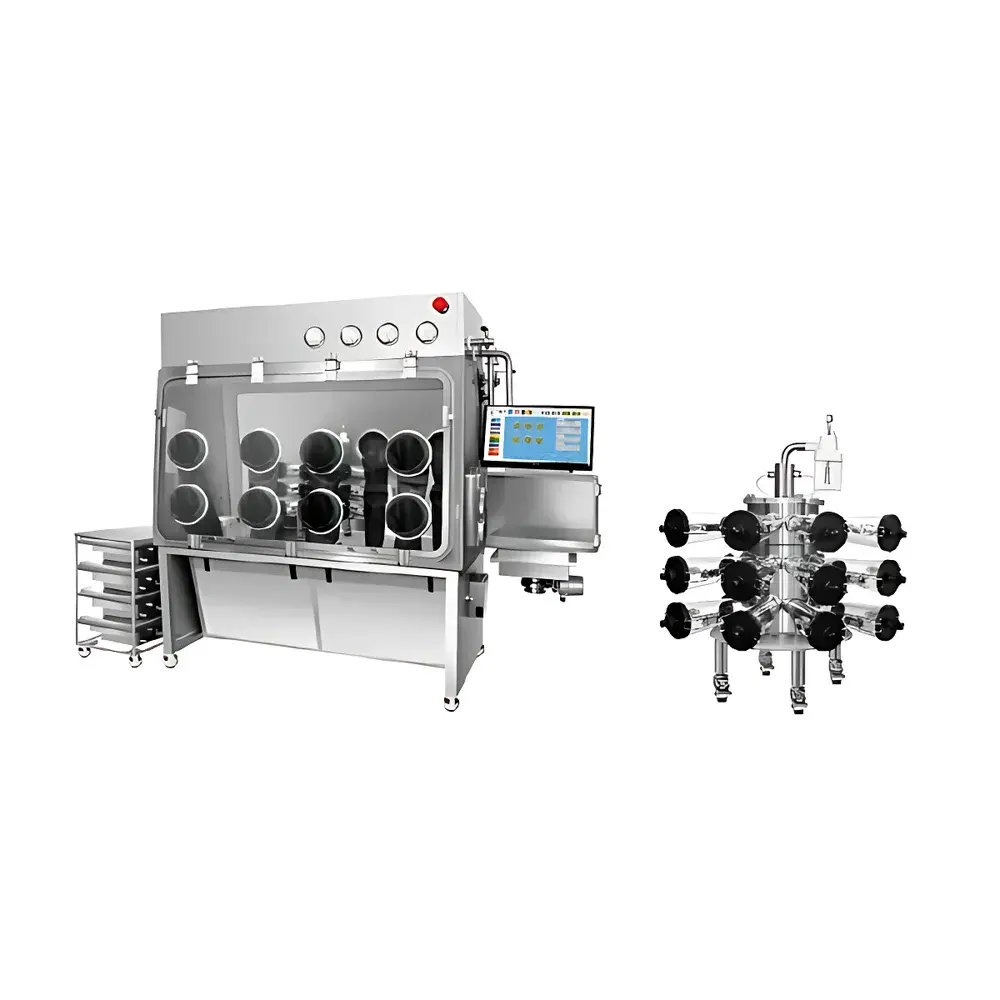
HRH-BSNE9036 Bio-Safe Nose-Only Inhalation Exposure System for Small Animals
| Brand | HRH |
|---|---|
| Origin | Beijing, China |
| Model | HRH-BSNE9036 |
| Application | ABSL-3/ABSL-4 laboratories |
| Animal Compatibility | Mice, rats, guinea pigs, ferrets, rabbits |
| Aerosol Uniformity Deviation | < ±20% |
| Safety Configuration | Integrated Class III Biosafety Cabinet |
| Flow Control | High-precision mass flow controllers (MFCs) |
| Environmental Monitoring | Real-time temperature, humidity, differential pressure, CO₂, O₂ |
| Software Compliance | GLP-compliant audit trail, user-level access control, immutable data logging |
| Filtration | Dual-stage HEPA filtration |
| Structural Material | Corrosion-resistant stainless steel with radius-rounded interior joints |
| Interlock System | Bidirectional safety interlock between exposure module and BSC |
Overview
The HRH-BSNE9036 Bio-Safe Nose-Only Inhalation Exposure System is an integrated, containment-engineered platform designed for high-containment inhalation studies involving Tier 3 and Tier 4 biological agents. It operates on the principle of nose-only aerosol exposure—ensuring precise, route-specific delivery of bioaerosols to the respiratory tract while excluding dermal, oral, or gastrointestinal exposure pathways. This physiological fidelity enables modeling of natural respiratory infection dynamics, critical for pathogenesis studies, inhaled vaccine evaluation, pulmonary drug delivery assessment, and aerosol-based challenge testing under ABSL-3 and ABSL-4 conditions. The system comprises two functionally coupled subsystems: a precision-controlled nose-only exposure chamber and a fully enclosed, negative-pressure Class III biosafety cabinet (BSC). Unlike open-chamber or whole-body exposure systems, the HRH-BSNE9036 eliminates cross-contamination risk and ensures operator, laboratory, and environmental protection through engineered physical containment, real-time parameter surveillance, and fail-safe interlocked operation.
Key Features
- Integrated Class III biosafety cabinet with dual-user, dual-access configuration—constructed from electropolished 316L stainless steel with ≥R15mm internal radii to eliminate cleaning voids and support validated decontamination cycles.
- Nose-only restraint tubes compatible with mice (C57BL/6, BALB/c), rats (Sprague-Dawley, Wistar), guinea pigs, ferrets, and rabbits—designed for conscious, unrestrained exposure without sedation or anesthesia-induced respiratory depression.
- Real-time environmental monitoring of chamber temperature (±0.5 °C), relative humidity (±3% RH), differential pressure (±1 Pa), O₂ (0–25% vol, ±0.1%), and CO₂ (0–5%, ±0.05%)—all traceable to NIST-calibrated sensors and aligned with OECD TG 412 and ISO 10993-12 requirements.
- Patented orthogonal dilution technology (CN201310351052.9) ensuring aerosol concentration uniformity across all animal ports with deviation < ±20%—validated via cascade impactor sampling and optical particle sizer (OPS) mapping at multiple spatial coordinates.
- High-accuracy thermal mass flow controllers (MFCs) for aerosol generation, dilution, sampling, and exhaust streams—each calibrated to ISO/IEC 17025-accredited standards with repeatability ≤0.5% FS and linearity ≤1.0% FS.
- Automated safety interlock architecture: chamber door position, BSC sash status, airflow integrity, and filter saturation status are continuously monitored; any fault triggers immediate shutdown, HEPA bypass isolation, and audible/visual alarm escalation.
Sample Compatibility & Compliance
The HRH-BSNE9036 supports aerosolized test agents including viral suspensions (e.g., SARS-CoV-2, influenza A/H5N1), bacterial cultures (e.g., Mycobacterium tuberculosis, Francisella tularensis), fungal spores, and nano/microparticulate drug formulations. All wetted surfaces are chemically resistant to hydrogen peroxide vapor (HPV), chlorine dioxide, and formaldehyde—enabling full-cycle decontamination per CDC/NIH BMBL 6th Edition protocols. The system conforms to NSF/ANSI 49 Class III performance criteria, EN 12469:2000 for biosafety cabinets, and IEC 61010-1 for electrical safety in hazardous environments. Its software architecture satisfies FDA 21 CFR Part 11 requirements for electronic records and signatures—including role-based access control, time-stamped audit trails, and write-once-read-many (WORM) data storage.
Software & Data Management
The embedded control software (v3.2+) provides centralized management of exposure protocols, environmental setpoints, and safety logic. It implements ALCOA+ principles: Attributable, Legible, Contemporaneous, Original, Accurate, Complete, Consistent, Enduring, and Available. Each experiment generates a tamper-evident digital dossier containing raw sensor logs, MFC calibration certificates, operator ID, start/stop timestamps, deviation alerts, and final exposure dose calculations (particles/cm³ × minute). Data export complies with ASTM E2500-18 for instrument qualification documentation and supports CSV, PDF, and XML formats for integration into LIMS or ELN platforms. All software updates undergo regression testing and are version-locked to maintain GxP compliance throughout the instrument lifecycle.
Applications
- Inhalation pathogenesis modeling of high-consequence respiratory pathogens under ABSL-3/ABSL-4 containment.
- Aerosol immunization studies evaluating mucosal immune responses to inhaled vaccine candidates (e.g., adenoviral vectors, mRNA-LNPs).
- Preclinical pulmonary pharmacokinetics and biodistribution analysis of inhaled therapeutics (e.g., dry powder inhalers, nebulized biologics).
- Toxicological assessment of industrial nanomaterials, combustion particulates, or environmental allergens using OECD TG 412 and EPA OPPTS 870.3465 guidelines.
- Validation of respirator filtration efficiency and personal protective equipment (PPE) performance against live bioaerosols.
FAQ
Does the HRH-BSNE9036 support simultaneous multi-species exposure within a single run?
Yes—restraint tube configurations can be mixed (e.g., mice + ferrets) provided species-specific flow rates and exposure durations are independently programmed per port group.
How is aerosol concentration verified during operation?
Real-time photometric monitoring is supplemented by scheduled cascade impactor sampling at defined intervals; all validation data are archived with metadata linking to corresponding exposure events.
Can the system be integrated with third-party analytical instruments?
Yes—the software exposes RESTful API endpoints for bidirectional communication with particle counters, gas analyzers, and mass spectrometers via Ethernet TCP/IP.
What maintenance certifications are required for continued GLP compliance?
Annual performance verification per ISO/IEC 17025 must include airflow velocity mapping, HEPA filter integrity testing (DOP/PAO scan), MFC recalibration, and interlock response timing validation.
Is remote operation supported for ABSL-4 applications?
Yes—fully functional remote desktop access with dual-factor authentication and session recording is enabled; local HMI remains physically disabled during remote mode to prevent concurrent control conflicts.
Related Products




