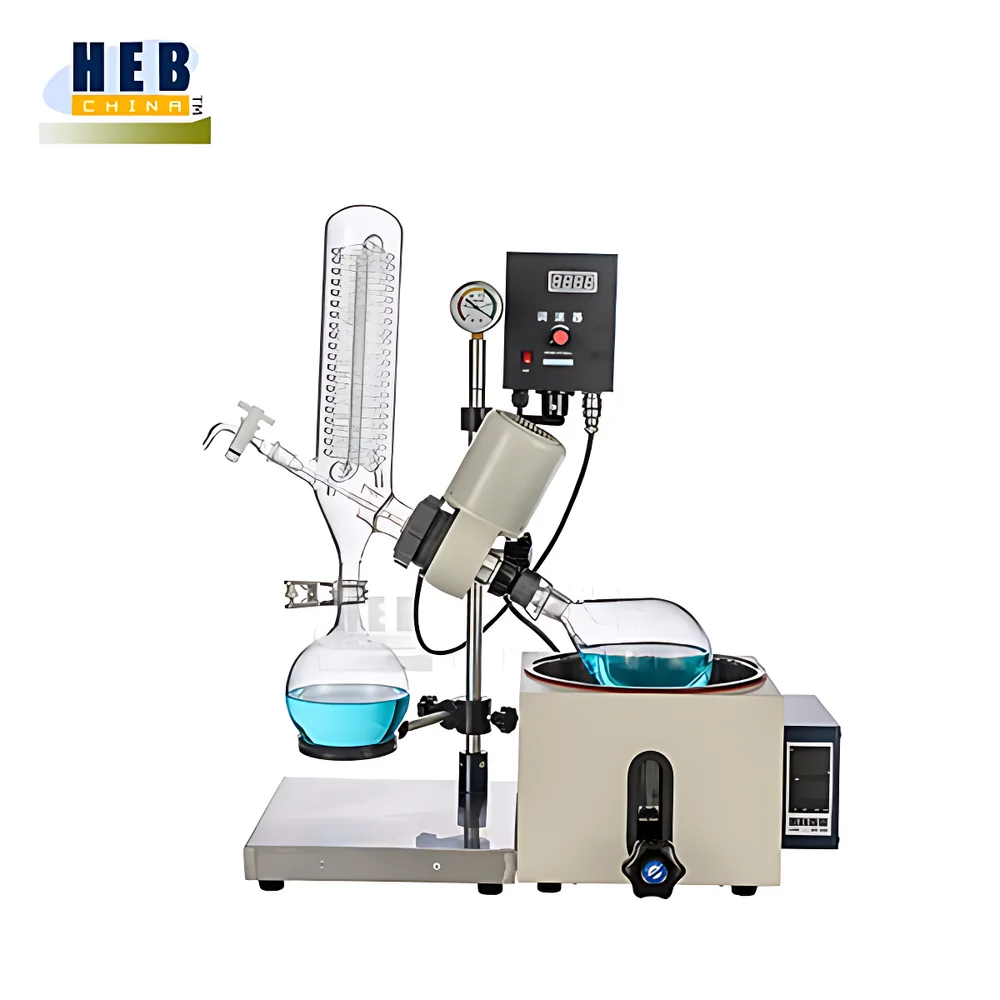
Jihepu R206B Rotary Evaporator

| Brand | Jihepu |
|---|---|
| Origin | Shandong, China |
| Model | R206B |
| Capacity | 2 L |
| Ultimate Vacuum | 0.098 MPa |
| Rotational Speed Range | 4–200 rpm |
| Bath Temperature Range | Ambient to 100 °C |
| Temperature Control Accuracy | ±1 °C |
| Condensing Area | 0.11 m² |
Ask about pricing, availability and specifications.
Overview
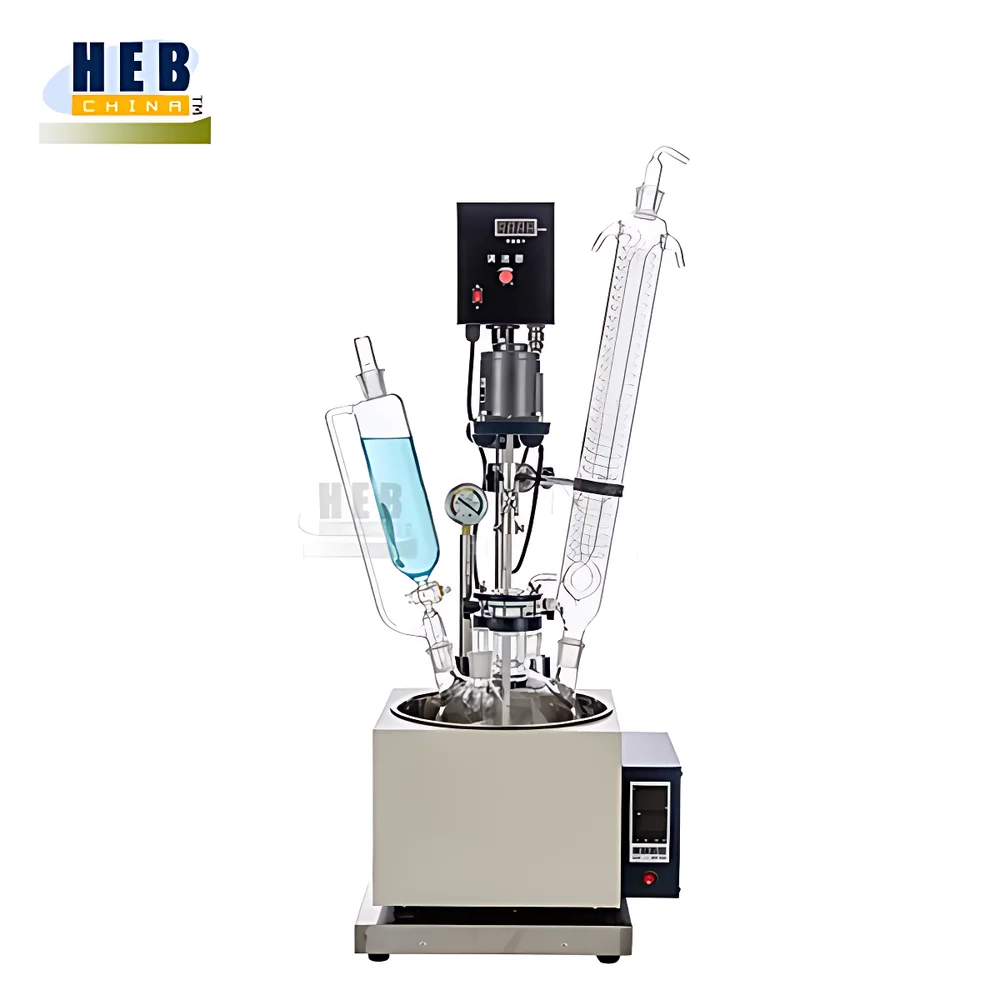
The Jihepu R206B Rotary Evaporator is a precision-engineered laboratory instrument designed for efficient solvent removal, concentration, crystallization, and recovery under controlled vacuum and thermal conditions. It operates on the principle of thin-film evaporation: a rotating evaporation flask generates a uniform, high-surface-area liquid film on its inner wall; simultaneous application of regulated heat (via an intelligent water bath) and reduced pressure (down to 0.098 MPa) accelerates vaporization while minimizing thermal degradation. This makes the system especially suitable for thermolabile compounds—such as pharmaceutical intermediates, natural product extracts, and biopolymer solutions—where preservation of molecular integrity is critical. All wetted parts—including the evaporation flask, condenser, and collection vessel—are fabricated from GG-17 borosilicate glass (ISO 3585 compliant), offering exceptional resistance to thermal shock, chemical corrosion, and mechanical stress. The unit integrates vacuum-compatible PTFE and fluororubber dual-seal technology to ensure long-term vacuum integrity and operational reliability in routine QC, R&D, and pilot-scale purification workflows.
Key Features
- Stainless steel and aluminum alloy support frame ensures structural rigidity, corrosion resistance, and ergonomic stability.
- Dual-stage vertical condenser with triple-coil design: primary and auxiliary condensing sections maximize solvent recovery efficiency (>95% for common solvents like ethanol, acetone, and ethyl acetate).
- Intelligent digital water bath with K-type thermocouple sensor delivers precise temperature control (±1 °C) and low thermal fluctuation (±0.2 °C typical), reducing bumping and foaming during sensitive evaporations.
- Stepless frequency-controlled motor enables smooth rotational speed adjustment from 4 to 200 rpm, with real-time digital display and tactile rotary dial interface.
- Manual bath height adjustment via geared handwheel eliminates flask stress during loading/unloading; integrated flask ejection mechanism minimizes glass breakage risk.
- PTFE-lined joints and F4-coated ground-glass interfaces prevent seizing, enhance vacuum tightness, and extend service life of glass components.
- Explosion-proof electrical architecture: aluminum-housed speed controller, explosion-proof motor, flameproof cable conduits, and intrinsically safe circuit design comply with IEC 60079-0 general requirements for equipment used in potentially explosive atmospheres.
- Bottom-discharge collection flask with PTFE stopcock enables quantitative transfer of concentrated residues without disassembly.
- Integrated vacuum gauge provides continuous real-time pressure monitoring; optional vacuum controller compatibility supports automated pressure ramping protocols.
Sample Compatibility & Compliance
The R206B accommodates standard ISO/ASTM-compliant evaporation flasks (e.g., 500 mL, 1 L, and optional 2 L GG-17 vessels with 29/35 standard taper joints) and S35-threaded collection flasks. Its all-glass, fluoropolymer-sealed fluid path ensures compatibility with acidic, alkaline, and organic media—including chlorinated solvents, esters, and low-boiling ethers—without leaching or catalytic side reactions. The system meets fundamental requirements for Good Laboratory Practice (GLP) environments: traceable temperature and rotation logging (when paired with external data acquisition), mechanical safety interlocks, and documented maintenance intervals. While not certified to FDA 21 CFR Part 11 out-of-the-box, its analog control architecture supports integration into validated systems through third-party audit-ready data loggers and electronic lab notebook (ELN) interfaces.
Software & Data Management
The R206B operates via embedded microcontroller logic—no proprietary software is required for basic operation. However, its analog output signals (0–10 V DC for bath temperature and 4–20 mA for rotation speed) are compatible with industrial SCADA platforms, LabVIEW, or custom Python-based acquisition scripts. Optional RS-485 Modbus RTU communication module (sold separately) enables remote parameter setting, real-time telemetry streaming, and event-triggered data capture—supporting compliance with ISO/IEC 17025 documentation standards. All control actions—including ON/OFF switching, setpoint changes, and emergency shutdown—are recorded with timestamp and operator ID when interfaced with a compliant ELN or LIMS.
Applications
- Solvent recovery and concentration of active pharmaceutical ingredients (APIs) in early-stage process development (per ICH Q5A and Q5C guidelines).
- Purification of natural product extracts (e.g., flavonoids, terpenes) where thermal lability precludes distillation or spray drying.
- Removal of reaction solvents post-Suzuki coupling or Grignard synthesis, minimizing residual solvent content per ICH Q3C thresholds.
- Preparative-scale dehydration of hygroscopic biomolecules (e.g., peptides, oligonucleotides) under mild vacuum and sub-60 °C bath conditions.
- Recycling of high-purity acetone, THF, or dichloromethane in analytical chemistry labs—reducing hazardous waste generation and disposal costs.
- Parallel evaporation setup (with multi-position manifolds) for high-throughput sample preparation prior to HPLC or GC-MS analysis.
FAQ
What is the maximum recommended operating vacuum level for the R206B?
The system achieves and maintains up to 0.098 MPa (≈20 mbar absolute), verified using calibrated diaphragm vacuum gauges. For optimal film formation and boiling point depression, we recommend operating between 0.085–0.095 MPa for most organic solvents.
Can the R206B be used with cryogenic condensers?
Yes—though not included as standard, the vertical condenser accepts optional dry ice/acetone or liquid nitrogen cold traps (via standardized S35 or ISO-KF 16 flanges) to enhance condensation efficiency for low-boiling solvents such as diethyl ether or pentane.
Is the water bath temperature calibration traceable to national standards?
The K-type sensor is factory-calibrated against NIST-traceable references. Users may perform field verification using a certified reference thermometer (e.g., ASTM E74-compliant) inserted into the bath’s auxiliary port.
Does the R206B support continuous feed during evaporation?
Yes—via the front-mounted PTFE-lined addition funnel with adjustable valve, enabling metered reagent introduction without breaking vacuum or interrupting rotation.
What maintenance intervals are recommended for long-term vacuum integrity?
Fluororubber seals should be inspected every 500 operational hours; PTFE components require replacement only upon visible compression set or leakage. Annual verification of bath heater resistance and motor insulation resistance is advised per IEC 60335-1 safety standards.