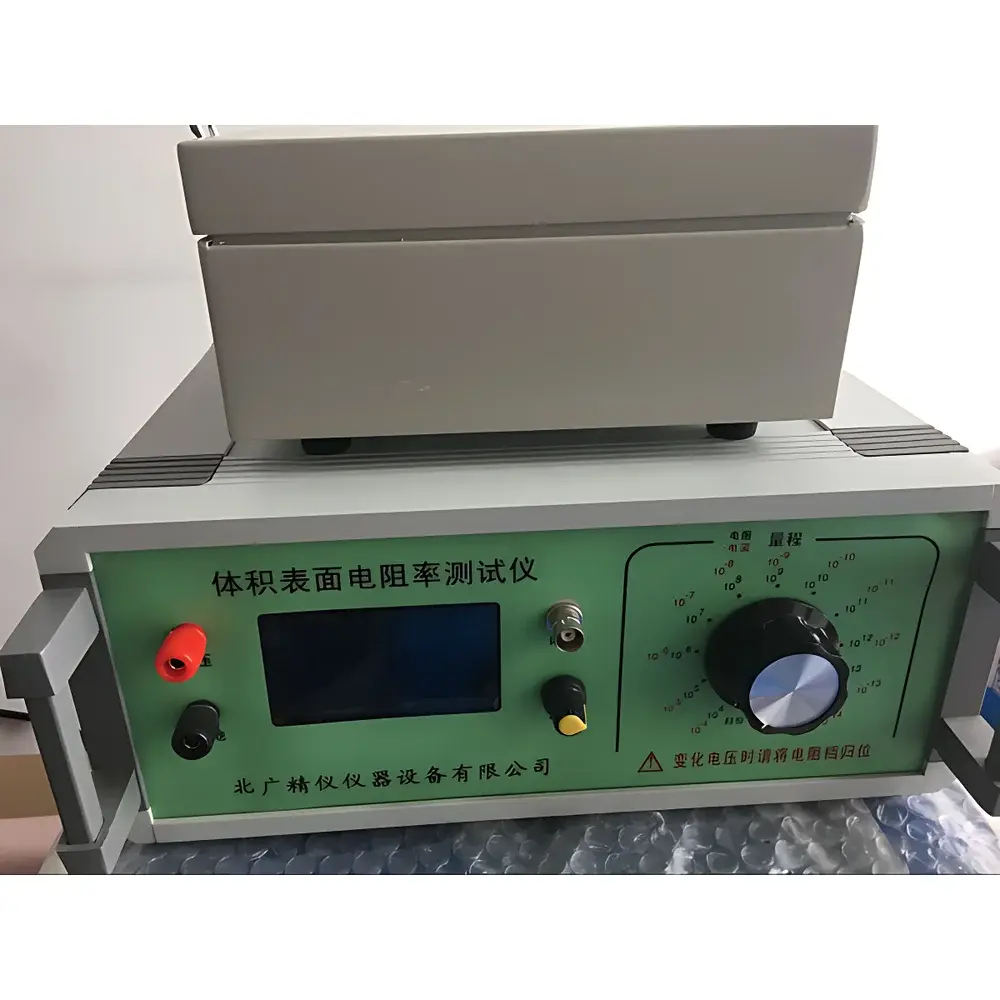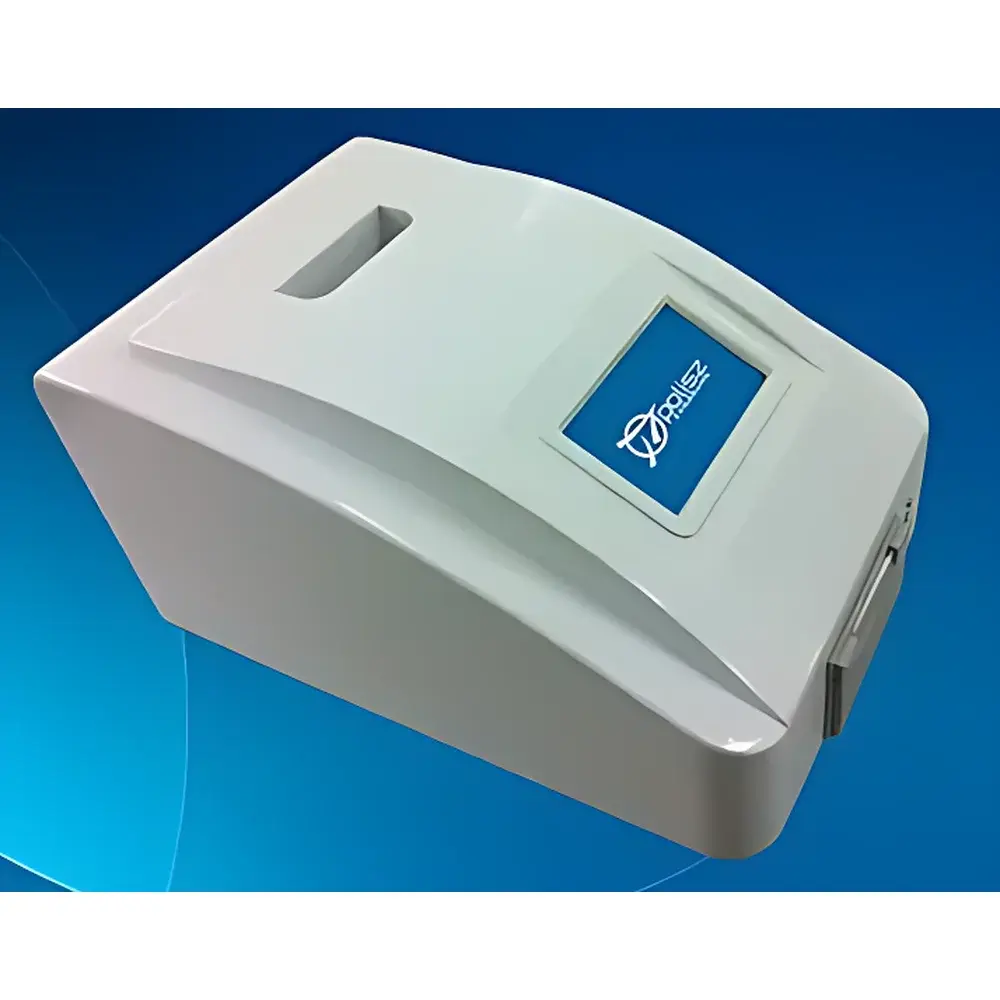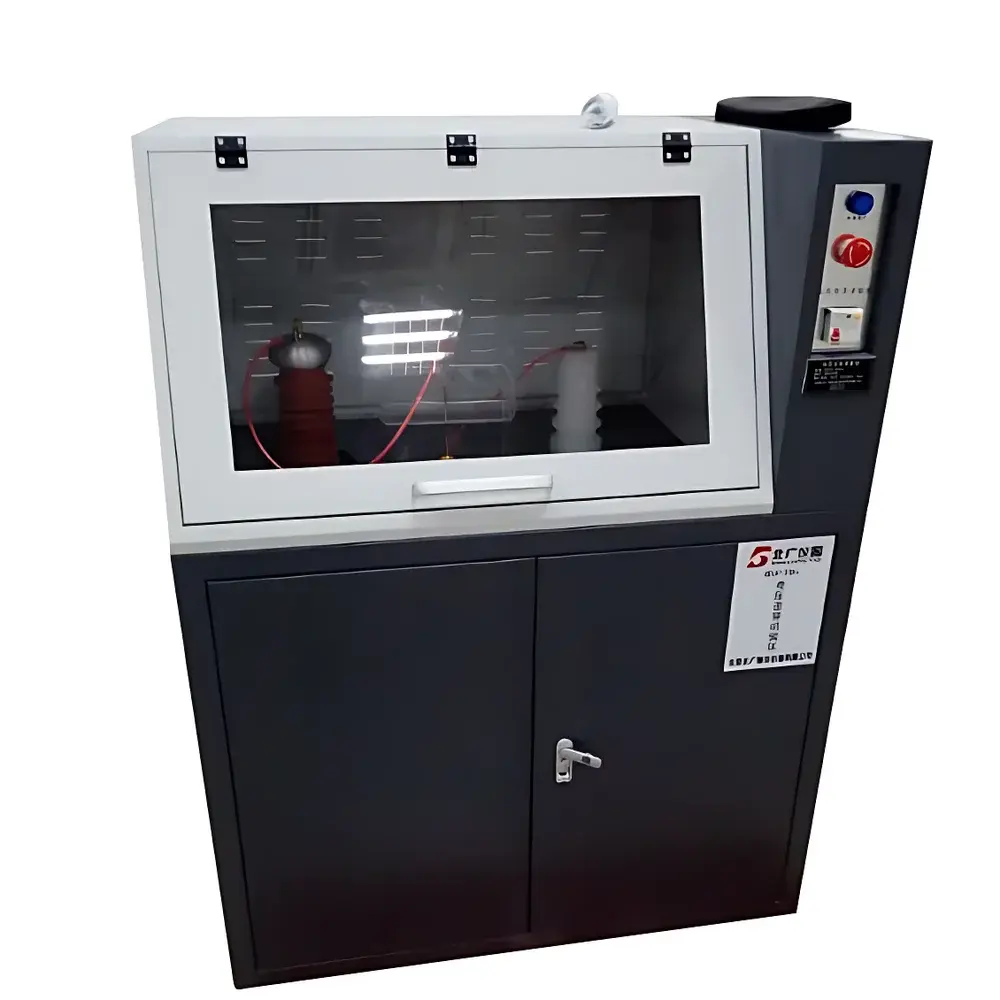
Beijing North Guang Precision Instruments BDJC-50KV Dielectric Breakdown Tester

| Brand | Beijing North Guang Precision Instruments (All Precision Instrument) |
|---|---|
| Origin | Beijing, China |
| Manufacturer Type | Direct Manufacturer |
| Product Origin | Domestic (China) |
| Model | BDJC-50KV |
| Maximum Output Voltage | AC/DC 0–50 kV |
| Electrical Capacity | 10 kVA |
| Voltage Accuracy | ≤ ±1% |
| Rise Rate Range | 0.1–5.0 kV/s |
| Test Modes | AC/DC Ramp-up, Step-up, and Hold-at-Voltage (up to 6 h) |
| Dielectric Medium | Air or Insulating Oil |
| Electrode Compliance | Conforms to GB/T 1408.1 (equivalent to IEC 60243-1 & ASTM D149) |
| Safety Response Time | < 0.05 s overcurrent cutoff |
| Data Acquisition | Real-time voltage/current (mA resolution) |
| Control Interface | PC/EPC via USB/RS-232/Bluetooth |
| Enclosure Material | SUS304 Stainless Steel |
| Calibration | Traceable to National Primary Metrology Institute (CNAS-accredited certificate available upon request) |
Ask about pricing, availability and specifications.
Overview
The Beijing North Guang Precision Instruments BDJC-50KV Dielectric Breakdown Tester is a microprocessor-controlled high-voltage testing system engineered for precise determination of dielectric strength, breakdown voltage, and withstand voltage performance of solid insulating materials under standardized power-frequency (50 Hz) conditions. Based on the fundamental principle of electrical breakdown in dielectrics—governed by Townsend avalanche theory and Paschen’s law—the instrument applies controlled AC or DC voltage across a defined electrode geometry until catastrophic insulation failure occurs. It complies with core international test standards including IEC 60243-1, ASTM D149, GB/T 1408.1, and ISO 60243, enabling reproducible assessment of materials such as impregnated fiber composites, laminates, varnishes, resins, ceramics, glass, polymer films, and molded plastics used in electrical insulation systems. The system supports both short-term breakdown evaluation and extended time-dependent dielectric endurance testing, delivering quantitative data essential for material qualification, quality control, and R&D validation in transformer, motor, capacitor, and aerospace component manufacturing.
Key Features
- Full digital voltage regulation using solid-state, contactless step-up circuitry—eliminating mechanical variacs and ensuring linear, jitter-free ramp profiles.
- Dual-mode output: Simultaneous AC (0–50 kV RMS) and DC (0–50 kV) capability with independent calibration paths and waveform fidelity verification.
- Programmable rise rate (0.1–5.0 kV/s) with user-defined step intervals and hold durations (0–6 hours), supporting both IEC 60243-1 Method A (short-time) and Method B (step-by-step).
- Integrated dual-stage overcurrent protection: hardware-level fast-trip (<50 ms) plus software-monitored current thresholding, compliant with functional safety requirements for Class I laboratory equipment.
- SUS304 stainless steel enclosure with interlocked safety door, zero-voltage reset logic, automatic post-test discharge, and ground-fault detection per IEC 61010-1.
- Real-time synchronized acquisition of voltage (kV) and leakage current (mA) at ≥1 kHz sampling rate, stored with timestamp and test metadata.
- Modular electrode sets conforming to GB/T 1408.1—standardized brass disk electrodes (25 mm diameter, 3 mm edge radius) and optional needle-plane configurations for localized stress analysis.
- Optional oil bath assembly (two tanks included) with temperature-stable immersion design, facilitating testing per ASTM D877 and IEC 60156 for liquid-impregnated specimens.
Sample Compatibility & Compliance
The BDJC-50KV accommodates rigid and semi-rigid sheet, film, and molded specimens up to 10 mm thickness, with standard sample dimensions of 100 × 100 mm (minimum). It is validated for use with impregnated fiber products—including varnish-treated paper, resin-bonded glass cloth laminates, mica tapes, and cellulose-based pressboards—as well as thermosets, thermoplastics, elastomers, and ceramic substrates. All test protocols align with regulatory expectations for electrical safety certification: test reports generated by the system support GLP documentation requirements, include full audit trails (user ID, timestamp, parameter settings, raw waveform exports), and are compatible with FDA 21 CFR Part 11-compliant electronic signature workflows when deployed with validated PC/EPC configurations. Calibration certificates are issued by CNAS-accredited national metrology institutes and reference NIST-traceable high-voltage dividers.
Software & Data Management
The proprietary Windows-based test software provides intuitive graphical setup, real-time oscilloscope-style voltage/current overlay, and automated pass/fail classification based on user-defined thresholds. Data export options include CSV, XML, and PDF report templates compliant with ISO/IEC 17025 reporting guidelines. All test sequences are saved with immutable metadata—including environmental conditions (optional external sensor integration), operator ID, electrode configuration, and ambient humidity/temperature logs. Version-controlled firmware updates ensure long-term compatibility with evolving cybersecurity and data integrity mandates. Remote operation is supported via encrypted Bluetooth 5.0 or wired RS-232/USB; network-enabled configurations allow centralized fleet management across multi-lab environments.
Applications
- Quality assurance of impregnated insulation systems in rotating machinery stators and transformers.
- Evaluation of dielectric aging effects under thermal-electrical stress (combined with environmental chambers).
- Comparative screening of alternative resin formulations for high-voltage encapsulation.
- Validation of vacuum-pressure impregnation (VPI) process efficacy on fiber-reinforced composites.
- Compliance testing for UL 1446, IEC 60684-2, and EN 60243 series standards in third-party certification labs.
- Failure mode analysis via post-breakdown surface morphology inspection (electrode pit depth, carbon tracking, flashover path mapping).
FAQ
What standards does the BDJC-50KV comply with for dielectric strength testing?
It meets the technical and procedural requirements of IEC 60243-1, ASTM D149, GB/T 1408.1, ISO 60243, and EN 60243, with electrode geometry and voltage application methods fully traceable to these documents.
Can the system perform both AC and DC breakdown tests without hardware reconfiguration?
Yes—dual-output architecture enables seamless switching between AC RMS and DC polarities via software command; no manual wiring changes or module swaps are required.
Is the test software 21 CFR Part 11 compliant?
Out-of-the-box functionality supports ALCOA+ data integrity principles; full Part 11 compliance requires deployment on validated IT infrastructure with role-based access controls and electronic signature modules—available as an optional validation package.
What is the typical calibration interval and traceability chain?
Annual calibration is recommended; certificates reference national primary standards maintained by the China National Institute of Metrology (NIM), with uncertainty budgets ≤0.8% (k=2) for 50 kV range.
Does the system support custom electrode geometries beyond standard GB/T 1408.1?
Yes—modular electrode mounting allows integration of customer-supplied fixtures (e.g., rod-plane, sphere-gap, or multi-point arrays) provided mechanical tolerances and creepage distances meet IEC 60664-1 clearance requirements.