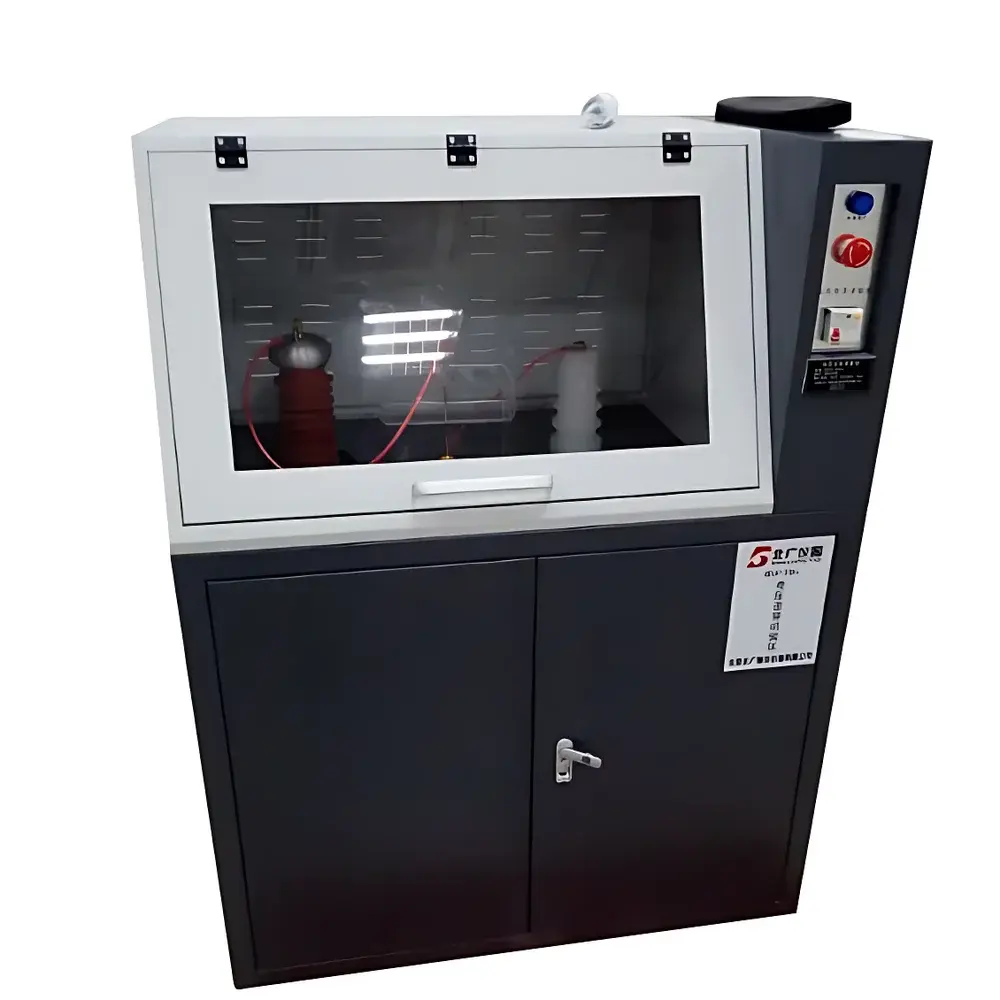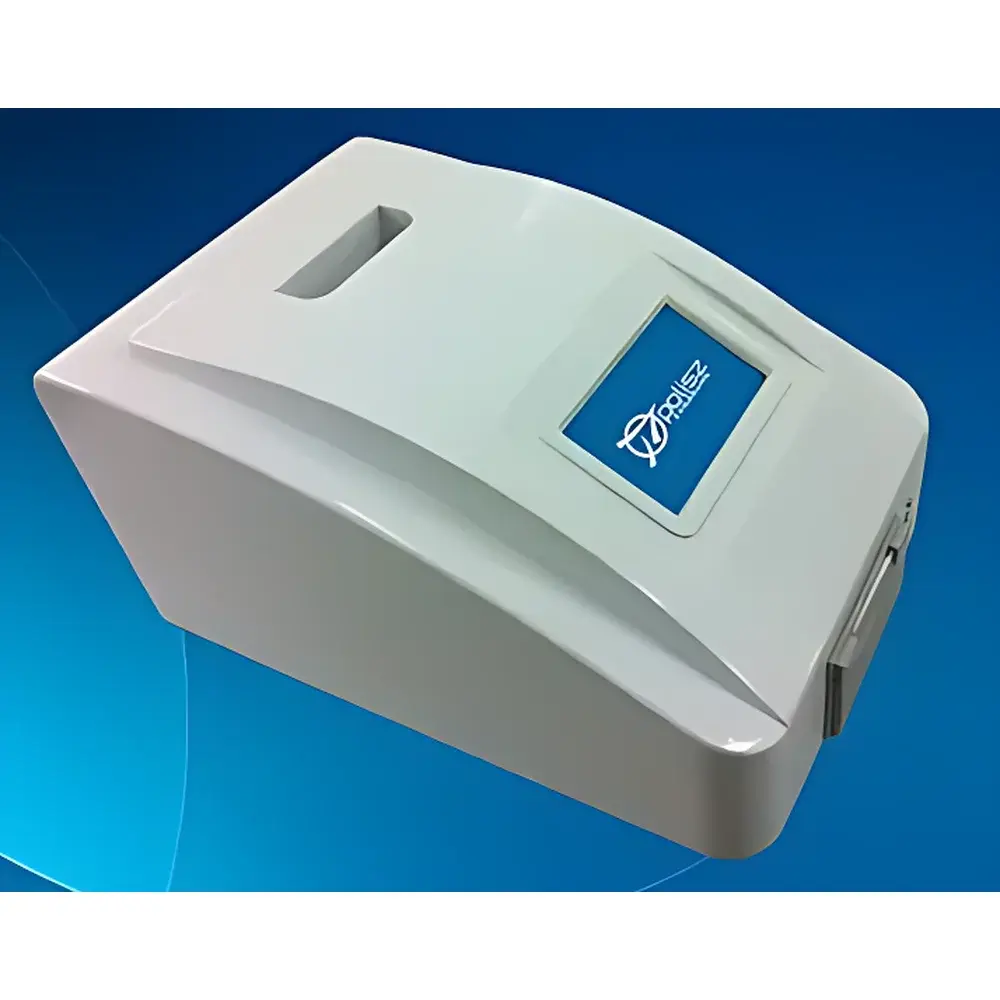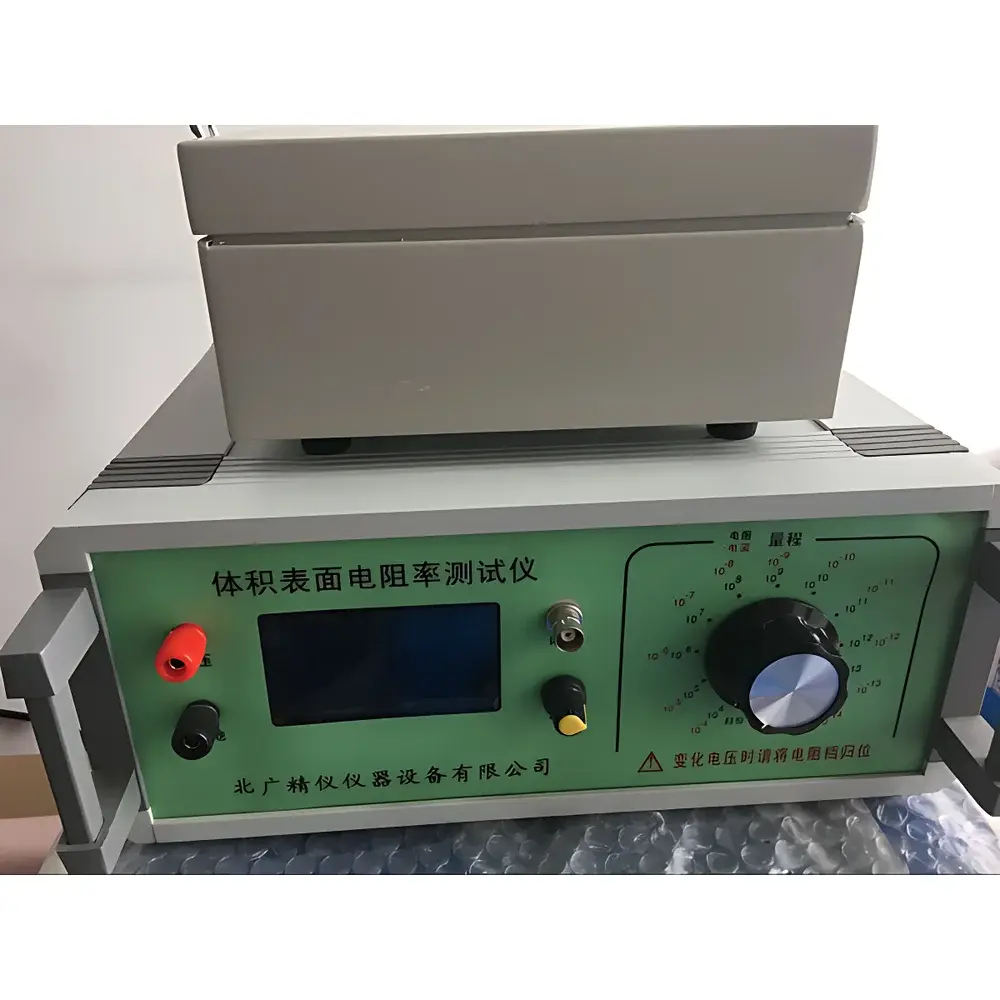
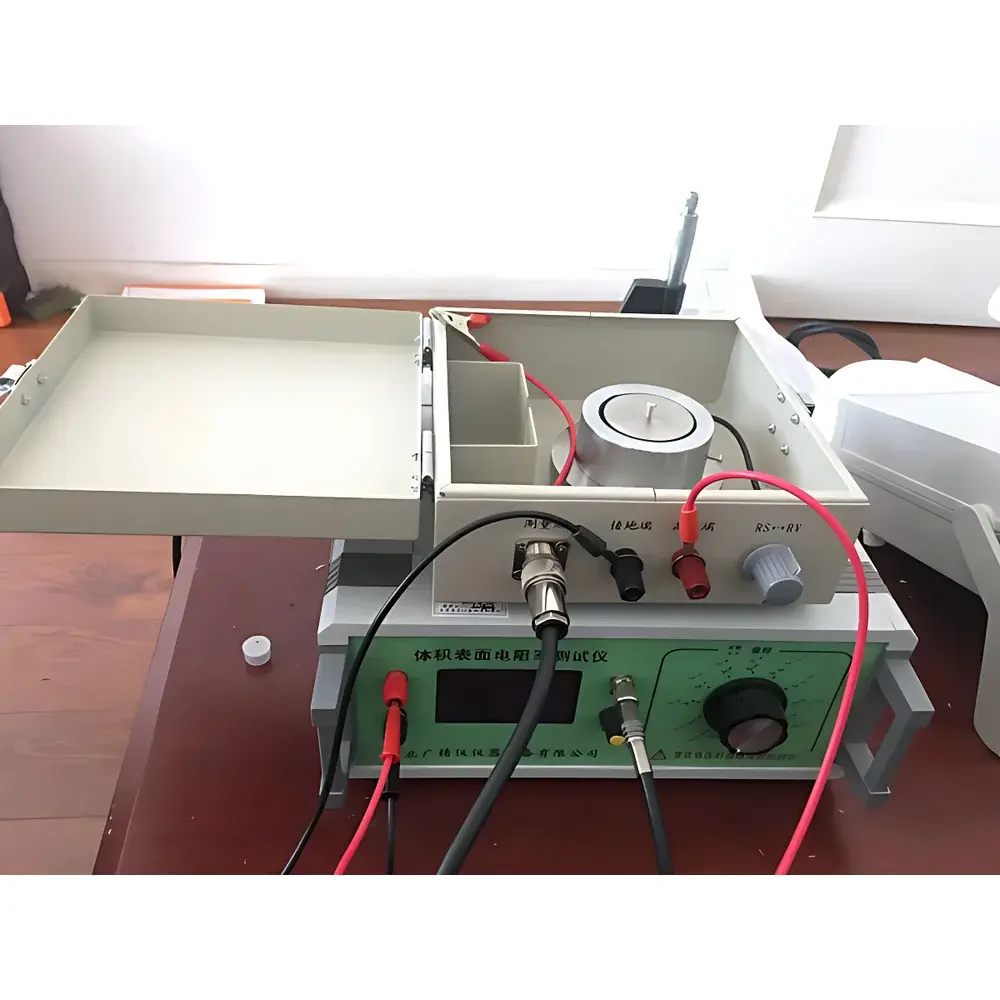
Beijing North Guang Precision Instruments BEST-121 Silicon Rubber Volume & Surface Resistivity Tester

| Brand | Beijing North Guang Precision Instruments (All Precision Instrument) |
|---|---|
| Origin | Beijing, China |
| Manufacturer Type | Direct Manufacturer |
| Country of Origin | China |
| Model | BEST-121 |
| Price | USD 1,280 (FOB Beijing) |
| Resistance Range | 1×10⁴ Ω to 1×10¹⁸ Ω |
| Current Range | 2×10⁻⁴ A to 1×10⁻¹⁶ A |
| Test Voltages | 10 V / 50 V / 100 V / 250 V / 500 V / 1000 V (selectable) |
| Accuracy | ±1% to ±5% (depending on range and voltage) |
| Display | 32-bit LED LCD |
| Dimensions | 285 mm × 245 mm × 120 mm |
| Weight | ~10 kg |
| Power Supply | AC 220 V, 50 Hz, ~5 W |
| Operating Environment | 0–40 °C, RH < 80% |
Ask about pricing, availability and specifications.
Overview
The Beijing North Guang Precision Instruments BEST-121 Silicon Rubber Volume & Surface Resistivity Tester is a precision digital high-resistance meter engineered for accurate, simultaneous measurement of volume resistivity (ρV) and surface resistivity (ρS) in insulating and antistatic materials—including silicone rubber, elastomers, plastics, thin films, powders, and liquids. It operates on the fundamental principle of Ohm’s Law (R = V/I), but departs from conventional analog or single-parameter high-resistance meters by employing dual-signal acquisition: real-time synchronous measurement of both applied test voltage (V) and resulting current (I) across the sample. This architecture—implemented via proprietary large-scale integrated circuits—eliminates nonlinearity inherent in fixed-voltage analog meters and ensures stable, linear digital resistance readout independent of minor fluctuations in source voltage or sample polarization. The instrument supports six discrete DC test voltages (10 V to 1000 V), enabling compliance with standardized test conditions across diverse material classes and thicknesses. Its extended resistance range (10⁴ Ω to 10¹⁸ Ω) and ultra-low current sensitivity (down to 10⁻¹⁶ A) make it suitable for characterizing highly insulating elastomeric systems where charge decay kinetics and bulk conduction mechanisms are critical to functional performance.
Key Features
- Simultaneous dual-parameter acquisition: Independent, synchronized measurement of voltage and current enables true ohmic calculation with minimal drift-induced error.
- Programmable DC test voltages: Six selectable levels (10 V, 50 V, 100 V, 250 V, 500 V, 1000 V) meet requirements of ASTM D257, GB/T 1410, and GB/T 1692 for rubber resistivity testing.
- Wide dynamic range: Measures resistances from 10⁴ Ω (low-conductivity antistatic compounds) to 10¹⁸ Ω (ultra-pure silicone base polymers), with current detection down to 1×10⁻¹⁶ A.
- Digital LED display: 32-bit resolution ensures unambiguous reading of resistance values and current magnitude without parallax or scale compression artifacts.
- Modular electrode compatibility: Designed to interface with standardized guarded electrodes—solid disk, concentric ring, liquid cell, and powder compaction fixtures—for volume and surface resistivity per ISO 3915 and IEC 60093 methodologies.
- Robust industrial design: Compact footprint (285 × 245 × 120 mm), low power consumption (~5 W), and EMI-shielded internal architecture ensure stable operation in QC labs and production environments.
Sample Compatibility & Compliance
The BEST-121 is validated for use with solid elastomers (e.g., cured silicone rubber sheets ≥0.5 mm thick), uncured gum stock, conductive/antistatic compound slurries, granular fillers, and low-conductivity solvents. When paired with appropriate electrode configurations—such as the guarded three-terminal solid electrode set (included) or optional liquid-cell fixture—it fully satisfies the specimen geometry, conditioning, and measurement protocol requirements of GB/T 1410–2006, ASTM D257–99 (Reapproved 2021), GB/T 1692–2008 (for vulcanized rubber), and GB/T 2439–2001. All test procedures align with GLP-compliant documentation practices; raw voltage/current data can be recorded manually for audit trails. While the instrument itself does not include automated 21 CFR Part 11 electronic signature functionality, its deterministic analog front-end and stable digital output support integration into validated laboratory information management systems (LIMS) when used with external data logging.
Software & Data Management
The BEST-121 operates as a standalone benchtop instrument with no embedded firmware-based software. All measurements are displayed directly on the LED screen and require manual transcription. However, its analog voltage and current output signals (available via rear-panel BNC terminals) are compatible with third-party data acquisition systems (e.g., National Instruments DAQ, Keysight 34970A) for time-series logging, statistical process control (SPC), or automated report generation. Users may apply standard resistivity formulas—ρV = RX·h/A and ρS = RX·g/P—using recorded RX, known electrode dimensions (A, h, g, P), and calibrated test voltage. Traceability is maintained through documented calibration certificates for the internal reference resistors and voltage sources, issued annually per ISO/IEC 17025-accredited service providers.
Applications
- Quality control of silicone rubber formulations for medical devices, aerospace seals, and high-voltage insulation components.
- Evaluation of carbon-black or metal-oxide filler dispersion homogeneity in conductive elastomers.
- Surface resistivity mapping of antistatic conveyor belts, cleanroom flooring, and ESD-safe packaging materials.
- Research into humidity-dependent conduction mechanisms in hydrophobic silicone matrices.
- Verification of resistivity stability after thermal aging (per GB/T 10581–2006) or gamma irradiation exposure.
- Characterization of ionic conductivity in silicone-based electrolyte gels for flexible batteries.
FAQ
What standards does the BEST-121 comply with for silicone rubber testing?
It meets the electrical measurement requirements of GB/T 1692–2008, GB/T 1410–2006, ASTM D257–99 (Reapproved 2021), and GB/T 2439–2001—specifically addressing electrode configuration, voltage application duration, and environmental conditioning.
Can the instrument measure both volume and surface resistivity on the same sample?
Yes—by swapping between guarded two-electrode (surface) and three-electrode (volume) fixtures, users isolate interfacial vs. bulk conduction pathways without reconfiguring internal circuitry.
Is calibration required before each test?
No routine zeroing is needed beyond initial current offset adjustment at startup; however, annual calibration against NIST-traceable high-resistance standards is recommended for ISO/IEC 17025 compliance.
Does the instrument support automated data export?
Not natively—but analog outputs enable seamless integration with external DAQ hardware and custom Python/Matlab scripts for batch reporting and statistical analysis.
What is the minimum sample thickness for valid volume resistivity measurement?
Per GB/T 1410, thickness must exceed 1 mm for reliable results; thinner specimens require correction factors or alternative methods such as four-point probe for sheet resistance.