

Microphotons PL-VCSEL-1550-0-A81-CPSA 1550 nm Single-Mode Vertical-Cavity Surface-Emitting Laser (VCSEL) without TEC

| Brand | Microphotons |
|---|---|
| Origin | Singapore |
| Manufacturer Type | OEM Manufacturer |
| Product Category | Imported Optical Component |
| Model | PL-VCSEL-1550-0-A81-CPSA |
| Component Type | Optical Semiconductor Device |
| Operating Wavelength | 1530–1570 nm (typ. 1550 nm) |
| Output Power | 0.3–0.7 mW (typ. 0.5 mW) |
| Threshold Current | 2 mA |
| Slope Efficiency | 0.3 W/A |
| 3-dB Modulation Bandwidth | 0.10 GHz |
| Spectral Linewidth | 100 MHz |
| Side Mode Suppression Ratio (SMSR) | ≥35 dB |
| Beam Divergence (FW 1/e²) | 10–25° |
| RIN | −130 to −120 dB/Hz @ 1 GHz |
| Wavelength Tuning Coefficient (Current) | 0.6 nm/mA |
| Wavelength Tuning Coefficient (Temperature) | 0.06 nm/K |
| Thermal Resistance (Chip) | 3–5 K/mW |
| Storage Temperature | −40 to +125 °C |
| Operating Chip Temperature | +10 to +40 °C |
| Forward Voltage | 0.8–1.8 V |
| Series Resistance | 100–200 Ω |
| Rise/Fall Time | 90/120 ps |
Ask about pricing, availability and specifications.
Overview
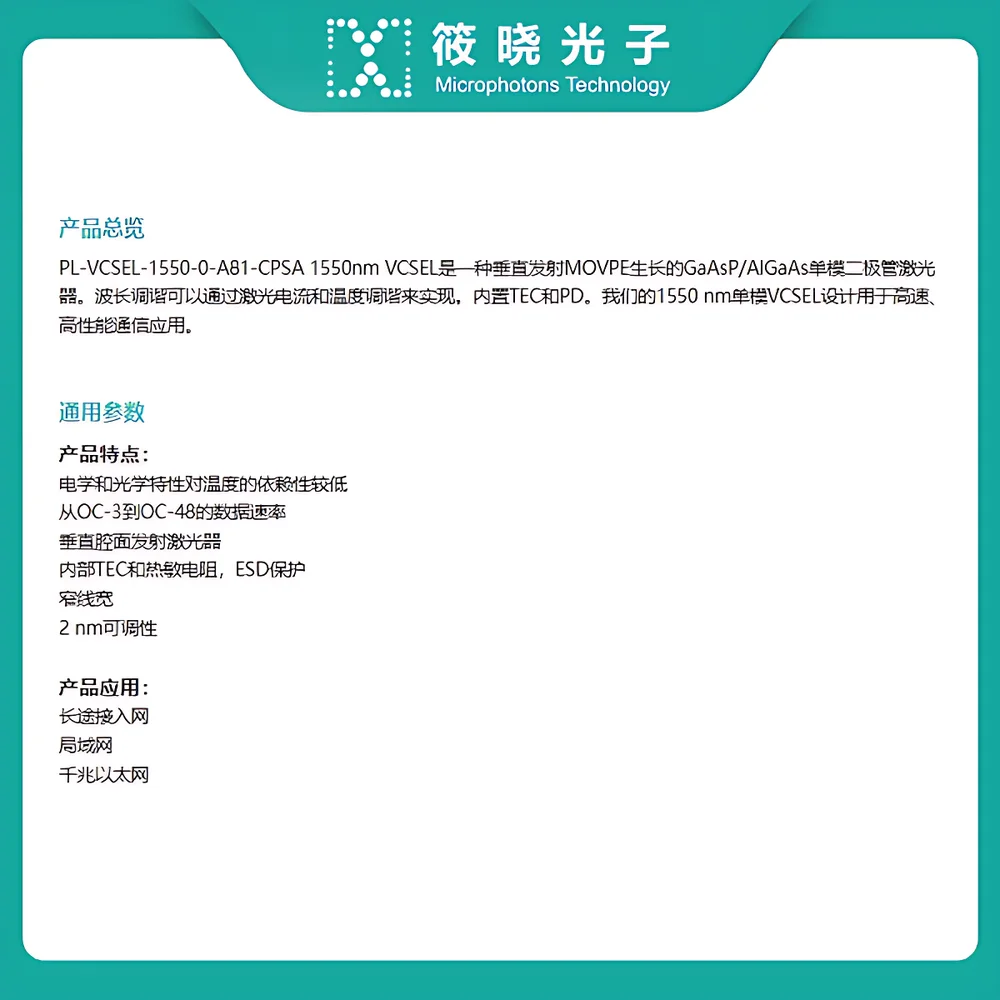
The Microphotons PL-VCSEL-1550-0-A81-CPSA is a high-stability, single-mode vertical-cavity surface-emitting laser (VCSEL) engineered for precision optical communication and metrology applications operating at the telecommunications C-band wavelength of 1550 nm. Unlike edge-emitting lasers, this VCSEL employs a monolithic GaAsP/AlGaAs epitaxial structure grown via metalorganic vapor-phase epitaxy (MOVPE), enabling inherently low divergence, circular beam profile, and high polarization stability. The device operates without an integrated thermoelectric cooler (TEC), making it suitable for space-constrained or low-power systems where passive thermal management is preferred. Its emission characteristics—centered at 1550 nm with ±20 nm tunability via injection current—are optimized for compatibility with standard single-mode fiber (SMF-28E) and FC/APC connectors. Designed for robustness in laboratory and light industrial environments, the PL-VCSEL-1550-0-A81-CPSA delivers stable output power up to 0.7 mW with high electro-optical conversion efficiency (12% typ.) and narrow spectral linewidth (100 MHz), supporting coherent detection schemes and low-noise analog transmission.
Key Features
- Single longitudinal mode operation with side-mode suppression ratio (SMSR) ≥35 dB at threshold current (I = 2 mA)
- Narrow intrinsic linewidth of 100 MHz (measured at 0.5 mW output), enabling use in interferometric sensing and low-jitter digital links
- Low temperature sensitivity: wavelength drift coefficient of only 0.06 nm/K, minimizing active thermal stabilization requirements
- High-speed modulation capability with 0.10 GHz 3-dB bandwidth and sub-100 ps rise time (90 ps), compatible with OC-3 through OC-48 data rates
- Integrated photodiode (PD) for real-time power monitoring and closed-loop intensity control
- ESD-protected architecture rated to >2 kV (HBM), ensuring reliability during handling and integration
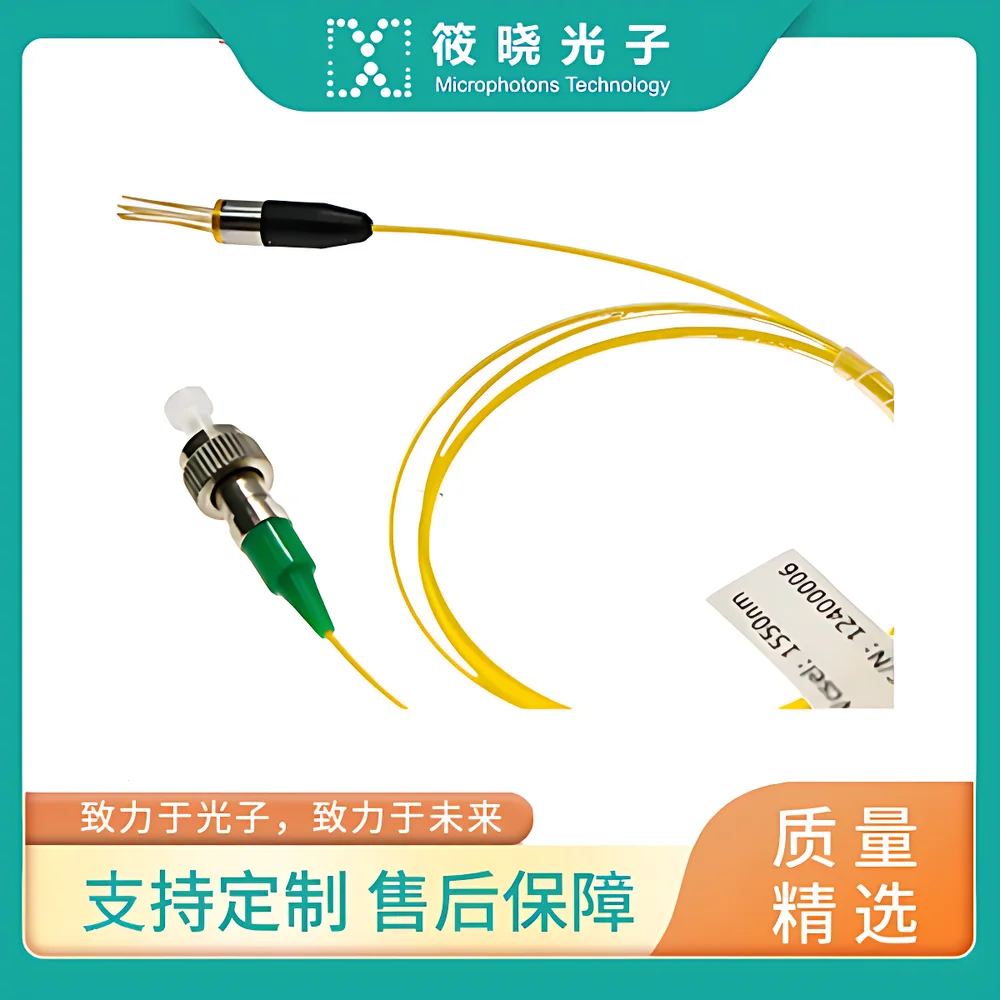
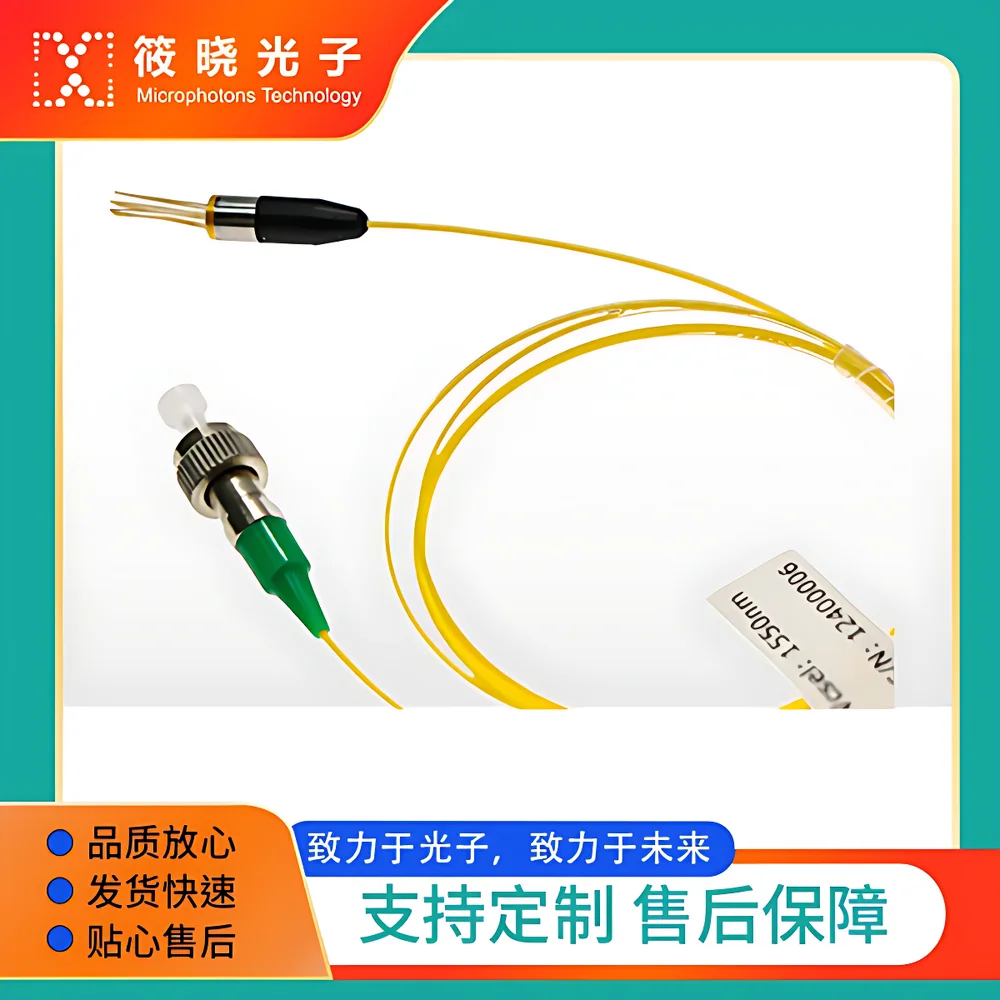
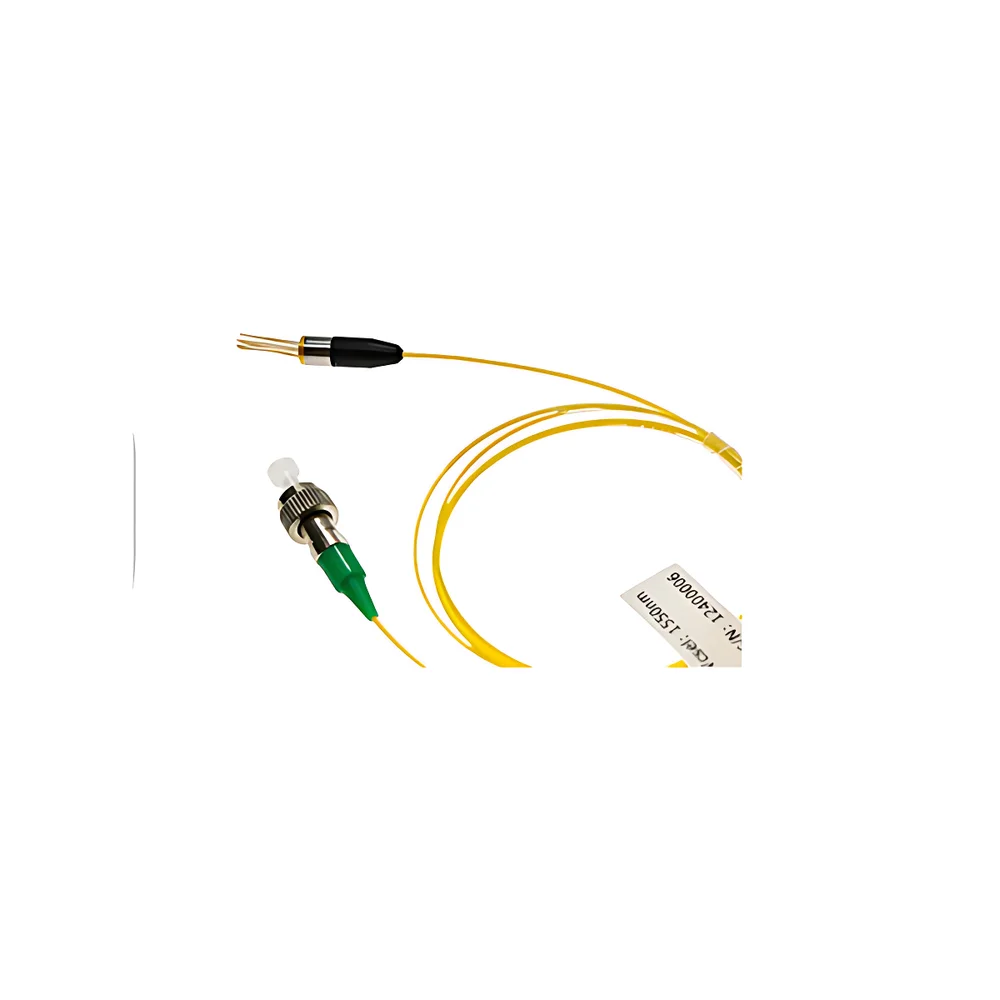
- Hermetically sealed TO-can package with SMF-28E fiber pigtail and FC/APC connector for low-reflection coupling
Sample Compatibility & Compliance
The PL-VCSEL-1550-0-A81-CPSA is designed for direct integration into optical test benches, fiber-optic sensor platforms, and telecom module assemblies. Its collimated, low-divergence output (10–25° full width at 1/e²) couples efficiently into standard single-mode fibers without additional optics. The device complies with IEC 60825-1:2014 for Class 1 laser safety when operated within specified current and temperature limits. While not certified to ITU-T G.694.1 or Telcordia GR-468-CORE, its spectral and electrical parameters align with industry expectations for uncooled 1550 nm sources used in access networks and passive optical networks (PON). For GLP/GMP-aligned validation workflows, the unit supports traceable calibration using NIST-traceable power meters and optical spectrum analyzers (OSAs) with resolution bandwidth ≤10 MHz.
Software & Data Management
This VCSEL operates as a standalone analog source and does not include embedded firmware or USB interfaces. Integration is performed via standard DC bias control (0–15 mA, 0.8–1.8 V forward voltage) and optional external photodiode feedback. For automated characterization, users may interface the device with programmable current sources (e.g., Keithley 2400/2450) and data acquisition systems compliant with IEEE 488.2 (GPIB) or USB-TMC protocols. All measured performance data—including L-I-V curves, spectral scans, and RIN spectra—can be exported in CSV or HDF5 format for post-processing in MATLAB, Python (NumPy/SciPy), or LabVIEW. Audit trails for calibration records and operational logs may be maintained in accordance with FDA 21 CFR Part 11 requirements when deployed in regulated environments.
Applications
- Fiber Bragg grating (FBG) interrogation systems requiring stable 1550 nm seeding
- Low-cost coherent receivers for short-reach metro and access networks
- Optical time-domain reflectometry (OTDR) reference sources
- Gas sensing platforms targeting methane (CH₄) and hydrogen sulfide (H₂S) absorption lines near 1550 nm
- Lab-scale demonstrations of wavelength-division multiplexing (WDM) channel alignment
- Calibration sources for optical power meters and spectrometers operating in the C-band
FAQ
Is this VCSEL compatible with standard single-mode fiber?
Yes—the device is factory-pigtailed with SMF-28E fiber and terminated with an FC/APC connector, ensuring <−60 dB return loss and minimal modal noise.
What is the maximum allowable operating current?
The absolute maximum forward current is 15.0 mA; continuous operation above 10 mA requires careful thermal management to maintain chip temperature below +40 °C.
Can the wavelength be tuned without temperature control?
Yes—current tuning provides up to 2 nm shift per mA, enabling coarse wavelength adjustment across the 1530–1570 nm range without external TEC.
Does the device include a monitor photodiode?
Yes—an integrated back-facet photodiode enables real-time output power monitoring with typical responsivity of 0.08 A/W.
What is the recommended storage condition?
Store in a dry, inert environment at −40 to +125 °C; avoid condensation and mechanical shock during transit or long-term storage.
More from Microphotons
View all Microphotons products → Microphotons ABL-005IR-GE InGaAs Linear Sensor SWIR Camera (QVGA Resolution, GigE Vision Interface)
- Difrotec D7 Series Ultra-High-Precision Laser Interferometer (λ/1000)
- Microphotons TPX-D25.4-f10-t12.7 Mounted Aspheric Plano-Convex THz Lens for High-Spatial-Resolution Imaging
- Microphotons ASE-0980-10 Broadband Amplified Spontaneous Emission Light Source at 980 nm (10 mW Output)


