
COM-3800V2 Air Positive & Negative Ion Analyzer
| Origin | Japan |
|---|---|
| Manufacturer Type | Authorized Distributor |
| Origin Category | Imported Instrument |
| Model | COM-3800V2 |
| Price | USD 13,200 (FOB Japan) |
Overview
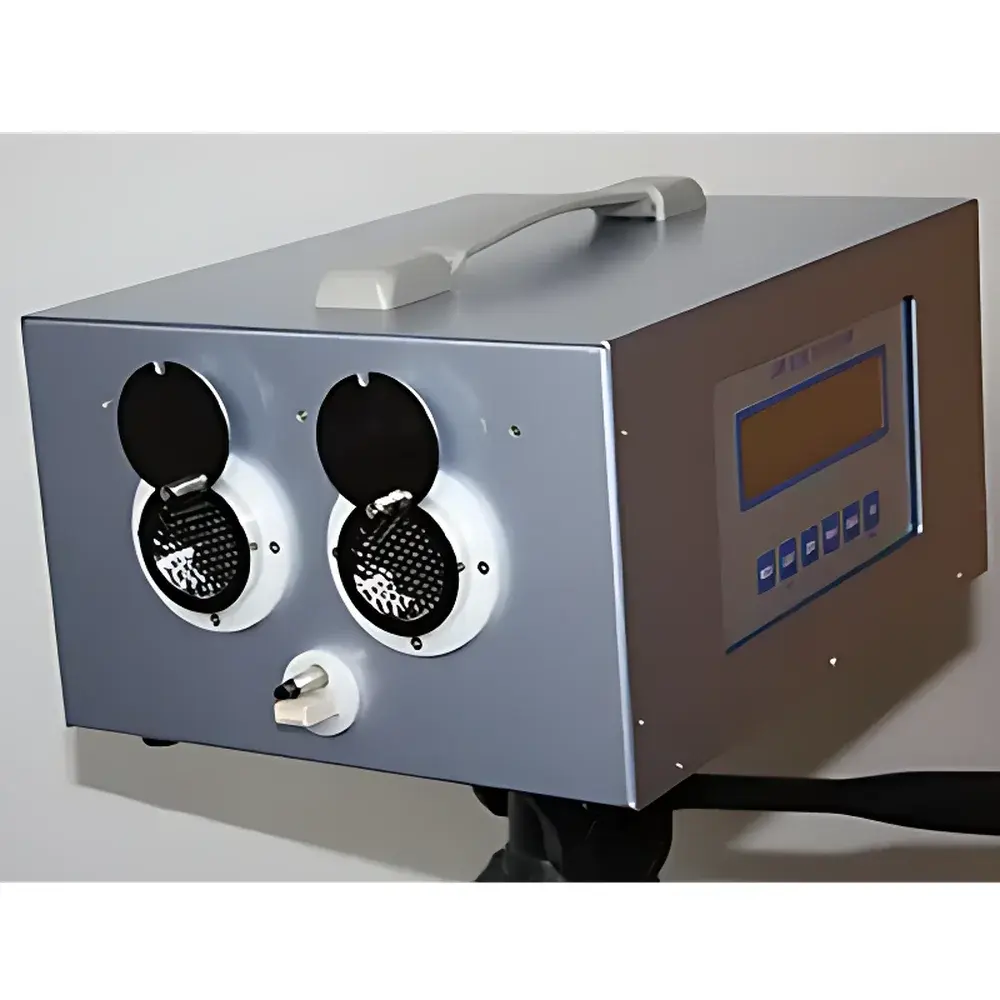
The COM-3800V2 Air Positive & Negative Ion Analyzer is a precision environmental monitoring instrument engineered for simultaneous, real-time quantification of both positive and negative air ions in ambient and controlled environments. It operates on the Gerdien condenser principle—a well-established electrostatic measurement method in atmospheric physics—utilizing a coaxial dual-cylinder capacitor geometry compliant with JIS B 7950 (Japanese Industrial Standard for Air Ion Measurement). This design delivers superior charge collection efficiency and signal stability compared to planar electrode configurations, minimizing edge effects and enhancing reproducibility across varying humidity and temperature conditions. As the second-generation successor to the COM-3800, the V2 model integrates structural optimization—including a 35 mm reduction in length and 50 mm in width—resulting in a compact, field-deployable form factor (95 × 150 × 252 mm; ~3.0 kg) without compromising metrological integrity. Its extended operational temperature range (−20 °C to +50.0 °C, ±1.0 °C accuracy) and integrated dual-sensor thermal/hygrometric monitoring (0–100 % RH, ±5 % accuracy) support reliable deployment in diverse climatic zones, from alpine research stations to subtropical urban monitoring networks.
Key Features
- Simultaneous dual-polarity ion detection (positive and negative) via independent electrode channels using Gerdien-type coaxial cylindrical capacitors
- Four selectable measurement ranges: 0–8,000; 0–50,000; 0–500,000; and 0–5,000,000 ions/cm³—enabling high-dynamic-range characterization from indoor spaces to high-ionization natural environments (e.g., waterfalls, forests)
- Onboard STN LCD display (16-character × 2-line) with backlight, real-time clock (Y/M/D/h/m/s), and ON/OFF control
- Integrated rechargeable battery supporting ≥5 hours of continuous field operation; rapid-charging circuit compatible with universal AC input (100–240 V AC)
- Dual-sensor environmental compensation: high-accuracy thermistor (−20 to +50.0 °C) and capacitive humidity sensor (0–100 % RH)
- Configurable sampling intervals: 1, 5, 10, 15, 20, 30, or 60 seconds—optimized for transient event capture or long-term trend analysis
- Internal memory storage with RS-232C interface for direct data export to PC; supports time-stamped, multi-channel logging including standard deviation per measurement cycle
Sample Compatibility & Compliance
The COM-3800V2 is validated for direct sampling of ambient air without filtration or dilution, making it suitable for both open-field and semi-enclosed environments (e.g., greenhouses, cleanrooms, wellness facilities, and indoor air quality assessments). Its coaxial cylinder sensor architecture conforms to the Japanese Functional Ion Association (JFIA) certification criteria for ion density measurement accuracy and repeatability. While not certified to ISO/IEC 17025 for accredited testing, its design aligns with foundational principles referenced in ISO 16000-30 (Indoor air — Part 30: Determination of airborne ions) and ASTM D8193-21 (Standard Guide for Measuring Air Ion Concentrations). The instrument meets electromagnetic compatibility (EMC) requirements per IEC 61326-1 for laboratory and field use, and its housing complies with IP54-rated ingress protection against dust and water splashes.
Software & Data Management
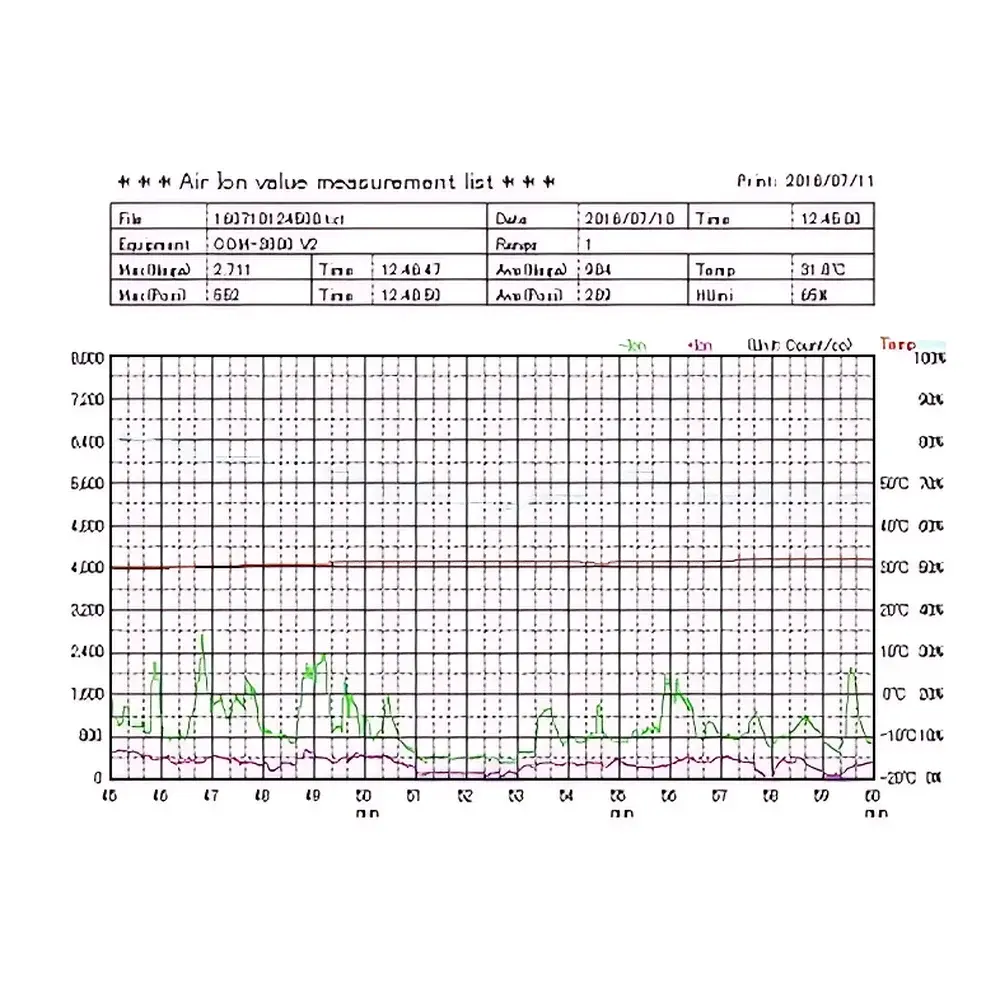
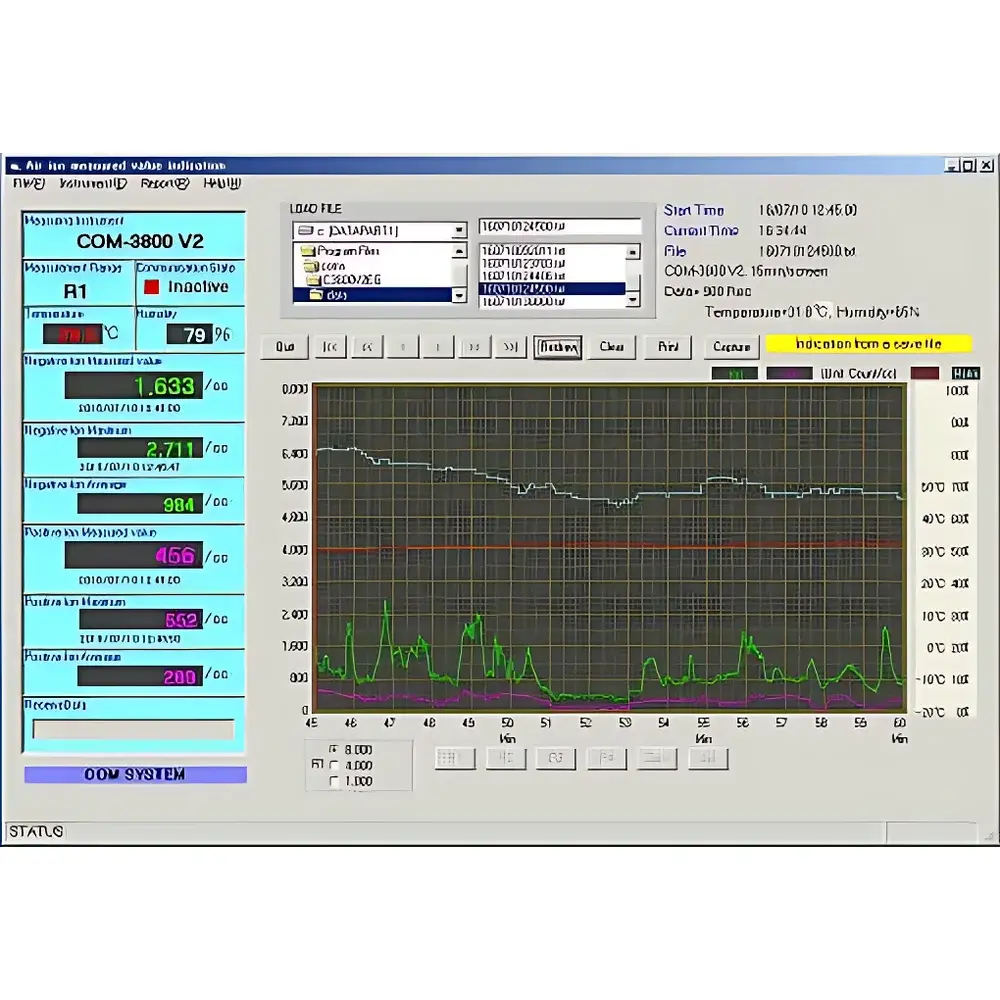
Data acquisition and post-processing are supported by dedicated Windows-compatible software (English-language version included), enabling real-time visualization, time-series plotting, statistical summary (mean, SD, min/max), and CSV export. The software implements audit-trail-capable session logging, preserving operator ID, timestamp, instrument configuration, and raw channel values—supporting GLP-aligned documentation practices. Raw datasets retain full metadata, including environmental sensor readings synchronized with ion counts. Optional connectivity modules—including USB-to-RS232 adapters, wired LAN gateways, and IEEE 802.11 b/g/n wireless transceivers—facilitate integration into centralized environmental monitoring networks. An optional DP-U245 thermal printer (sold separately) provides on-site hardcopy output of ion concentration values with timestamp and range identification.
Applications
- Environmental health studies: correlation of air ion concentrations with particulate matter (PM₂.₅/PM₁₀), ozone, and VOC levels
- Indoor air quality (IAQ) validation in hospitals, schools, offices, and residential buildings
- Functional evaluation of ion-generating consumer devices (e.g., air purifiers, HVAC ionizers)
- Ecological field research: forest-atmosphere exchange, coastal ion fluxes, mountain microclimate profiling
- Material science testing: surface charge decay assessment of antistatic coatings and functional textiles
- Regulatory benchmarking: pre-compliance screening against national guidelines (e.g., China’s GB/T 18883 Annex C, Japan’s JIS B 7950)
FAQ
Does the COM-3800V2 comply with FDA 21 CFR Part 11 for electronic records?
No—the instrument does not implement electronic signature, role-based access control, or audit-trail encryption required under Part 11. However, its raw data export and timestamped logging support manual traceability in non-regulated QA/QC workflows.
Can the device measure ions in moving air streams (e.g., HVAC ducts)?
Yes—its robust airflow response (<50 ms settling time) and low-pressure drop sensor geometry permit direct insertion into laminar flow paths up to 2 m/s velocity; recommended inlet orientation is perpendicular to airflow.
Is calibration traceable to NIST or other national standards?
The COM-3800V2 is factory-calibrated using a reference ion generator traceable to JNLA (Japan National Metrology Institute); NIST-traceable recalibration services are available through authorized service centers in North America and EU.
What is the minimum detectable ion concentration in Range R1?
The effective lower limit of detection (LOD) in R1 (0–8,000 ions/cm³) is approximately 50 ions/cm³ at 95 % confidence, determined via repeated zero-air measurements and statistical noise floor analysis.
Does the internal battery support hot-swapping during operation?
No—battery replacement requires power-down. However, the unit can operate continuously while charging via AC adapter, ensuring uninterrupted long-term deployments.







