
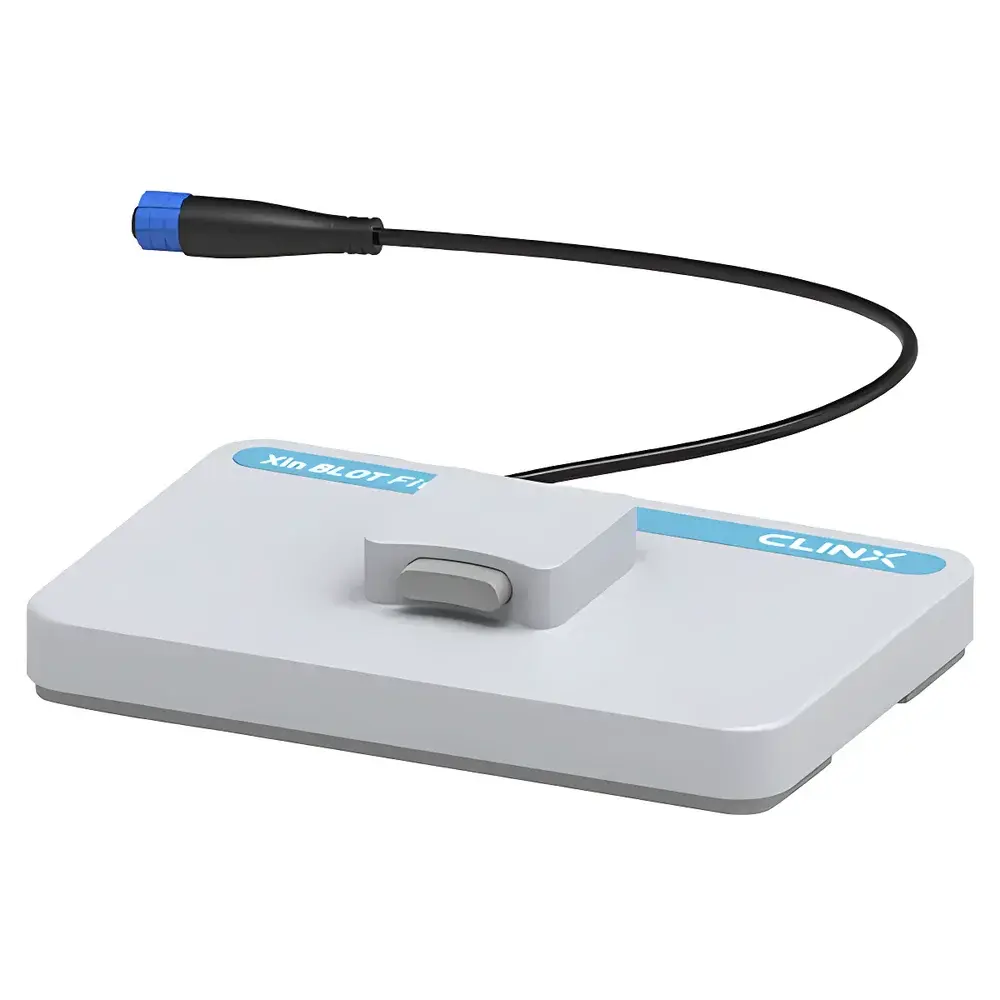
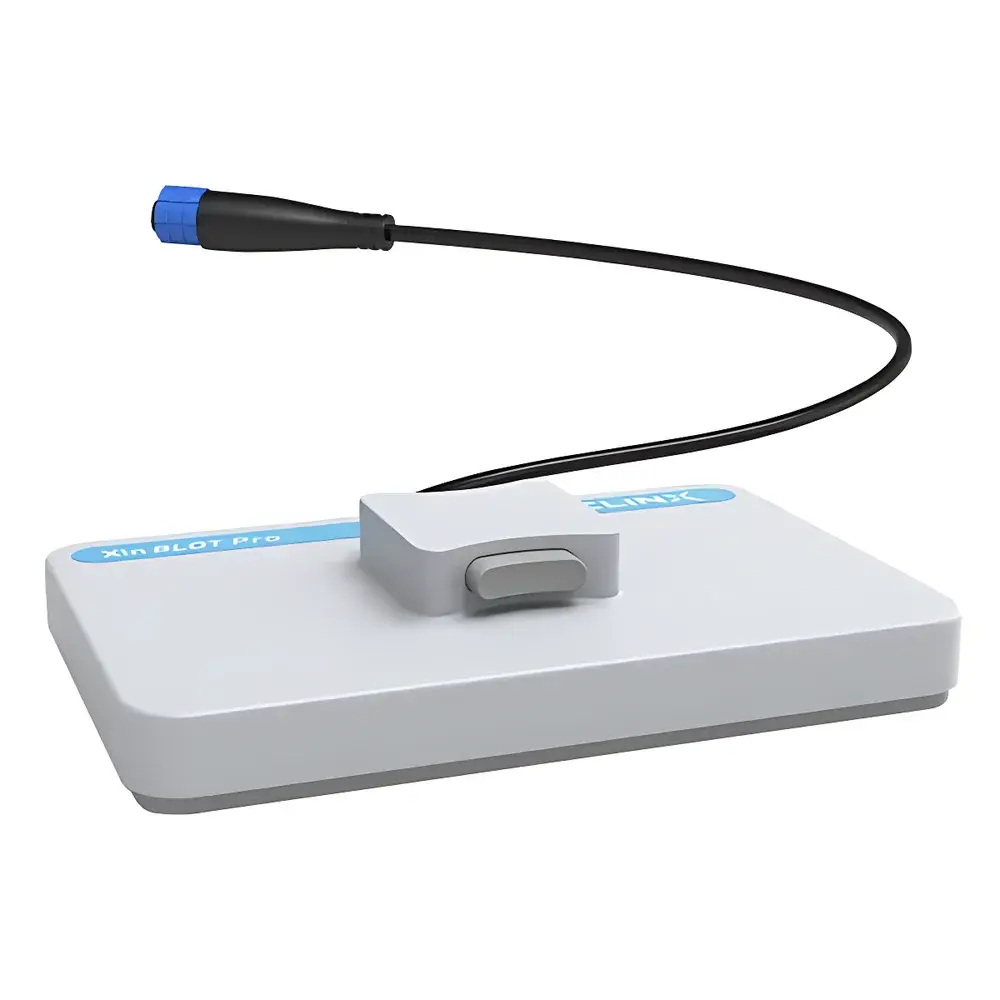
Clix XinBlot Pro Semi-Dry Electrophoretic Transfer Unit
| Brand | Clix |
|---|---|
| Origin | Shanghai, China |
| Model | XinBlot Pro |
| Instrument Type | Semi-Dry Electrophoretic Transfer System |
| Gel Format Compatibility | 2 × Mini Gels (≤ 168 mm × 121 mm) or 1 × Midi Gel |
| Buffer Volume Requirement | ≤ 250 mL |
| Dimensions (W×D×H) | 218 mm × 144 mm × 43 mm |
| Safety Compliance | GB, IEC 61010-1, EN 61010-1 |
| Transfer Principle | Semi-Dry Electrophoretic Blotting |
| Typical Transfer Time | ≤ 10 min for complete protein transfer |
Overview
The Clix XinBlot Pro Semi-Dry Electrophoretic Transfer Unit is an engineered solution for rapid, reproducible, and operator-safe protein transfer from polyacrylamide gels to solid supports—including nitrocellulose and PVDF membranes. Designed around the semi-dry transfer principle, it applies a uniform electric field directly across a compact gel-membrane sandwich assembled between two parallel electrode plates. Unlike traditional wet-transfer systems, the XinBlot Pro eliminates large buffer tanks and relies on minimal electrolyte volume—confined only to filter papers saturated with transfer buffer—enabling efficient ion conduction while minimizing joule heating and buffer consumption. Its optimized electrode geometry and thermal management architecture ensure consistent field distribution across the entire gel surface, supporting high-fidelity transfer of proteins ranging from 10 kDa to >200 kDa without significant distortion or loss.
Key Features
- Single-Handed Electrode Connection: Patented polarity-insensitive terminal design allows secure, tool-free connection of power leads—no need to identify or align positive/negative terminals—reducing setup time and eliminating misconnection risk.
- Tool-Free Hinged Lid Mechanism: Integrated snap-fit lid latch enables one-handed opening and closing; lid actuation automatically interrupts power supply via embedded safety interlock switch, complying with IEC 61010-1 Class I electrical safety requirements.
- Optimized Semi-Dry Architecture: Precision-machined aluminum electrodes with corrosion-resistant plating ensure low-resistance current delivery and long-term dimensional stability; electrode spacing is calibrated to maintain optimal field strength (typically 15–25 V/cm) across standard mini and midi gel formats.
- Minimal Buffer Consumption: Requires only ≤250 mL total buffer volume—distributed exclusively across absorbent filter papers—reducing reagent cost, waste generation, and environmental footprint compared to conventional tank-based systems.
- Compact Benchtop Footprint: At just 218 mm × 144 mm × 43 mm (W×D×H), the unit integrates seamlessly into space-constrained laboratories while maintaining full compatibility with standard electrophoresis casting trays and blotting accessories.
Sample Compatibility & Compliance
The XinBlot Pro accommodates two standard mini gels (up to 168 mm × 121 mm each) or one midi-format gel in a single run. It supports common gel matrices (SDS-PAGE, native PAGE, gradient gels) and membrane types (nitrocellulose, PVDF, low-fluorescence variants). All electrical components meet GB 4793.1–2007, IEC 61010-1:2010, and EN 61010-1:2010 standards for laboratory equipment safety. The enclosure provides IP20 ingress protection, and the interlocked lid mechanism satisfies mandatory disconnection-on-access requirements for Class I protected instruments.
Software & Data Management
As a standalone benchtop transfer unit, the XinBlot Pro operates without proprietary software or digital interfaces. Voltage, current, and run time are controlled manually via front-panel dials and LED indicators. However, its stable output characteristics—combined with built-in overcurrent and thermal cutoffs—ensure consistent performance across repeated runs, supporting GLP-compliant documentation when paired with external logging devices or laboratory notebooks. For labs requiring electronic audit trails, integration with programmable power supplies (e.g., those compliant with FDA 21 CFR Part 11) is supported via analog voltage/current monitoring ports (optional accessory).
Applications
The XinBlot Pro is routinely deployed in academic research, biopharmaceutical QC labs, and clinical diagnostics settings for Western blotting workflows requiring speed, repeatability, and safety. It is particularly suited for high-throughput screening of post-translational modifications, antibody validation studies, and comparative proteomic analyses where rapid turnaround between electrophoresis and immunodetection is critical. Its low buffer demand and absence of recirculation pumps also make it ideal for field-deployable or resource-limited laboratories adhering to sustainable lab practices.
FAQ
What gel formats does the XinBlot Pro support?
It accepts up to two mini gels (max 168 mm × 121 mm) or one midi gel per run.
Is the unit compatible with both nitrocellulose and PVDF membranes?
Yes—optimized electrode spacing and field uniformity accommodate standard thicknesses (0.2 µm–0.45 µm) of both membrane types.
Does the device require special buffer formulations?
No—it functions with standard semi-dry transfer buffers (e.g., 25 mM Tris, 192 mM glycine, 20% methanol) and does not mandate proprietary additives.
How is electrical safety enforced during operation?
A mechanical interlock cuts power instantly upon lid opening, verified per IEC 61010-1 Annex D requirements for accessible hazardous voltage circuits.
Can transfer efficiency be validated for specific protein targets?
Yes—consistent field geometry and thermal control enable reproducible transfer kinetics; users may validate recovery rates using Ponceau S staining or fluorescent pre-labeling protocols per ISO/IEC 17025-aligned SOPs.




