
Cowie PTFE Stirring Impellers (Centrifugal, Anchor, Propeller & Interchangeable-Blade Types)
| Brand | Cowie |
|---|---|
| Origin | United Kingdom |
| Model | PTFE Centrifugal / Anchor / Propeller / Interchangeable-Blade Stirring Impellers |
| Material Certification | FDA-compliant & USP Class VI-certified PTFE |
| Shaft Construction | Stainless steel core encapsulated in PTFE |
| Temperature Range | −200 °C to +280 °C |
| Max. Working Vacuum | 5 mbar |
| Compliance | BS EN ISO 9001:2008 |
| Sterilization | Autoclavable (121 °C, 20 min), chemical-resistant, non-leaching, non-porous surface |
| Cleaning | Compatible with aqueous and organic solvent cleaning protocols |
Overview
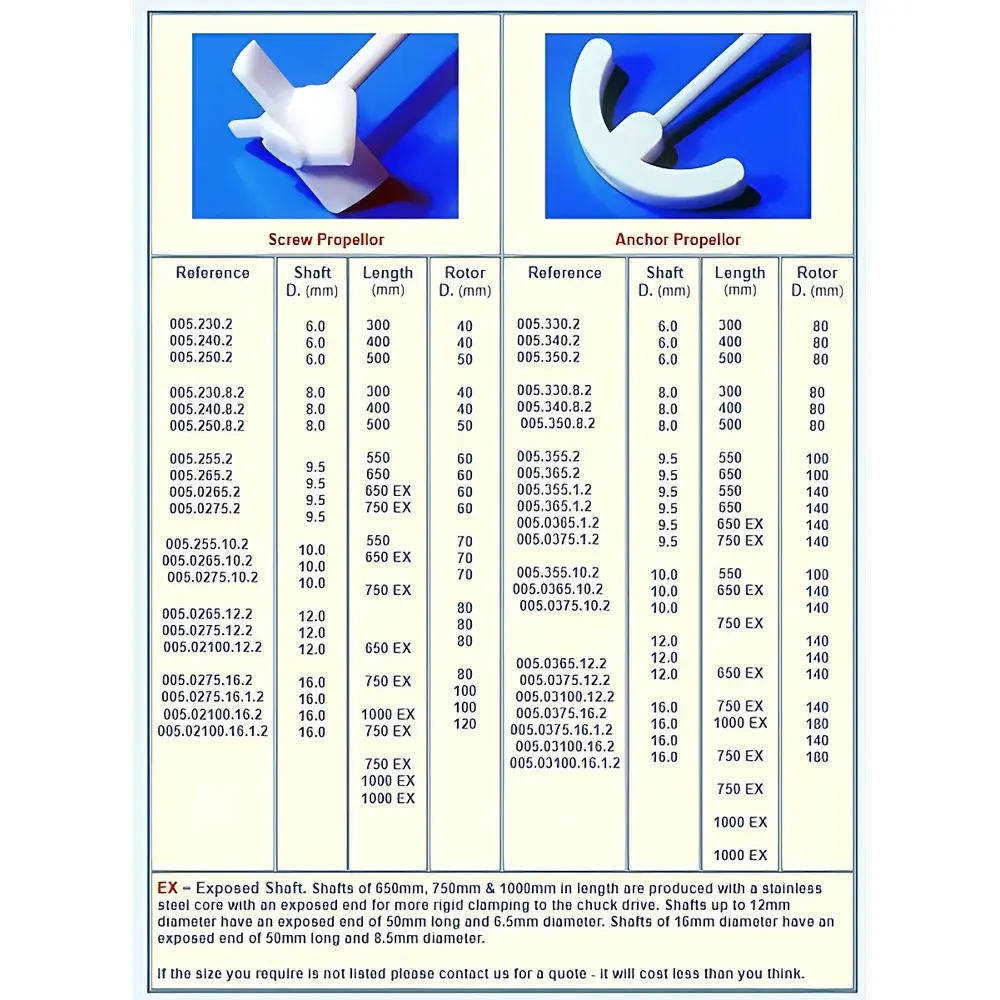
The Cowie PTFE Stirring Impellers are precision-engineered laboratory components designed for chemically aggressive, ultra-clean, and thermally demanding mixing applications. Constructed using high-purity, USP Class VI-certified and FDA-compliant polytetrafluoroethylene (PTFE), these impellers operate reliably across an exceptional thermal range—from cryogenic conditions at −200 °C up to sustained service at +280 °C. The composite shaft design integrates a fully encapsulated stainless steel core within the PTFE matrix, delivering mechanical rigidity and torque transmission while preserving full chemical inertness and surface integrity. Unlike conventional coated or laminated stirrers, Cowie’s monolithic PTFE construction eliminates delamination risk, particle shedding, or extractable leachables—critical for pharmaceutical process development, catalyst synthesis, and high-purity electrochemical cell preparation. These impellers are not standalone motorized units but engineered accessories intended for integration with overhead stirrers, magnetic stirrer hotplates (via compatible PTFE-coated stirring bars or coupling adapters), and vacuum-rated reactor systems.
Key Features
- Chemical resistance validated against concentrated acids (e.g., HF, HNO₃), strong bases (e.g., 50% NaOH), halogenated solvents, and aggressive oxidizers—no swelling, cracking, or weight loss after prolonged exposure
- Thermal stability confirmed per ASTM D648 (HDT) and ISO 75: no measurable deformation below +280 °C; onset of thermal degradation observed only above +400 °C without liquefaction or dripping
- Surface roughness (Ra) < 0.8 µm as measured by profilometry—ensuring minimal nucleation sites and compatibility with Good Manufacturing Practice (GMP) cleaning validation
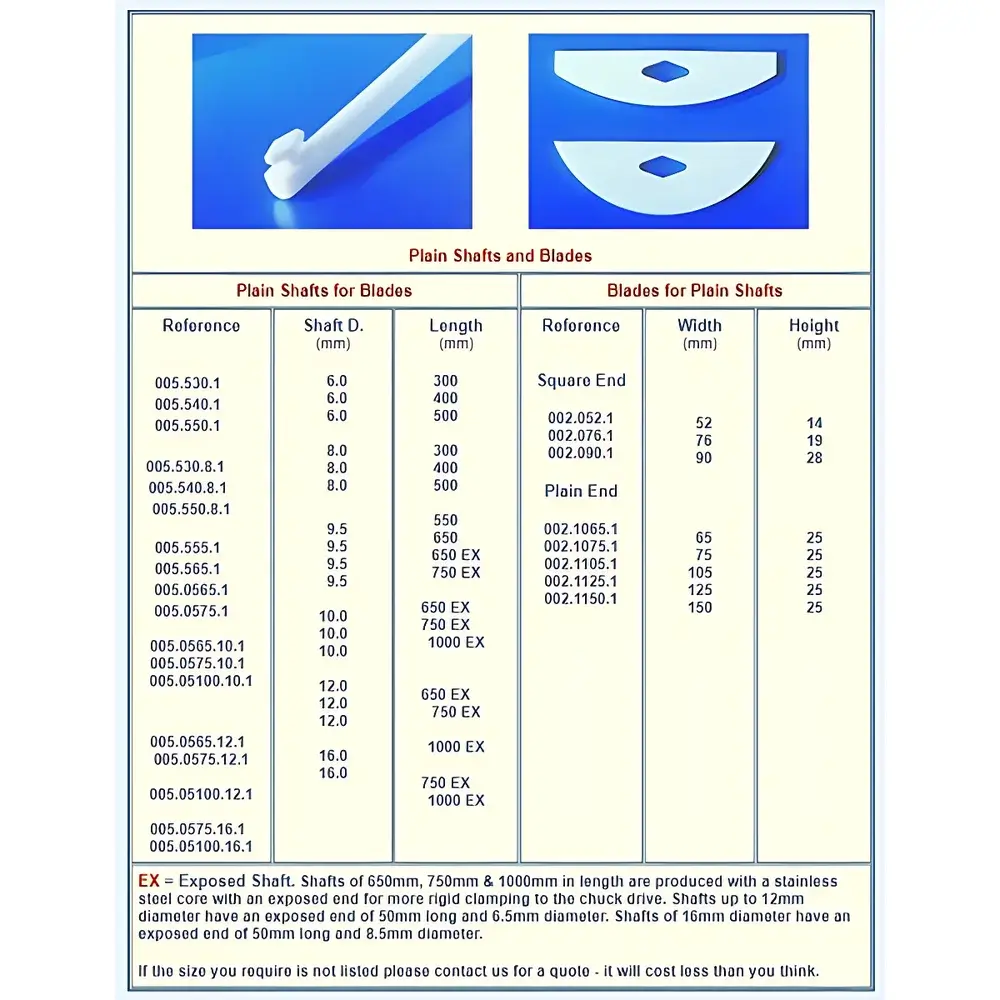
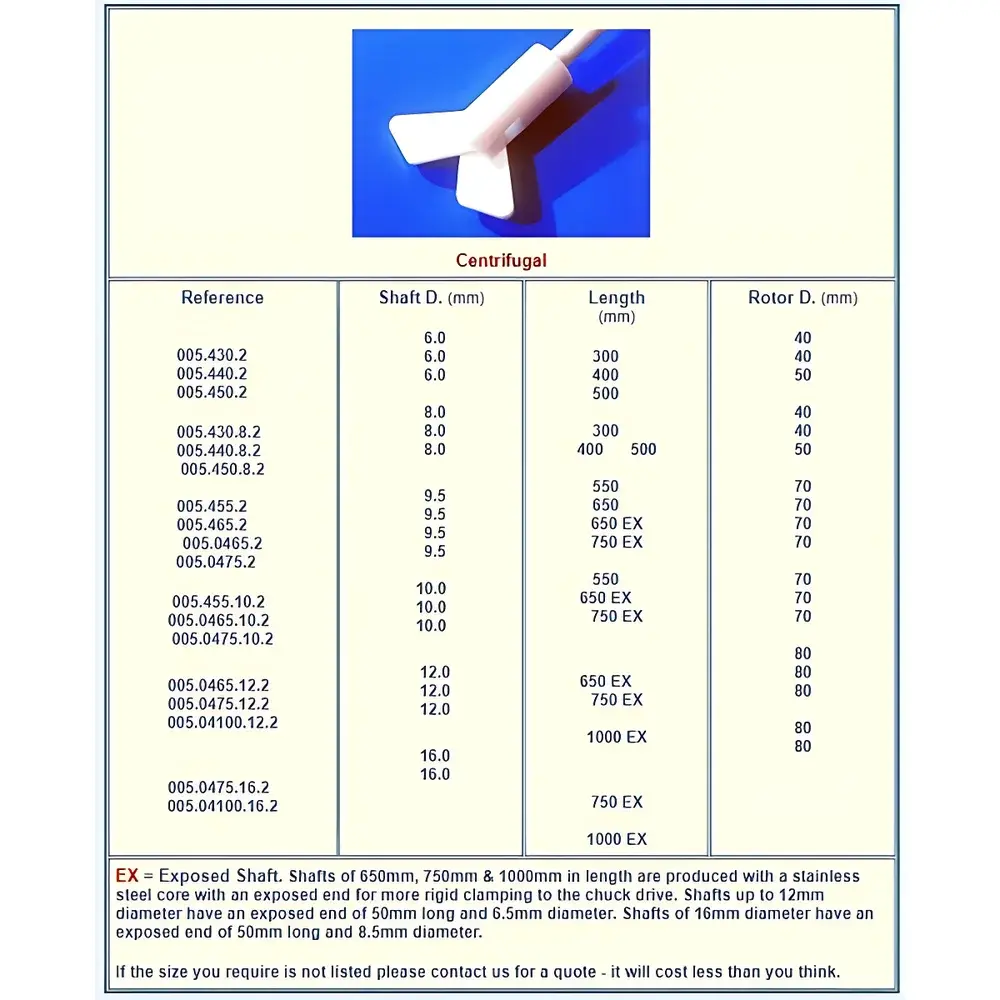
- Interchangeable-blade configuration enables rapid adaptation between mixing regimes: centrifugal (for low-viscosity homogenization), anchor (for high-viscosity wall-scraping), and propeller (for axial flow in tall vessels)
- Vacuum-compatible geometry validated to 5 mbar absolute pressure—suitable for solvent removal, thin-film evaporation, and inert-atmosphere synthesis under reduced pressure
- Autoclavable per ISO 17665-1:2017—fully compatible with steam sterilization cycles (121 °C, 15–20 min, saturated steam) without dimensional change or surface haze formation
Sample Compatibility & Compliance
Cowie PTFE impellers are routinely deployed in regulated environments requiring material traceability and biocompatibility assurance. All PTFE stock is sourced from ISO 9001:2008–certified manufacturing facilities in the UK, with full lot-level documentation including extractables testing reports (per USP and ). The impellers comply with EU Regulation (EC) No 1935/2004 for food-contact materials and meet the cytotoxicity requirements of ISO 10993-5. For pharmaceutical applications, they support ICH Q5A/Q5D compliance when used in upstream buffer preparation or final formulation mixing. Their non-porous, non-shedding surface eliminates risk of particulate contamination in sterile filtration train validation and supports ALCOA+ data integrity principles when paired with compliant overhead drive systems.
Software & Data Management
While the impellers themselves are passive mechanical components, their use is integral to digitally controlled mixing workflows. When integrated with GLP/GMP-compliant overhead stirrers (e.g., IKA RW 20 digital, Thermo Scientific Cimarec+), they enable audit-trail-enabled parameter logging—including speed setpoint, torque feedback, temperature ramp profiles, and runtime duration—aligned with FDA 21 CFR Part 11 requirements. PTFE surface consistency ensures stable torque response across viscosity changes, improving repeatability in automated reaction monitoring platforms (e.g., ReactIR, EasyMax). Calibration certificates for associated drive units include traceable NIST-traceable torque verification, supporting IQ/OQ/PQ validation packages.
Applications
- High-value API synthesis under anhydrous, oxygen-free, or vacuum conditions (e.g., Grignard, lithiation, hydrogenation)
- Electrolyte formulation for Li-ion and solid-state batteries—resistant to carbonate solvents and LiPF₆ decomposition products
- Preparation of nanoparticle dispersions and colloidal suspensions where metal ion contamination must be avoided
- Clean-in-place (CIP) and sterilize-in-place (SIP) compatible mixing in single-use bioreactor bags and jacketed glass reactors
- Calibration reference mixing for rheometer validation studies (e.g., Brookfield DVNext with low-shear PTFE geometry)
- Low-volume (<5 mL) microreactor agitation where surface area-to-volume ratio demands maximal inertness
FAQ
Are these impellers compatible with magnetic stirrers?
No—they are designed for overhead mechanical drive systems. However, Cowie offers complementary PTFE-coated magnetic stirring bars and vacuum-rated PTFE stirrer adapters for integration with magnetic hotplates.
Can they be used in hydrofluoric acid (HF) solutions?
Yes. PTFE exhibits complete resistance to HF across all concentrations and temperatures up to +200 °C, verified per ASTM D543 immersion testing protocols.
Is post-sterilization revalidation required?
No. Thermal and chemical stability data confirm no change in dimensional tolerance (±0.02 mm), surface energy (65–68 mN/m), or elemental composition (EDS-confirmed absence of Fe/Ni/Cr migration) after 50 autoclave cycles.
What torque limits apply during operation?
Maximum recommended continuous torque load is 0.8 N·m at 300 rpm. Exceeding this may induce localized creep in PTFE near the shaft interface—consult application engineering for high-torque anchor configurations.
Do you provide material certification for individual batches?
Yes. Each shipment includes a Certificate of Conformance (CoC) with lot-specific USP Class VI test summary, residual metal analysis (ICP-MS), and ISO 9001:2008 manufacturing site accreditation details.



