
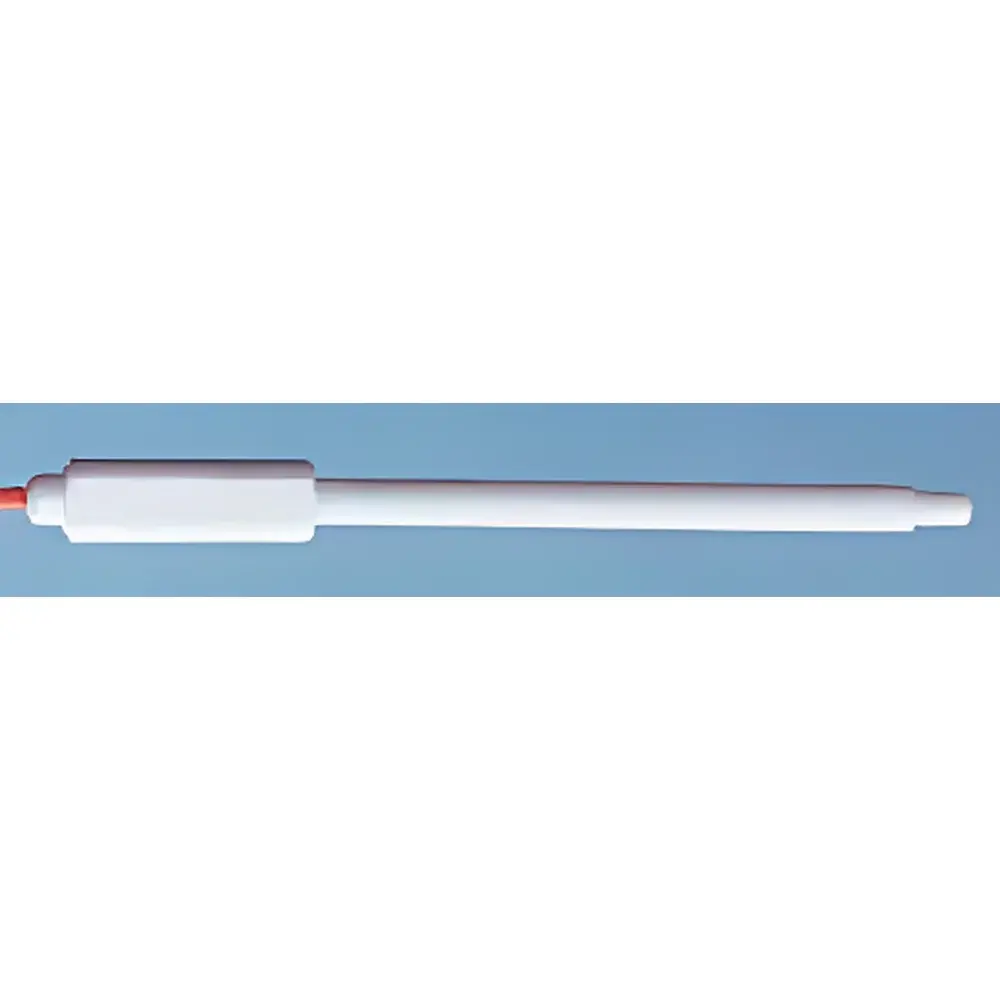
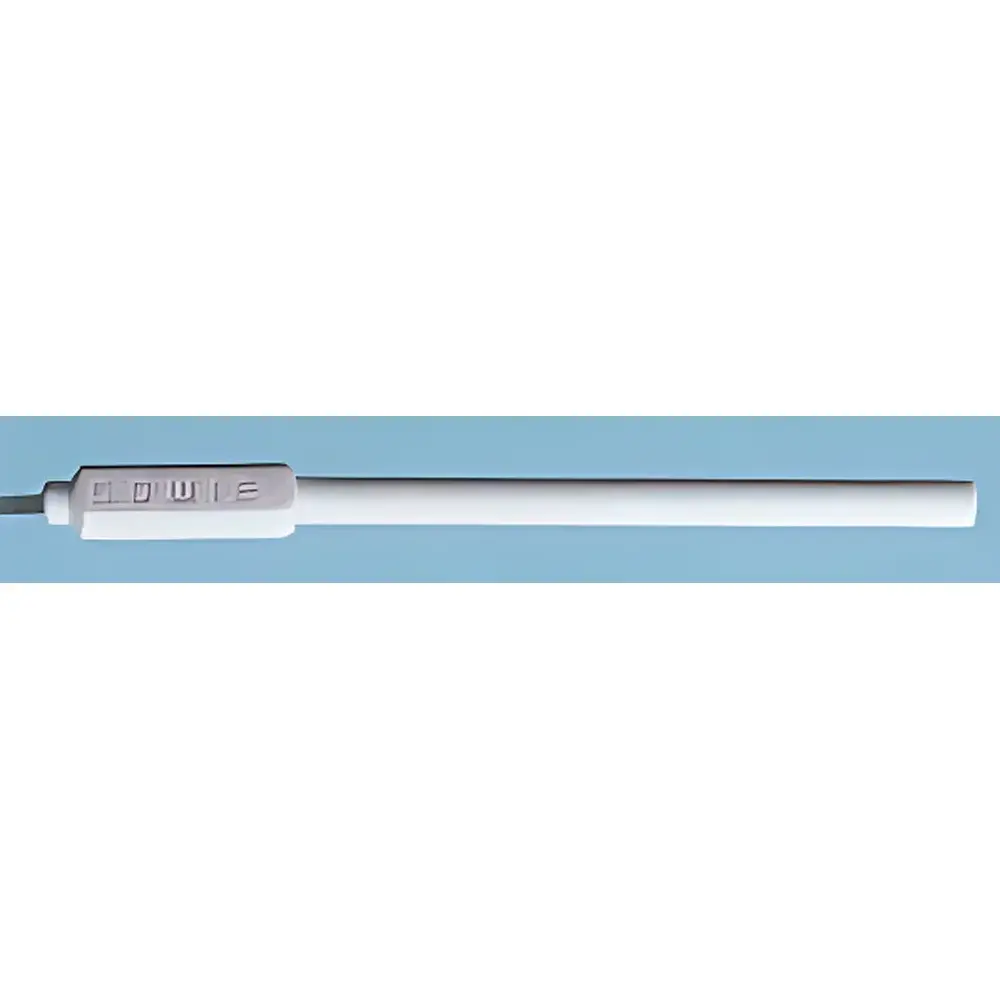
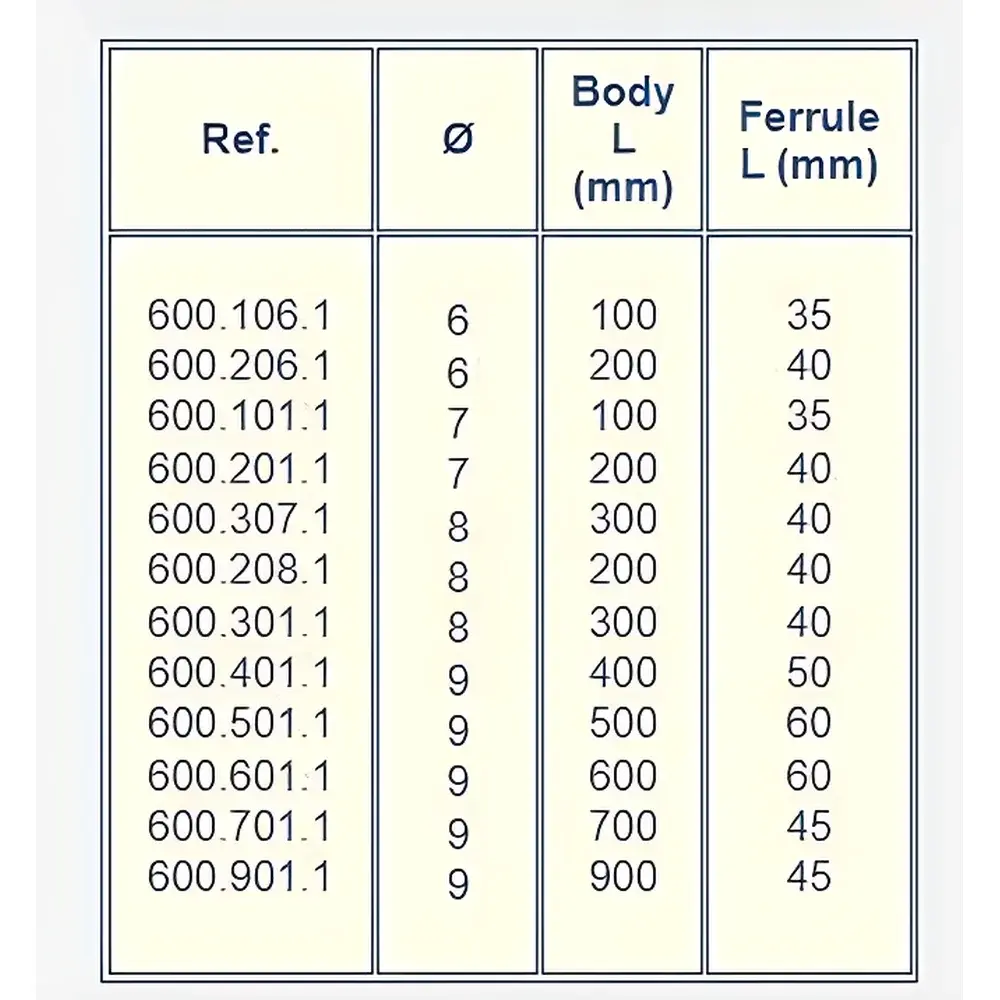
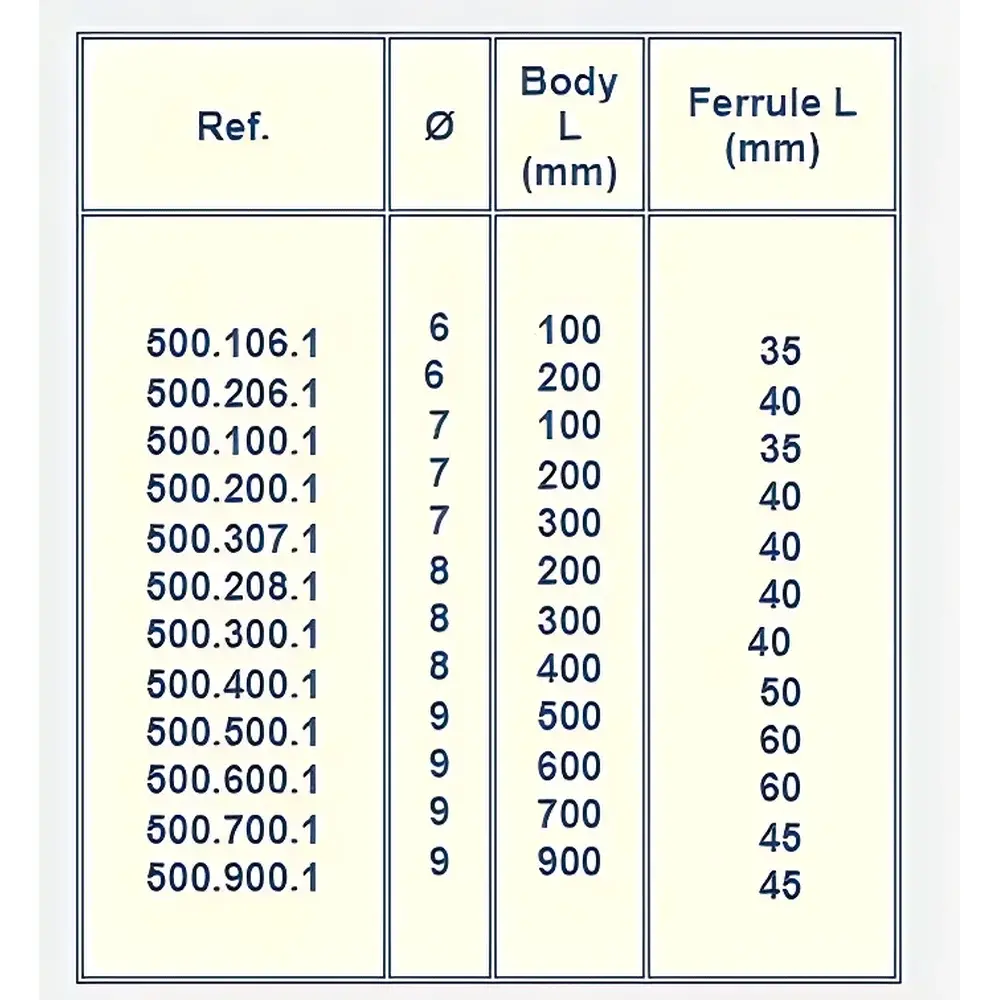
COWIE PTFE Temperature Probe with Lemo or K-Type Connector
| Brand | COWIE |
|---|---|
| Origin | United Kingdom |
| Connector Type | Lemo Interface / K-Type Thermocouple |
| Sensor Types | PT100 (4-wire), PT1000, K-Type, J-Type, T-Type |
| Temperature Range | –200 °C to +400 °C (short-term), –70 °C to +300 °C (continuous for PT100 variant), –180 °C to +300 °C (continuous for K-type variant) |
| Sheath Material | Virgin PTFE fully encapsulated body with PFA-insulated cable |
| Core Structure | Stainless steel mandrel — rigid yet bendable |
| Cable Termination | 1 m standard lead |
| Compliance | BS EN ISO 9001:2008 certified |
| Regulatory Status | FDA-compliant PTFE materials |
| Sealing | PFA fusion-welded cable-to-body junction for leak-tight integrity |
Overview
The COWIE PTFE Temperature Probe is a high-integrity, chemically inert temperature sensing solution engineered for demanding laboratory and process environments where corrosion resistance, thermal stability, and contamination control are critical. Designed specifically for integration with magnetic stirrers, jacketed reactors, and inline mixing systems, this probe utilizes either platinum resistance thermometry (PT100/PT1000) or base-metal thermocouple technology (K-, J-, or T-type) housed entirely within virgin polytetrafluoroethylene (PTFE). The sensor assembly is hermetically sealed using PFA (perfluoroalkoxy alkane) overbraid and fusion bonding — eliminating crevices, preventing fluid ingress, and ensuring long-term signal stability under aggressive chemical exposure. Its operational range spans from cryogenic conditions (–200 °C) to high-temperature processing (+400 °C), making it suitable for applications ranging from low-temperature catalysis to high-viscosity polymer devolatilization.
Key Features
- Full PTFE encapsulation of sensor element, lead wires, and probe body — compliant with FDA 21 CFR §177.1550 for food-contact and pharmaceutical use
- Rigid-yet-flexible stainless steel core enabling precise positioning in narrow-necked vessels while maintaining mechanical integrity during stirring or agitation
- PFA-insulated, fusion-bonded cable termination — eliminates delamination risk and ensures pressure-tight sealing up to 6 bar at 200 °C
- 4-wire PT100 configuration with ATC (alpha = 0.00385) for high-accuracy resistance measurement; optional 1/3 DIN or 1/10 DIN tolerance grades available
- K-type thermocouple variant calibrated per IEC 60584-1:2013, with cold-junction compensation support in compatible readout systems
- Lemo FGG.0B.304.CLAD52Z (or equivalent) connector interface for secure, repeatable mating with data acquisition modules, PID controllers, and lab-scale monitoring systems
- Customizable geometry — including bent-tip, angled, multi-sensor, and dual-zone configurations — supported by COWIE’s engineering team under NDA
Sample Compatibility & Compliance
This probe is validated for direct contact with corrosive solvents (e.g., concentrated HNO₃, HF, molten alkalis), halogenated media, and ultra-pure water systems. It meets BS EN ISO 9001:2008 quality management requirements and employs only USP Class VI–rated PTFE and PFA polymers. For regulated environments, the probe supports GLP/GMP workflows when paired with traceable calibration certificates (NIST-traceable, accredited to ISO/IEC 17025). While the probe itself does not carry CE marking as a standalone component, its integration into CE-marked equipment (e.g., magnetic stirrers, reactor systems) complies with Annex I essential health and safety requirements of the Machinery Directive 2006/42/EC.
Software & Data Management
The COWIE PTFE probe operates as an analog sensor requiring external signal conditioning. When interfaced with industrial-grade DAQ systems (e.g., Keysight 34972A, National Instruments cDAQ), it delivers stable, low-noise output compatible with LabVIEW, MATLAB, or custom SCADA architectures. For batch record integrity, users may configure audit trails and electronic signatures via FDA 21 CFR Part 11–compliant software platforms — provided the host system implements role-based access, change control, and raw-data archiving. Calibration logs and probe-specific characterization reports (including drift history and thermal hysteresis curves) are supplied upon request.
Applications
- In situ temperature monitoring during exothermic Grignard or lithiation reactions in glass-jacketed reactors
- Real-time thermal profiling in high-shear dispersion of nanomaterials within PTFE-lined planetary mixers
- Cryogenic reaction control in liquid nitrogen-cooled Schlenk lines and glovebox-integrated synthesis stations
- Continuous sterilization validation (SIP) in single-use bioreactor manifolds using steam at 135 °C
- Long-duration stability testing of battery electrolytes under thermal cycling (–40 °C ↔ +85 °C)
- Quality control of adhesive curing profiles in PUR-based laminating systems
FAQ
Can this probe be autoclaved?
Yes — the PTFE/PFA construction withstands repeated autoclave cycles at 121 °C, 15 psi for 20 minutes; however, thermal shock from rapid cooling should be avoided to prevent microcracking.
Is electrical isolation guaranteed between sensor and vessel wall?
Yes — the dielectric strength of virgin PTFE exceeds 15 kV/mm; leakage current remains below 1 µA at 500 VDC, satisfying IEC 61010-1 insulation requirements.
What is the recommended minimum bending radius during installation?
For probes with 6 mm OD, maintain ≥30 mm radius; for 4 mm OD variants, ≥20 mm radius — exceeding this may compromise internal conductor alignment or PFA bond integrity.
Do you offer calibration services with uncertainty budgets?
Yes — UKAS-accredited calibration (ISO/IEC 17025) is available for PT100 variants across –70 °C to +300 °C, reporting expanded uncertainty (k=2) ≤ ±0.12 °C.
Can the Lemo connector be replaced with a different interface?
Yes — standard options include Miniature DIN 43650, M8x1, or bare leads; custom OEM interfaces (e.g., Hirose, Fischer) are supported subject to MOQ and tooling lead time.



