
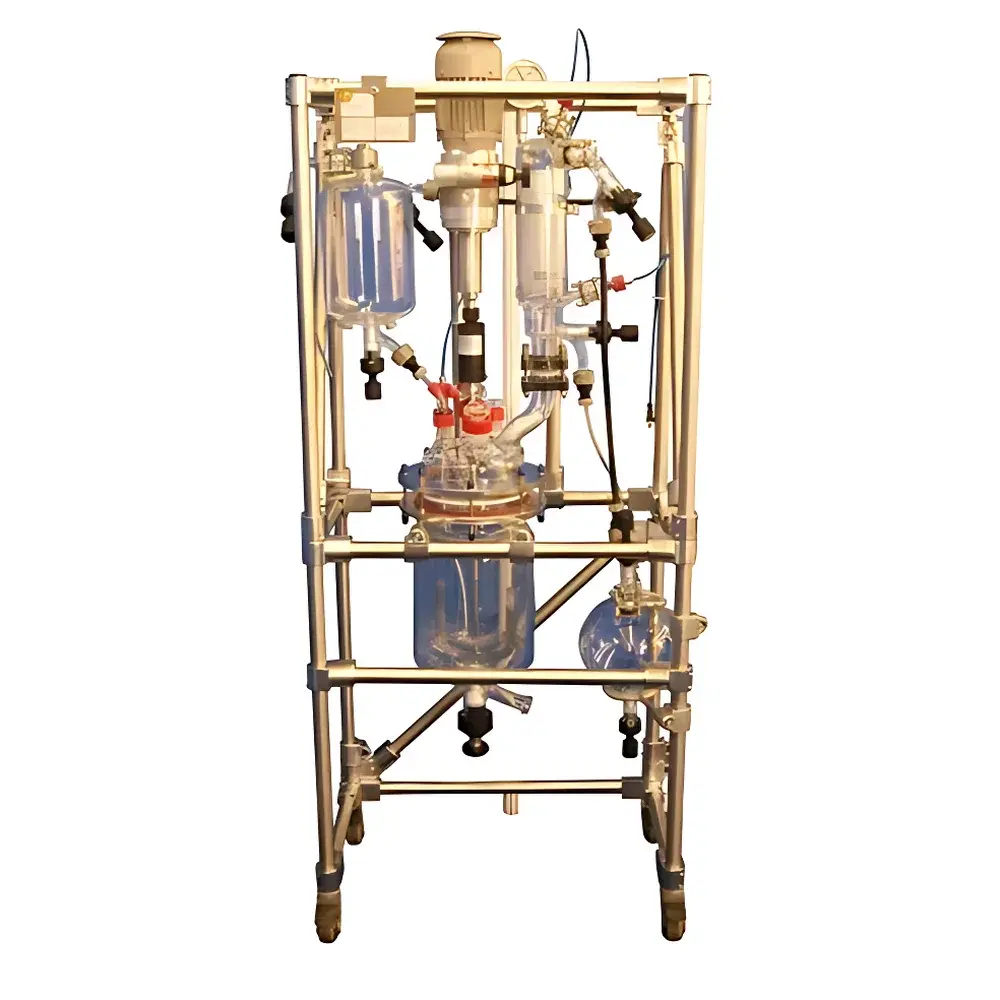
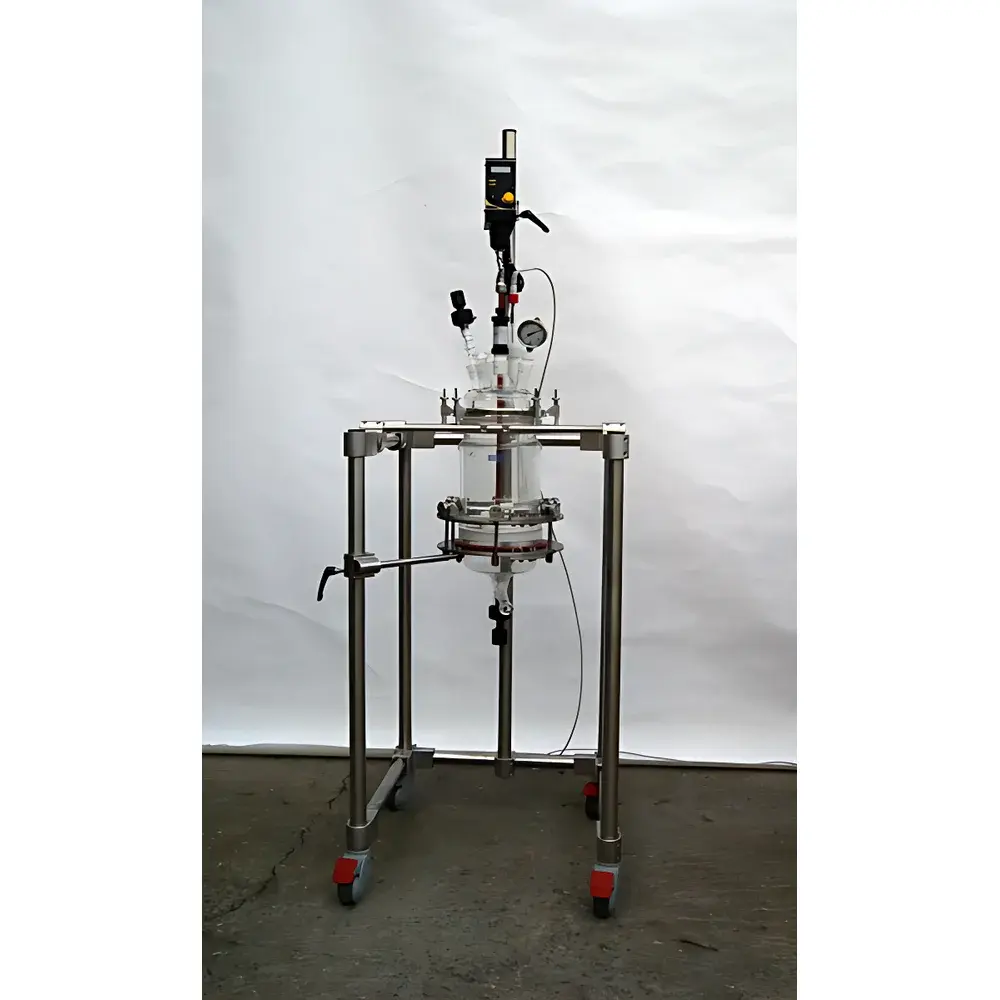
DIEHM Lab-Grade Glass Reactor
| Brand | DIEHM |
|---|---|
| Origin | Germany |
| Model Range | 15 L to 150 L |
| Working Volume | 50 L (Standard Configuration) |
| Construction Material | Borosilicate Glass 3.3 (DIN ISO 3585) |
| Operating Pressure | Low-Pressure System (≤ 0.5 bar gauge) |
| Vacuum Capability | ≤ 1 mbar (absolute) |
| Jacket Type | Double-Walled with Thermal Fluid Circulation |
| Stirring Drive | Mechanical or Electromagnetic Coupling |
| Sealing | PTFE-FKM Composite Gaskets |
| Bottom Valve | PTFE Plug Valve, Zero-Dead-Volume Design |
| Stirrer Options | Glass or PTFE-Coated SS316Ti Blades |
| Support Frame | Stainless Steel (AISI 304), Modular & Tool-Free Assembly |
| Condenser Options | Vertical or Horizontal, Exchangeable Heat Transfer Area |
| Feed Ports | Elevated Addition Funnel with Standardized GL45/GS24 Interfaces |
| Sampling Port | Integrated Ball Valve with Septum-Piercing Needle Interface |
| Compliance | Designed in Conformance with DIN 12575, ASTM E2915, and General Principles of EU GMP Annex 15 for Laboratory-Scale Process Development |
Overview
The DIEHM Lab-Grade Glass Reactor is a precision-engineered, borosilicate glass (DIN ISO 3585) reaction system designed for controlled synthesis, crystallization, hydrogenation, and process optimization under low-pressure and vacuum conditions. Based on Couette-type flow dynamics and jacketed thermal management, the reactor enables accurate temperature regulation (±0.3 °C typical stability) across the entire working volume via external circulation of heating/cooling media through its double-walled jacket. Its all-glass wetted path—comprising vessel body, lid, condenser, and feed/sampling lines—ensures full chemical inertness against strong acids, alkalis, halogenated solvents, and oxidizing reagents. The system operates within a nominal pressure range of –1 mbar to +0.5 bar (gauge), making it suitable for solvent reflux, distillation, and gentle evaporation protocols common in pharmaceutical intermediate development and fine chemical R&D.
Key Features
- Borosilicate glass 3.3 construction compliant with DIN ISO 3585 and ASTM E438 Type I, Class A specifications for thermal shock resistance (ΔT ≥ 120 °C) and hydrolytic stability (HGB 1)
- Double-jacket design with standardized SAE 10–20 mm inlet/outlet ports compatible with LAUDA, JULABO, Huber, and other major thermal circulators
- Modular lid assembly featuring 4–5 standardized ground-glass (GL45/GS24) or PTFE-lined threaded ports for thermometer, pH probe, gas inlet, reflux condenser, and mechanical stirrer drive
- Zero-dead-volume PTFE plug valve with integrated drip-free discharge mechanism and optional diaphragm-sealed sampling port
- Stirring system options include glass-bladed impellers (for non-abrasive media) or SS316Ti blades coated with 0.5 mm fluoropolymer alloy (FPA) for high-viscosity or abrasive suspensions
- Stainless steel support frame (AISI 304) engineered for load distribution up to 200 kg; includes quick-release clamps, leveling feet, and integrated cable management channels
- Condenser configurations available in vertical (Liebig, Dimroth) or horizontal (Coil-in-Jacket) formats, with heat transfer areas ranging from 0.15 to 0.85 m²
Sample Compatibility & Compliance
The reactor accommodates batch volumes from 15 L to 150 L, with standard 50 L configuration optimized for kilogram-scale process validation. Its all-glass fluid path eliminates metal leaching and surface catalysis, supporting USP extractables profiling and ICH Q5C stability testing requirements. All elastomeric seals utilize FDA-compliant FKM/PTFE composites meeting ASTM D1418 classification and ISO 3601-1:2019 standards. The modular architecture allows integration into GLP-compliant workflows: traceable calibration records for temperature and pressure transducers are maintained per ISO/IEC 17025, and mechanical agitation speed is logged with ±1 rpm resolution for audit-ready process documentation.
Software & Data Management
While the base reactor operates as a standalone analog system, optional digital integration kits support RS485/Modbus RTU or Ethernet/IP connectivity for centralized control via third-party SCADA platforms (e.g., Siemens Desigo, Ignition SCADA). Temperature, pressure, stirring speed, and condenser coolant flow can be logged at user-defined intervals (1–60 s) with timestamped CSV export. Optional data acquisition modules comply with FDA 21 CFR Part 11 requirements—including electronic signatures, audit trails, and role-based access control—when deployed with validated software environments. All firmware updates follow IEC 62443-3-3 security guidelines.
Applications
- Pharmaceutical process development: Grignard reactions, enantioselective catalysis, and API crystallization under inert atmosphere
- Agrochemical formulation: Emulsion polymerization and suspension concentrate (SC) stabilization studies
- Materials science: Sol-gel synthesis of metal oxides (SiO₂, TiO₂) and colloidal quantum dot preparation
- Academic research: Kinetic modeling of exothermic nitration or esterification under controlled heat removal
- Quality control labs: Reproducible batch replication for reference standard preparation per ISO 17034
FAQ
What is the maximum allowable operating temperature for the glass vessel?
The borosilicate glass 3.3 body is rated for continuous operation up to 150 °C at ambient pressure; short-term excursions to 200 °C are permissible under controlled ramping conditions.
Can the reactor be used under full vacuum (≤ 0.1 mbar)?
Yes—the vessel and jacket are tested to 0.01 mbar absolute pressure per DIN 28120; however, prolonged operation below 1 mbar requires verification of seal integrity and condenser backpressure limits.
Is custom geometry or port layout available?
DIEHM offers engineering-led customization including non-standard diameters (DN200–DN500), bespoke lid drilling patterns, and integration of sight glasses or ultrasonic probes per client technical specification.
Does the system meet GMP requirements for pilot-scale manufacturing?
While classified as laboratory equipment, the reactor’s design adheres to core GMP Annex 15 principles—traceable materials, documented qualification (IQ/OQ), and configurable process logging—enabling direct technology transfer to cGMP production reactors.
What maintenance intervals are recommended for the PTFE bottom valve?
Under normal use (≤ 5 cycles/day), the PTFE valve seat should be inspected every 500 operational hours; replacement is advised after 2,000 hours or upon visible deformation or leakage during vacuum hold tests.



