
EME Guard Electromagnetic Field Strength Analyzer (France-imported, Model EME Guard)
| Origin | France |
|---|---|
| Manufacturer Type | Authorized Distributor |
| Origin Category | Imported |
| Model | EME Guard |
| Pricing | Available Upon Request |
Overview
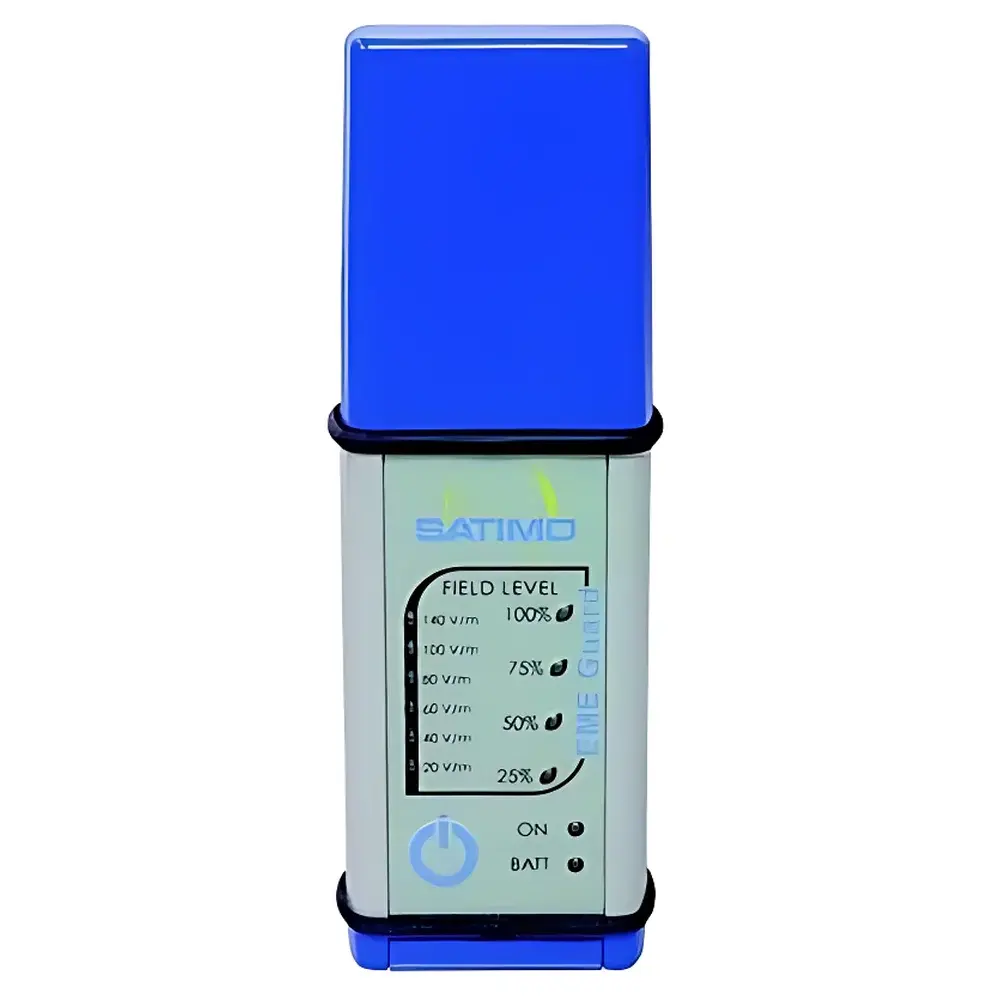
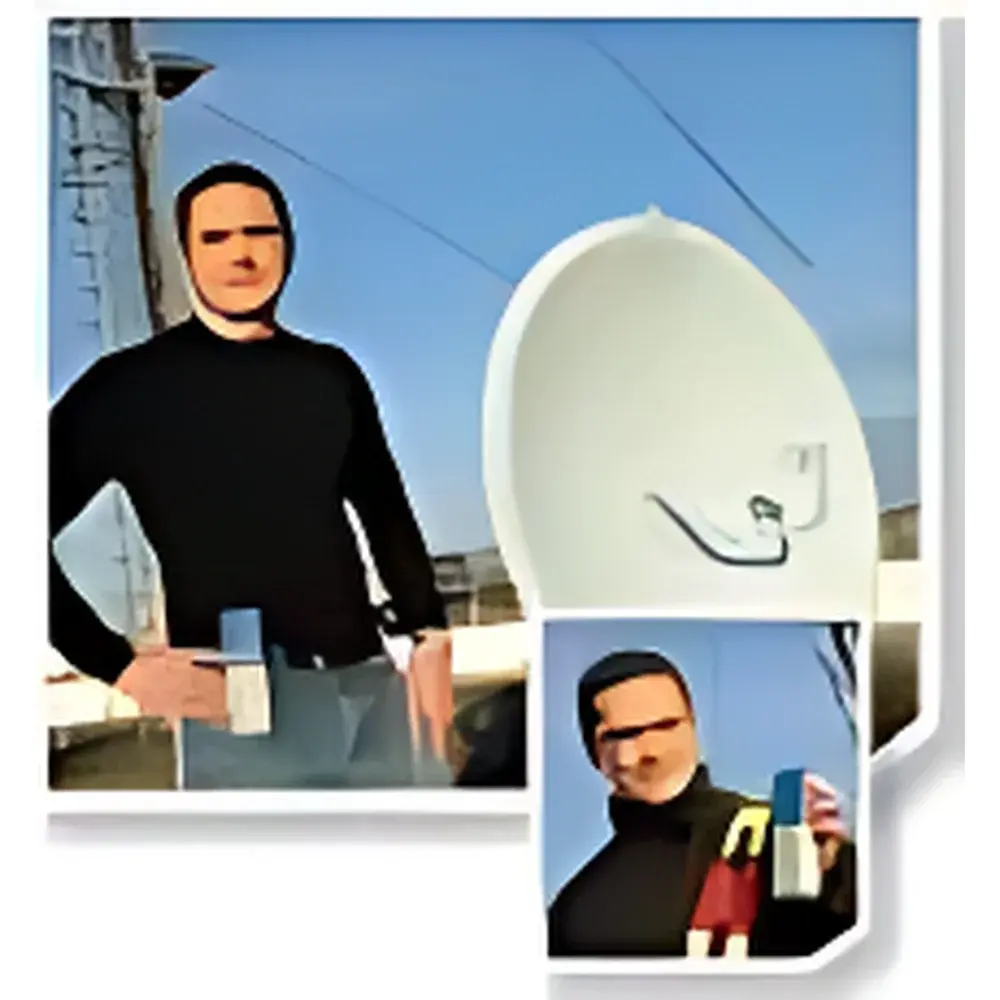
The EME Guard Electromagnetic Field Strength Analyzer is a CE-certified, portable personal RF exposure monitor engineered for real-time, isotropic assessment of electromagnetic field (EMF) intensity across an ultra-wide frequency spectrum—from 27 MHz to 40 GHz. Designed in accordance with international RF safety frameworks—including ICNIRP 2020, FCC OET Bulletin 65 Supplement C, Health Canada Safety Code 6 (2022), and EU Directive 2013/35/EU (replacing 2004/40/EC)—the device implements triaxial electric field sensing to deliver true RMS field strength measurements (V/m) independent of incident wave polarization or orientation. Its compact, ergonomic form factor (172 × 60 × 35 mm, 320 g) enables hands-free operation via belt clip, shoulder strap, or pocket mounting—making it suitable for occupational monitoring during antenna maintenance, site surveys near broadcast towers, radar installations, 5G small cells, and industrial RF heating equipment. The instrument operates on a rechargeable lithium-ion battery with >100 hours of continuous runtime and features IP55-rated ingress protection against dust and low-pressure water jets.
Key Features
- Triaxial isotropic E-field probe calibrated traceably to national metrology institutes; axial isotropy ±1 dB at 1400 MHz, ±2 dB at 2100 MHz
- Real-time dual-mode alarm system: visual (four-stage LED bar graph: 25%/50%/75%/100% of user-defined threshold), audible (adjustable tone from 5–137 V/m), and tactile (vibration feedback)
- User-configurable exposure thresholds: six preset reference levels (20, 40, 60, 80, 100, 140 V/m) with selectable averaging window (instantaneous or 6-minute time-weighted average per ICNIRP guidelines)
- Onboard data logging: up to 30,000 timestamped records with programmable sampling intervals (1–255 seconds); measurement update rate: 1 Hz
- Comprehensive frequency response characterization: ±3 dB (27 MHz–2.5 GHz), +6/0 dB (2.5–6 GHz), +12/+6 dB (6–10 GHz), +10/0 dB (10–20 GHz), +8/−3 dB (20–40 GHz)
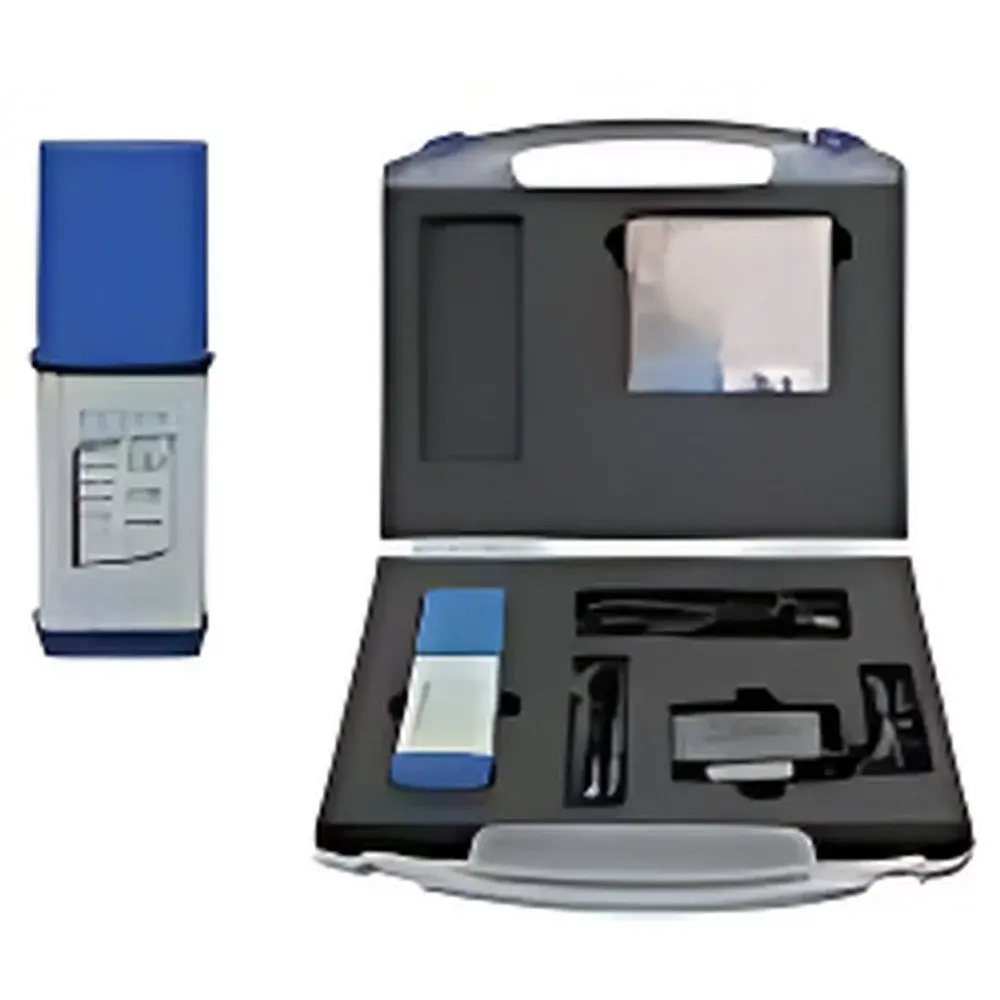
- USB interface for firmware updates, configuration management, and post-processing via included EME Guard Analysis Software (Windows-compatible)
Sample Compatibility & Compliance
The EME Guard is validated for use in heterogeneous RF environments typical of telecom infrastructure (FM/AM broadcast, DAB/DVB-T, LTE, 5G NR n78/n257/n260), radar systems (S-, C-, X-, Ku-, K-bands), microwave ovens, industrial dielectric heaters, and medical diathermy units. It complies with the essential requirements of the EU Electromagnetic Compatibility Directive 2014/30/EU and the Radio Equipment Directive 2014/53/EU. Each unit ships with an accredited calibration certificate traceable to LNE (Laboratoire National de Métrologie et d’Essais, France), documenting full-spectrum verification at key frequencies (e.g., 900 MHz, 1800 MHz, 2.45 GHz, 5.8 GHz, 10 GHz, 24 GHz, 39 GHz). The device supports audit-ready documentation workflows aligned with ISO/IEC 17025 laboratory quality management systems and facilitates GLP-compliant exposure recordkeeping.
Software & Data Management
The bundled EME Guard Analysis Software provides secure, password-protected configuration of alarm thresholds, logging parameters, and unit preferences. Raw measurement files (.csv/.emg) retain full metadata—including GPS coordinates (when paired with optional GNSS module), temperature, battery status, and sensor ID. Exported datasets include calculated exposure ratios relative to ICNIRP/FCC limits per frequency band, enabling automated compliance reporting. Audit trail functionality logs all configuration changes with timestamps and operator IDs—supporting FDA 21 CFR Part 11–aligned electronic record integrity where required. Software updates are delivered via signed firmware packages verified through SHA-256 checksums.
Applications
- Occupational health & safety officers conducting RF exposure assessments for telecom tower climbers, broadcast engineers, and radar technicians
- Regulatory inspectors performing compliance audits at mobile network base stations, AM/FM transmitter sites, and satellite earth stations
- Facility managers monitoring EMF levels in hospitals (near MRI fringe fields), laboratories, and manufacturing plants using RF plasma or induction heating
- Environmental consultants mapping ambient RF background in urban and rural zones per national monitoring protocols
- Research teams studying long-term low-level RF exposure in epidemiological field studies requiring personal dosimetry
FAQ
Is the EME Guard suitable for measuring near-field emissions from small antennas or PCBs?
Yes—the triaxial probe’s miniaturized sensor geometry and optimized spatial averaging response enable reliable measurements within reactive near-field regions, provided minimum source-to-probe distances comply with IEEE Std 1308-2013 guidance.
Does the device support simultaneous multi-band analysis?
No—it performs broadband scalar E-field measurement only; spectral decomposition requires external spectrum analyzers or FFT-capable receivers.
Can the calibration certificate be extended beyond initial issuance?
Yes—traceable recalibration services are available annually through authorized service centers, with certificates issued per ISO/IEC 17025 requirements.
What environmental conditions affect measurement accuracy?
Operation is rated for −10 °C to +50 °C and ≤85% RH non-condensing; extreme thermal gradients may induce minor drift (<±0.5 dB) until thermal equilibrium is reached.
Is USB communication encrypted or authenticated?
Data transfer uses standard CDC ACM protocol without encryption; however, configuration write access requires software-level authentication to prevent unauthorized parameter modification.
Related Products







