
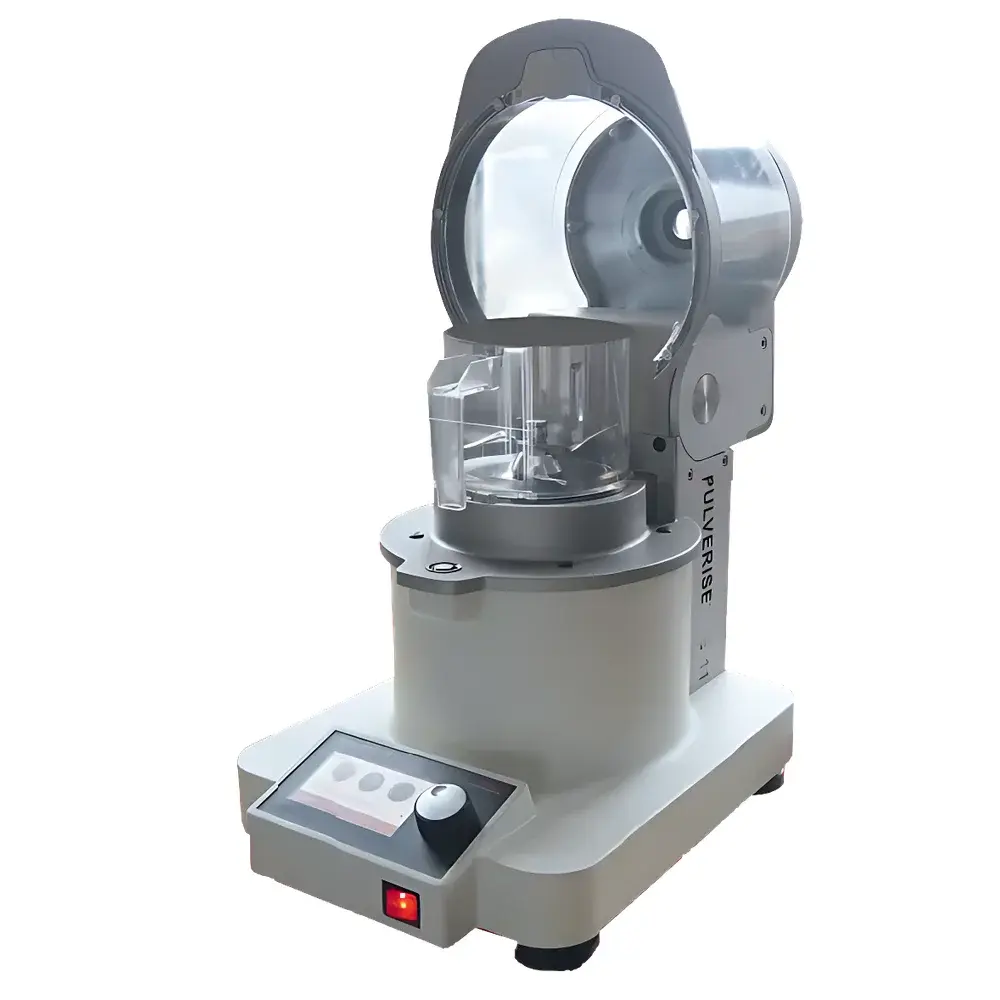
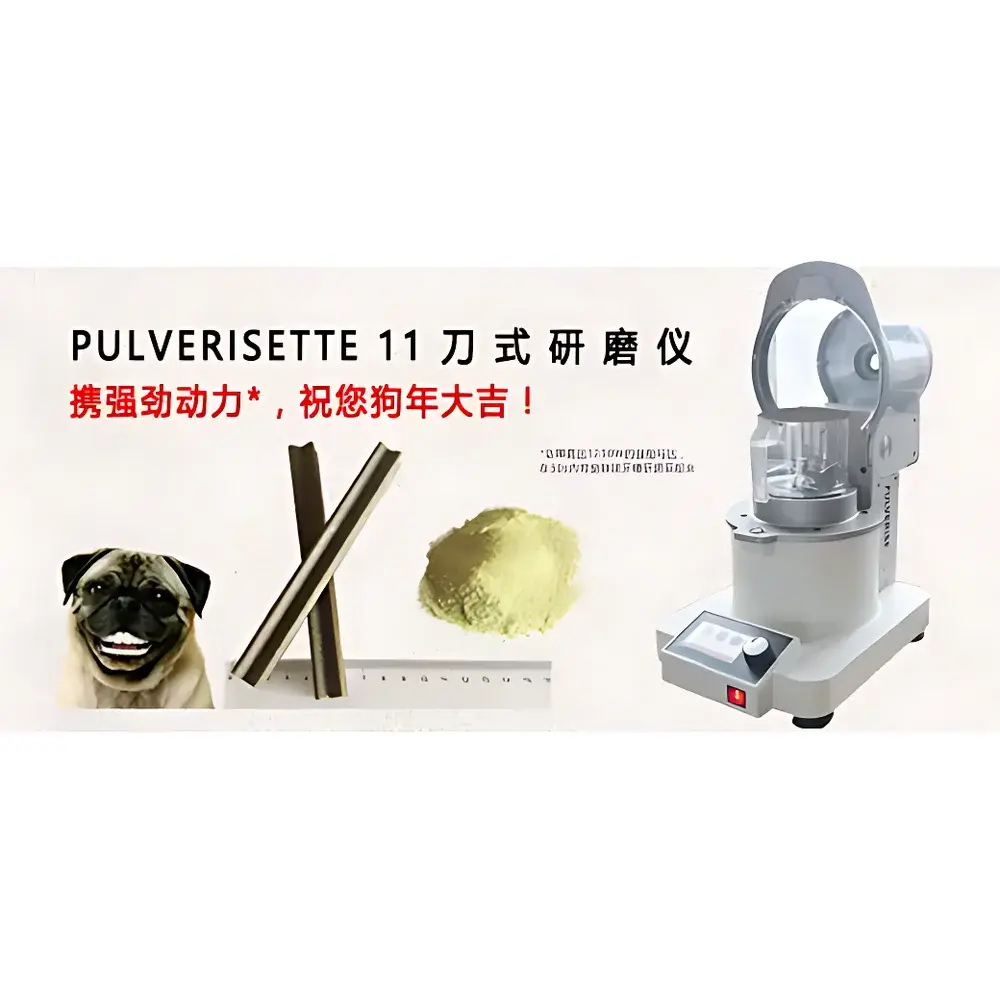
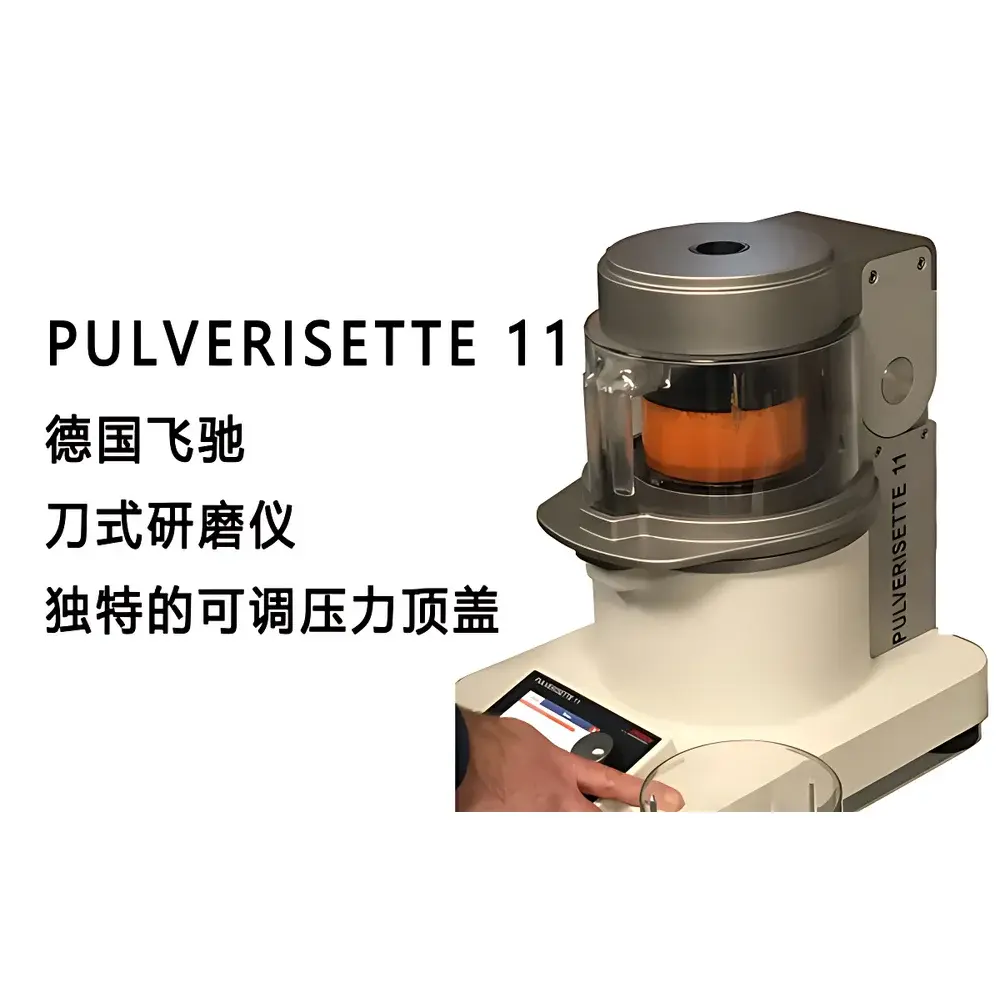
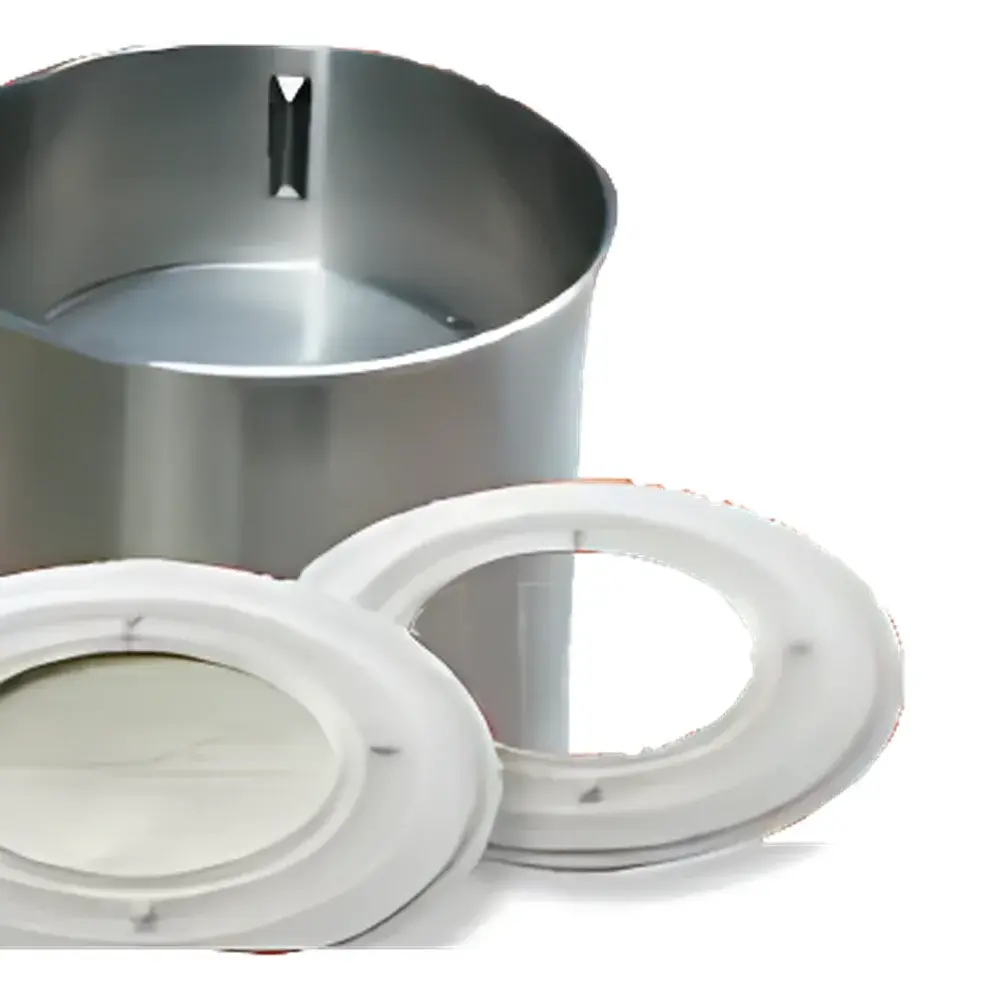
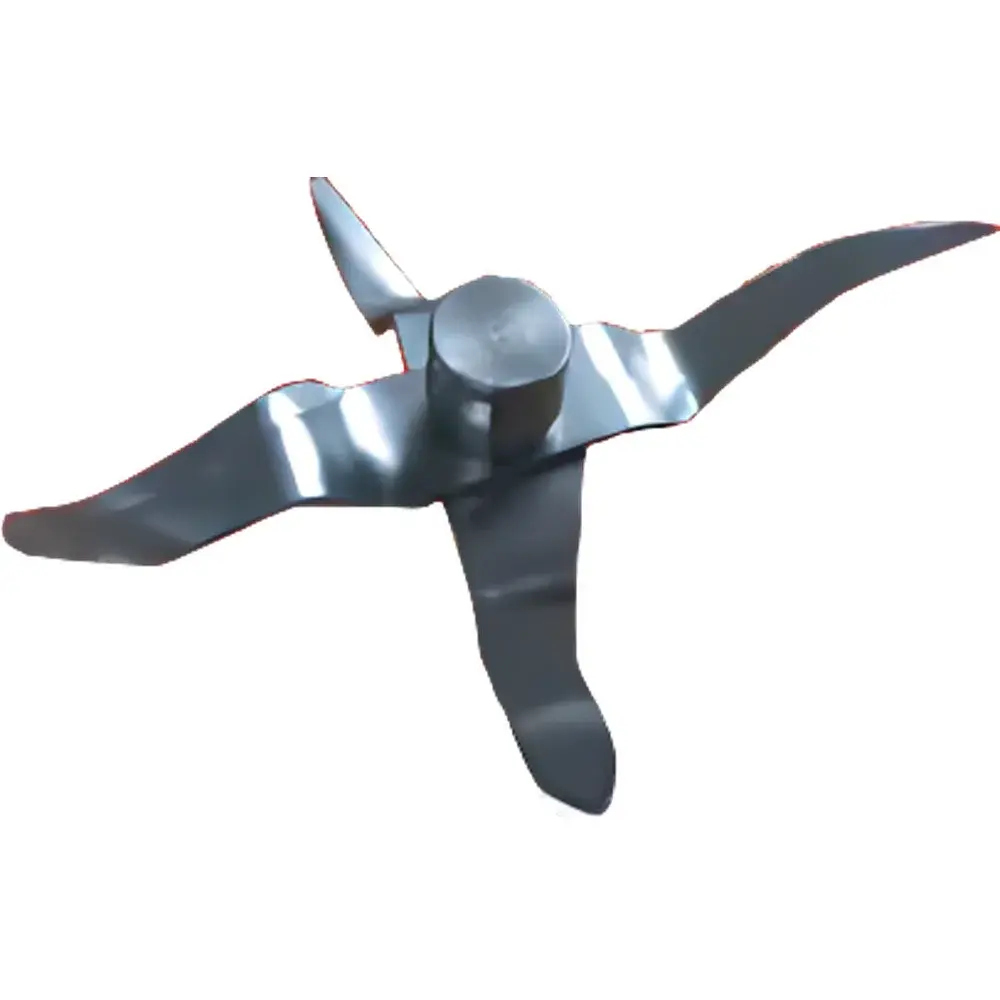
FRITSCH P-11 Knife Mill
| Brand | FRITSCH |
|---|---|
| Origin | Germany |
| Manufacturer | FRITSCH GmbH |
| Type | Knife Mill |
| Model | P-11 |
| Sample Compatibility | Wet, oily, fatty, dry, soft, medium-hard, fibrous, and cryogenic samples |
| Maximum Feed Size | < 40 mm |
| Final Particle Size Range | 0.01–0.5 mm (10–500 µm) |
| Typical Output Particle Size | < 300 µm |
| Batch Capacity | 1.3 L |
| Motor Power | 1250 W |
| Blade Configuration | Up to 4 specially engineered, replaceable stainless steel knives |
| Noise Level | Optimized for low-noise laboratory operation |
| Compliance | CE, ISO 9001 certified design |
Overview
The FRITSCH P-11 Knife Mill is a high-performance, laboratory-scale comminution instrument engineered for reproducible, gentle, and efficient size reduction of heterogeneous organic and inorganic materials. Operating on the principle of high-speed rotary shearing—where precisely angled, hardened stainless steel knives impact and cut samples against a fixed counter-cutting surface—the P-11 delivers consistent particle size distribution without excessive heat generation or mechanical degradation. Its design prioritizes sample integrity, particularly for thermolabile, high-fat, high-moisture, or fibrous matrices commonly encountered in food science, animal nutrition, pharmaceutical R&D, and environmental testing. Unlike rotor-stator homogenizers or jaw crushers, the P-11’s knife-based architecture enables simultaneous cutting, shredding, and mixing in a single step, minimizing processing time while preserving biochemical composition—critical for downstream analytical workflows such as HPLC, GC-MS, or proximate analysis.
Key Features
- 1250 W brushless motor delivering stable torque across variable load conditions, ensuring uniform throughput even with dense or adhesive samples (e.g., chocolate, cured meats, wet botanicals)
- Modular knife system with up to four interchangeable, cryo-compatible stainless steel blades—each geometry optimized for specific material classes (soft/fibrous vs. hard/brittle)
- Acoustically damped housing and vibration-isolated base reduce operational noise to ≤72 dB(A), meeting ISO 11201 laboratory ambient requirements
- Interlocked safety lid with position-sensing switch halts rotation immediately upon opening—compliant with EN 61000-6-2 EMC and EN 60204-1 machinery safety directives
- Quick-release grinding chamber (1.3 L capacity) fabricated from corrosion-resistant, FDA-compliant polymer; fully autoclavable and traceable via laser-engraved serial number
- Adjustable speed control (3,000–10,000 rpm) with digital tachometer feedback for method reproducibility and SOP alignment
Sample Compatibility & Compliance
The P-11 accommodates a broad spectrum of sample types without pre-drying or pre-freezing—though optional liquid nitrogen cooling ports support cryogenic milling of heat-sensitive polymers or biological tissues. Validated applications include raw meat, dairy products, cereal grains, feed pellets, pharmaceutical tablets, rubber compounds, and composite plastics. All wet-contact components comply with EU Regulation (EC) No. 1935/2004 for food contact materials and USP for plastic packaging. The instrument’s mechanical design adheres to ISO 17025:2017 clause 6.4.3 (equipment suitability verification), and routine performance qualification (PQ) protocols are supported by FRITSCH’s GxP-ready documentation package—including calibration certificates traceable to DKD/DAkkS standards.
Software & Data Management
While the P-11 operates as a standalone benchtop unit with analog speed control, it integrates seamlessly into regulated environments via optional FRITSCH LabSoft™ v4.2 software (sold separately). This Windows-based platform enables full audit trail functionality per FDA 21 CFR Part 11—recording operator ID, timestamp, speed setpoint, runtime, and chamber temperature (when paired with optional IR sensor module). Electronic signatures, role-based access control, and encrypted data export (CSV, PDF, XML) support GLP/GMP compliance. Method templates can be locked, version-controlled, and exported for cross-laboratory harmonization—particularly valuable in multi-site quality control networks.
Applications
- Food & Agriculture: Homogenization of meat composites for fat/protein analysis (AOAC 991.36), grinding of feedstuffs prior to NIRS calibration, preparation of spice blends for volatile oil extraction
- Pharmaceuticals: Reduction of tablet excipients for content uniformity testing (USP ), size control of herbal extracts prior to dissolution studies
- Environmental: Pulverization of soil aggregates for heavy metal leaching assays (EPA Method 1311), comminution of microplastic-laden sediment cores
- Materials Science: Pre-treatment of polymer composites for SEM-EDS elemental mapping, size standardization of recycled rubber granules for rheological characterization
FAQ
Can the P-11 process frozen or cryogenic samples?
Yes—the grinding chamber and blade assembly are rated for continuous operation at –20 °C, and optional LN₂ jacketing permits milling down to –80 °C without condensation or brittleness-induced fracture.
Is blade wear monitored automatically?
No real-time wear sensing is built-in; however, FRITSCH provides a blade life estimator based on cumulative runtime and sample hardness index (SHI), with recommended replacement intervals documented in the PQ manual.
How does the P-11 compare to rotor-beater mills for fibrous samples?
Unlike centrifugal beater mills that rely on impact fragmentation, the P-11’s controlled shear action minimizes fiber liberation artifacts—preserving structural morphology critical for histological or textile fiber identification workflows.
Does FRITSCH supply validation documentation for regulated labs?
Yes—IQ/OQ/PQ protocols, metrological traceability reports, and 21 CFR Part 11 conformance statements are available under NDA upon request and form part of the instrument’s delivery dossier.



