
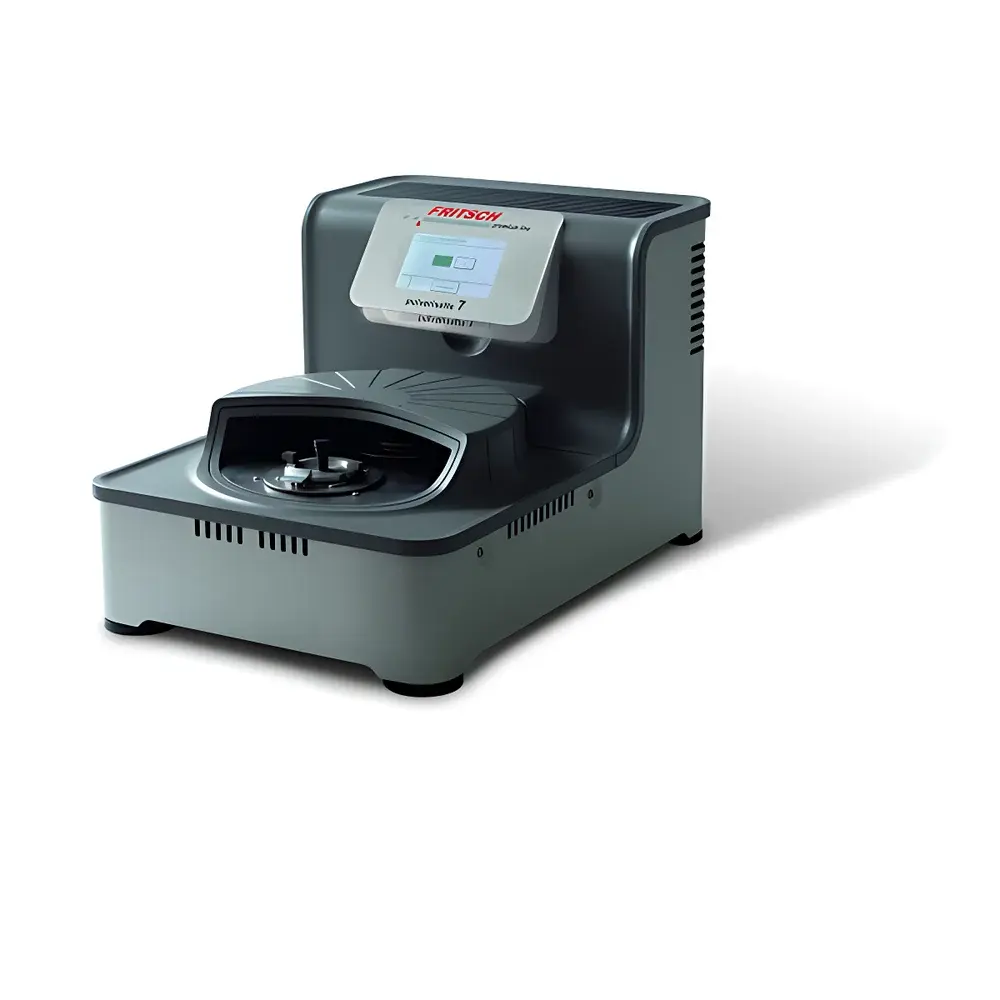
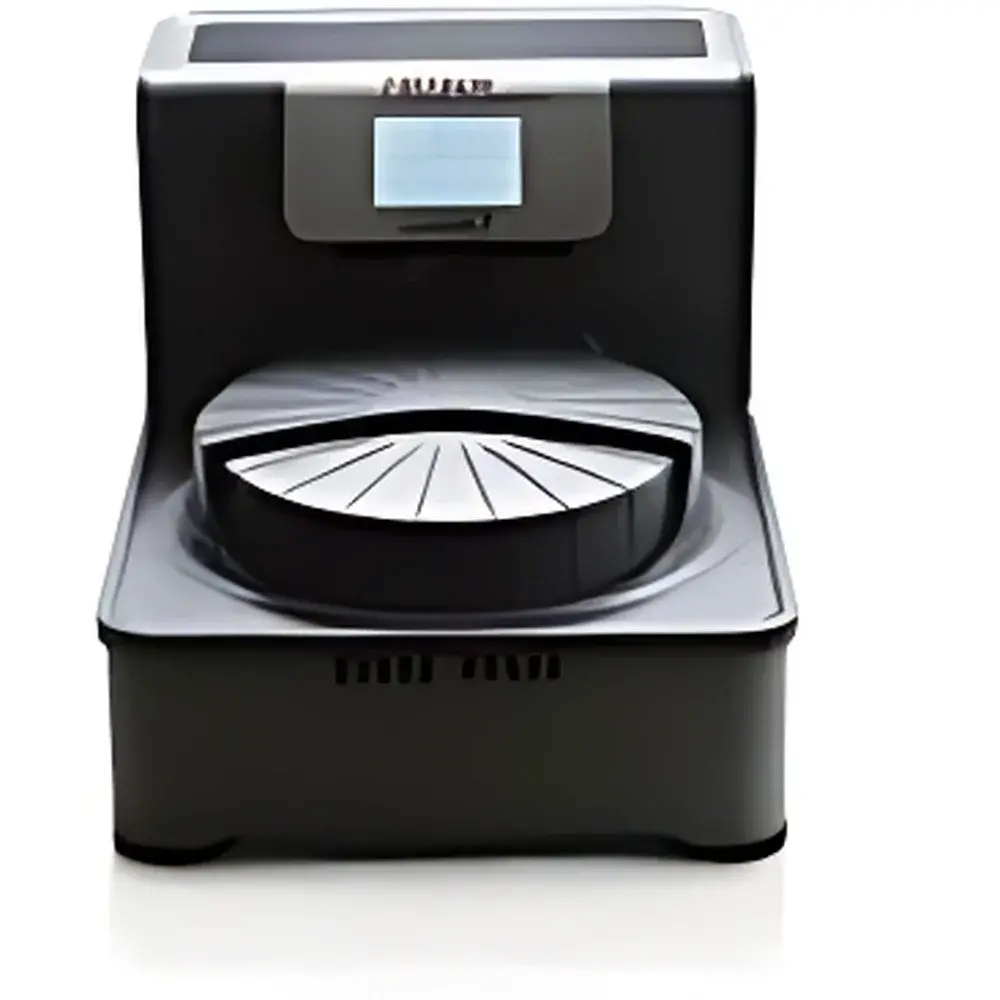
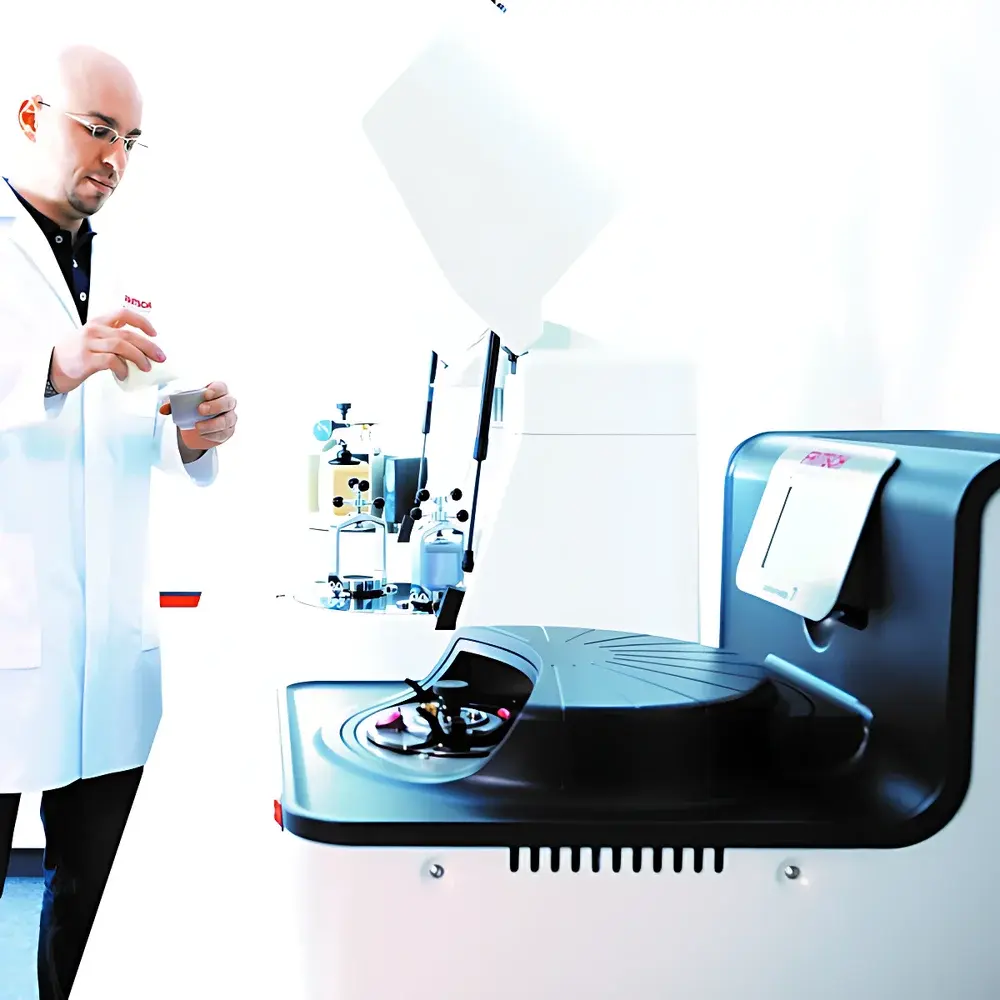
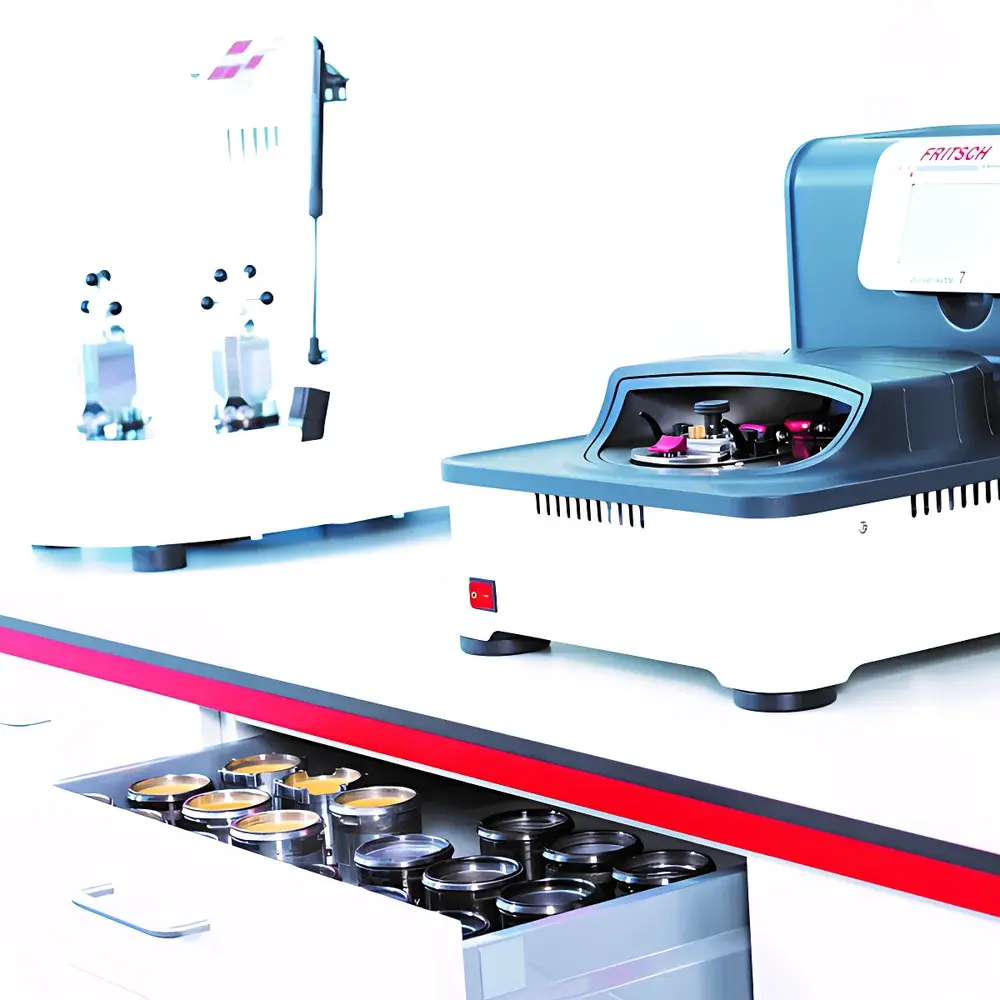
Fritsch P-7 premium Planetary Micro Mill
| Brand | Fritsch |
|---|---|
| Country of Origin | Germany |
| Manufacturer | Fritsch GmbH |
| Product Type | Planetary Ball Mill |
| Model | P-7 premium |
| Sample Type | Hard, brittle, fibrous, or composite materials |
| Maximum Feed Size | < 5 mm |
| Batch Volume | 70 mL (max) |
| Final Particle Size | < 0.1 µm |
| Grinding Bowl Volumes | 12 mL, 45 mL, 80 mL |
| Grinding Media Diameters | 3, 5, 10, 15, 20 mm |
| Grinding Modes | Dry and Wet |
| Inert Atmosphere Capability | Yes (gas-tight sealing with optional gas inlet) |
| Main Drive Speed | Up to 1100 rpm |
| Power Supply | 100–240 V, 1–, 50–60 Hz, 1100 W |
| Net Weight | 44 kg |
| Dimensions (W × H × D) | 40 × 58 × 36 cm |
| Compliance | CE, RoHS, ISO 9001-certified manufacturing |
| Data Interface | USB 2.0, Bluetooth 4.2, Ethernet (optional) |
Overview
The Fritsch P-7 premium is a high-energy planetary micro mill engineered for reproducible, contamination-controlled size reduction of hard, brittle, and temperature-sensitive materials down to the nanoscale. Operating on the principle of planetary motion—where grinding bowls rotate around a central axis while simultaneously rotating on their own axes—the instrument generates intense centrifugal acceleration (up to 65 g), enabling efficient particle fracture via combined impact, shear, and friction forces. Unlike conventional mills, the P-7 premium achieves final particle sizes below 0.1 µm without requiring post-milling classification or dispersion steps, making it suitable for advanced material synthesis, catalyst preparation, pharmaceutical solid-state research, and nanocomposite development. Its compact footprint and modular bowl design support laboratory-scale R&D workflows where sample integrity, traceability, and process control are critical.
Key Features
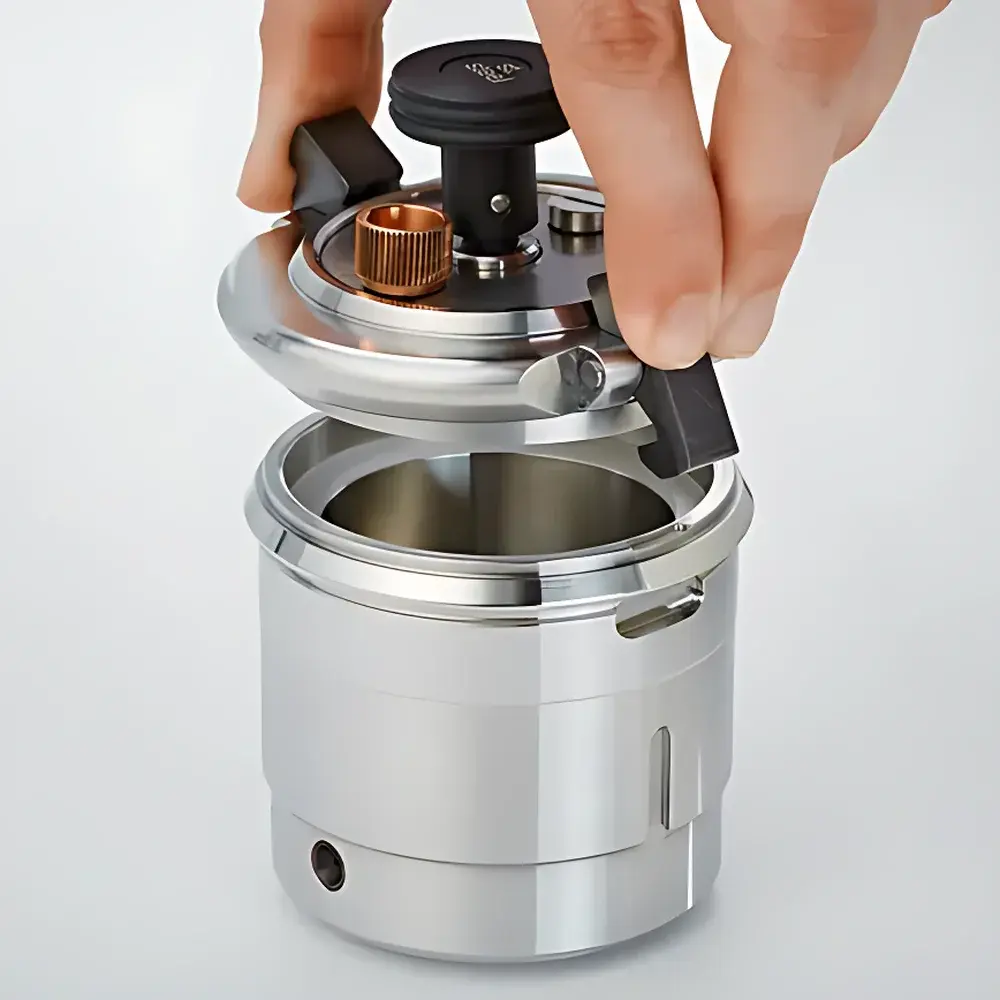
- Gas-tight grinding bowls (12 mL, 45 mL, 80 mL) with integrated inert gas purging ports for oxygen- or moisture-sensitive processing (e.g., Li-ion battery cathode precursors, metal-organic frameworks)
- Patented self-locking bowl clamping mechanism ensuring mechanical stability and leak-free operation at rotational speeds up to 1100 rpm
- Precision programmable parameters: grinding time (1 s–99 h 59 min), pause intervals, speed ramping profiles, and real-time speed monitoring
- Seven certified grinding media materials—including agate, silicon nitride, alumina, zirconia, stainless steel, hardened steel, and tungsten carbide—to minimize elemental cross-contamination
- Dual-bowl configuration allows parallel processing of two independent samples under identical or differentiated protocols
- Integrated thermal management system with configurable cooling pauses to suppress amorphization and phase transitions during prolonged milling
- Full digital connectivity via USB 2.0, Bluetooth 4.2, and optional Ethernet for remote parameter upload, firmware updates, and audit-ready data export
Sample Compatibility & Compliance
The P-7 premium accommodates diverse sample classes: metals, ceramics, alloys, polymers, pharmaceutical actives, geological specimens, and biological matrices (after lyophilization). It supports both dry grinding and wet milling in solvents such as ethanol, isopropanol, or hexane. All contact surfaces comply with USP Class VI and FDA 21 CFR Part 11 requirements for electronic records when used with validated software configurations. Grinding bowls and media are manufactured under ISO 9001 quality management systems and tested for dimensional consistency and surface roughness (Ra < 0.2 µm). The instrument meets CE marking directives (2014/30/EU EMC, 2014/35/EU LVD) and RoHS 2011/65/EU restrictions on hazardous substances.
Software & Data Management
Fritsch’s proprietary EASY MILL software (v4.2+) provides full lifecycle control—from method creation and execution logging to raw data export in CSV or XML format. Each grinding run is timestamped and assigned a unique ID; operator login, parameter sets, bowl/media identifiers, and environmental logs (e.g., ambient temperature, gas pressure) are stored locally and synchronizable to network drives. Audit trails include user-modified values, system alerts (e.g., overtemperature, imbalance detection), and calibration timestamps. For regulated environments, optional 21 CFR Part 11-compliant modules enable electronic signatures, role-based access control, and immutable record retention aligned with GLP and GMP documentation standards.
Applications
- Nanoparticle synthesis for catalysis (e.g., NiFe₂O₄ spinels, TiO₂ anatase/rutile hybrids)
- Amorphization and mechanochemical activation of APIs to enhance dissolution kinetics
- Preparation of ultrafine ceramic powders for sintering studies (Al₂O₃, Y₂O₃, SiC)
- Mechanochemical synthesis of MOFs and covalent organic frameworks (COFs)
- Homogenization of composite electrode slurries for battery R&D
- Reduction of geological reference materials (e.g., NIST SRM 278, BCR-1) to sub-100 nm fractions for geochemical analysis
- Disruption of hardened tissue samples for proteomic extraction protocols
FAQ
What is the minimum achievable particle size with the P-7 premium?
Under optimized conditions (zirconia bowls, 10 mm media, inert atmosphere, 30–60 min milling), D₉₀ values consistently fall below 0.1 µm, with sub-50 nm modes observed via TEM and laser diffraction.
Can the instrument be validated for GMP use?
Yes—when paired with IQ/OQ documentation packages and EASY MILL’s Part 11 module, the system supports installation qualification, operational qualification, and routine performance verification per ASTM E2500 and ISO/IEC 17025 guidelines.
Is cryogenic milling supported?
No internal cryo-cooling is integrated; however, pre-chilled bowls and media may be used within ambient lab conditions (<25°C) for thermally sensitive materials.
How is cross-contamination prevented between runs?
Bowl and media surfaces are chemically inert and mechanically polished; cleaning protocols (ultrasonic + solvent rinse) are validated per SOPs and documented in the instrument’s logbook.
Does the P-7 premium support remote diagnostics?
Yes—Bluetooth and Ethernet interfaces allow secure remote access for firmware diagnostics, error code interpretation, and predictive maintenance alerts via Fritsch’s cloud-based service portal.



