
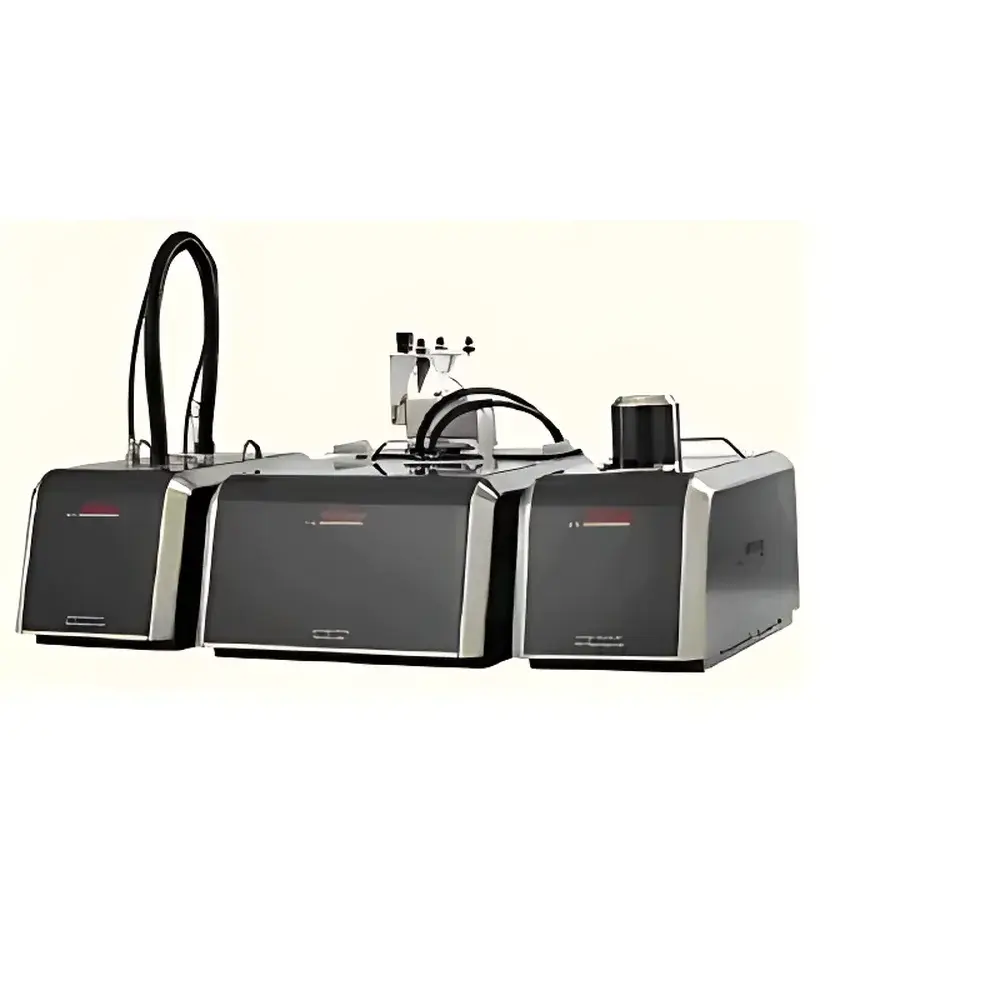
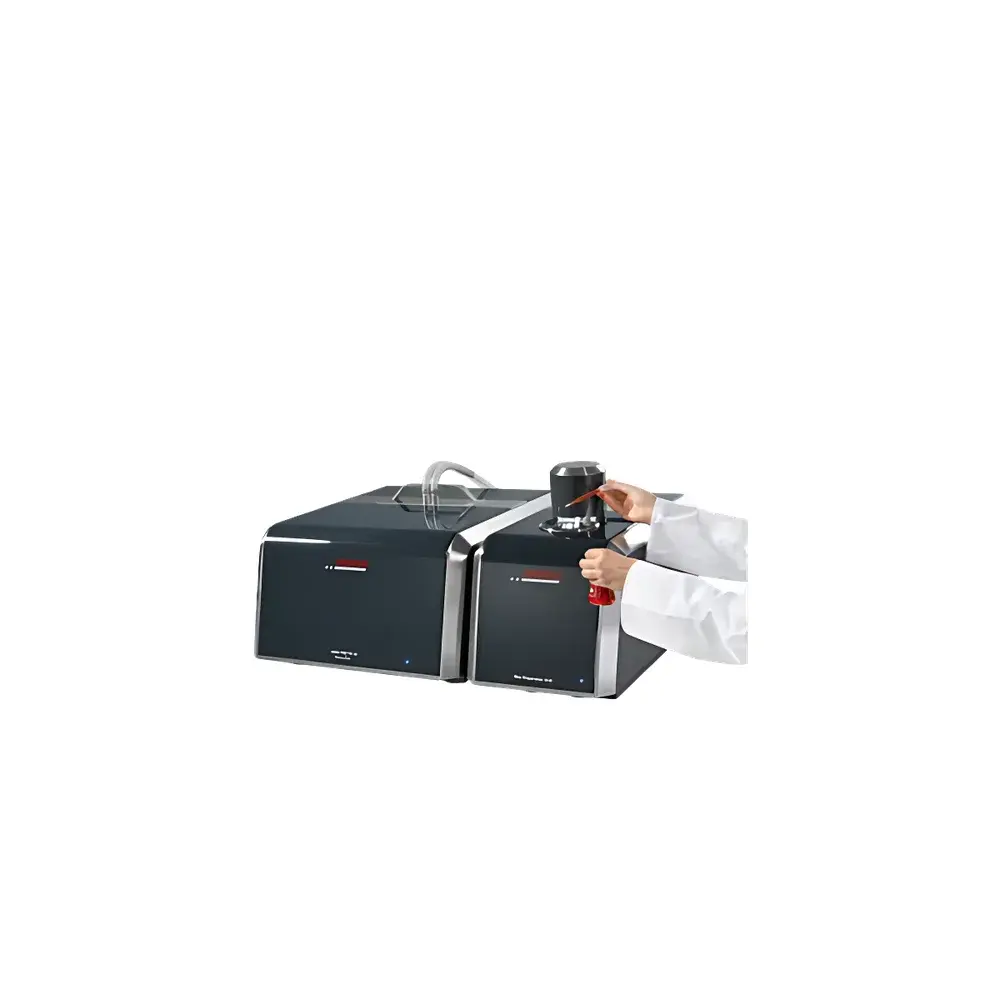
Fritsch Analysette 22 NanoTec Laser Particle Size Analyzer
| Brand | Fritsch |
|---|---|
| Origin | Germany |
| Manufacturer Type | Manufacturer |
| Origin Category | Imported |
| Model | Analysette 22 NanoTec |
| Dispersion Method | Dry & Wet Dispersion |
| Instrument Type | Laboratory Laser Particle Size Analyzer |
| Measurement Range | 0.01–2100 µm |
| Repeatability | <0.5% |
| Measurement Time | 5–10 s (per single measurement) |
Overview
The Fritsch Analysette 22 NanoTec is a high-precision, dual-laser laboratory particle size analyzer engineered for comprehensive granulometric characterization across an exceptionally wide dynamic range—from sub-10 nm colloidal nanoparticles to coarse particles up to 2100 µm. It operates on the physical principle of laser diffraction (Mie and Fraunhofer light scattering theory), optimized through a patented inverse Fourier optical configuration with two independently collimated laser sources (532 nm green and 940 nm infrared). This dual-wavelength architecture enables simultaneous detection of both fine-mode scattering intensity (enhanced sensitivity below 100 nm) and coarse-mode angular distribution (improved resolution above 10 µm), eliminating the need for instrument reconfiguration or sample dilution adjustments across broad size distributions. Designed and manufactured in Germany, the NanoTec integrates optical, fluidic, and electronic subsystems into a single robust platform compliant with ISO 13320:2020 for laser diffraction particle sizing—ensuring traceable, internationally recognized measurement validity.
Key Features
- Dual-laser optical system: 532 nm (green) and 940 nm (IR) coherent sources with independent beam paths and dedicated detectors, enabling extended low-end sensitivity and high angular resolution
- Inverse Fourier optical design with interchangeable focal-length lenses (260 mm and 560 mm), supporting optimized signal capture for both nano- and macro-particle regimes
- 108-channel high-resolution photodetector array with automatic beam alignment and real-time intensity normalization
- Modular wet dispersion unit with computer-controlled volumetric selection (300 / 400 / 500 mL), variable-speed radial pump, and adjustable ultrasonic probe—no mechanical stirrer required
- Cartridge-style measurement cell design: tool-free, rapid exchange of optical modules for maintenance or method adaptation
- Independent separation of optical measurement zone and dispersion loop—minimizing cross-contamination and enabling solvent compatibility with aqueous and organic media (e.g., isopropanol, ethanol, cyclohexane)
- Single-measurement acquisition time of 5–10 seconds; full automated cycle (dispersion, measurement, cleaning) completed in ≤2 minutes
Sample Compatibility & Compliance
The Analysette 22 NanoTec accommodates suspensions in water, polar organic solvents (e.g., isopropanol, methanol), and non-polar media (e.g., xylene, toluene), subject to refractive index matching and chemical compatibility with wet-loop materials (stainless steel 1.4404, PTFE, FKM seals). Dry dispersion is supported via optional integrated air-jet module for cohesive powders. All measurements adhere strictly to ISO 13320:2020 requirements for instrument calibration, validation protocols, and data reporting—including mandatory Mie theory parameter input (particle refractive index, dispersant RI) and uncertainty estimation per clause 7.4. The system supports audit-ready operation under GLP and GMP environments: raw data files retain unprocessed detector intensities, timestamped metadata, and operator ID; software logs all parameter changes and calibration events in immutable format.
Software & Data Management
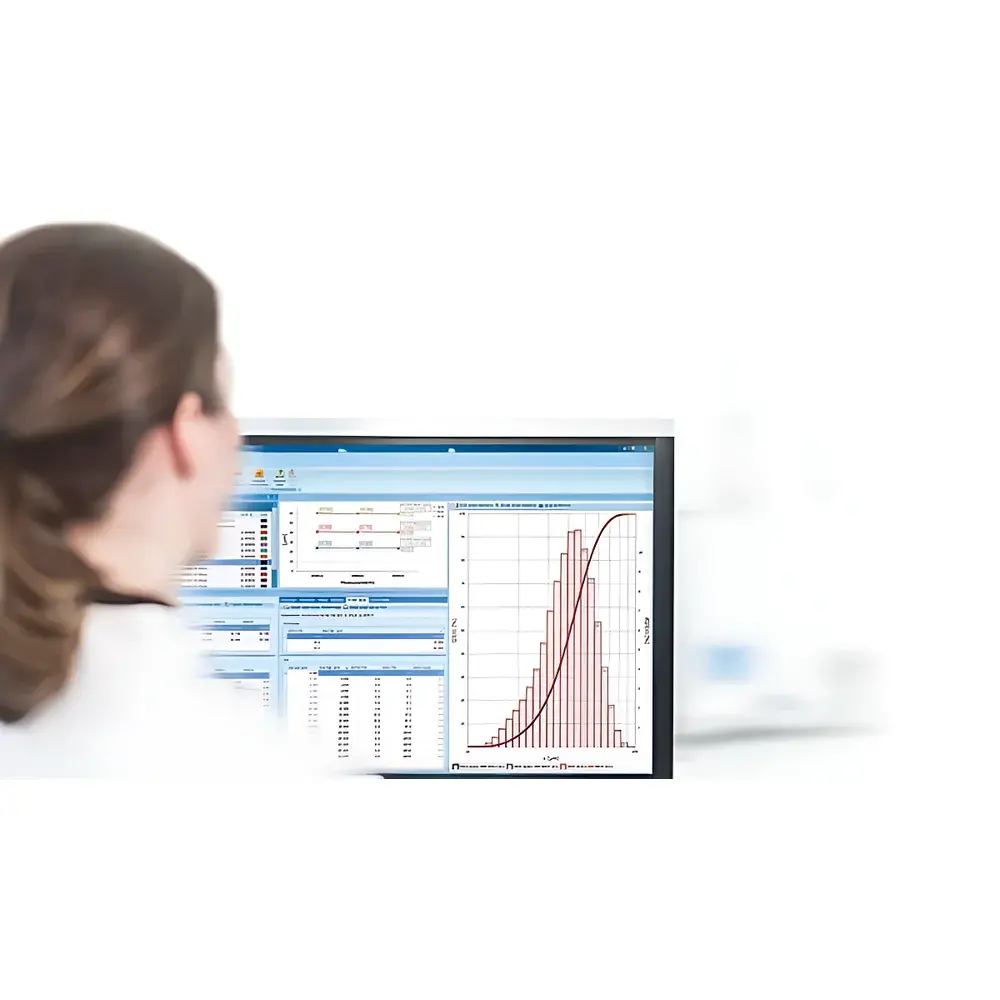
Control, acquisition, and evaluation are executed via FRITSCH MaS (Measurement & Analysis Software), a Windows-based application compliant with FDA 21 CFR Part 11 requirements. MaS provides role-based user access control, electronic signatures, and full audit trail functionality—including history of method parameters, calibration certificates, and raw scatter pattern archives. Data export options include CSV, PDF reports (with customizable templates), and XML for LIMS integration. Advanced analysis includes multi-modal deconvolution, D10/D50/D90 statistics, span calculation, and comparative overlay of up to eight distributions. Batch processing mode enables unattended sequence execution with auto-validation against pre-set acceptance criteria (e.g., repeatability threshold ≤0.5% RSD).
Applications
This instrument serves laboratories requiring metrologically rigorous particle sizing across diverse sectors: pharmaceutical formulation (nanosuspensions, inhalable dry powders, excipient characterization); advanced ceramics and battery materials (anode/cathode slurries, SiO₂/Al₂O₃ nanopowders); catalyst development (Pt/C, zeolite dispersions); pigment and ink manufacturing (TiO₂, carbon black aggregates); and environmental science (colloidal clay, microplastic suspensions). Its ability to resolve bimodal or trimodal distributions without fractionation makes it particularly suited for quality control of complex industrial dispersions where regulatory documentation demands full-size-range coverage in a single run.
FAQ
Does the Analysette 22 NanoTec require external calibration standards for routine operation?
No—factory-calibrated optical path and detector geometry eliminate the need for daily standard runs; however, verification with NIST-traceable polystyrene latex standards (e.g., 100 nm, 1 µm, 10 µm) is recommended per ISO 13320 before critical campaigns.
Can the instrument measure highly absorbing or anisotropic particles?
Yes—Mie theory modeling within MaS allows input of complex refractive index (n + ik), enabling accurate sizing of metallic nanoparticles, carbon-based materials, and pigments when optical constants are known.
Is remote monitoring or networked deployment supported?
Yes—MaS supports TCP/IP communication and OPC UA interface for integration into centralized lab automation systems; remote desktop access is permissible under validated IT security protocols.
What maintenance intervals are specified for the optical and fluidic modules?
Optical alignment verification every 6 months; wet-loop seals and ultrasonic probe inspected quarterly; full cartridge replacement recommended after 5,000 measurement cycles or per wear assessment.
How does the system handle agglomerated samples during wet dispersion?
Programmable ultrasonic energy delivery (0–100 W, 0–300 s duration) combined with variable shear from the radial pump ensures controlled deagglomeration; dispersion efficiency is quantified via real-time backscatter trend analysis in MaS.



