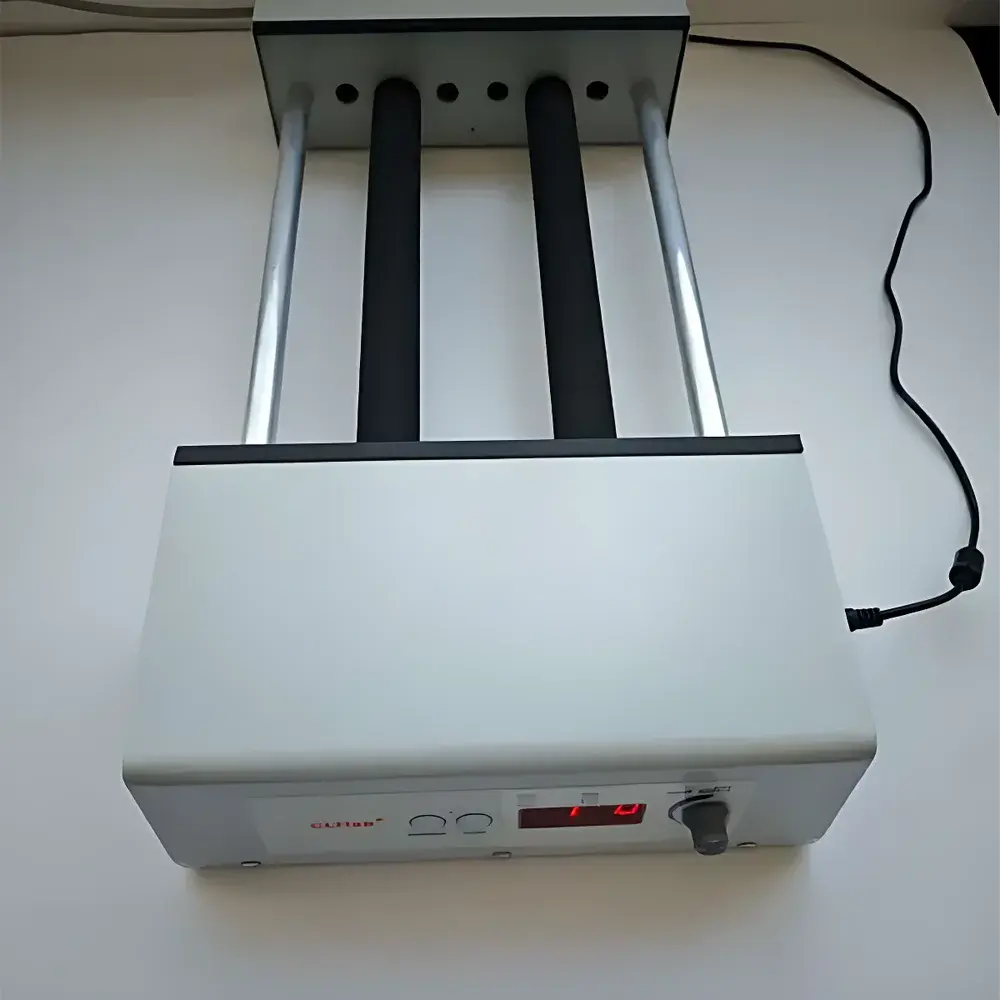
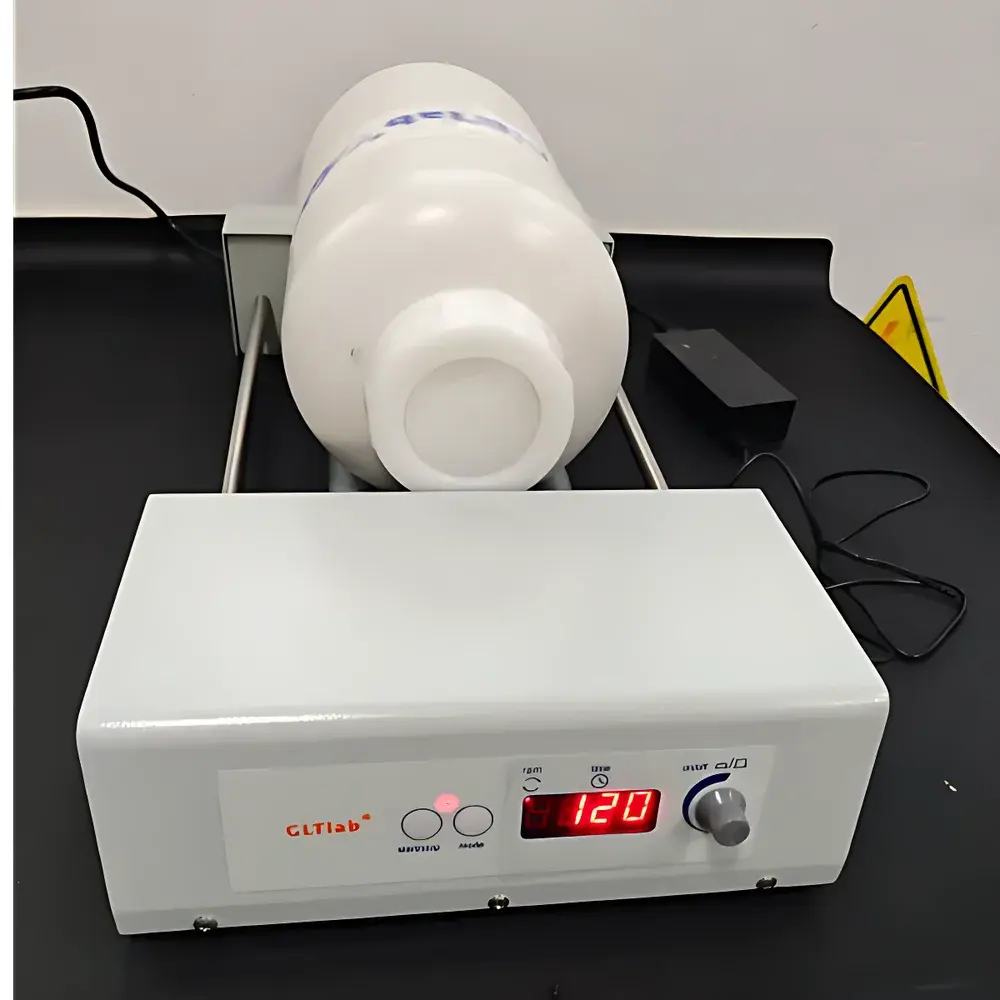
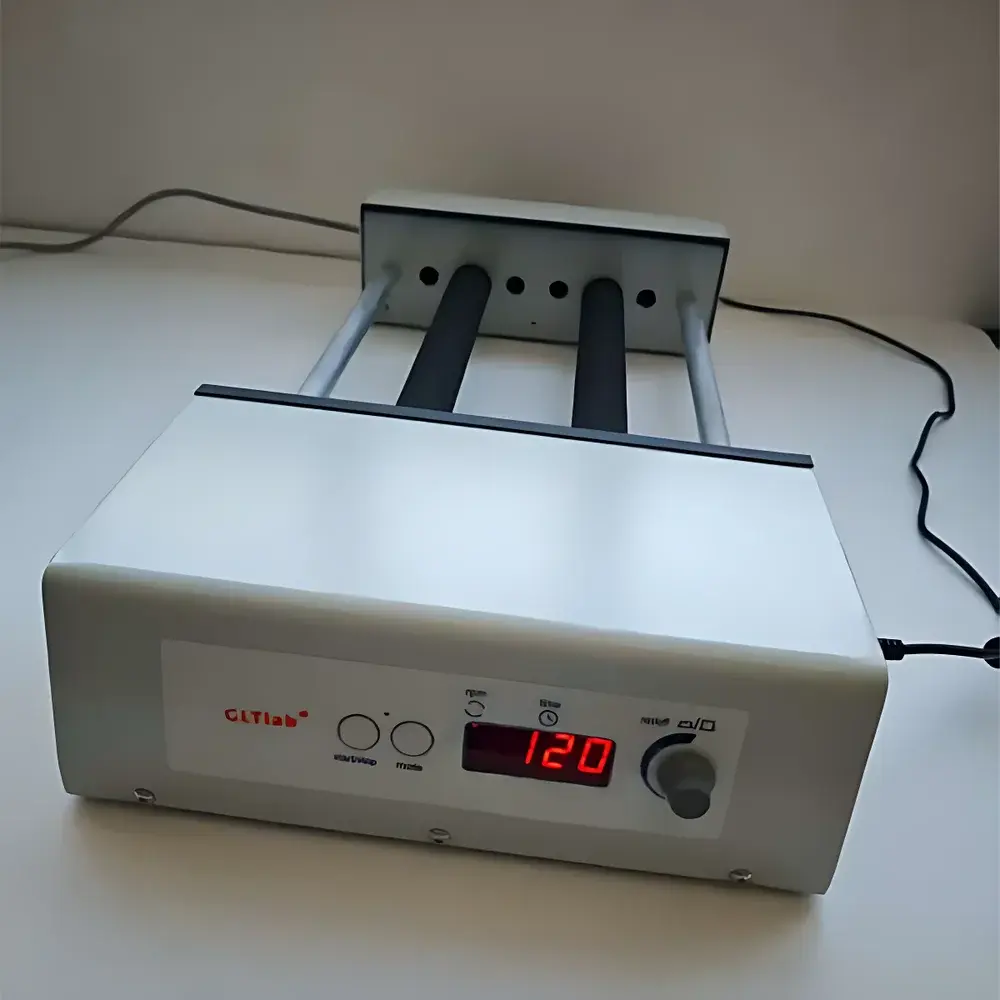
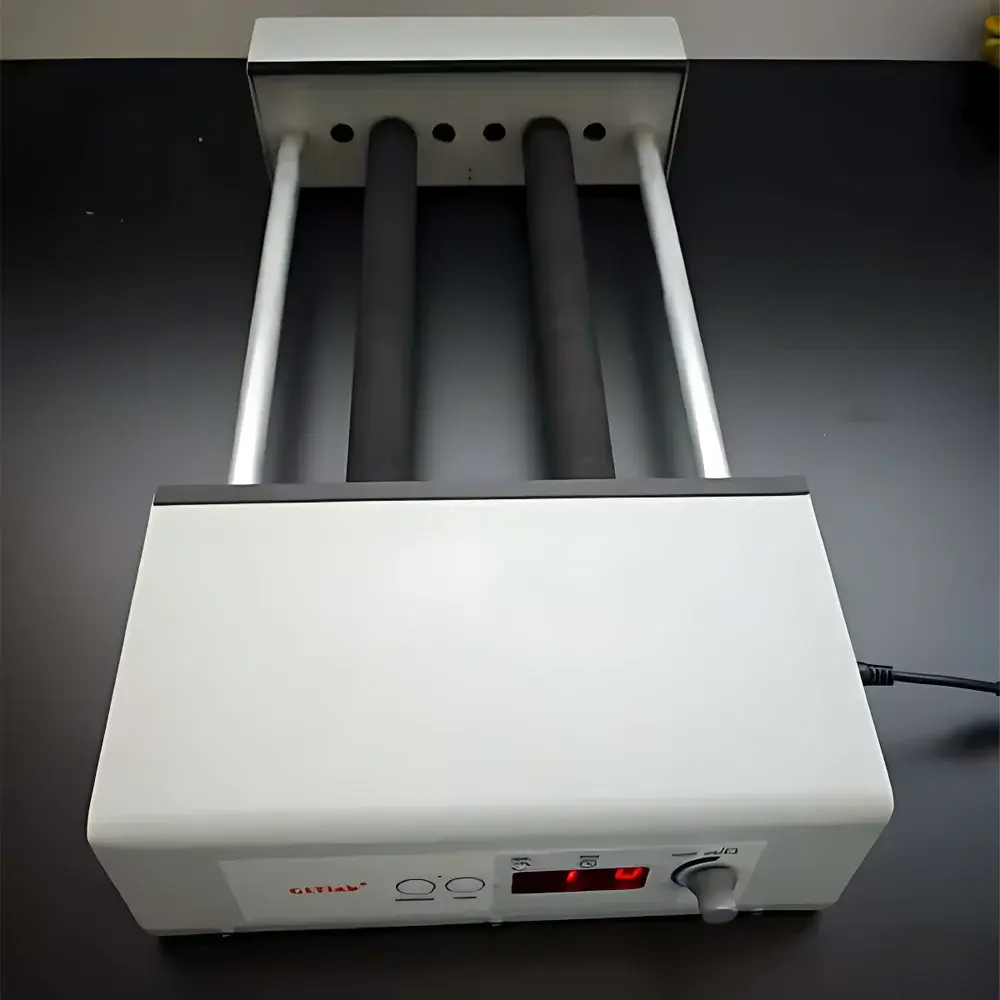
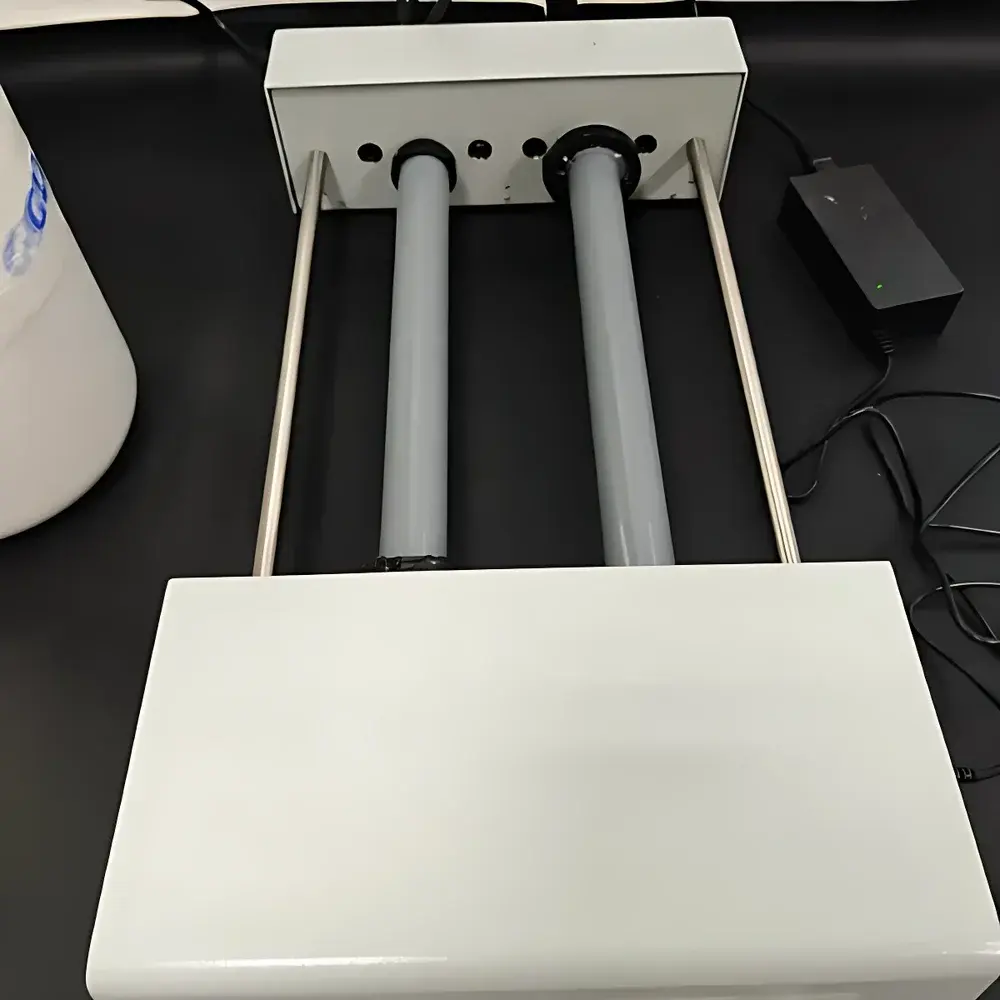
GLTLab TR-1 Basic 5L Single-Bottle Roller Mixer
| Brand | GLTLab |
|---|---|
| Origin | Guangdong, China |
| Manufacturer Type | Direct Manufacturer |
| Instrument Category | Domestic |
| Model | TR-1 Basic |
| Price | USD 185 (FOB) |
| Instrument Type | Rolling Mixer / Bottle Rotator |
| Timer Range | 1 second to 200 hours |
| Rotation Speed | 5–300 rpm |
| Oscillation Amplitude | ±30 mm (rotational arc diameter) |
| Temperature Control | Ambient-only operation |
| Platform Configuration | Dual-roller horizontal shaft assembly |
| Roller Material | ABS polymer |
| Roller Spacing | 70 mm center-to-center |
| Max Bottle Capacity | One 5 L cylindrical bottle (diameter ≤ 120 mm) |
| Max Load per Roller Set | 10 kg |
| Direction Control | Reversible rotation (CW/CCW) |
| Timer Presets | 1–15 min quick-select intervals |
| Construction | 304 stainless steel chassis with reinforced aluminum frame |
| Dimensions (W×D×H) | 560 × 300 × 100 mm |
Overview
The GLTLab TR-1 Basic is a compact, dual-roller horizontal bottle rotator engineered for consistent, low-shear mixing of viscous or sediment-prone biological samples in single large-volume containers. Designed around the principle of controlled rotational motion—where sample vessels rotate continuously about a fixed horizontal axis—the instrument ensures uniform suspension of cells, microcarriers, or particulates without vortexing, foaming, or shear-induced damage. Unlike orbital shakers or reciprocating mixers, this roller mixer applies gentle, laminar angular displacement ideal for adherent cell culture expansion on microcarriers, viral vector production, serum-free media conditioning, and long-term stability studies of biopharmaceutical formulations. Its ambient-only operation reflects its intended use in temperature-controlled incubators or cleanroom environments where external heating/cooling is externally managed.
Key Features
- Dual independent ABS rollers with precise 70 mm center-to-center spacing—optimized for stable support of standard 5 L glass or PETG cylindrical bottles (≤120 mm diameter).
- Stepless speed control from 5 to 300 rpm, calibrated via integrated optical encoder feedback for repeatable rotational velocity across extended durations.
- Reversible rotation mode (clockwise/counter-clockwise) programmable per timer cycle—minimizes directional bias in particle settling and improves homogeneity in heterogeneous suspensions.
- High-resolution digital timer supporting both fine-grained (1 s) and extended-duration (up to 200 h) protocols, with six user-accessible quick-select presets (1–15 min) for routine operations.
- Structural integrity ensured by a 304 stainless steel base chassis and anodized aluminum support frame—resistant to corrosion from alcohol wipes, mild disinfectants, and humidity exposure typical in BSL-2 labs.
- Low-noise brushless DC motor drive system with thermal overload protection—rated for continuous duty cycles exceeding 10,000 hours under nominal load (≤10 kg total).
Sample Compatibility & Compliance
The TR-1 Basic accommodates standard ISO-compliant 5 L laboratory bottles (e.g., Nalgene™ Wide-Mouth HDPE, Corning® PYREX® glass), including those fitted with vented caps or silicone septa. It is compatible with common cell culture formats such as Cytodex™ 1/3 microcarrier suspensions, baculovirus-infected Sf9 cultures, and recombinant protein aggregates in formulation buffers. While the device itself carries no CE or FDA clearance (as it is classified as a Class I general-purpose lab accessory under IEC 61010-1), its mechanical design conforms to GLP-aligned operational practices—including traceable speed calibration logs, manual direction-locking during maintenance, and non-volatile timer memory retention after power interruption. Documentation packages include factory calibration certificates and RoHS-compliant material declarations.
Software & Data Management
The TR-1 Basic operates as a standalone hardware platform with no embedded firmware or network interface. All operational parameters are set via front-panel tactile buttons and a 3-digit LED display. For laboratories requiring audit trails, optional external data loggers (e.g., Omega OM-DAQPRO-5300) may be interfaced via analog 0–5 V tachometer output (available at rear terminal block). The unit supports integration into broader QC workflows governed by ISO 17025 or FDA 21 CFR Part 11 when paired with validated electronic lab notebook (ELN) systems that record operator ID, start/stop timestamps, and speed settings manually entered into metadata fields.
Applications
- Adherent cell expansion on dextran-based microcarriers in serum-free suspension bioreactors.
- Long-term stability assessment of monoclonal antibody formulations under accelerated storage conditions (e.g., 25°C/60% RH).
- Homogenization of high-viscosity hydrogels (e.g., collagen I, Matrigel® dilutions) prior to 3D bioprinting deposition.
- Preparation of uniform bacterial inocula for ASTM E2614 antimicrobial efficacy testing.
- Equilibration of cryopreservation media containing DMSO and fetal bovine serum prior to controlled-rate freezing.
- Batch-wise mixing of diagnostic reagent kits where stratification compromises assay precision (e.g., latex agglutination suspensions).
FAQ
Can the TR-1 Basic accommodate bottles larger than 5 L?
No—mechanical clearance and torque limits are validated only for cylindrical containers up to 120 mm in diameter and 5 L volume. Larger vessels risk misalignment, uneven loading, and premature bearing wear.
Is speed accuracy traceable to NIST standards?
Yes—each unit ships with a factory calibration report referencing a NIST-traceable optical tachometer (Model: Extech 461921), verifying ±1.5% deviation at 30, 100, and 250 rpm across three consecutive 1-hour runs.
Does the device meet IP rating requirements for humid environments?
It carries no formal IP rating; however, the sealed motor housing and conformal-coated PCBs provide functional resistance to non-condensing humidity ≤85% RH—suitable for placement inside CO₂ incubators with active air circulation.
Can multiple TR-1 Basic units be synchronized?
No native synchronization capability exists. Independent operation is standard; coordinated timing must be managed externally via master clock signals or PLC-triggered relay modules.
What maintenance schedule is recommended?
Lubrication-free roller bearings require no scheduled maintenance. Biannual visual inspection of roller surface integrity and cleaning of debris from shaft grooves using lint-free isopropyl alcohol swabs is advised.