HTNMR HT-QMRI Awake Small Animal Body Composition Analyzer
| Brand | HTNMR |
|---|---|
| Origin | Shanghai, China |
| Manufacturer | HTNMR Scientific Equipment Co., Ltd. |
| Instrument Type | Magnetic Resonance Imaging (MRI) System |
| Animal Model | Rat (also compatible with mouse) |
| Spatial Resolution | 0.15 mm |
| Field of View (FOV) | 50 mm |
| Matrix Sizes | 128×128×128 (standard), 256×256×128 (high-resolution), 512×512×128 (ultra-high-resolution) |
| Maximum Sample Depth | 50 mm |
| Sample Capacity | 1 animal per scan |
| Magnet Type | Permanent magnet (cryogen-free) |
Overview
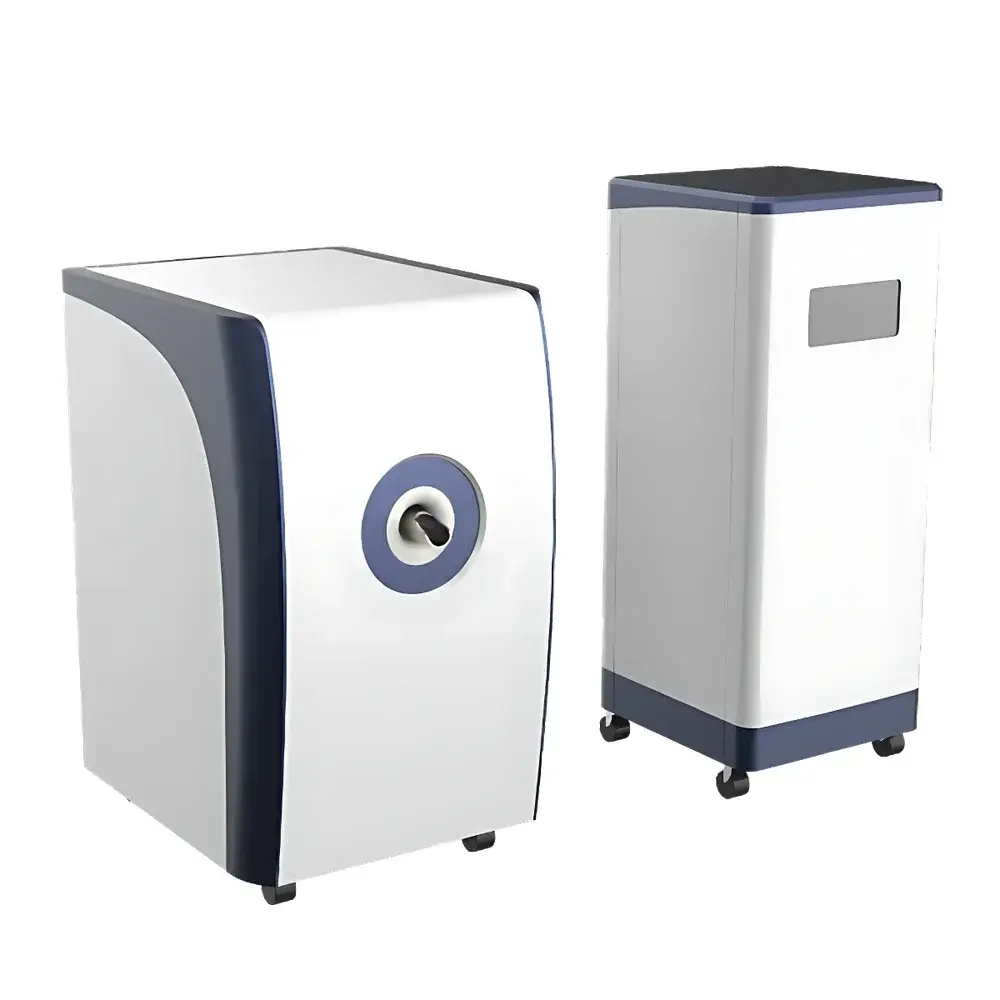
The HTNMR HT-QMRI Awake Small Animal Body Composition Analyzer is a dedicated benchtop magnetic resonance imaging system engineered for non-invasive, quantitative assessment of soft-tissue composition in unrestrained or lightly restrained small rodents—primarily rats and mice. Unlike conventional MRI systems requiring general anesthesia—which introduces physiological confounders such as suppressed metabolism, altered perfusion, and respiratory depression—the HT-QMRI enables high-fidelity acquisition under conscious or minimally sedated conditions. It operates on the physical principle of nuclear magnetic resonance (NMR), specifically exploiting the differential relaxation properties (T1 and T2) of hydrogen nuclei (¹H) in adipose tissue, lean muscle mass, and free fluid compartments. By applying optimized pulse sequences—including gradient-echo and spin-echo variants—the system generates voxel-wise signal intensity maps that are calibrated against reference phantoms and validated against gold-standard methods (e.g., chemical extraction, DEXA). The permanent magnet architecture eliminates reliance on liquid helium or cryogenic cooling, ensuring operational stability, reduced infrastructure demands, and long-term cost efficiency.
Key Features
- Conscious-state imaging capability: Enables longitudinal studies without anesthesia-induced artifacts, supporting metabolic, behavioral, and pharmacodynamic investigations.
- Cryogen-free permanent magnet design: Delivers stable field homogeneity (≤10 ppm over 30 mm DSV) with zero consumables, no quench risk, and minimal facility requirements.
- Multi-resolution imaging protocols: Supports three acquisition matrices (128³, 256²×128, 512²×128) to balance throughput and anatomical detail; spatial resolution down to 0.15 mm isotropic at 50 mm FOV.
- Quantitative body composition analysis: Automated segmentation algorithms differentiate fat mass, lean tissue mass, and free water volume using multi-echo T2 mapping and Dixon-based fat–water separation techniques.
- Single-animal throughput optimization: Typical scan duration ranges from 90–180 seconds per acquisition, facilitating high-volume cohort studies with consistent positioning via adjustable stereotactic cradles.
- Integrated safety monitoring: Real-time temperature and motion feedback loops ensure subject welfare compliance during extended acquisitions.
Sample Compatibility & Compliance
The HT-QMRI is validated for use with Sprague-Dawley, Wistar, and C57BL/6 rats (up to 500 g) and adult mice (20–35 g). Its 50 mm bore accommodates standard restraint tubes with integrated ventilation and sensor ports. All imaging protocols adhere to ARRIVE 2.0 guidelines for reporting animal research and support institutional IACUC documentation requirements. Data output formats (DICOM 3.0 Level 2, NIfTI) are compatible with third-party analysis platforms including FSL, SPM, and ITK-SNAP. The system meets electromagnetic compatibility standards per IEC 61326-1 and safety requirements outlined in ISO 10993-1 for biocompatible material contact surfaces.
Software & Data Management
The proprietary HT-QMRI Acquisition & Analysis Suite (v4.2+) provides full workflow control—from protocol selection and real-time preview to automated segmentation and statistical export. Raw k-space data is stored with embedded metadata (pulse sequence parameters, animal ID, date/time, operator ID). Quantitative outputs include total fat mass (g), lean mass (g), free fluid volume (mL), regional fat distribution (visceral vs. subcutaneous), and longitudinal change metrics (%Δ). Audit trails log all user actions, parameter modifications, and software updates in accordance with FDA 21 CFR Part 11 and GLP-compliant data integrity frameworks. Export options include CSV, Excel, and structured JSON for integration into LIMS or ELN environments.
Applications
- Preclinical obesity and diabetes research: Longitudinal tracking of adipose expansion, ectopic lipid deposition, and muscle atrophy in diet-induced or genetically modified models.
- Metabolic phenotyping: Correlation of body composition shifts with glucose tolerance, insulin sensitivity, and energy expenditure measurements.
- Drug efficacy evaluation: Quantification of treatment-induced changes in fat–lean ratio following PPARγ agonists, GLP-1 analogs, or mitochondrial uncouplers.
- Aging and sarcopenia studies: Discrimination of age-related lean mass loss versus fluid retention using T2-weighted contrast dynamics.
- Toxicology screening: Detection of early hepatic steatosis or renal edema prior to histopathological manifestation.
FAQ
Does the HT-QMRI require anesthesia for scanning?
No—anesthesia is not required. The system is designed for awake or lightly restrained imaging, minimizing physiological stress and enabling true baseline metabolic assessment.
Can it distinguish between visceral and subcutaneous adipose tissue?
Yes—using axial slice reconstruction and region-of-interest (ROI) tools combined with T2-weighted contrast, users can manually or semi-automatically delineate anatomical depots with spatial accuracy validated against ex vivo dissection.
Is the system compliant with regulatory data integrity standards?
Yes—the software supports electronic signatures, audit trails, and secure user access controls aligned with FDA 21 CFR Part 11 and EU Annex 11 requirements for regulated preclinical research.
What maintenance is required for the permanent magnet?
None beyond routine calibration checks every 6 months. The magnet does not require cryogens, shimming coils, or RF coil recalibration under normal operating conditions.
Can multiple animals be scanned sequentially without recalibration?
Yes—system stability allows uninterrupted batch scanning of up to 12 animals per day with consistent geometric fidelity and signal-to-noise performance across sessions.