
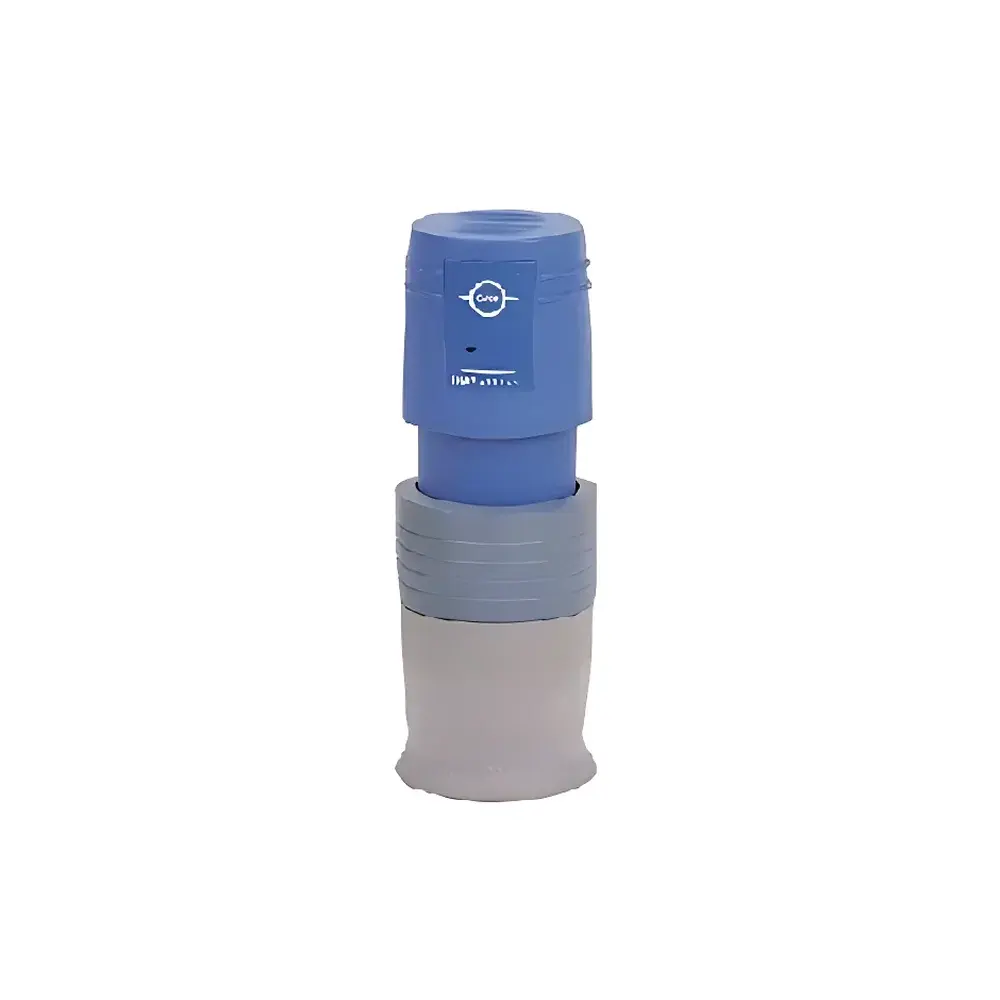
IKA A11 Basic Analytical Grinder
| Origin | Germany |
|---|---|
| Manufacturer Type | Authorized Distributor |
| Origin Category | Imported |
| Model | A11 |
| Motor Input Power | 160 W |
| Motor Output Power | 100 W |
| Max. Speed | 28,000 rpm |
| Max. Tip Speed | 53 m/s |
| Max. Feed Hardness | 6 Mohs |
| Max. Feed Size | 10 mm |
| Batch Volume (Standard) | 80 mL |
| Optional Volume | 250 mL |
| Grinding Chamber Material | Stainless Steel 1.4571 (AISI 316L) & Tefcel® (ETFE + Glass Fiber Reinforcement) |
| Rotor Material | Stainless Steel 1.4034 |
| Dry Ice Cooling | Yes |
| Liquid Nitrogen Cooling | Yes |
| Duty Cycle | 1 min ON / 10 min OFF |
| Dimensions (W × H × D) | 85 × 240 × 85 mm |
| Weight | 1.5 kg |
| Ambient Temperature Range | 5–40 °C |
| Relative Humidity Limit | ≤80 % (non-condensing) |
| Ingress Protection | IP43 |
| Voltage | 220–240 V / 100–115 V |
| Frequency | 50/60 Hz |
Overview
The IKA A11 Basic Analytical Grinder is a compact, high-speed batch-type laboratory grinder engineered for reproducible sample preparation of heterogeneous solid materials prior to analytical characterization. Operating on dual mechanical principles—impact and shear—it delivers controlled particle size reduction across a broad spectrum of material classes, including brittle inorganic compounds, polymeric fragments, plant tissues, pharmaceutical excipients, and food matrices. Its design adheres to fundamental principles of comminution physics: impact energy transfer via rotating stainless-steel rotors at up to 28,000 rpm generates localized stress exceeding the fracture toughness of materials rated up to 6 on the Mohs hardness scale; simultaneous shear forces arise from rotor-stator clearance dynamics, enabling efficient disintegration of fibrous or viscoelastic substances when equipped with the optional shear rotor. The device’s modular architecture—featuring interchangeable grinding chambers and rotor assemblies—supports method development under varying thermal conditions, including cryogenic processing with liquid nitrogen or dry ice, essential for thermolabile or ductile samples.
Key Features
- Two operational modes: impact grinding (standard stainless-steel cutting blade, DIN 1.4034) and shear grinding (optional rotor assembly, sold separately)
- Tefcel® grinding chamber (ETFE polymer reinforced with glass fiber) combined with AISI 316L stainless steel housing ensures chemical resistance, dimensional stability, and low extractables—critical for trace-level analysis
- Standard 80 mL grinding volume; optional 250 mL chamber available for higher throughput or dilute suspensions
- Cryogenic compatibility: validated for direct immersion in liquid nitrogen and dry ice cooling—enabling embrittlement of elastomers, resins, and biological tissues without thermal degradation
- Thermally isolated motor housing and duty-cycle control (1 min ON / 10 min OFF) prevent overheating during repetitive operation
- IP43-rated enclosure provides protection against splashing water and solid ingress, supporting use in standard laboratory environments per DIN EN 60529
- Universal voltage input (100–115 V / 220–240 V, 50/60 Hz) ensures global deployment without external transformers
Sample Compatibility & Compliance
The A11 accommodates feed particles up to 10 mm in maximum dimension and materials with hardness ≤6 Mohs—including carbonates, silicates, dried botanicals, tablets, and composite polymers. It is routinely employed in QC laboratories compliant with ISO/IEC 17025, where documented sample homogenization is prerequisite for subsequent techniques such as XRD, SEM-EDS, or elemental analysis by ICP-OES. While the instrument itself does not carry CE marking for medical device applications, its construction materials meet USP Class VI biocompatibility requirements for non-implantable contact surfaces. All wetted components comply with FDA 21 CFR §177.1550 (fluoropolymer resins) and §177.1520 (olefin polymers), supporting use in regulated pharmaceutical and nutraceutical workflows.
Software & Data Management
The A11 Basic operates as a standalone electromechanical unit without embedded microprocessor control or digital interface. Consequently, it does not generate electronic records, nor does it support audit trails, user authentication, or data export—making it suitable for non-GxP environments or as a pre-analytical tool upstream of validated instrumentation. For laboratories requiring traceability, manual logbook entries—including lot numbers of consumables, operator ID, date/time stamp, cycle count, and observed endpoint consistency—are recommended per GLP Annex 3 guidelines. No firmware updates or software validation packages are provided or required.
Applications
- Homogenization of geological core samples prior to X-ray fluorescence (XRF) or ICP-MS analysis
- Particle size reduction of freeze-dried biologics for residual moisture quantification by Karl Fischer titration
- Preparation of uniform powder blends for content uniformity testing in solid oral dosage forms (per USP <905>)
- Routine fragmentation of polymer pellets for melt flow index (MFI) sample conditioning (ASTM D1238)
- Cryogenic grinding of rubber compounds to suppress viscous flow and enable TEM grid embedding
- Cell disruption of yeast and fungal biomass under sub-zero conditions for intracellular metabolite extraction
FAQ
Is the A11 compatible with GMP-regulated environments?
It may be used in GMP settings as a pre-analytical tool, provided procedural controls (e.g., cleaning validation, calibration checks, and operator training) are established per internal SOPs—but it lacks built-in features for electronic recordkeeping or 21 CFR Part 11 compliance.
Can the grinding chamber be autoclaved?
No. Tefcel® is not autoclavable; repeated exposure to saturated steam above 121 °C causes irreversible deformation and loss of mechanical integrity.
What maintenance is required?
Routine visual inspection of rotor sharpness and chamber integrity; periodic lubrication of drive shaft bearings is not required—the motor uses sealed-for-life bearings.
Does IKA provide method development support?
Yes—application notes covering cryogenic grinding of plant tissues, pharmaceutical tablet pulverization, and polymer fragmentation are available upon request from authorized distributors.
Is the shear rotor certified for food contact?
The shear rotor shares the same 1.4034 stainless-steel composition as the standard impact blade and complies with EC Regulation No. 1935/2004 for food-contact materials when cleaned per manufacturer instructions.



