
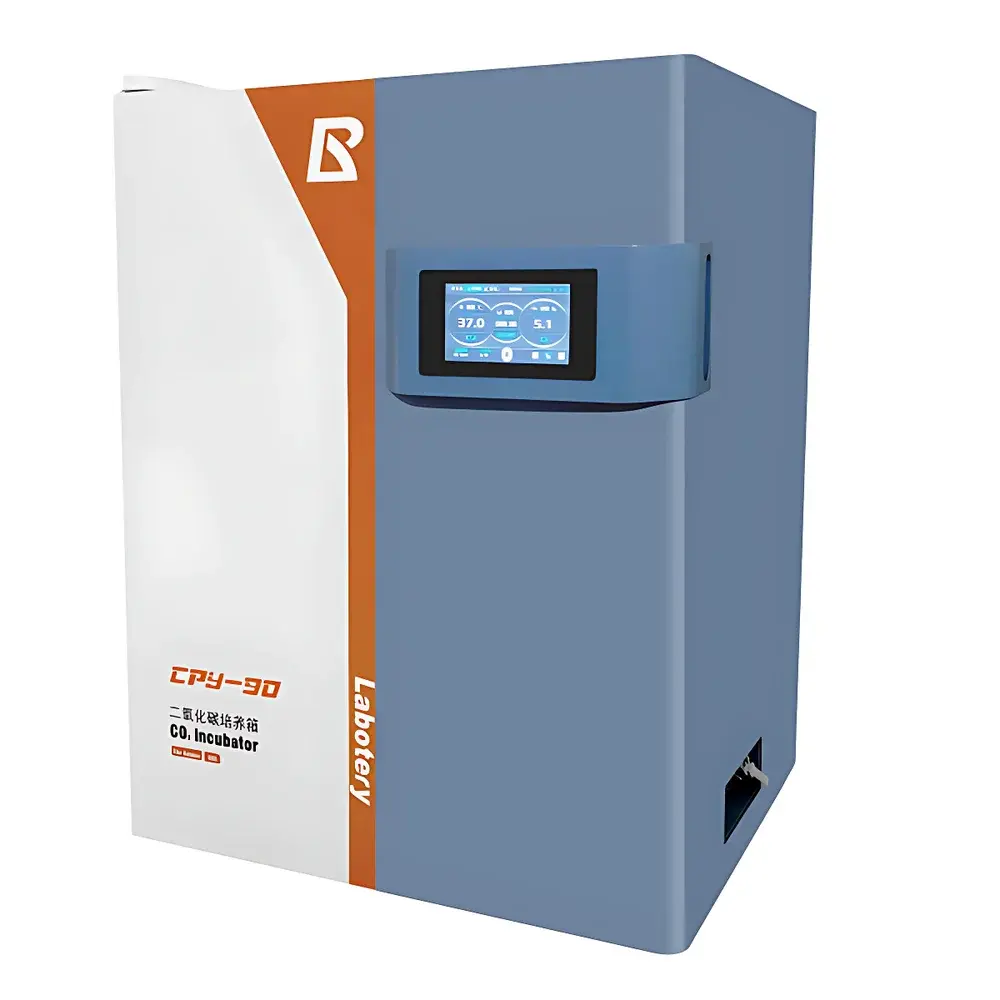
Labotery CPY-180 Gas-Jacketed CO₂ Incubator
| Brand | Labotery |
|---|---|
| Origin | Tianjin, China |
| Model | CPY-180 |
| Instrument Type | Gas-Jacketed CO₂ Incubator |
| CO₂ Detection | Infrared (IR) Sensor |
| Temperature Control Range & Accuracy | Ambient +5°C to 60°C |
| Temperature Uniformity | ±0.1°C |
| CO₂ Concentration Control Range & Accuracy | 0–20% (±0.1% with IR sensor) |
| Humidity Control Method | Natural Evaporation (>95% RH at 37°C) |
| Chamber Capacity | 180 L |
| External Dimensions (W×D×H) | 580 × 650 × 775 mm |
| Sterilization Method | 140°C Dry-Heat Sterilization |
| Standard Configuration | High-Temperature Sterilization Cycle |
| Power Supply | AC 220 V / 50 Hz |
| Input Power | 700 W |
| Heating Method | Gas-Jacketed |
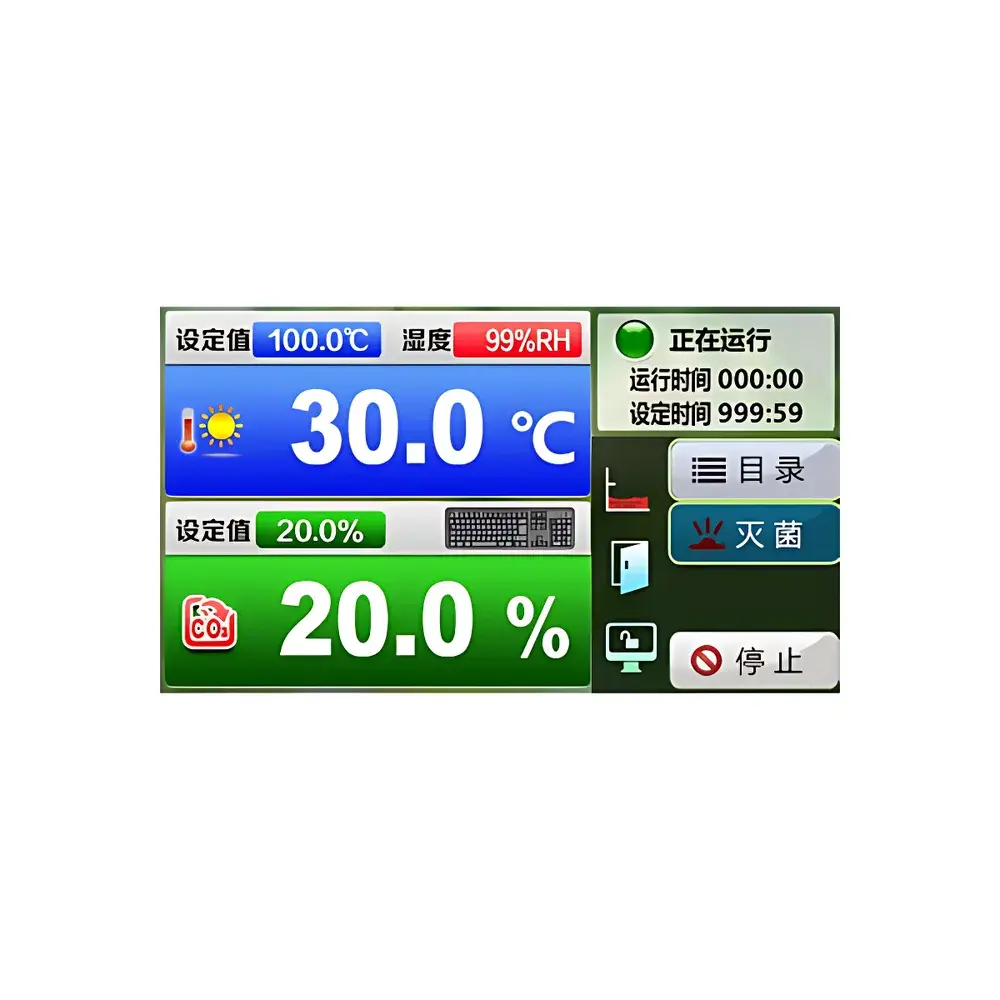
| Control Interface | Full-Color Touchscreen with PID Algorithm |
| CO₂ Recovery Time (after 30-sec door opening, to 5%) | ≤5 min |
| Temperature Recovery Time (to 37°C) | ≤8 min |
| Internal Chamber Material | 304 Mirror-Finish Stainless Steel |
| Air Filtration | Integrated HEPA Filter (≥99.99% @ 0.3 µm) |
| CO₂ Inlet Filtration | 0.3 µm Microbial Filter |
| Door Heating | Yes (prevents condensation on inner glass) |
Overview
The Labotery CPY-180 is a gas-jacketed, microprocessor-controlled CO₂ incubator engineered for high-fidelity cell culture environments in academic research laboratories, biopharmaceutical QC facilities, and clinical IVF centers. It operates on the principle of stable thermal regulation via an outer gas jacket—filled with ambient air—and precise CO₂ concentration maintenance using a non-dispersive infrared (NDIR) sensor. Unlike water-jacketed systems, the gas-jacket architecture enables rapid temperature recovery after door openings and eliminates risks associated with water leakage or microbial growth in jacket cavities. The chamber maintains physiological conditions (37°C, 5% CO₂, >95% RH) essential for mammalian cell monolayers, primary cultures, stem cells, and embryonic development models. Its design complies with fundamental requirements of ISO 13485–aligned quality management systems and supports GLP-compliant documentation when integrated with audit-trail-enabled software (see Software & Data Management section).
Key Features
- 304 mirror-finish stainless steel interior chamber fabricated via seamless one-piece forming—no weld seams or crevices—to prevent biofilm accumulation and ensure complete sterilizability.
- Integrated HEPA filtration (ISO Class 5 compliant) in the internal air recirculation path, removing ≥99.99% of airborne particles ≥0.3 µm—including bacteria, fungal spores, and dust—before reintroducing air into the culture space.
- Dual-door heating system: The inner tempered glass door is actively heated to eliminate condensation, thereby mitigating moisture-mediated microbial cross-contamination during routine observation.
- High-stability NDIR CO₂ sensor with temperature- and humidity-compensated output—providing long-term drift resistance (<0.02% CO₂/year), eliminating need for frequent recalibration per ASTM E2912 guidance.
- 140°C dry-heat sterilization cycle validated for log⁶ reduction of bacterial endospores (e.g., Bacillus stearothermophilus) and fungal conidia—fully compliant with USP & Ph. Eur. sterility assurance requirements for non-sterile equipment surfaces.
- PID-based microcontroller with full-color touchscreen interface supporting real-time overlay of temperature, CO₂, and humidity trends; adjustable fan speed control prevents desiccation of low-volume cultures (e.g., 6-well plates, embryo dishes).
Sample Compatibility & Compliance
The CPY-180 accommodates standard SBS-format multiwell plates (6–96-well), T-flasks (T25–T225), Petri dishes, roller bottles, and IVF-specific culture dishes. Its uniform thermal distribution (±0.1°C across full volume) and laminar airflow profile meet ISO 15189 clause 5.3.2 for pre-analytical environmental consistency. All wetted surfaces are electropolished 304 stainless steel—passivated per ASTM A967—and compatible with common disinfectants (70% ethanol, 1% Virkon™, hydrogen peroxide vapor). The CO₂ inlet filter conforms to ISO 14644-1 Class 5 particulate limits, while the incubator’s electrical safety meets IEC 61010-1:2010 Ed.3 for laboratory equipment.
Software & Data Management
The embedded controller logs timestamped operational data (temperature, CO₂, humidity, door status, alarm events) with 30-day local storage. Optional RS485/Modbus RTU or Ethernet (TCP/IP) interfaces enable integration into centralized lab infrastructure (e.g., LabVantage, STARLIMS). When paired with Labotery’s optional DataLogger Pro software, the system generates 21 CFR Part 11–compliant audit trails—including user ID, action type, timestamp, and parameter values—with electronic signature support and immutable record archiving. All calibration and sterilization cycles generate PDF reports with digital signatures for regulatory submissions.
Applications
- Mammalian cell line expansion (HEK293, CHO, HeLa) under controlled pH (via CO₂/bicarbonate buffering) and osmolality.
- In vitro fertilization (IVF) and embryo culture—validated for blastocyst development up to Day 5 using time-lapse imaging-compatible configurations.
- Stem cell maintenance (iPSCs, MSCs) requiring strict avoidance of mycoplasma and endotoxin contamination.
- Toxicology assays evaluating dose-dependent cytotoxicity under chronic exposure (72-hr+ incubations).
- Antibody production via hybridoma culture, where consistent CO₂ levels prevent premature IgG denaturation.
- Tissue engineering scaffolds requiring prolonged humidified hypoxic or normoxic conditioning (O₂ module optional).
FAQ
What CO₂ sensor technology does the CPY-180 use, and why is it superior to thermal conductivity (TC) sensors?
It employs a factory-calibrated NDIR sensor with built-in temperature/humidity compensation—offering higher specificity, longer service life (>10 years), and immunity to background gas interference compared to TC sensors.
Is the 140°C sterilization cycle validated against international standards?
Yes—the cycle achieves ≥6-log reduction of Geobacillus stearothermophilus spores per ISO 14937 Annex C, with thermal mapping confirming minimum 140°C exposure across all interior surfaces for ≥30 minutes.
Can the incubator operate in rooms with ambient temperatures above 30°C?
No—the specified operating environment is ambient +5°C to 30°C; sustained operation above 30°C may compromise CO₂ stability and humidity retention.
Does the system support remote monitoring via network protocols?
Yes—via optional Ethernet module supporting Modbus TCP and HTTP API for integration with building management systems (BMS) or enterprise LIMS.
Are third-party validation services available for IQ/OQ/PQ documentation?
Labotery provides IQ/OQ templates aligned with ASTM E2500 and EU GMP Annex 15; certified field engineers offer PQ execution with calibrated reference instruments traceable to NIST standards.



