
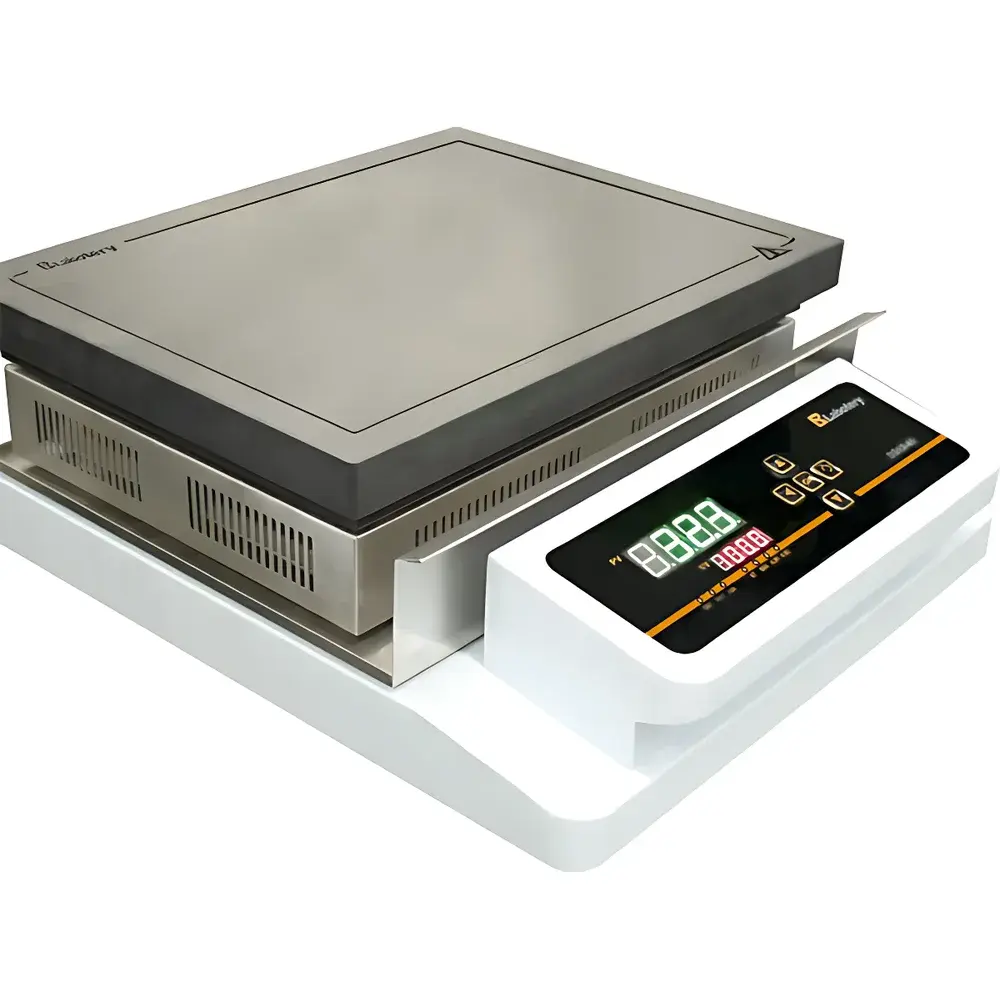
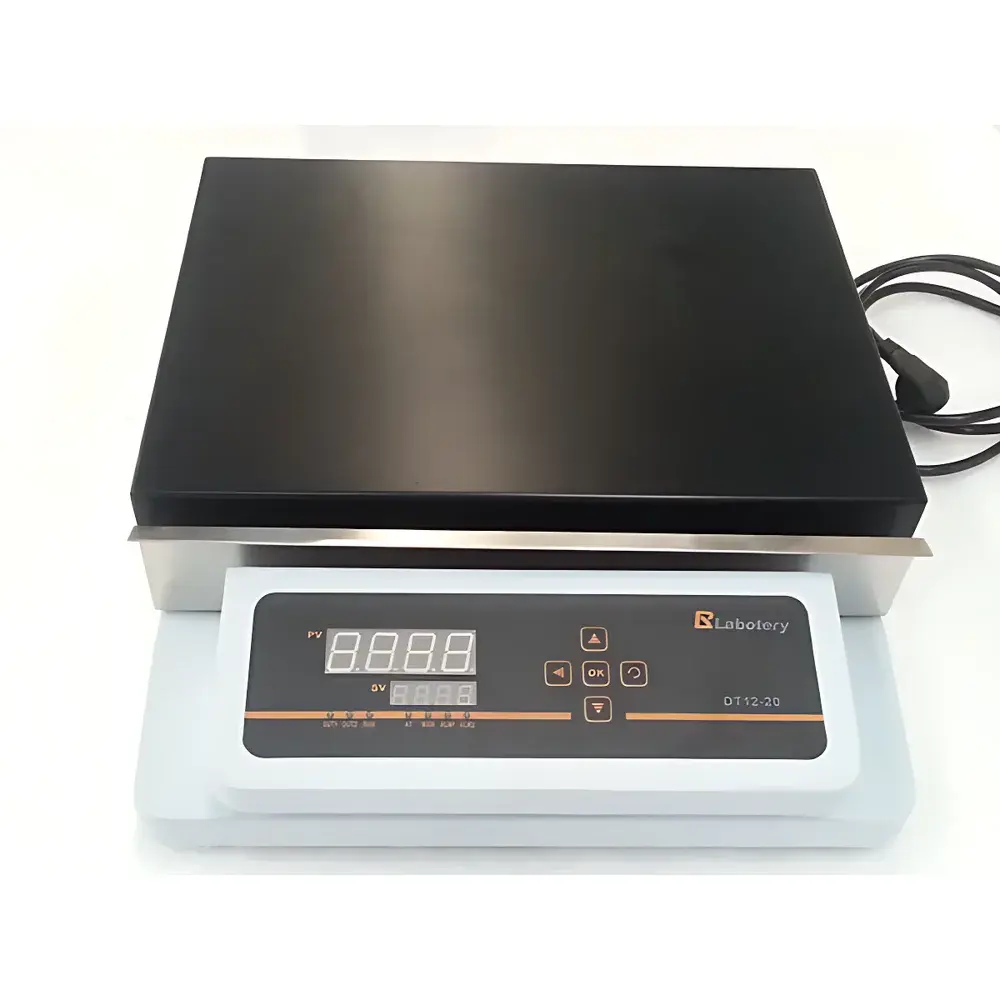
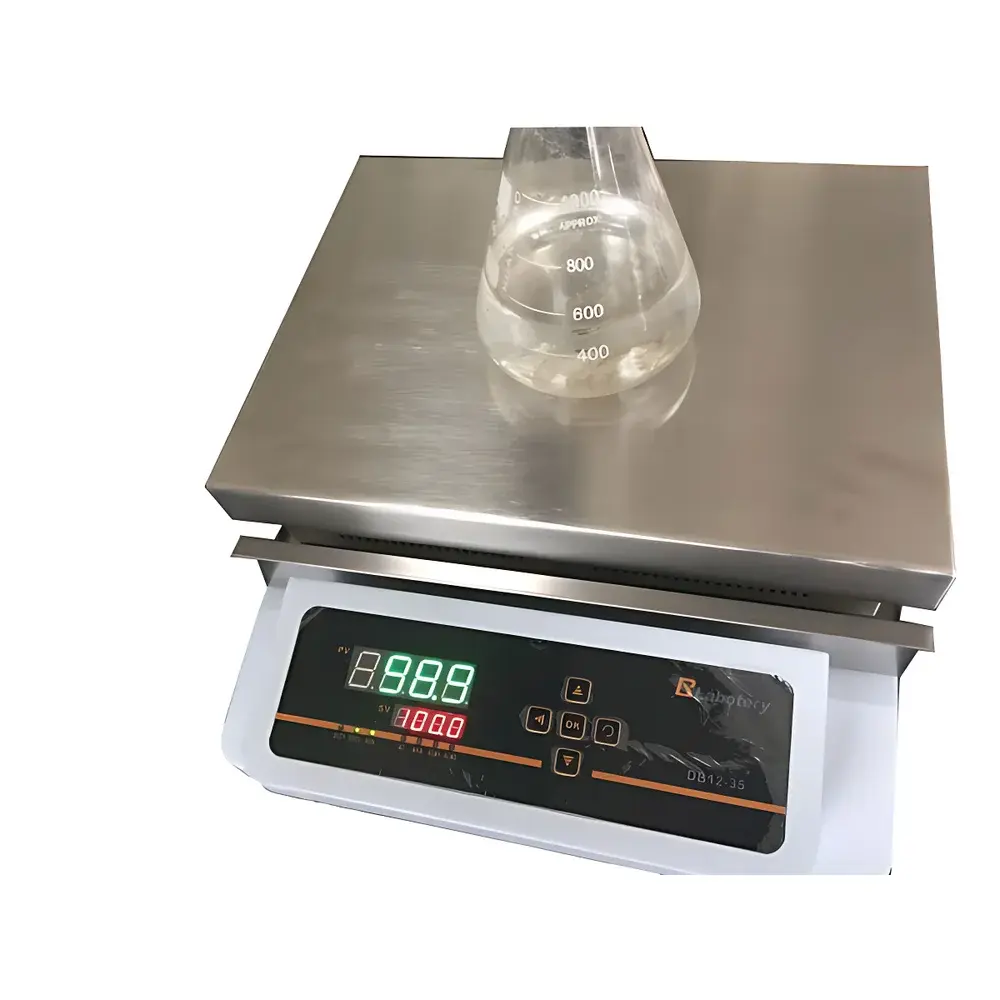
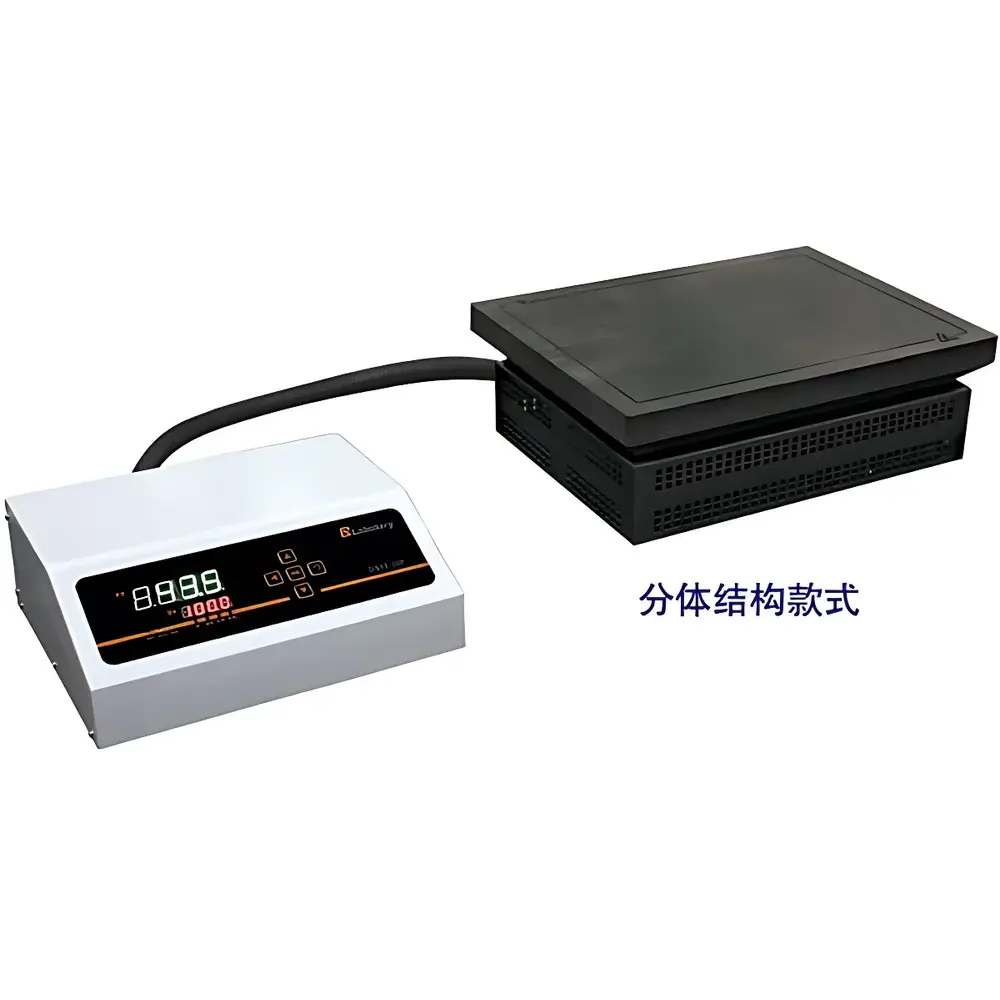
Labotery DS Series Graphite Electric Heating Plate
| Brand | Labotery |
|---|---|
| Origin | Tianjin, China |
| Model | DS12-35 / DS12-45 |
| Heating Power | 2.5 kW |
| Max. Temperature | 460 °C |
| Temperature Uniformity | ±2 °C |
| Plate Dimensions | 400 × 300 mm |
| Heating Zone | 380 × 280 mm |
| Display | Digital LED |
Overview
The Labotery DS Series Graphite Electric Heating Plate is a precision-engineered laboratory heating platform designed for high-temperature, corrosion-resistant sample preparation in demanding analytical workflows. Unlike conventional aluminum or stainless-steel heating plates, the DS series utilizes isotropic high-purity graphite as the primary heating surface material—selected for its exceptional thermal stability, uniform heat distribution, chemical inertness toward strong acids (including HF, HNO₃, and aqua regia), and resistance to thermal shock up to 460 °C. Built on a robust resistive heating architecture with embedded Pt100 temperature sensing and PID-controlled feedback, the DS series delivers stable, repeatable thermal conditions essential for open-vessel digestion, acid reflux, solvent evaporation, and standardized sample drying protocols per ASTM D5191, ISO 11466, and EPA Method 3050B.
Key Features
- Isostatic Graphite Heating Surface: Chemically inert, non-porous graphite plate rated for continuous operation at ≤460 °C; resistant to aggressive mineral acids, alkalis, and halogenated solvents—eliminating cross-contamination risks during multi-step digestions.
- Precision Temperature Control: Digital PID controller with ±0.5 °C setpoint accuracy (typical) and real-time monitoring via high-resolution LED display; user-adjustable ramp/soak profiles supported via front-panel interface.
- Thermal Uniformity & Safety: Achieves ±2 °C spatial uniformity across the 380 × 280 mm active heating zone; integrated over-temperature cut-off, audible alarm, and auto-shutdown prevent thermal runaway and ensure GLP-compliant operation.
- Robust Mechanical Design: Reinforced steel chassis with ceramic insulation layer minimizes heat loss and external surface temperature rise (<60 °C at ambient); non-slip rubber feet and recessed control panel enhance lab bench stability and operator safety.
- Energy-Efficient Architecture: 2.5 kW high-efficiency resistive heating elements deliver rapid thermal response (≤15 min to 400 °C) while maintaining low standby power consumption (<5 W).
Sample Compatibility & Compliance
The DS12-35 and DS12-45 models are validated for use with borosilicate glass, quartz, PTFE, and quartz-fiber crucibles—supporting both wet digestion (e.g., soil, sludge, plant tissue per USP ) and dry ashing pre-treatments. The graphite surface meets ISO 8513:2014 requirements for non-reactive laboratory heating surfaces and complies with CE safety directives (2014/35/EU Low Voltage Directive). Units are suitable for environments requiring adherence to ISO/IEC 17025 documentation standards, including audit-ready calibration traceability (NIST-traceable thermocouple verification available upon request). No moving parts or consumables reduce maintenance burden and extend service life beyond 10,000 operational hours under routine QC use.
Software & Data Management
While the DS series operates via standalone digital interface (no PC connectivity required), optional RS-485 communication port enables integration into centralized lab management systems (LIMS) for remote parameter logging and event-triggered data capture. All temperature setpoints, dwell times, and alarm events are timestamped and stored locally (non-volatile memory, 1000-cycle retention). Audit trail functionality supports FDA 21 CFR Part 11 compliance when paired with validated third-party data acquisition software—enabling electronic signatures, user access levels, and change history reporting for regulated QA/QC laboratories.
Applications
- Open-vessel acid digestion of environmental samples (soil, sediment, wastewater sludge) prior to ICP-OES or ICP-MS analysis
- Pre-concentration of trace metals in biological fluids and food extracts using nitric-perchloric acid mixtures
- Controlled evaporation of organic solvents in pesticide residue testing (AOAC 2007.01)
- Standardized drying of filter papers and gravimetric precipitates in water quality labs (APHA 2540B)
- Heating of reaction vessels during kinetic studies in teaching laboratories (undergraduate chemistry & environmental science curricula)
- Pre-heating of GC vials and LC mobile phase reservoirs in method development workflows
FAQ
What materials are compatible with the graphite heating surface?
The isotropic graphite plate is chemically compatible with concentrated HCl, HNO₃, HF, H₂SO₄, and aqua regia—making it ideal for EPA SW-846 Methods 3050B, 3051A, and 3052. Avoid direct contact with molten alkali hydroxides (e.g., NaOH/KOH at >300 °C) or oxidizing salts (e.g., K₂S₂O₇) above 400 °C.
Does the DS series support programmable ramp-and-soak temperature profiles?
Yes—via manual front-panel entry, users can define up to three sequential segments (ramp rate, target temperature, hold time) without external software.
Is calibration documentation included?
Each unit ships with a factory calibration certificate (temperature verification at 100 °C, 250 °C, and 400 °C), traceable to NIST SRM 1750a thermistor standards.
Can the DS12-45 be used under a fume hood?
Yes—the unit is rated IP20 and designed for installation in ventilated enclosures; ensure minimum 10 cm clearance on all sides for airflow and heat dissipation.
What is the expected service life of the graphite plate?
Under normal usage (≤4 hours/day, ≤400 °C average), the graphite surface maintains dimensional stability and thermal performance for ≥8 years; replacement plates are available as field-serviceable components.



