
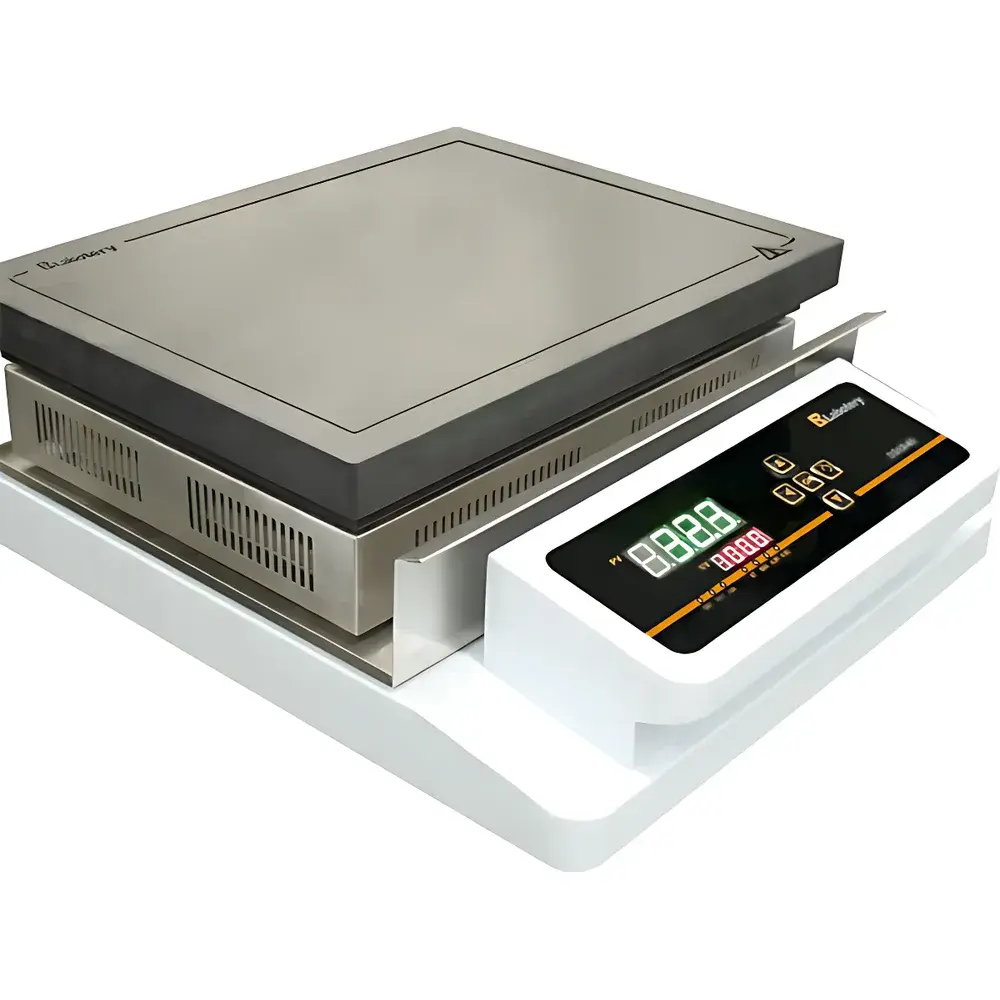
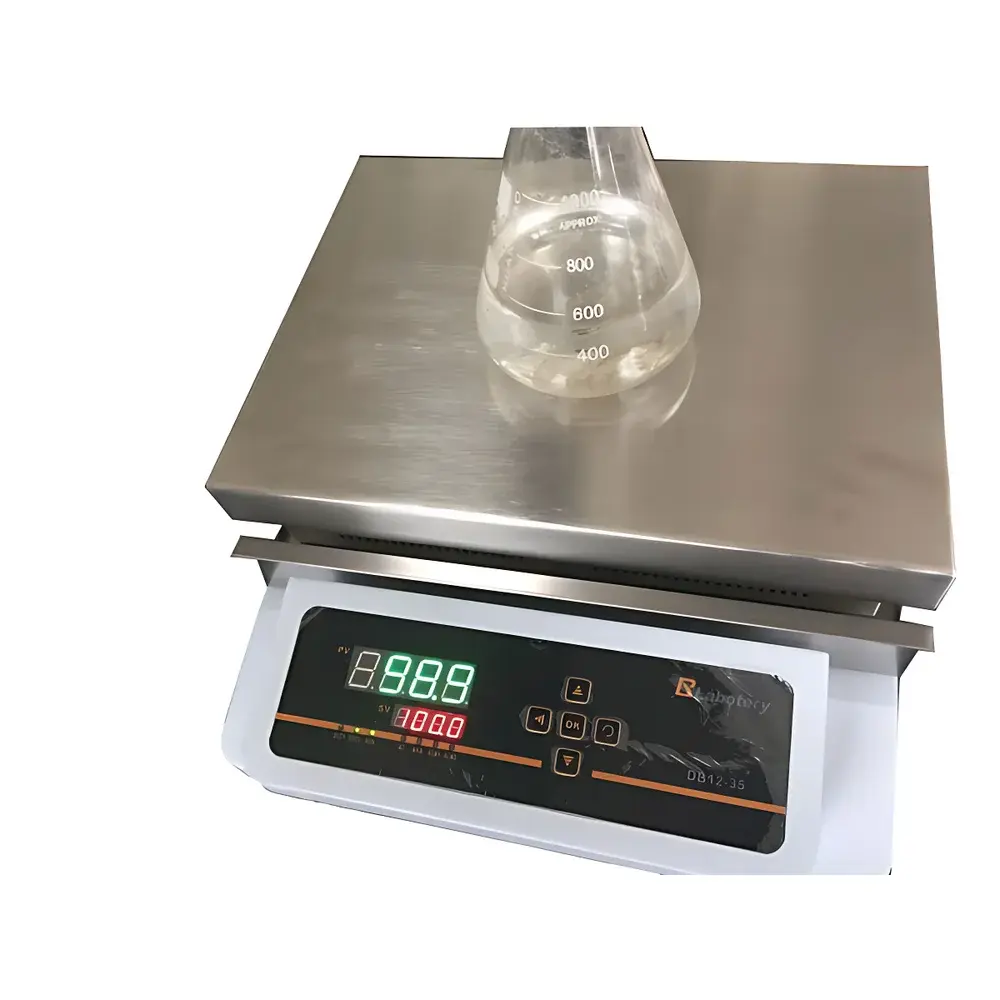
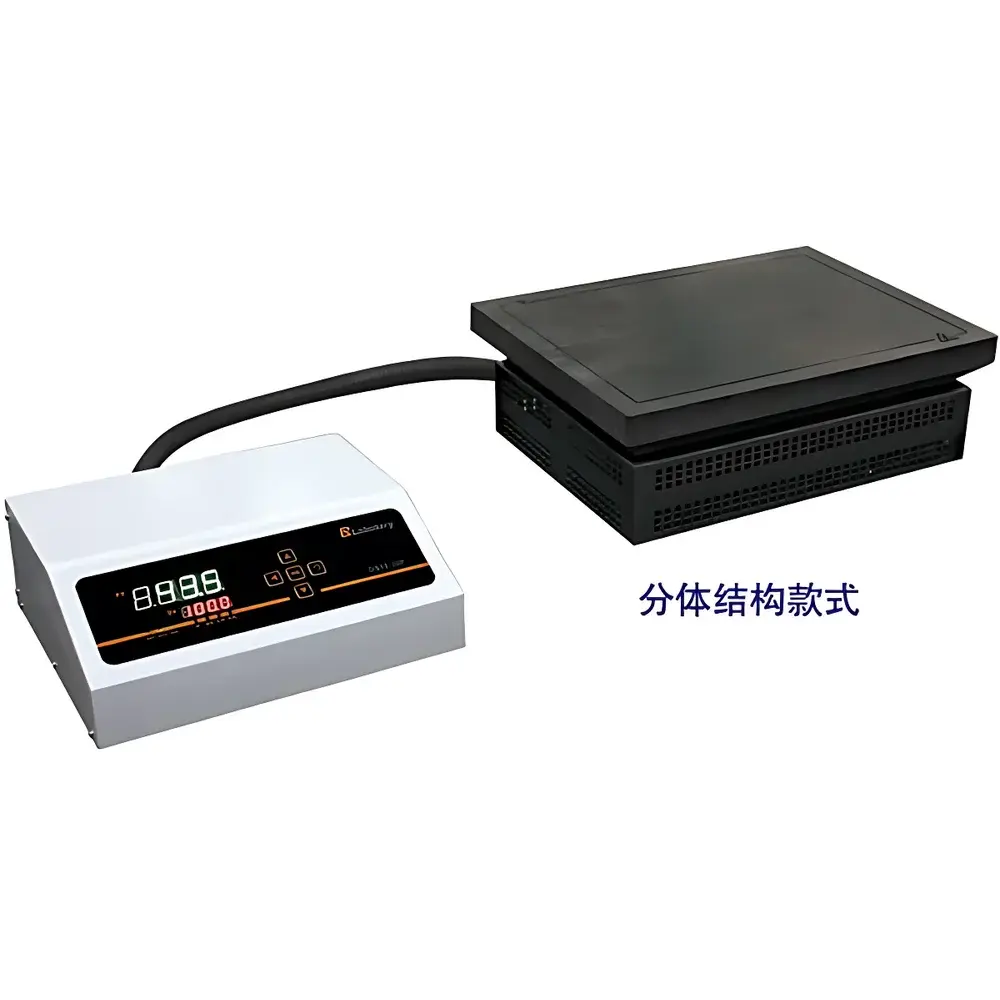
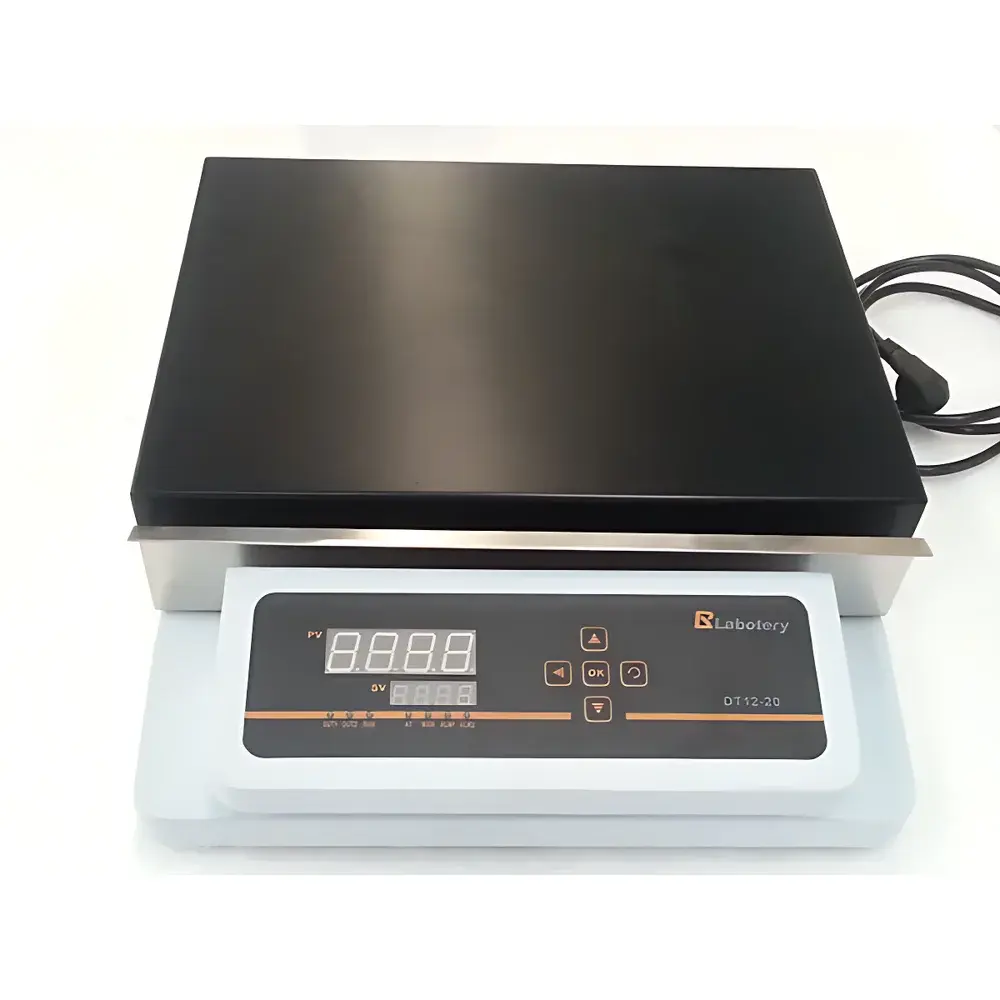
Labotery DS24-35F Constant-Temperature Electric Heating Plate with Graphite Heating Surface
| Brand | Labotery |
|---|---|
| Origin | Tianjin, China |
| Model | DS24-35F |
| Heating Power | 2–4.5 kW |
| Max. Heating Temperature | 460 °C |
| Heating Zone Dimensions | 400 × 600 mm |
| Display | LCD |
| Heating Surface Material | Isostatic Graphite |
| Plate Construction | Aluminum Alloy Frame with Graphite Top |
Overview
The Labotery DS24-35F Constant-Temperature Electric Heating Plate is a precision-engineered laboratory heating platform designed for controlled, uniform thermal treatment of samples during digestion, evaporation, acid reflux, drying, and pre-concentration procedures. Unlike conventional hot plates relying on resistive coil elements beneath metal surfaces, the DS24-35F integrates an isostatically pressed graphite heating surface—selected for its exceptional thermal stability, chemical inertness, and resistance to thermal shock across extended operating cycles. This architecture enables consistent heat distribution (±1.5 °C uniformity across the working zone at 300 °C), minimizes localized hot spots, and ensures reproducible sample treatment essential for trace-metal analysis and regulatory-compliant digestion workflows. The unit operates within a programmable temperature range of ambient to 460 °C and is engineered for continuous-duty applications in ISO/IEC 17025-accredited laboratories, EPA Method 3050B/3051A/3052 digestion protocols, and ASTM D3682–22 ash content preparation.
Key Features
- Isostatic graphite heating surface rated for continuous operation up to 460 °C — provides superior corrosion resistance against concentrated HNO₃, HF, HCl, and aqua regia; eliminates surface pitting and metal leaching common with stainless steel or aluminum-only plates.
- Aluminum alloy structural frame with integrated thermal insulation — reduces external casing temperature (<60 °C at 400 °C setpoint), enhances operator safety, and improves energy efficiency.
- LCD digital interface with dual-parameter display (setpoint & real-time surface temperature) — supports ramp-hold programming, timer-based auto-shutdown (1–999 min), and overtemperature alarm (adjustable threshold ±5 °C above setpoint).
- Robust PID temperature control algorithm — achieves ±2 °C accuracy across full range (verified per IEC 61000-4-30 harmonic immunity testing) with <15-minute stabilization time from ambient to 350 °C.
- Electrical safety compliance: double-insulated heating circuitry, grounded chassis, and Class I protection per IEC 61010-1 Ed. 3.0; CE-marked for laboratory use under EMC Directive 2014/30/EU.
Sample Compatibility & Compliance
The DS24-35F accommodates standard digestion vessels—including Teflon® PFA, quartz, borosilicate glass, and quartz-crucible sets—within its 400 × 600 mm active heating zone. Its graphite surface is compatible with open-vessel hotplate digestion per US EPA SW-846 Method 3050B (for soils/sediments), AOAC 999.10 (for food matrices), and ISO 11466 (for contaminated soil analysis). The unit meets mechanical and thermal requirements for GLP-aligned sample preparation environments and supports audit-ready documentation when paired with Labotery’s optional RS-232/USB data logging module (compliant with FDA 21 CFR Part 11 for electronic records and signatures).
Software & Data Management
While the DS24-35F operates as a standalone instrument, it supports external data acquisition via analog 0–5 V output (proportional to surface temperature) and digital TTL-level trigger signals for synchronized start/stop with fume hood interlocks or automated sample handlers. Optional Labotery HTLink™ software (v3.2+) enables remote parameter configuration, real-time temperature graphing, event-logged timestamped profiles, and CSV export for LIMS integration. All logged data include operator ID, method ID, calibration certificate reference, and environmental timestamp—fulfilling ALCOA+ data integrity principles (Attributable, Legible, Contemporaneous, Original, Accurate, Complete, Consistent, Enduring, Available).
Applications
- Acid digestion of environmental samples (soils, sludges, sediments) prior to ICP-MS or AAS quantification.
- Controlled evaporation of digestates to near-dryness without spattering or analyte loss.
- Preparation of calibration standards requiring matrix-matched heating profiles.
- Thermal conditioning of catalysts, polymers, and ceramic precursors in materials science labs.
- Boiling-point elevation studies and solvent reflux setups in organic synthesis support.
- Teaching laboratory use in undergraduate analytical chemistry courses for method validation exercises.
FAQ
What is the maximum recommended load capacity for the DS24-35F heating surface?
The plate supports static loads up to 15 kg distributed evenly across the 400 × 600 mm zone; exceeding this may compromise graphite surface flatness and thermal contact uniformity.
Can the DS24-35F be used under a fume hood with restricted airflow?
Yes — its convection-independent heating mechanism and low external surface temperature make it suitable for enclosed hoods; ensure minimum 100 mm clearance around all sides for ventilation.
Is third-party calibration certification available?
Labotery provides NIST-traceable calibration certificates (per ISO/IEC 17025) upon request; includes verification at 100 °C, 250 °C, and 400 °C using calibrated Pt100 probes.
Does the unit comply with RoHS and REACH directives?
Yes — all materials, including graphite grade IG-110 (Schunk) and aluminum alloy 6063-T5, are fully documented for restricted substance compliance (SVHC list v28, Annex XIV).
How often should the graphite surface be inspected for microcracking?
Visual inspection is recommended every 200 operational hours; minor surface oxidation is normal, but visible fissures >0.2 mm depth require replacement to maintain thermal uniformity and chemical containment integrity.



