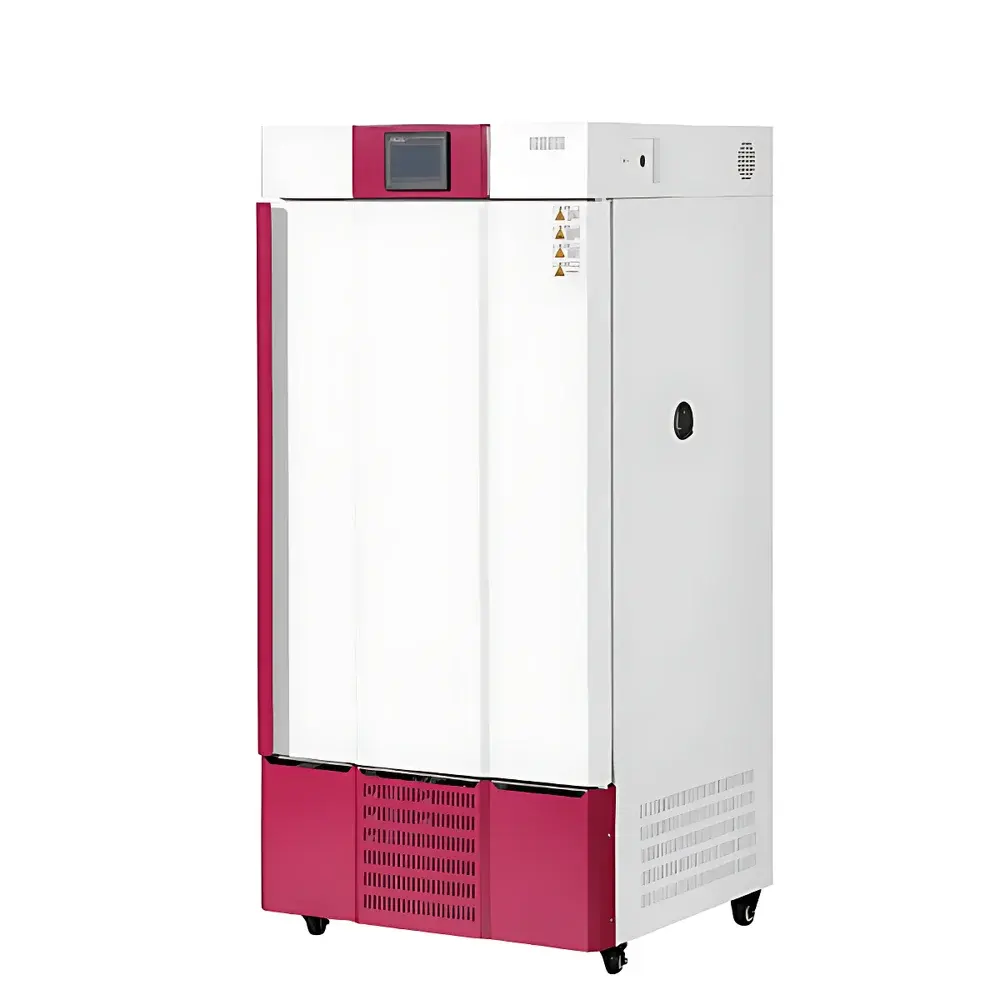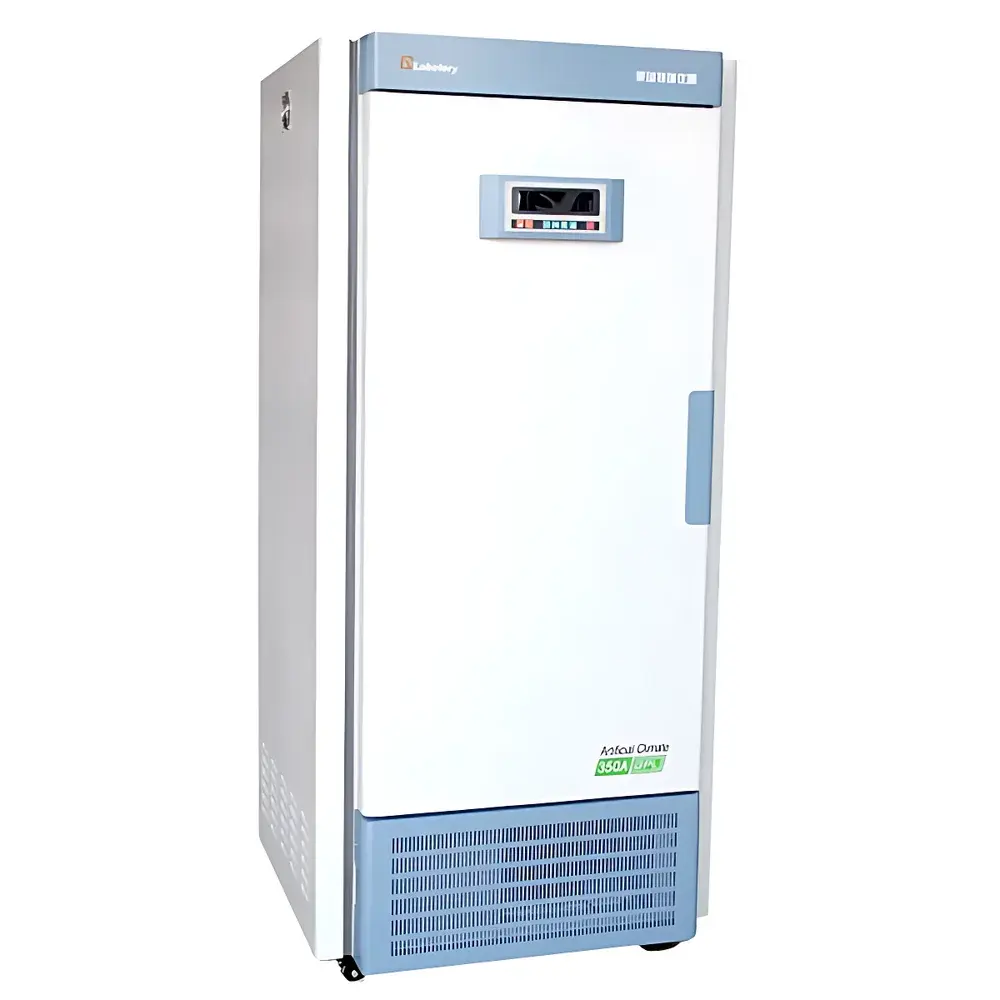
Labotery GPL-450A Precision Climate Chamber
| Brand | Labotery |
|---|---|
| Origin | Tianjin, China |
| Model | GPL-450A |
| Temperature Range (with lighting) | 10–60 °C |
| (without lighting) | 0–60 °C |
| Temperature Uniformity | ±1 °C |
| Humidity Range | 30–95 %RH |
| Chamber Volume | 450 L |
| Control System | PID-based microcomputer controller with multi-segment programmable logic |
| Lighting Source | Adjustable LED cold-light array (0–25,000 lx) |
| Construction | Mirror-finish 304 stainless steel interior |
| Power Supply | AC 220 V, 50 Hz |
| Input Power | 2100 W |
Overview
The Labotery GPL-450A Precision Climate Chamber is an advanced environmental simulation system engineered for reproducible, long-term biological and botanical experimentation under tightly controlled temperature, relative humidity, and photoperiod conditions. Based on the Couette-type air circulation architecture and dual-channel PID feedback control, the chamber employs a hermetically sealed refrigeration loop with hydrophilic polymer-based humidification and condensation-driven dehumidification to maintain stable climatic profiles across its 450 L working volume. Unlike basic incubators, the GPL-450A integrates independent regulation of thermal, hygral, and photometric parameters—enabling precise emulation of diurnal cycles, seasonal gradients, and geographically specific microclimates. It complies with ISO 17025 requirements for environmental test equipment validation and supports GLP-compliant operation when configured with audit-trail-enabled data logging (optional RS485/USB interface and FDA 21 CFR Part 11–compliant software).
Key Features
- High-fidelity climate control: ±1 °C temperature uniformity and ±3 %RH humidity stability (balanced mode), validated per ASTM E2875–22 guidelines for environmental chambers.
- Energy-efficient cooling system featuring R134a-free, oil-free scroll compressor with integrated dust filtration—designed for >20,000 hours MTBF and minimal thermal drift during extended operation.
- Multi-spectrum LED illumination module (0–25,000 lx), calibrated to CIE standard illuminant D65, with adjustable photoperiod scheduling and spectral consistency across intensity levels.
- Corrosion-resistant 304 stainless steel chamber interior with radius-rounded corners (R15), seamless welds, and autoclavable removable shelves—facilitating ISO 14644–1 Class 5 cleanroom-compatible decontamination protocols.
- Dual-door design: outer insulated door with magnetic seal and inner tempered glass observation window with optional lockable latch—minimizing thermal load disruption during visual monitoring.
- Intuitive 7-inch TFT-LCD touchscreen interface supporting 30-segment programmable profiles, each with independently configurable ramp rates for temperature, humidity, light intensity, and dwell time.
- Integrated safety architecture: independent over-temperature cutoff (±5 °C deviation threshold), low-water-level alarm, ground-fault circuit interrupter (GFCI), and real-time fault diagnostics displayed as alphanumeric error codes (e.g., “E07 = Humidity Sensor Timeout”).
Sample Compatibility & Compliance
The GPL-450A accommodates diverse biological specimens—including microbial cultures (bacteria, fungi, yeasts), plant seedlings (Arabidopsis, rice, maize), tissue explants, and small-scale entomological colonies—within its validated operational envelope. Its chamber geometry (760 × 550 × 1145 mm W×D×H) allows placement of standard ISO 8573–1 compliant petri dishes, multi-well plates, growth trays, and modular bioreactor vessels. The unit meets IEC 61000–4 electromagnetic compatibility standards and conforms to EN 61010–1 safety requirements for laboratory equipment. When equipped with optional GMP-compliant printer and electronic signature modules, it satisfies Annex 11 and USP analytical instrument qualification (AIQ) criteria.
Software & Data Management
The GPL-450A supports bidirectional communication via RS485 (Modbus RTU) or USB 2.0 interfaces. Optional Labotery ClimateLink™ software enables real-time parameter visualization, historical trend analysis, CSV export, and automated report generation—including calibration logs, alarm histories, and deviation summaries. All data entries are timestamped with NTP-synchronized UTC clocks and include operator ID fields. Audit trail functionality records every configuration change, user login/logout event, and manual override action—ensuring full traceability for regulatory submissions (FDA, EMA, PMDA). Data encryption (AES-256) and role-based access control (RBAC) align with HIPAA and GDPR technical safeguards.
Applications
- Phytopathology research: Simulating pathogen infection windows under defined RH/temperature stress combinations (e.g., Botrytis cinerea sporulation at 92 %RH/20 °C).
- Seed germination kinetics: Multi-condition screening of dormancy-breaking thresholds using programmable thermoperiods and light/dark transitions.
- Microbial stability testing: Accelerated shelf-life assessment of probiotics under variable moisture and thermal cycling per ICH Q5C.
- Cell culture pre-acclimatization: Gradual conditioning of mammalian cell lines to hypoxic or hyperosmotic environments prior to bioreactor transfer.
- Educational laboratories: Standardized teaching modules for environmental physiology, circadian rhythm analysis, and climate-resilience trait mapping in crop breeding programs.
FAQ
What is the maximum continuous operating duration for the GPL-450A?
The chamber is rated for indefinite unattended operation under nominal load conditions, provided ambient room temperature remains between +5 °C and +35 °C and relative humidity does not exceed 80 %RH.
Can the unit maintain 95 %RH at 60 °C simultaneously?
Yes—this combination falls within the validated operational envelope, though stabilization time increases to approximately 45 minutes due to latent heat management constraints.
Is third-party IQ/OQ/PQ documentation available?
Labotery provides standardized qualification templates aligned with ASTM E2500 and ISPE Baseline Guide Volumes 4–5; site-specific execution requires commissioning by certified field service engineers.
Does the LED lighting system emit UV radiation?
No—the spectrum is restricted to 400–700 nm (photosynthetically active radiation), with negligible output below 380 nm as verified by spectroradiometric certification per CIE S 026/E:2019.
How is humidity calibrated and verified?
Factory calibration uses NIST-traceable chilled-mirror hygrometers; users may perform field verification using saturated salt solutions (e.g., NaCl for 75.3 %RH at 25 °C) per ISO 8573–3 Annex B.