
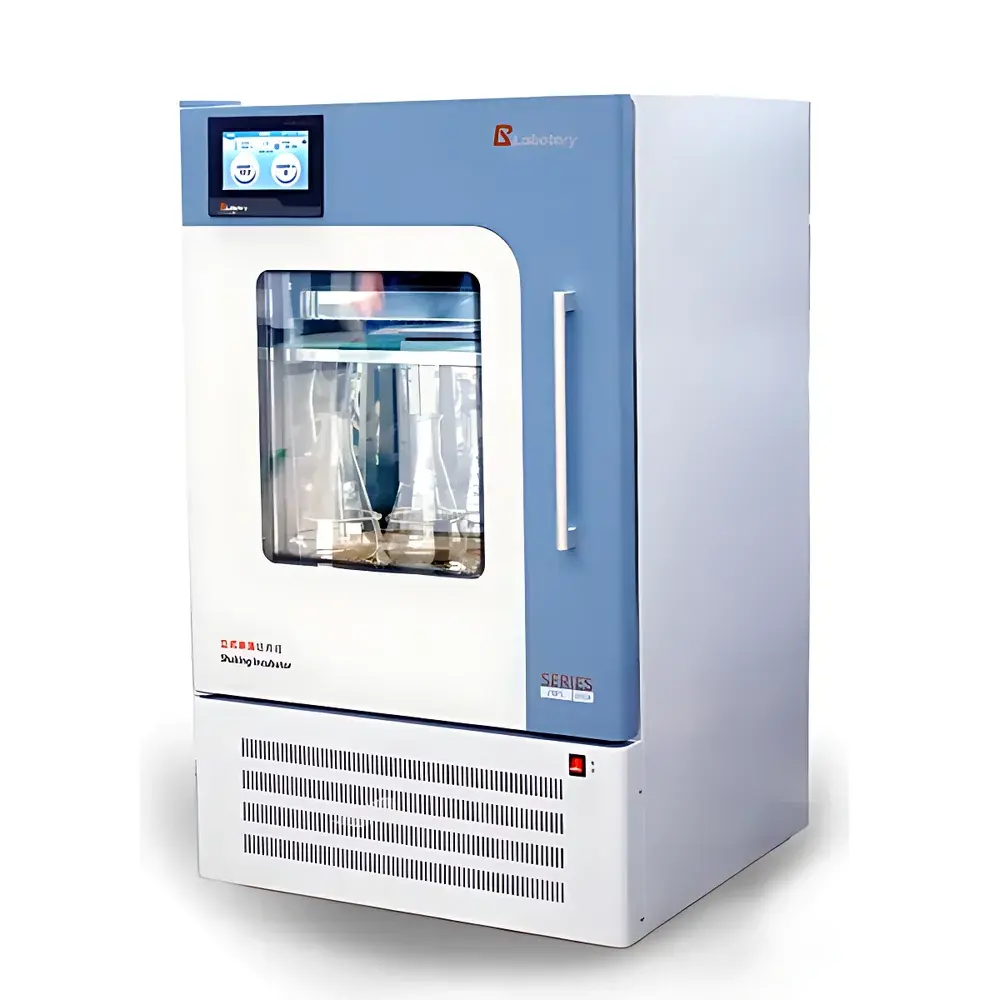
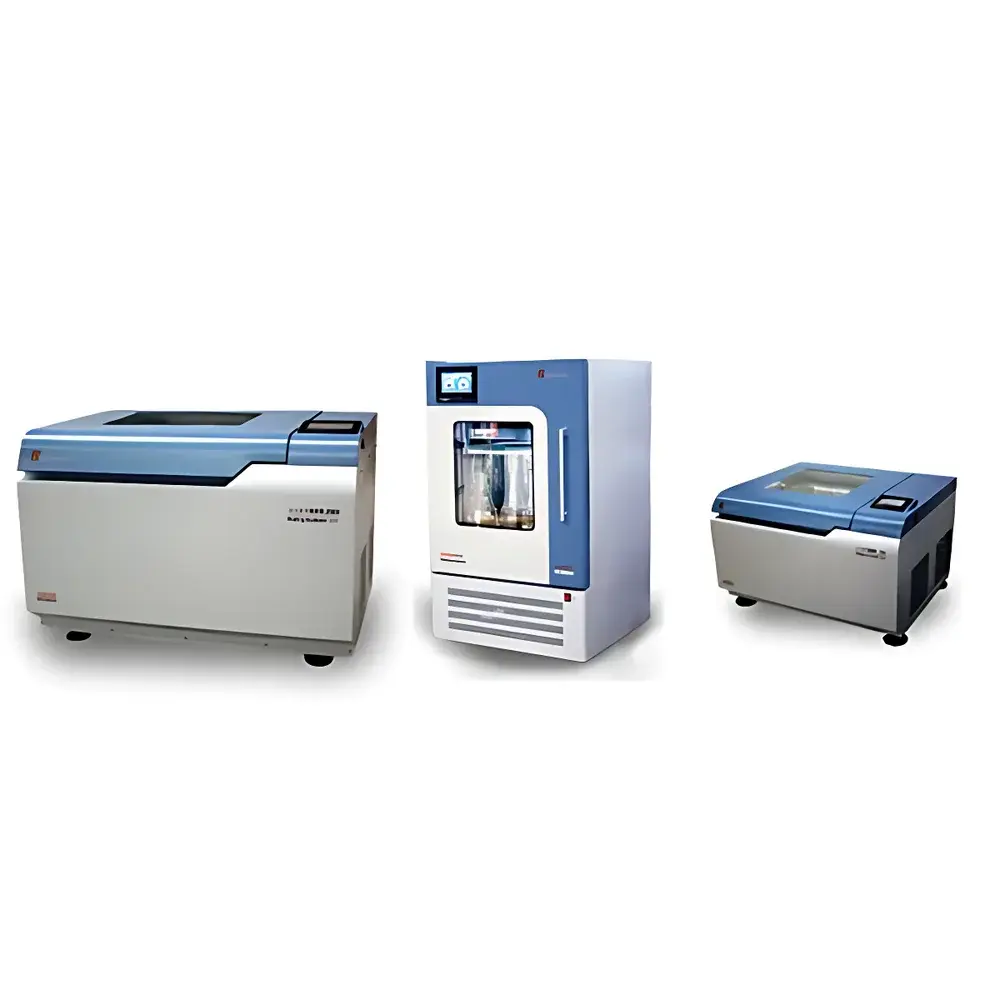
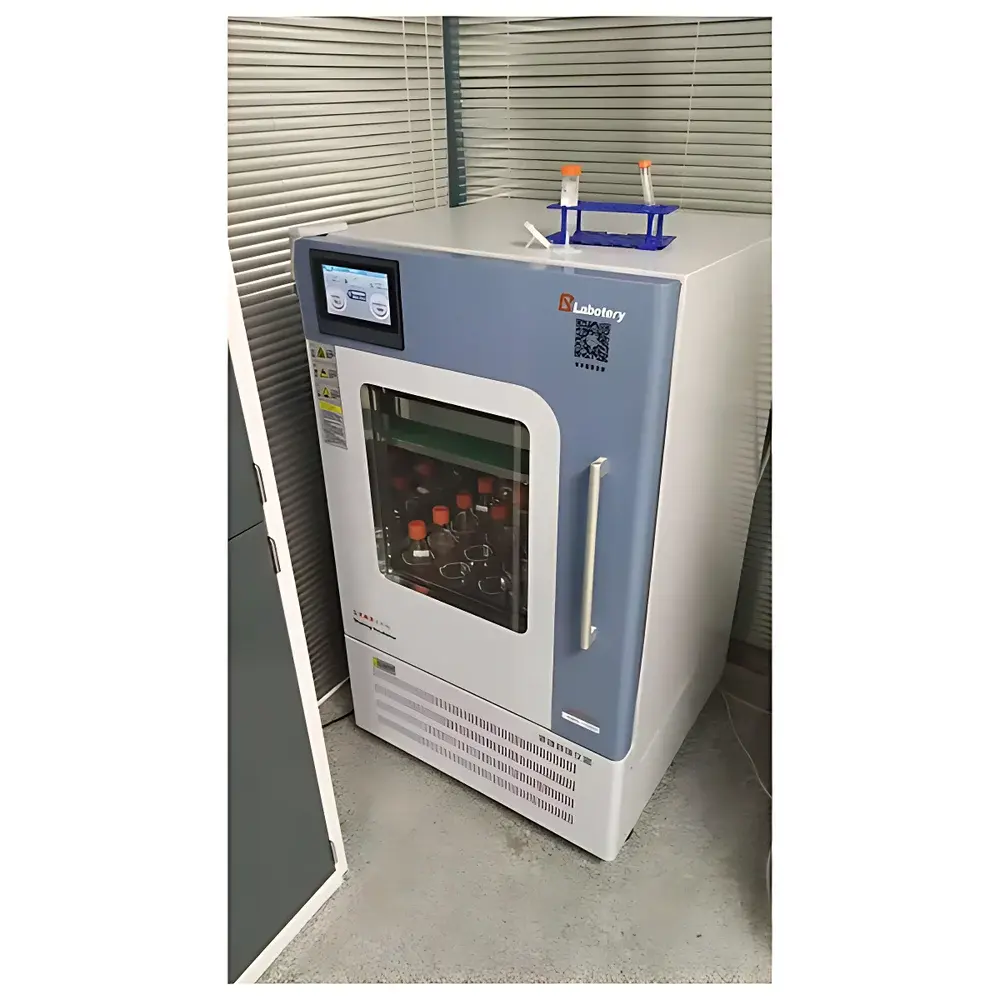
Labotery ZQPL-200G Precision Vertical Illuminated Orbital Shaker Incubator
| Brand | Labotery |
|---|---|
| Origin | Tianjin, China |
| Model | ZQPL-200G |
| Shaker Type | Full-Temperature Orbital Incubator with Integrated Illumination |
| Timer Range | 0–999 h 59 min |
| Oscillation Frequency | 10–300 rpm |
| Oscillation Amplitude | Ø26 mm |
| Temperature Range | 4–65°C (dark) / 10–65°C (with illumination) |
| Number of Shaking Platforms | 2 |
| 光照 Intensity | 0–16,000 lx (standard), up to 30,000 lx (optional) |
| Temperature Resolution | ±0.1°C |
| Temperature Uniformity | ±0.5°C at 37°C |
| Platform Dimensions | 439 × 528 mm per shelf |
| Power Consumption | 1.3 kW |
| Input Voltage | AC 220 V ±10%, 50–60 Hz |
| External Dimensions (W×D×H) | 740 × 780 × 1235 mm |
| Net Weight | 170 kg |
Overview
The Labotery ZQPL-200G is a precision-engineered vertical orbital shaker incubator integrating full-temperature control, programmable illumination, and dual-platform orbital shaking in a single compact footprint. Designed for rigorous life science applications—including microbial cultivation, cell suspension expansion, protein expression, and photobiological assays—the instrument operates on the principle of controlled orbital motion (26 mm diameter) combined with P.I.D.-regulated air-jacketed thermal management and uniform LED-based spectral illumination. Its dual-shelf architecture enables independent or synchronized operation of two sample zones, while the forced-air circulation system—based on a centrifugal airflow path—ensures thermal homogeneity within ±0.5°C at 37°C, meeting ISO 13408-1 and USP environmental consistency requirements for bioprocess validation.
Key Features
- Dual-function design: operates as both a static illuminated incubator and a dynamic orbital shaker—eliminating the need for separate equipment in multi-step workflows.
- Full-spectrum white LED lighting system with adjustable intensity (0–16,000 lx standard; optional 0–30,000 lx), calibrated for photosynthetic efficiency and circadian rhythm studies without UV emission or thermal load interference.
- Vertical double-tier configuration with independently accessible 439 × 528 mm stainless-steel platforms; each supports configurable load capacities (e.g., 500 mL × 12 flasks per shelf) and accommodates universal spring clamps or fixed fixtures.
- High-fidelity servo motor drive system delivering oscillation accuracy of ±1 rpm across the full 10–300 rpm range, with zero-maintenance operation and no belt wear or slippage.
- 16-bit true-color 7-inch capacitive touchscreen interface supporting both constant-setpoint and multi-segment programmable operation—with up to 20 user-defined programs, each containing temperature, speed, illumination, and timer parameters.
- Comprehensive data integrity architecture: real-time curve plotting, one-year local data retention (timestamped, non-volatile memory), USB export (CSV or image format), and optional thermal printing via external mini-printer module.
- Integrated safety protocols including door-activated motor cutoff, over-temperature audiovisual alarm with automatic power cutoff, self-diagnostic error logging, and operator-access encryption with timed UI lockout.
Sample Compatibility & Compliance
The ZQPL-200G accommodates standard laboratory vessels ranging from 100 mL Erlenmeyer flasks to 2 L bioreactor bottles, with validated compatibility for shake flask cultures under aerobic conditions (enhanced via spring-loaded vented lid ports). Its chamber—fabricated from electropolished 304 stainless steel with seamless corners—meets ISO 14644-1 Class 7 cleanroom surface standards for ease of decontamination. The unit complies with IEC 61010-1:2010 for laboratory equipment safety and incorporates a certified R134a-free refrigeration circuit meeting EU F-Gas Regulation (EU) No 517/2014. Optional UV-C germicidal lamps (254 nm) integrated into the chamber ceiling support periodic sterilization per ISO 14644-5 Annex B protocols.
Software & Data Management
The embedded control firmware supports GLP-compliant audit trails: all parameter changes, alarm events, and manual interventions are time-stamped and stored with user ID attribution. Data export conforms to ASTM E2500-21 Annex A3 for raw measurement traceability. The system supports 21 CFR Part 11-compliant electronic signatures when paired with optional network-enabled authentication modules. Remote monitoring is available via Labotery’s secure MQTT-based mobile application (iOS/Android), enabling real-time alerts, parameter override authorization, and historical trend review—all without compromising firewall integrity.
Applications
- Phototrophic algal and cyanobacterial cultivation under controlled PAR (Photosynthetically Active Radiation) conditions.
- Recombinant protein expression in E. coli and yeast using temperature- and agitation-coupled induction protocols.
- Stem cell suspension culture requiring precise oxygen transfer and low-shear orbital motion.
- Environmental microbiology studies involving light-dependent degradation kinetics of organic pollutants.
- Pharmaceutical stability testing per ICH Q1A(R2) guidelines, where simultaneous temperature, light, and agitation stressors are applied.
- Bioprocess development for monoclonal antibody production in shake-flask screening cascades.
FAQ
Does the ZQPL-200G support GMP-compliant data archiving?
Yes—when configured with the optional network module and user authentication license, it provides electronic signature capability, immutable audit logs, and encrypted data export compliant with FDA 21 CFR Part 11 Annex 11 requirements.
Can the illumination spectrum be customized beyond white LED?
Standard configuration uses broad-spectrum white LEDs optimized for chlorophyll absorption; narrow-band red/blue or far-red modules are available as OEM add-ons upon request.
What is the maximum flask volume supported per platform at 300 rpm?
At full speed, the recommended maximum is 2 L bottles with ≤50% fill volume to maintain stable orbital dynamics and avoid splashing-induced contamination risk.
Is external environmental temperature compensation active during calibration?
Yes—the built-in ambient temperature probe feeds real-time correction values to the PID controller, ensuring chamber setpoint accuracy remains within specification across ambient lab conditions of 5–25°C.
How is thermal uniformity verified during factory acceptance testing?
Each unit undergoes 24-hour thermal mapping per ISO/IEC 17025-accredited procedures using 9-point NIST-traceable thermocouples, with results documented in the Certificate of Conformance shipped with the instrument.




