
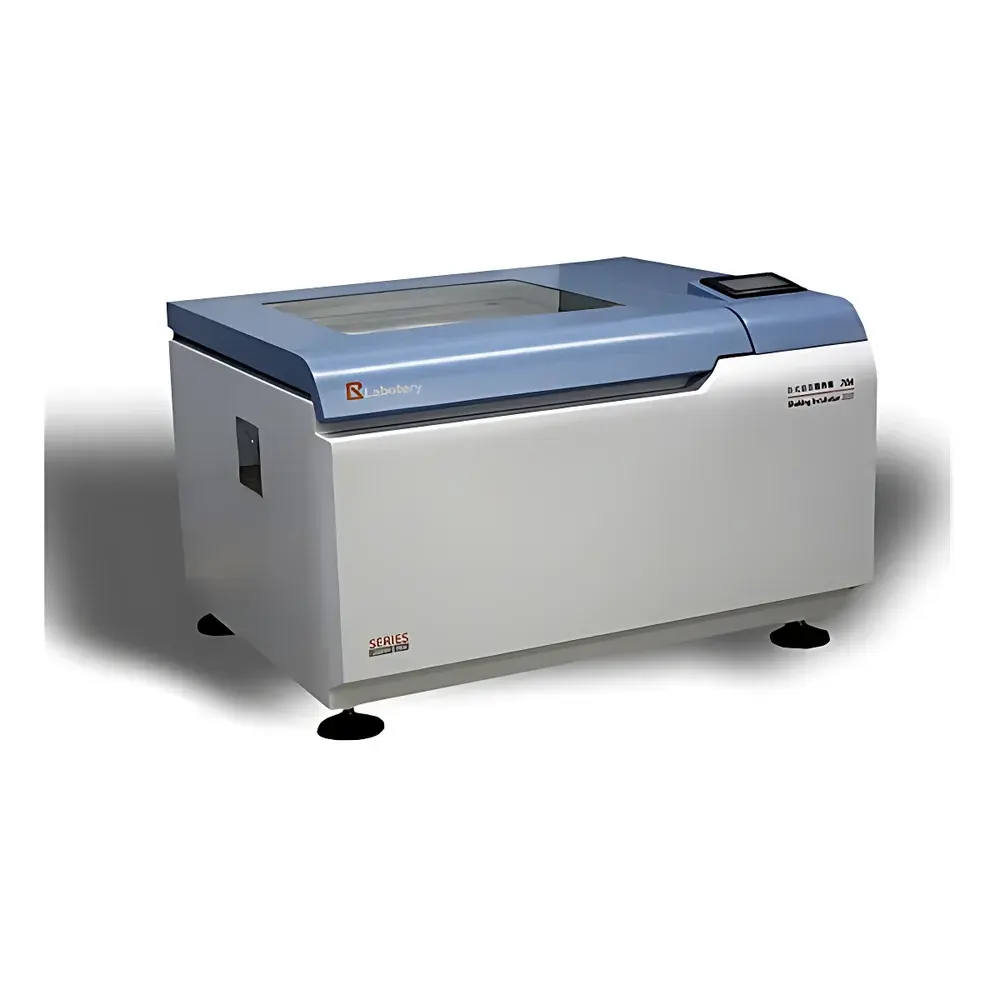
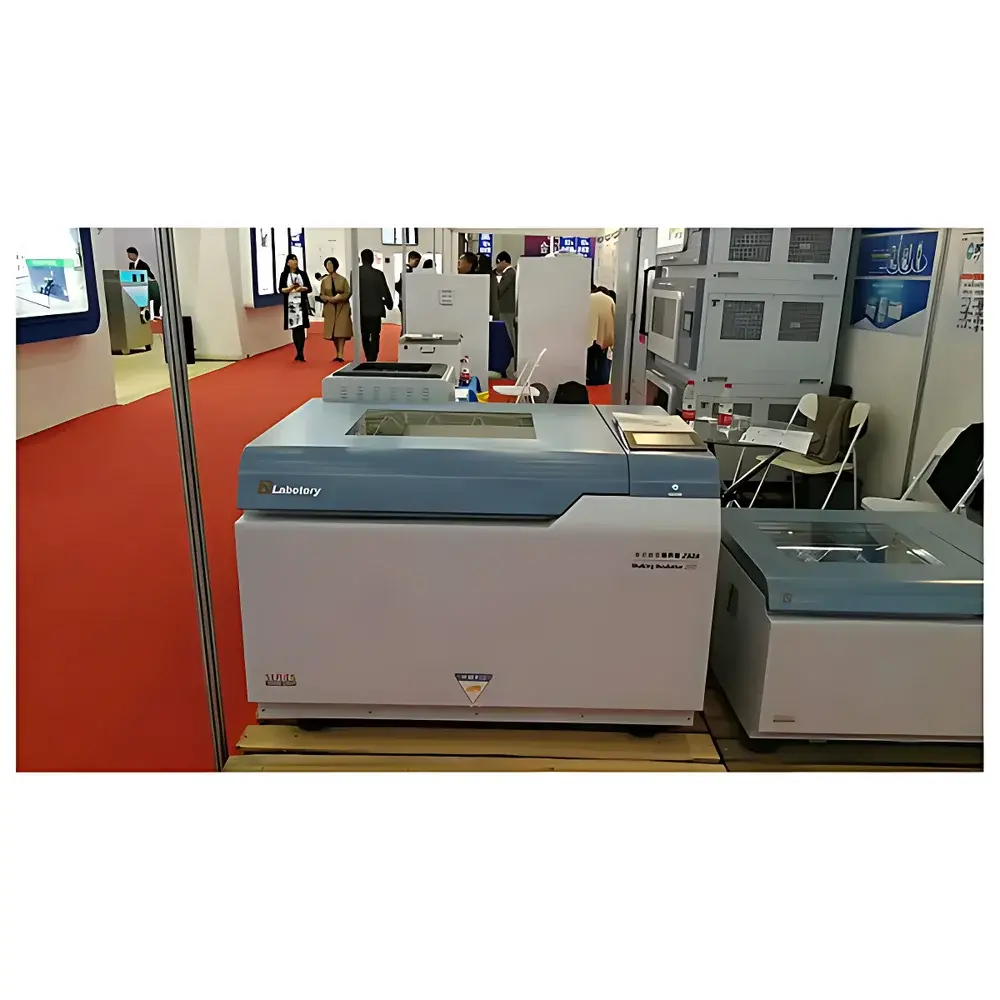
Labotery ZQPW-90 Precision Horizontal Orbital Incubator Shaker
| Brand | Labotery |
|---|---|
| Origin | Tianjin, China |
| Model | ZQPW-90 |
| Temperature Range | 4–65 °C |
| Temperature Uniformity | ±0.5 °C (at 37 °C) |
| Temperature Resolution | 0.1 °C |
| Oscillation Frequency | 10–400 rpm |
| Frequency Accuracy | ±1 rpm |
| Orbit Diameter | 26 mm |
| Timer Range | 0–9999 min |
| Platform Dimensions | 520 × 430 mm |
| Standard Capacity | 100 mL × 25 |
| Power Consumption | 0.7 kW |
| Input Voltage | AC 220 V ±10%, 50–60 Hz |
| External Dimensions (W×D×H) | 900 × 730 × 640 mm |
| Control System | 16-bit true-color touchscreen with PID algorithm |
| Data Storage | 1-year local history |
Overview
The Labotery ZQPW-90 Precision Horizontal Orbital Incubator Shaker is an engineered platform for controlled microbial growth, cell culture expansion, and biochemical reaction kinetics under simultaneous temperature regulation and uniform orbital agitation. It operates on the principle of horizontal orbital motion—generating consistent, low-shear mixing ideal for suspension cultures, yeast propagation, and aerobic fermentation where oxygen transfer efficiency is critical. Unlike vertical shakers or reciprocating platforms, its 26 mm orbit diameter ensures laminar fluid dynamics across a wide range of vessel sizes while minimizing shear-induced cellular stress. The unit integrates a high-efficiency, non-CFC refrigeration system with a dual-heating/cooling architecture, enabling stable thermal control from 4 °C (refrigerated storage) to 65 °C (thermophilic incubation), with real-time environmental temperature monitoring via an external probe to compensate for ambient drift.
Key Features
- 16-bit true-color touchscreen interface with intuitive PID-based temperature and speed control—displaying setpoints, real-time values, historical trends, and system status on a single screen.
- High-torque, brushless servo motor delivering precise speed control (±1 rpm accuracy) over the full 10–400 rpm range; maintenance-free operation with extended service life.
- Stainless steel mirror-finish interior chamber and electrostatically sprayed steel exterior—resistant to corrosion, easy to decontaminate, and compliant with ISO 14644-1 Class 8 cleanroom-compatible handling protocols.
- Double-layer tempered glass door with pressure-relief venting ports—enabling continuous gas exchange while maintaining thermal integrity and visual access during long-term runs.
- Integrated UV-C germicidal lamp (254 nm) and LED illumination—supporting routine sterility verification and sample observation without opening the chamber.
- Comprehensive safety architecture: door-activated motion interlock, over-temperature cut-off with audible/visual alarm, power-failure memory retention, and operator-access encryption to prevent unauthorized parameter changes.
- USB data port supporting CSV export of time-stamped temperature, speed, and runtime logs—compatible with LIMS integration and 21 CFR Part 11-compliant audit trail generation when paired with validated software extensions.
Sample Compatibility & Compliance
The ZQPW-90 accommodates standard laboratory vessels—including Erlenmeyer flasks (100–1000 mL), culture tubes, and multi-well plates—via its universal spring-loaded clamping system (520 × 430 mm platform). Vessel loading configurations are optimized for balanced mass distribution and minimal vibration transmission. The unit meets IEC 61010-1:2010 safety standards for laboratory equipment and conforms to ISO 20387:2018 requirements for biobanking infrastructure where environmental stability and traceability are mandated. While not certified for GMP manufacturing environments out-of-the-box, its data logging fidelity, calibration traceability (NIST-traceable temperature sensors optional), and configurable lockout modes support GLP-aligned workflows in academic, clinical, and contract research laboratories.
Software & Data Management
The embedded firmware supports two operational modes: fixed-parameter (constant T/rpm) and multi-step programmable sequences (up to 10 segments per program). Real-time trend curves—plotting temperature, speed, and elapsed time—are rendered on-screen and can be captured as PNG screenshots or exported with timestamps. Local storage retains 12 months of 1-minute-interval data (expandable via external USB drive). Optional firmware upgrades enable remote monitoring via secure HTTPS API endpoints—compatible with enterprise IoT dashboards—and support for Bluetooth-enabled environmental loggers. All data exports include metadata headers (instrument ID, operator tag, calibration date) to satisfy ALCOA+ data integrity principles.
Applications
- Aerobic bacterial and fungal cultivation requiring dissolved oxygen optimization (e.g., E. coli, Saccharomyces cerevisiae, Aspergillus niger)
- Mammalian cell line expansion in serum-containing or serum-free media under tightly regulated thermal conditions
- Enzyme kinetics assays and protein expression studies using shake-flask bioreactors
- Environmental microbiology: water quality testing, biodegradation rate analysis, and activated sludge acclimation
- Pharmaceutical QC: stability-indicating dissolution profiling and excipient compatibility screening
- Bioprocess development: scalable parameter mapping prior to benchtop bioreactor transfer
FAQ
What is the maximum flask size supported on the ZQPW-90 platform?
The platform accommodates up to nine 1000 mL Erlenmeyer flasks (or equivalent volume configurations) with balanced load distribution; optimal performance is achieved within the standard capacity matrix (e.g., 25 × 100 mL or 20 × 250 mL).
Does the unit support CO₂ supplementation?
Yes—optional CO₂ gas inlet port and humidity compensation module are available as factory-installed upgrades, enabling conversion to a CO₂-controlled incubator shaker for sensitive mammalian cell applications.
Can historical data be exported in machine-readable format?
Yes—USB export generates timestamped CSV files containing temperature, RPM, and runtime values at user-defined intervals (default: 1 minute), compatible with Excel, Python pandas, and statistical analysis platforms.
Is the UV sterilization function validated for microbial reduction?
The integrated 254 nm UV-C lamp delivers ≥10 mJ/cm² surface dose over 30 minutes (per ISO 15714), sufficient for routine decontamination of chamber surfaces between runs; biological indicator validation is recommended for critical applications.
What regulatory documentation is provided with the instrument?
Each unit ships with a Factory Calibration Certificate (temperature and speed), CE Declaration of Conformity, Electrical Safety Test Report (IEC 61010-1), and Firmware Version Log—available in English upon request.




