
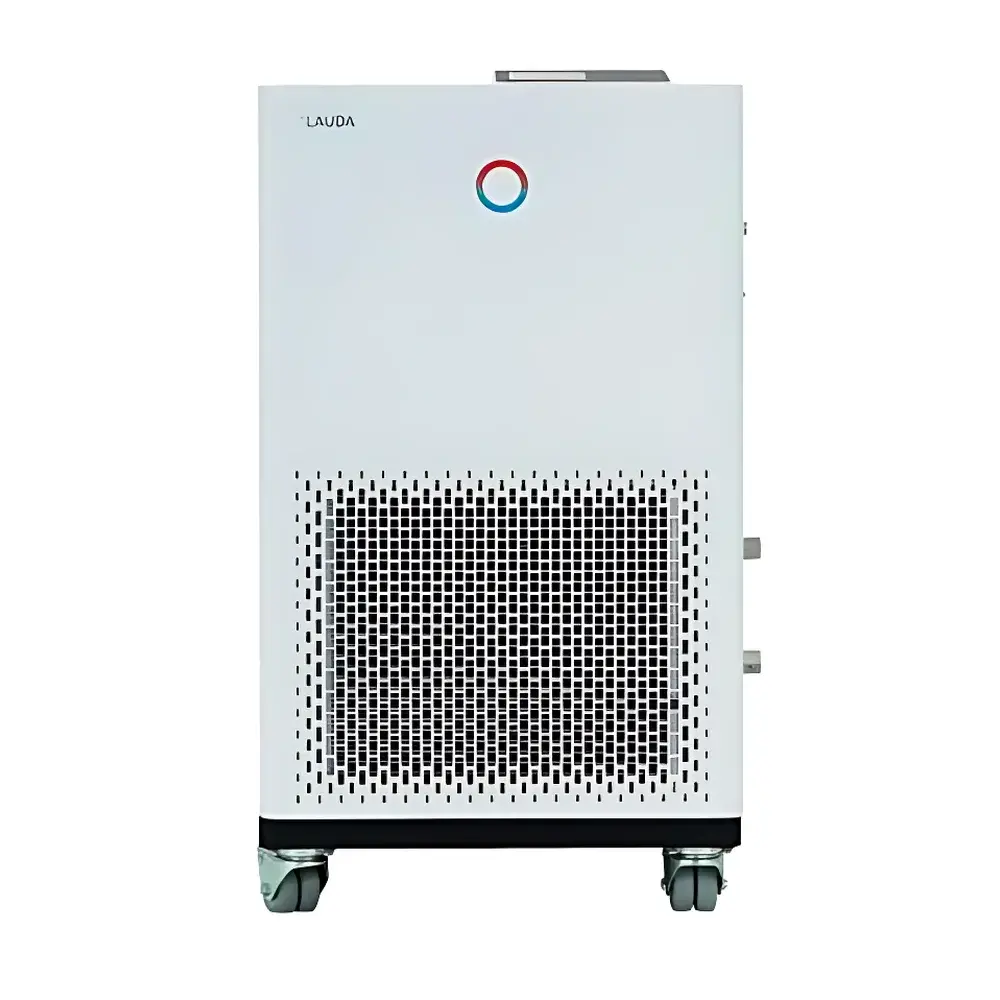
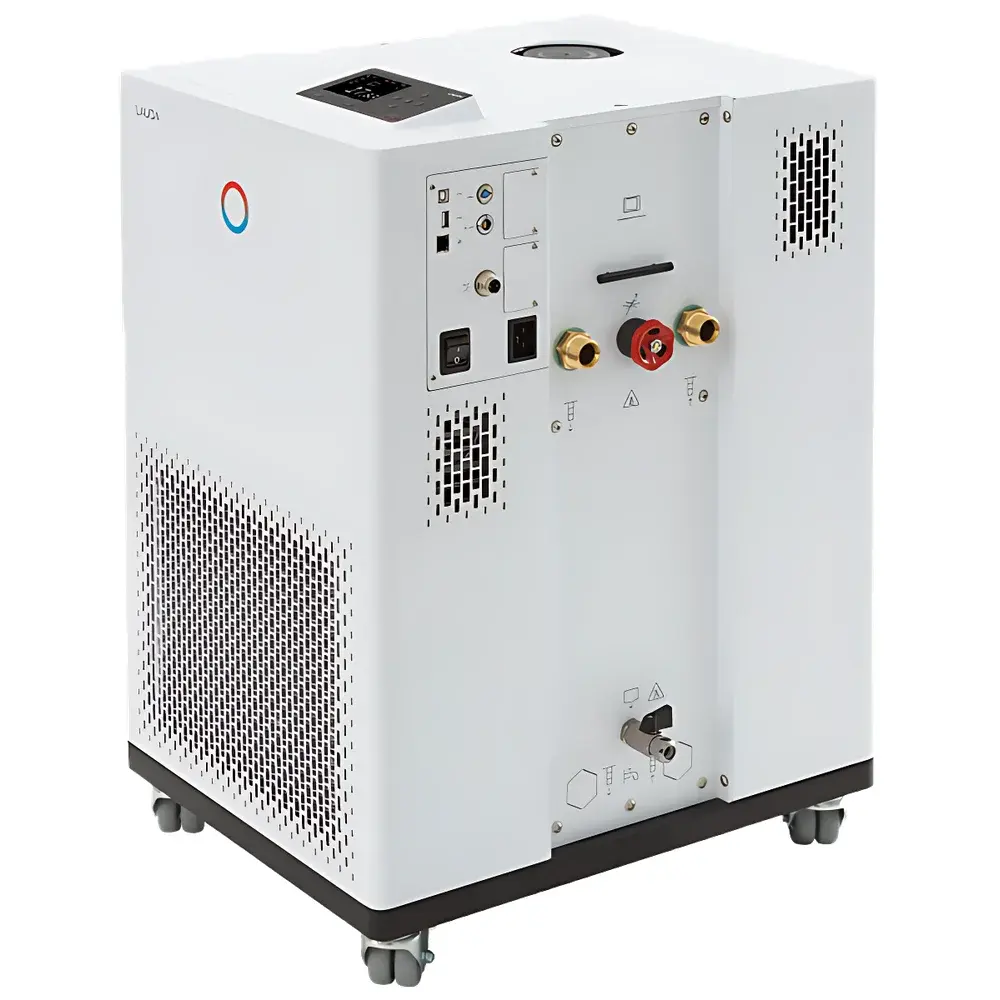
LAUDA Integral T IN230T Process Temperature Control System
| Brand | LAUDA |
|---|---|
| Origin | Germany |
| Model | IN230T |
| Bath Volume | 25.5 L |
| Temperature Range | −30 to +150 °C |
| Temperature Stability | ±0.1 K |
| Circulation Type | Internal & External |
| Cooling/Heating Mode | Dual-function |
| Pump Type | Immersed High-Flow Pump with Overflow Connection |
| Controller | Rotatable Touchscreen Interface with Dedicated Keypad |
| Network Capability | Built-in Web Server (LAN Access via PC/Tablet/Smartphone) |
| Optional Extended Power | Up to 16 kW Heating / 13 kW Cooling |
| Bypass Valve | Integrated Pressure-Limiting Bypass with Standard Configuration |
| Fill/Drain Ports | Side-Mounted for Operational Convenience |
| Compliance | Designed for GLP/GMP-aligned process development environments |
Overview
The LAUDA Integral T IN230T is a high-performance, dual-mode process temperature control system engineered for precision thermal management in laboratory-scale reaction optimization, pilot synthesis, and continuous process development. Based on closed-loop liquid circulation thermoregulation, it employs a robust refrigeration-compressor heating architecture combined with an immersed high-flow pump to deliver rapid, stable, and reproducible temperature control across an exceptionally wide operational range—from −30 °C to +150 °C. Its design prioritizes minimal internal fluid volume to reduce thermal inertia, enabling faster ramp rates and tighter dynamic response during exothermic/endothermic process transitions. The system integrates seamlessly into controlled environments where regulatory traceability, repeatability, and long-term thermal fidelity are critical—particularly in pharmaceutical process validation, fine chemical synthesis, and polymerization kinetics studies.
Key Features
- Wide-Range Thermal Operation: Sustained stability of ±0.1 K over the full −30 °C to +150 °C span, verified per DIN 12876-1 and ISO 17025 calibration protocols.
- Dual-Circulation Architecture: Supports both internal bath recirculation and external jacketed reactor cooling/heating via dedicated inlet/outlet ports with integrated pressure-limiting bypass valve.
- High-Capacity Thermal Output: Standard configuration delivers balanced heating and cooling power; optional extended-power variants support up to 16 kW heating and 13 kW cooling for demanding scale-up scenarios.
- Immersed Pump Design: Features a corrosion-resistant, high-head centrifugal pump with overflow connection and large expansion volume to accommodate thermal expansion of heat transfer fluids (e.g., silicone oil, water-glycol mixtures).
- Rotatable Controller Interface: Large backlit LCD display with tactile keypad enables ergonomic operation from multiple bench orientations; supports multilingual UI and configurable alarm thresholds.
- Embedded Network Server: Enables remote monitoring and parameter adjustment via standard web browser over local area network—no proprietary software required. Supports audit-trail logging compatible with FDA 21 CFR Part 11 requirements when deployed with validated IT infrastructure.
Sample Compatibility & Compliance
The IN230T accommodates a broad spectrum of heat transfer media—including deionized water, aqueous glycol solutions, and high-boiling-point silicone oils—making it suitable for applications requiring inert atmospheres or elevated flash-point safety margins. Its stainless-steel bath chamber and fluoropolymer-sealed wetted parts ensure compatibility with aggressive solvents and catalyst systems common in catalytic hydrogenation or Grignard chemistry. The unit complies with CE marking directives (2014/30/EU EMC, 2014/35/EU LVD), EN 61000-6-2/6-4 immunity/emission standards, and is designed to support GLP and GMP workflows through configurable event logging, user-access levels, and time-stamped setpoint history.
Software & Data Management
No external software installation is required: all configuration, real-time monitoring, and historical data review occur through the built-in HTML5-based web interface. Logged parameters include setpoint, actual bath temperature, pump speed, compressor status, and error codes—all timestamped and exportable as CSV files. When integrated into a validated laboratory information management system (LIMS), the device supports structured data exchange via HTTP GET/POST requests. Audit trail functionality records operator ID, timestamp, and action type for every parameter change, satisfying traceability requirements under ISO/IEC 17025:2017 clause 7.7 and USP .
Applications
- Controlled-temperature reaction screening in API intermediate synthesis
- Calorimetric profiling of batch and semi-batch reactors
- Thermal stress testing of formulated products (e.g., emulsions, suspensions)
- Conditioning of analytical instrumentation (e.g., HPLC column ovens, viscometer baths)
- Material testing under defined thermal cycles (e.g., ASTM D3418, ISO 3146)
- Process analytical technology (PAT) integration for real-time thermal feedback loops
FAQ
What heat transfer fluids are recommended for operation at −30 °C?
Low-viscosity silicone oils (e.g., LAUDA Therminol LT) or specialized low-temperature glycol–water blends (≤30 % glycol) are validated for sub-zero performance. Ethanol/water mixtures are not recommended due to volatility and flammability concerns.
Is external chiller integration possible?
Yes—the IN230T features a dedicated external cooling loop interface allowing connection to facility chillers or secondary refrigeration units for enhanced cooling capacity beyond the built-in compressor limit.
Can the system maintain temperature stability during rapid external heat loads?
Its low-fluid-volume design and high thermal mass reservoir minimize transient drift; stability of ±0.1 K is maintained even under step-load changes up to 2 kW, as verified per LAUDA internal test protocol TP-IN230T-04.
Does the web server support TLS encryption or LDAP authentication?
The embedded server operates over unencrypted HTTP by default; TLS and enterprise directory integration require deployment behind a validated reverse proxy configured per organizational IT security policy.
What maintenance intervals are recommended for the compressor and pump?
Compressor service is advised every 24 months under continuous operation; pump impeller inspection and seal replacement are scheduled annually or after 8,000 operating hours—log entries are auto-generated and accessible via the web interface.



