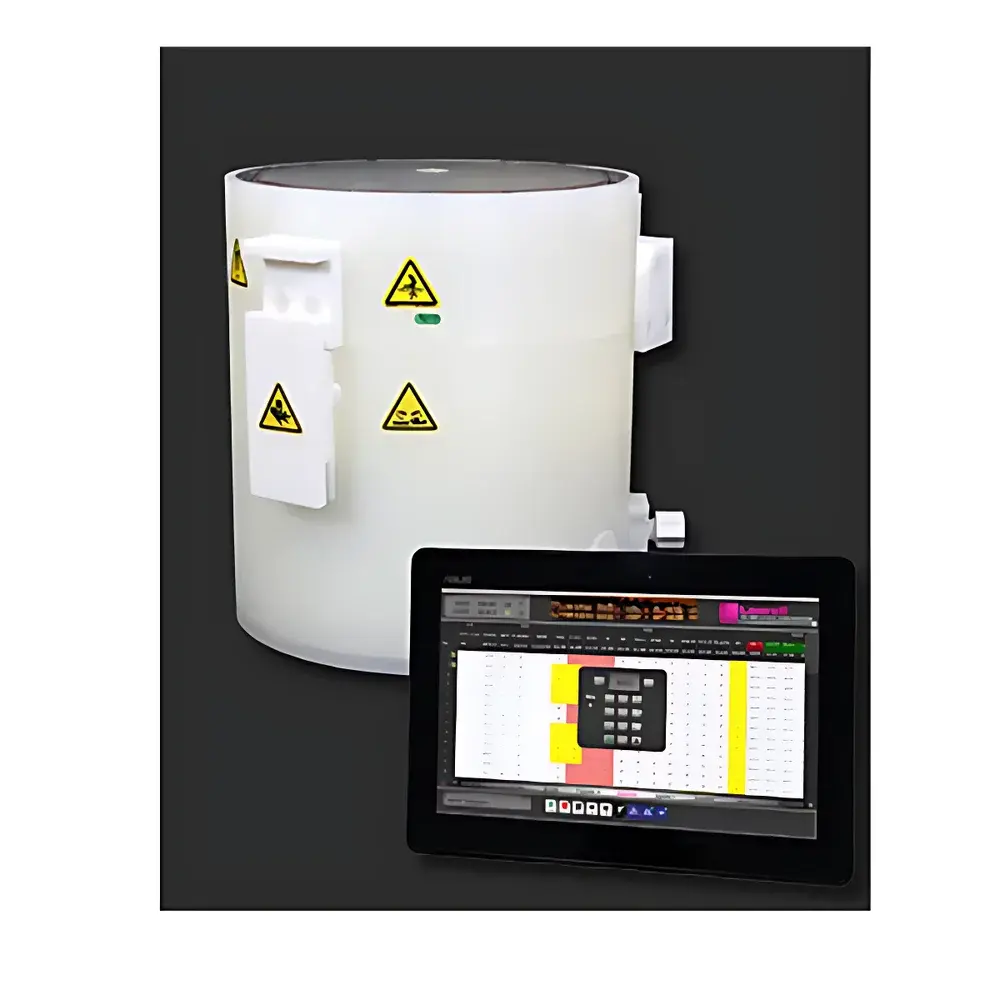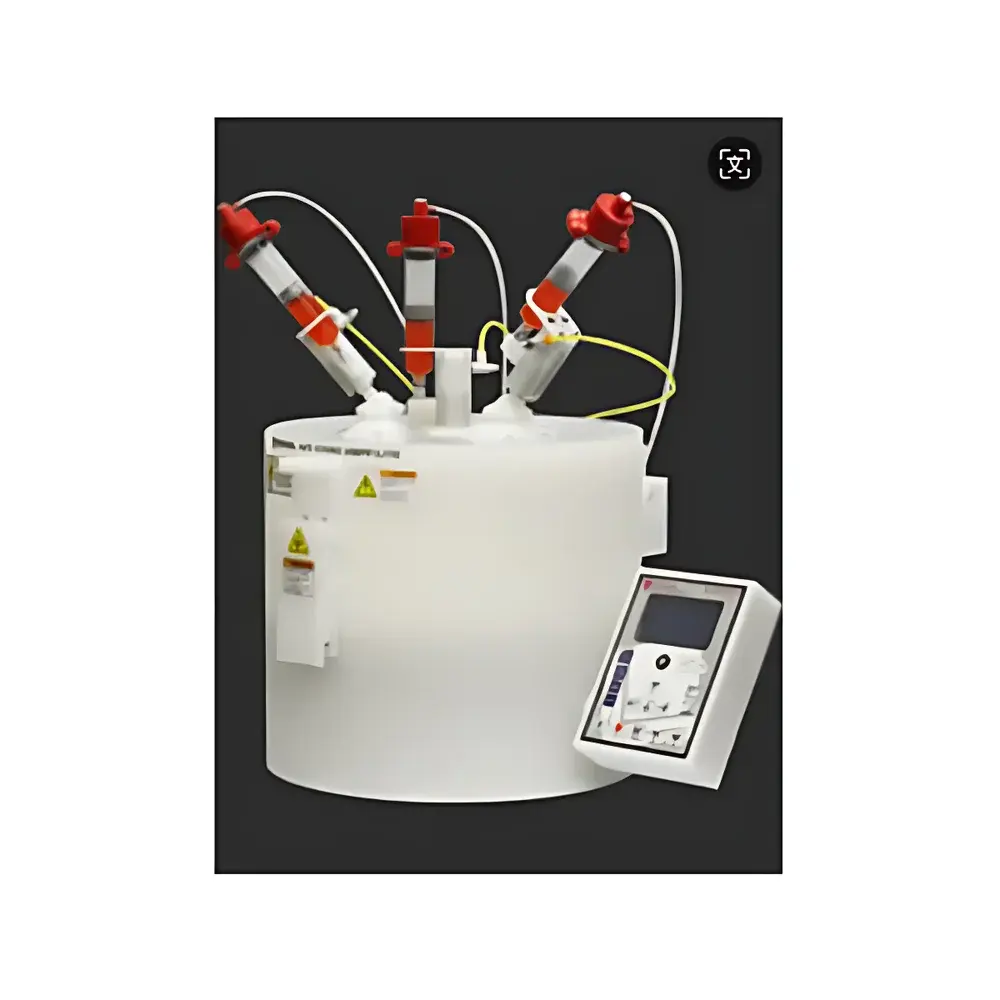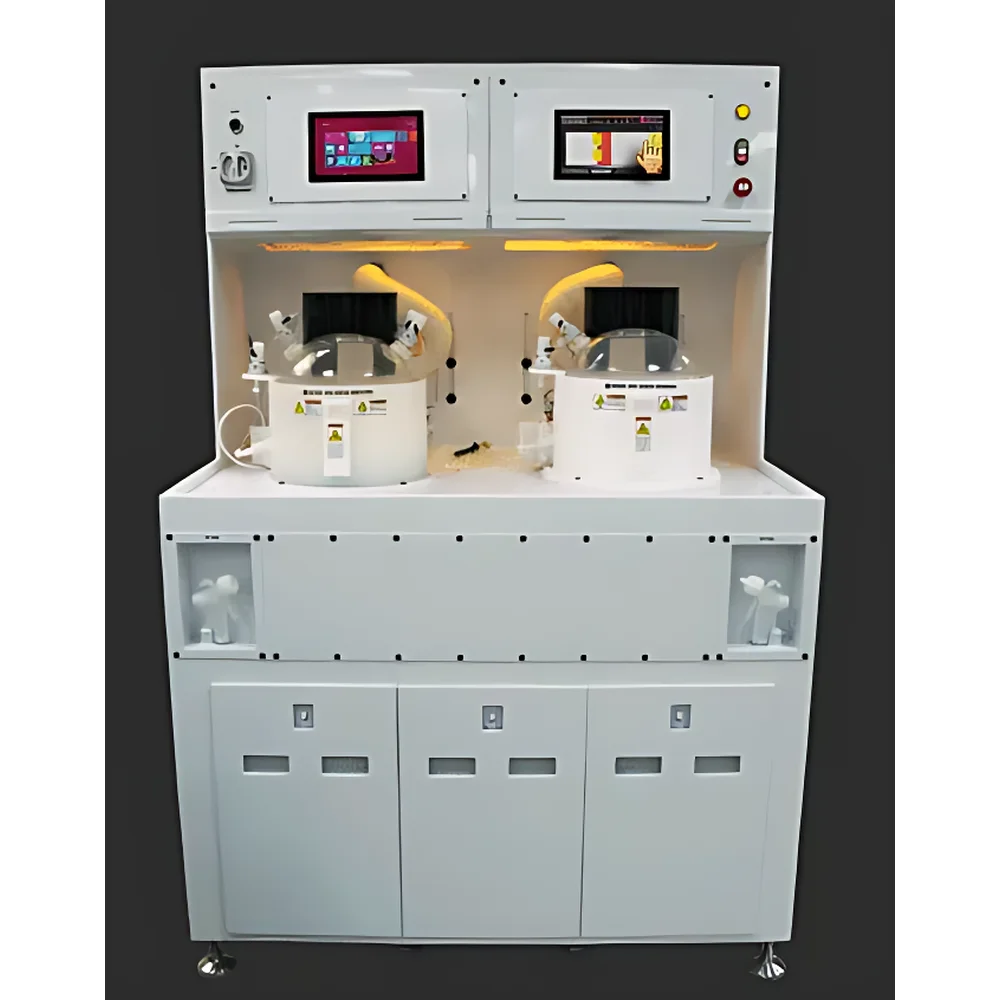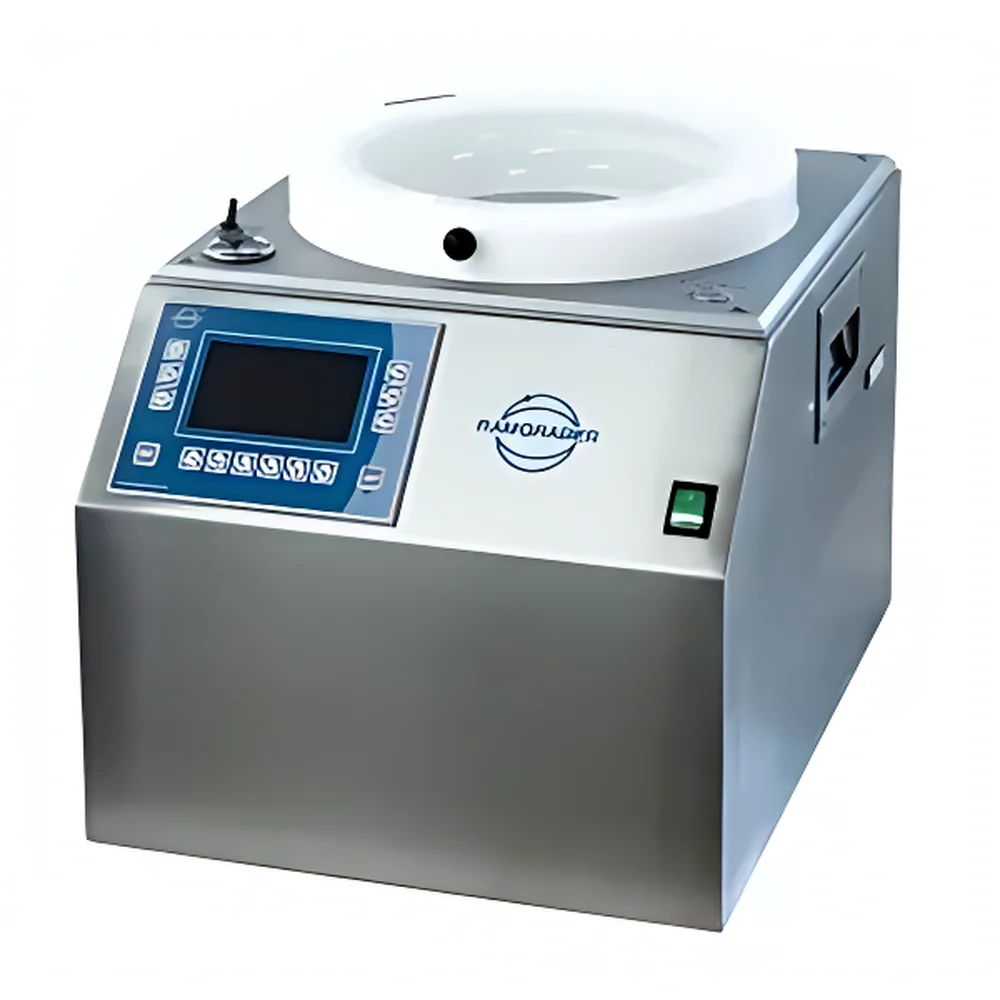
Laurell M-SPIN 200 Spin Coater

| Brand | Laurell |
|---|---|
| Origin | USA |
| Model | M-SPIN 200 |
| Maximum Substrate Diameter | 200 mm (8") |
| Compatible Substrate Format | Up to 152 mm × 152 mm (6" × 6") square substrates |
| Drive System | Brushless DC motor with closed-loop speed control |
| Chamber Diameter | 240 mm |
| Safety | Interlocked transparent lid with auto-halt on opening |
| Human-Machine Interface | Full-graphic capacitive touchscreen panel |
| Control Architecture | Modular embedded controller with external 19" rack-mountable control unit (connected via flexible ribbon cable) |
| Dispensing | Motorized dispensing arm with programmable XYZ positioning and dispense volume/timing logic |
| Acceleration Profile | Programmable multi-stage ramp-up/ramp-down |
| Compliance | CE-marked |
Ask about pricing, availability and specifications.
Overview
The Laurell M-SPIN 200 Spin Coater is a precision-engineered benchtop instrument designed for reproducible, uniform thin-film deposition via centrifugal spin coating—primarily used in semiconductor fabrication, microelectromechanical systems (MEMS), photovoltaics, and academic thin-film research. It operates on the fundamental principle of controlled rotational fluid dynamics: a liquid precursor (e.g., photoresist, polymer solution, sol-gel ink) is dispensed onto a stationary substrate, which is then accelerated to a defined rotational speed. Centrifugal force drives radial outward flow, while solvent evaporation and viscous drag govern film thickness—governed empirically by the Meyerhofer and Sato models. The M-SPIN 200 supports substrates up to 200 mm (8-inch) diameter wafers or square substrates measuring 152 mm × 152 mm (6″ × 6″), making it suitable for both R&D prototyping and low-volume pilot-line processing. Its modular architecture separates the process chamber from the external 19-inch rack-mounted control unit, minimizing electromagnetic interference and facilitating service access without compromising cleanroom integrity.
Key Features
- Brushless DC motor drive with closed-loop feedback ensures high-speed stability and repeatability across the full operational range (typical range: 50–10,000 rpm, programmable in 1 rpm increments).
- Motorized dispensing arm with programmable XYZ motion enables precise reagent placement—critical for edge-bead reduction and uniformity optimization on non-circular or irregular substrates.
- Interlocked transparent polycarbonate lid halts rotation immediately upon detection of lid displacement—complying with ISO 13857 mechanical safety requirements for accessible hazardous zones.
- Full-graphic capacitive touchscreen interface supports multilingual operation (English, Japanese, Korean, simplified Chinese), real-time parameter monitoring, and on-device recipe storage (≥500 programs with version timestamps).
- Chamber design features chemically resistant anodized aluminum construction and removable stainless-steel catch cup—compatible with common solvents including PGMEA, acetone, IPA, and xylene.
- Modular embedded controller communicates with the external 19″ control unit via shielded flexible ribbon cable, enabling separation of heat-generating electronics from the process zone—a key consideration for temperature-sensitive resist formulations.
Sample Compatibility & Compliance
The M-SPIN 200 accommodates silicon, glass, quartz, sapphire, and flexible polymer substrates (e.g., PET, PI) with thicknesses ranging from 0.1 mm to 2.0 mm. Chuck vacuum ports support flatness control for warped or bowed wafers. The system meets CE conformity under the Machinery Directive 2006/42/EC and Electromagnetic Compatibility Directive 2014/30/EU. While not certified to SEMI S2-0215 or S8-0717 out-of-the-box, its mechanical and electrical architecture is fully compatible with integration into SEMI-compliant fabs when installed with proper grounding, exhaust ducting (≥100 CFM at 0.5″ H₂O static pressure), and facility-grade nitrogen purge lines. It is routinely deployed in laboratories operating under ISO/IEC 17025 quality management frameworks and supports audit-ready operation logs when paired with optional network-enabled data export modules.
Software & Data Management
The embedded firmware provides native support for ASTM E1527-21 compliant process logging: all run parameters—including dispense volume, acceleration profile, spin speed vs. time trace, chamber temperature (via optional RTD sensor), and operator ID—are timestamped and stored in non-volatile memory. Export formats include CSV and XML, compatible with LIMS integration (e.g., Thermo Fisher SampleManager, LabVantage). Optional Ethernet/Wi-Fi connectivity enables remote monitoring and secure HTTPS-based API access (RESTful endpoints for start/stop/pause/status queries), supporting FDA 21 CFR Part 11 compliance when configured with electronic signature modules and audit-trail-enabling firmware v3.2+. All software updates are delivered via signed firmware packages verified using SHA-256 checksums.
Applications
- Photolithography: Uniform photoresist coating (e.g., AZ® series, SU-8, PMMA) prior to UV exposure and development.
- Perovskite solar cell fabrication: Sequential deposition of hole-transport layers (e.g., PEDOT:PSS) and perovskite precursors (e.g., MAPbI₃).
- Microfluidic device manufacturing: Parylene-C or PDMS precursor spin-coating for channel encapsulation.
- Nanomaterial thin films: Graphene oxide, MoS₂, or quantum dot suspensions for optoelectronic characterization.
- Hard mask deposition: Spin-on carbon (SOC) or spin-on glass (SOG) layers for advanced etch masking in 3D NAND and FinFET processes.
FAQ
What substrates can the M-SPIN 200 accommodate beyond standard silicon wafers?
It accepts rigid and semi-rigid planar substrates—including fused silica, sapphire, alumina ceramics, and polyimide-coated FR4—provided surface flatness deviation remains within ±15 µm over the clamped area.
Is vacuum chucking compatible with ultra-thin (<100 µm) wafers?
Yes, with optional low-pressure vacuum regulation (0.1–0.5 bar adjustable) and soft-seal elastomer gaskets to prevent breakage during clamping.
Can the dispensing arm be calibrated for viscous fluids (>100 cP)?
Yes—via gravimetric calibration routines embedded in the service menu, supporting syringe pump compatibility for shear-thinning resists like novolac-based deep-UV resists.
Does the system support automated recipe transfer between multiple M-SPIN units?
Yes, via USB 2.0 host port or network share; recipes include full parameter sets plus user-defined metadata tags (e.g., “Process_ID”, “Lot_Number”, “Resist_Batch”).
What maintenance intervals are recommended for long-term reliability?
Vacuum filter replacement every 6 months; chuck surface cleaning after each 50 runs; motor encoder calibration annually—documented in the included ISO 9001-aligned maintenance logbook.