
LENZ DURAN Glass Reactor – Laboratory Jacketed Reaction Vessel (100 mL to 30 L)
| Brand | LENZ |
|---|---|
| Origin | Germany |
| Material | Schott DURAN® borosilicate glass 3.3 |
| Volume Range | 100 mL – 30 L |
| Vessel Shape | Cylindrical or spherical bottom |
| Stirring System | PTFE-coated impellers (paddle, anchor, or propeller type) |
| Sealing | Chemically resistant PTFE gaskets with quick-release clamps |
| Jacket Interface | GL or KF standard |
| Vacuum Performance | ≤5 mbar |
| Temperature Monitoring | PTFE-sheathed Pt100 sensor port |
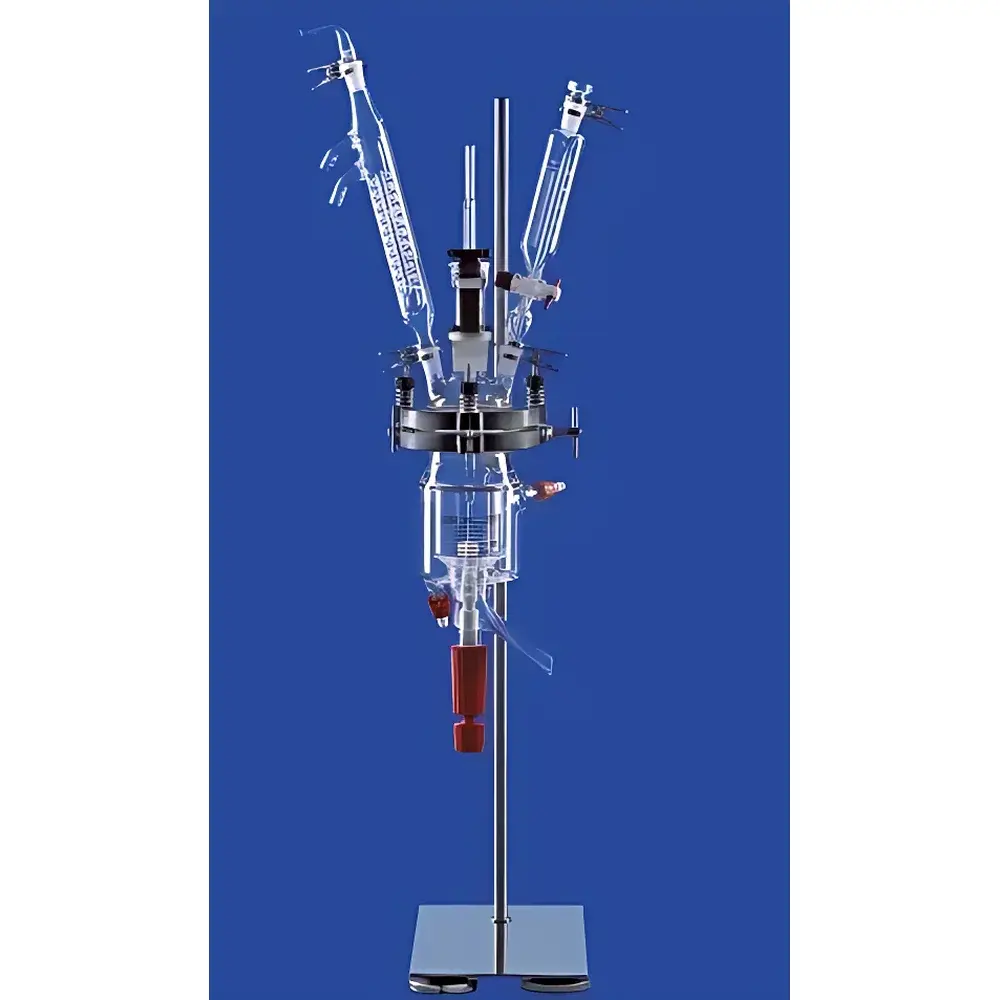
| Condenser & Feed Options | PTFE-valved inlet, glass condensers (multiple lengths), dropping funnels (assorted capacities) |
| Compliance | Designed for ISO/IEC 17025-aligned lab environments |
Overview
The LENZ DURAN Glass Reactor is a precision-engineered laboratory-scale jacketed reaction vessel designed for controlled chemical synthesis, process development, and small-batch pilot studies under vacuum, inert atmosphere, or reflux conditions. Constructed exclusively from Schott DURAN® borosilicate glass 3.3—certified to DIN ISO 3585—the reactor delivers exceptional thermal shock resistance (ΔT ≥ 150 °C), hydrolytic stability (Class 1 per ISO 8547), and optical clarity for real-time reaction monitoring. Its modular architecture supports integration with external heating/cooling circulators (e.g., LAUDA units), vacuum pumps, gas manifolds, and digital control systems. The reactor operates on classical batch reaction principles, enabling precise regulation of temperature (via double-wall jacket), agitation (via magnetic or overhead drive), pressure (up to 1 bar gauge), and mass transfer (through optimized baffle and impeller geometry). It is routinely deployed in academic research labs, pharmaceutical QC/QA workflows, and fine chemical process optimization where material compatibility, traceability, and visual process validation are critical.
Key Features
- Full-body construction from Schott DURAN® borosilicate glass 3.3—guaranteed traceable batch certification available upon request
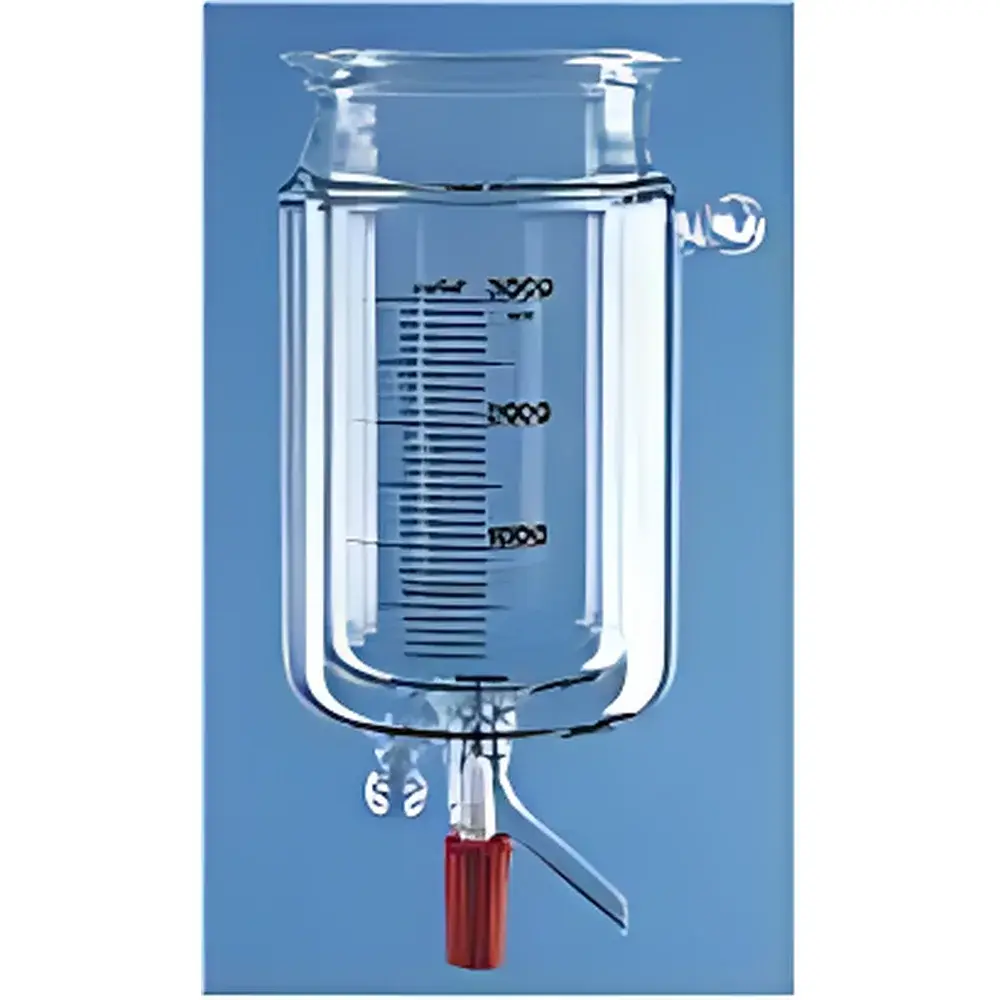
- Volume options spanning 100 mL to 30 L, all with calibrated volumetric markings conforming to DIN EN ISO 4787 accuracy class B
- Standardized GL 24/29 or KF 16/25 jacket ports for seamless coupling to thermostatic circulation systems
- PTFE-sealed quick-clamp assembly system enabling tool-free disassembly and full accessibility to internal surfaces
- Zero-dead-volume PTFE bottom valve with integrated drip-tip design for quantitative discharge and residue minimization
- Interchangeable stirring configurations: paddle (for low-viscosity media), anchor (for viscous or heterogeneous mixtures), and propeller (for high-shear dispersion)
- Dedicated ports for temperature sensing (Pt100), pH/ORP electrodes, sampling needles, and inert gas sparging (with sintered frit option)
Sample Compatibility & Compliance
The LENZ DURAN Glass Reactor exhibits broad chemical resistance across organic solvents (e.g., THF, DMF, chlorinated hydrocarbons), mineral acids (HCl, H₂SO₄ <30 wt%), alkalis (NaOH <10 wt%), and oxidizing agents (H₂O₂, KMnO₄), consistent with Schott’s published corrosion resistance charts. All wetted PTFE components comply with USP Class VI and FDA 21 CFR §177.1550. The reactor’s design supports GLP- and GMP-aligned workflows: volumetric calibration records, material traceability (DURAN® serial-numbered glass), and documentation-ready assembly protocols facilitate audit readiness. While not intrinsically rated for explosion-proof operation, it is compatible with ATEX-certified external drives and purge systems when configured for flammable solvent handling per IEC 60079-10-1.
Software & Data Management
The reactor itself is hardware-native and does not embed proprietary firmware. However, it integrates transparently with third-party process control platforms—including LabVIEW-based DAQ systems, DeltaV™ modules, and open-protocol PLCs—via standardized analog (4–20 mA) and digital (RS485/Modbus RTU) interfaces on optional sensor carriers. Temperature, stir speed, and pressure data streams can be logged with timestamped metadata compliant with 21 CFR Part 11 requirements when paired with validated electronic lab notebooks (ELNs) such as LabArchives or IDBS E-WorkBook. Calibration certificates for included Pt100 sensors follow ISO/IEC 17025 procedures and are issued by DAkkS-accredited laboratories.
Applications
- Pharmaceutical intermediate synthesis under nitrogen/argon blanket with in-situ FTIR probe access
- Controlled crystallization studies requiring precise supersaturation management and seeding protocol execution
- Catalytic hydrogenation trials using Pd/C or Raney Ni with integrated H₂ pressure regulation and vent-line condensation
- Polymerization kinetics (e.g., step-growth polycondensation) monitored via torque rheometry and viscosity tracking
- Photochemical reactions utilizing UV-transparent DURAN® walls and external LED/lamp coupling via side-port optical windows
- Extraction and partitioning workflows with continuous phase separation via bottom valve and separatory funnel integration
FAQ
What thermal cycling limits apply to the DURAN® glass body?
The vessel withstands repeated thermal shocks up to ΔT = 150 °C between ambient and operating temperature, provided ramp rates remain ≤5 °C/min to prevent stress-induced microfractures.
Can the reactor be used under full vacuum (≤0.1 mbar)?
Yes—when assembled with certified PTFE gaskets, reinforced clamps, and properly torqued joints, the system maintains integrity down to 0.5 mbar; for sub-millibar applications, optional metal-reinforced glass flanges are available.
Is custom port configuration supported for OEM integration?
LENZ offers engineering consultation for non-standard port layouts (e.g., additional side-arm inlets, dual thermowell sleeves, or integrated sight-glass windows), subject to structural validation per EN 13445-3.
How is cleaning validation performed for multi-campaign use?
Residue detection follows ICH Q5C guidelines using swab recovery tests with HPLC-UV quantification; DURAN®’s non-porous surface enables reproducible ATP bioluminescence results ≤10 RLU/cm² post-CIP.
Does the system include documentation for regulatory submissions?
Upon order, users receive a Device Master Record (DMR)-aligned package including DURAN® material certificates, dimensional inspection reports, pressure test logs (per PED 2014/68/EU Annex I), and assembly torque specifications.



