
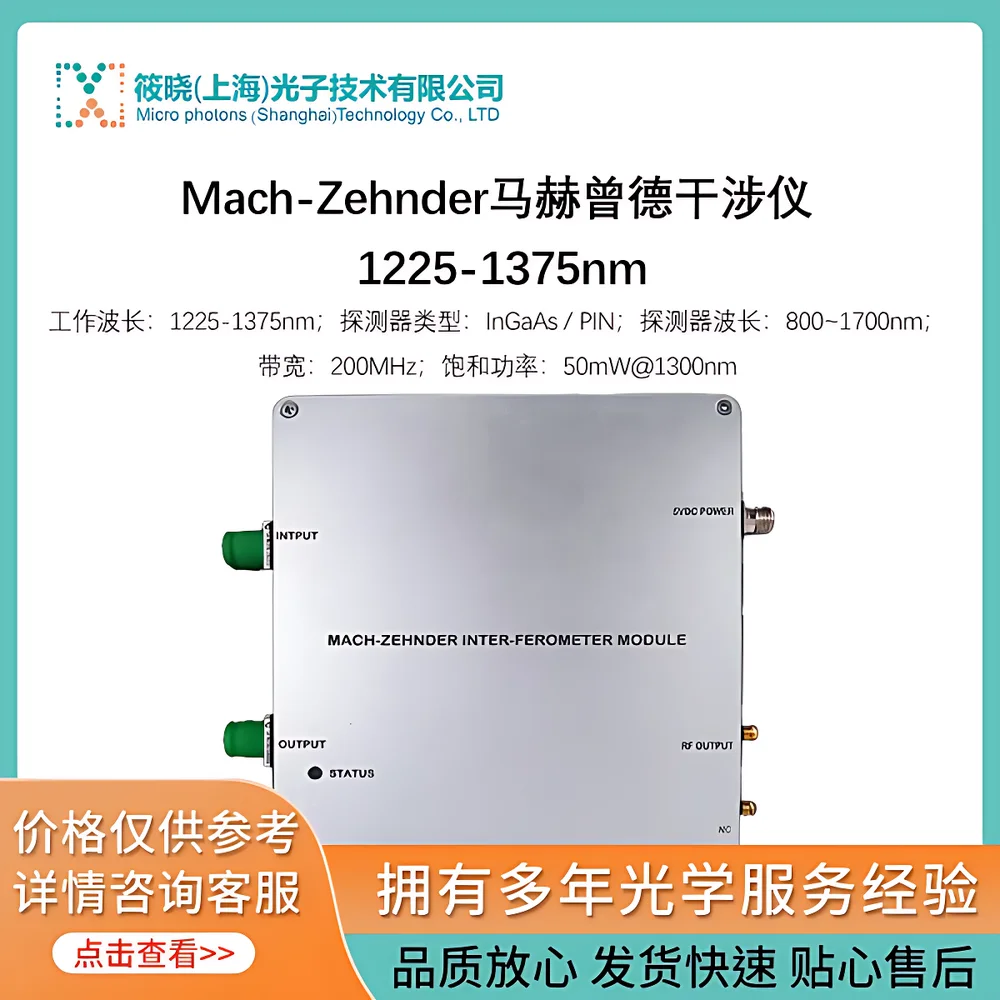
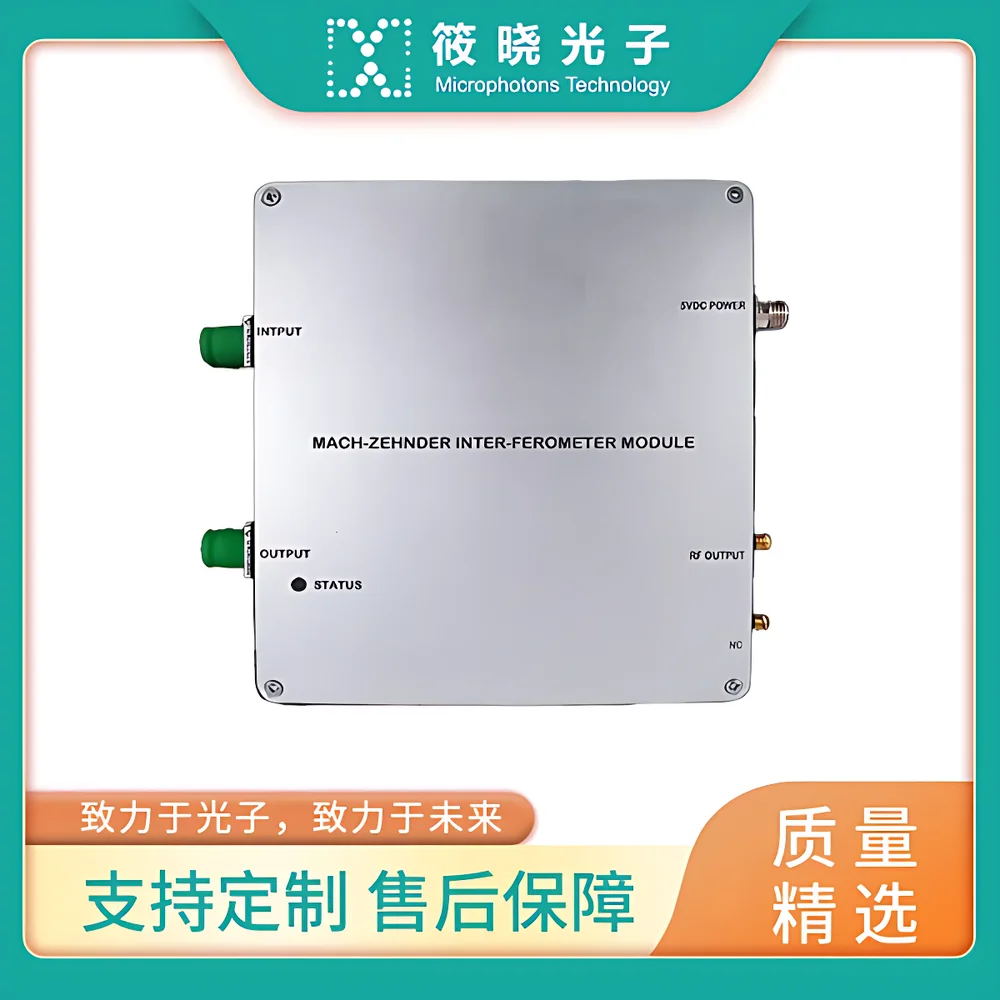
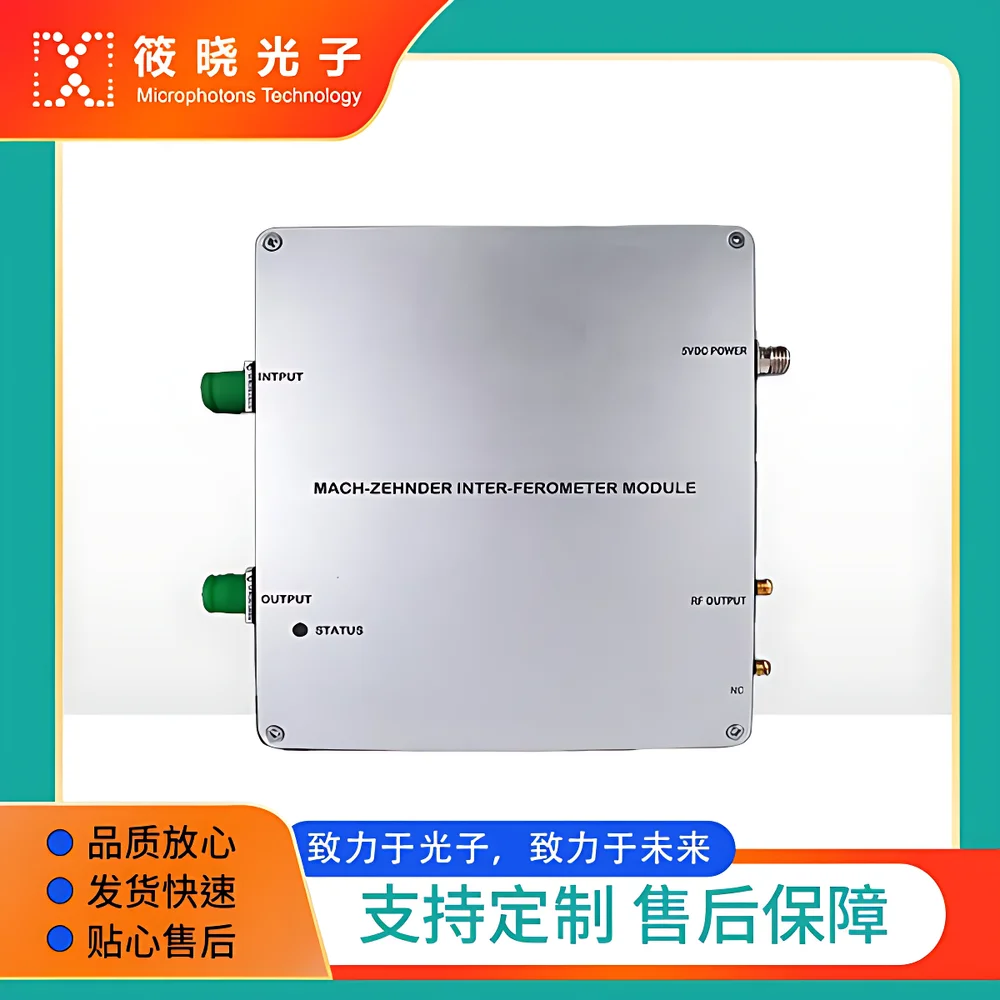
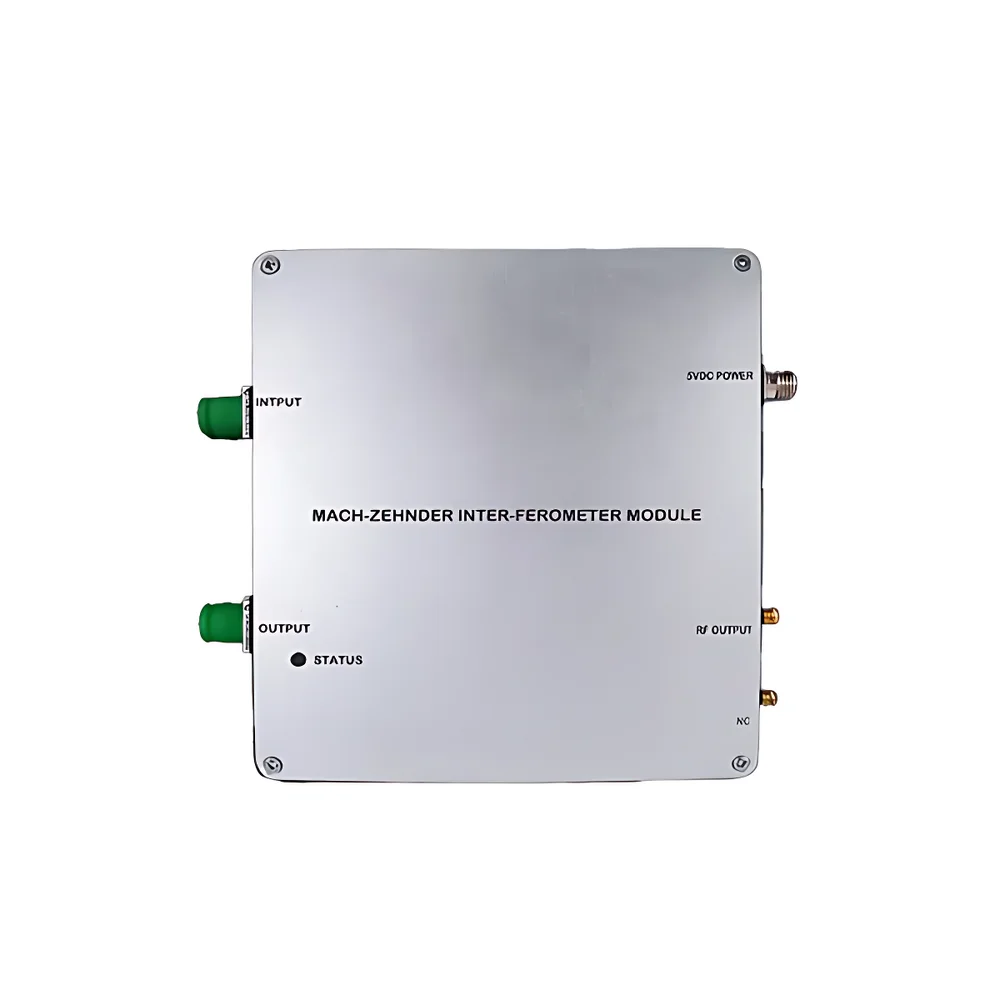
Mach-Zehnder Interferometer OL-MZI-1300 by Microphotons

| Brand | Microphotons |
|---|---|
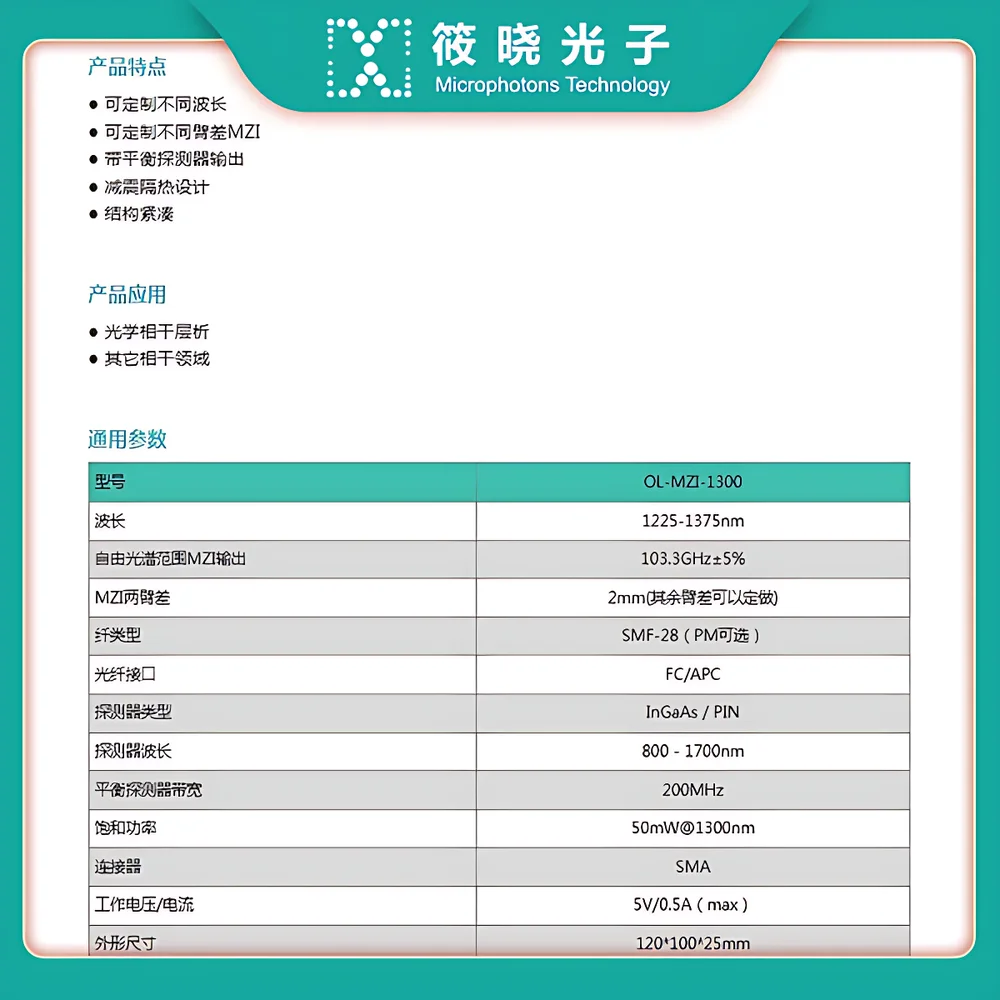
| Model | OL-MZI-1300 |
| Operating Wavelength Range | 1225–1375 nm |
| Component Type | Free-Space Optical Interferometric Element |
| Origin | Imported |
| Manufacturer Status | OEM Producer |
| Category | Optical Instrument Component |
Ask about pricing, availability and specifications.
Overview
The OL-MZI-1300 is a precision free-space Mach-Zehnder interferometer (MZI) engineered for high-stability phase-sensitive optical measurements in the near-infrared C-band. Based on the classical two-arm interferometric architecture, it splits an input beam via a broadband dielectric beam splitter, propagates the beams along independent collimated paths with adjustable relative phase delay, and recombines them to generate interference fringes whose intensity and contrast depend directly on the optical path difference (OPD) and coherence properties of the source. Designed specifically for operation between 1225 nm and 1375 nm, this MZI supports applications requiring sub-wavelength path-length resolution, including fiber-optic sensor calibration, wavelength reference stabilization, optical coherence tomography (OCT) system development, and photonic integrated circuit (PIC) characterization. Its rigid aluminum housing minimizes thermal drift and mechanical misalignment, while anti-reflection coated fused silica optics ensure >95% transmission efficiency across the specified band and low polarization-dependent loss (<0.05 dB).
Key Features
- Optimized for 1225–1375 nm spectral range with AR-coated fused silica substrates and broadband dielectric coatings
- Adjustable optical path difference via precision micrometer-driven translation stage (±5 mm travel, 1 µm resolution)
- Collimated free-space design enabling direct integration with fiber-coupled sources, detectors, and optical tables
- Thermally stable aluminum baseplate with kinematic mounting interface (M4 threaded holes, 25 mm grid pattern)
- Low wavefront distortion (92% with coherent laser source)
- OEM-ready configuration: no internal electronics or power supply; fully passive and radiation-hardened
Sample Compatibility & Compliance
The OL-MZI-1300 is compatible with single-mode and polarization-maintaining fiber pigtails (FC/APC or FC/PC optional), collimated laser diodes, superluminescent LEDs (SLEDs), and tunable external cavity lasers (ECLs) operating within its designated wavelength window. It meets mechanical and optical interface standards aligned with ISO 10110-7 (surface imperfections), ISO 10110-1 (optical drawing specifications), and SEMI F20 (cleanroom-compatible materials). While inherently compliant with general laboratory safety requirements (IEC 61000-6-3 EMC emission limits), end-user integration must adhere to applicable national laser safety regulations (e.g., ANSI Z136.1 Class 1 or Class 3R enclosure requirements depending on source power). No intrinsic regulatory certification (e.g., CE, FDA) applies to this passive optical component; final system-level compliance remains the responsibility of the integrator.
Software & Data Management
As a fully passive optical element, the OL-MZI-1300 requires no embedded firmware, drivers, or proprietary software. Interference signal acquisition and analysis are performed externally using standard data acquisition systems (e.g., National Instruments DAQ, Thorlabs Kinesis, or custom LabVIEW/Python-based platforms). The device supports real-time phase extraction via lock-in detection, Fourier-transform fringe analysis, or heterodyne demodulation when paired with appropriate photodetectors and digitizers. All measurement workflows remain fully traceable under GLP/GMP-aligned environments when implemented with audit-trail-enabled software (e.g., MATLAB with Simulink Test, Keysight PathWave, or Python packages compliant with 21 CFR Part 11 electronic record requirements via third-party validation).
Applications
- Calibration and linearity verification of fiber Bragg grating (FBG) and Fabry–Pérot interferometric sensors
- Reference arm implementation in swept-source OCT systems targeting ophthalmic or industrial imaging
- Phase-shift characterization of electro-optic modulators and silicon photonics Mach-Zehnder modulators (MZMs)
- Coherence length measurement of broadband light sources used in spectroscopy and metrology
- Stabilization of external cavity lasers via Pound–Drever–Hall (PDH) error signal generation
- Teaching and research laboratories for undergraduate and graduate instruction in wave optics and interferometry
FAQ
Is the OL-MZI-1300 polarization-sensitive?
It is polarization-maintaining only when used with PM fiber input/output configurations; the free-space version exhibits minimal polarization dependence (<0.05 dB PDL) due to symmetric AR coating design.
Can it be used with femtosecond laser sources?
Yes—provided the pulse spectrum falls entirely within 1225–1375 nm and average power remains below 500 mW to avoid thermal lensing in fused silica optics.
What alignment tolerances are recommended for optimal fringe contrast?
Beam divergence should be ≤1.5 mrad; lateral misalignment < ±25 µm and angular tilt 90% visibility with HeNe-equivalent coherence length.
Does Microphotons provide mounting hardware or alignment fixtures?
Standard kinematic mounts (KCB1P/M, KM100PM) and cage system adapters (C4W, SM1-threaded) are available as optional accessories; full optical alignment procedure documentation is included.
Is vacuum or cryogenic operation supported?
The housing and optical adhesives are rated for operation from –40 °C to +85 °C; vacuum compatibility (10⁻⁶ Torr) is achievable with optional outgassing-certified assembly—contact engineering support for qualification data.
More from Microphotons
View all Microphotons products → Microphotons ABL-005IR-GE InGaAs Linear Sensor SWIR Camera (QVGA Resolution, GigE Vision Interface)
- Difrotec D7 Series Ultra-High-Precision Laser Interferometer (λ/1000)
- Microphotons TPX-D25.4-f10-t12.7 Mounted Aspheric Plano-Convex THz Lens for High-Spatial-Resolution Imaging
- Microphotons ASE-0980-10 Broadband Amplified Spontaneous Emission Light Source at 980 nm (10 mW Output)


