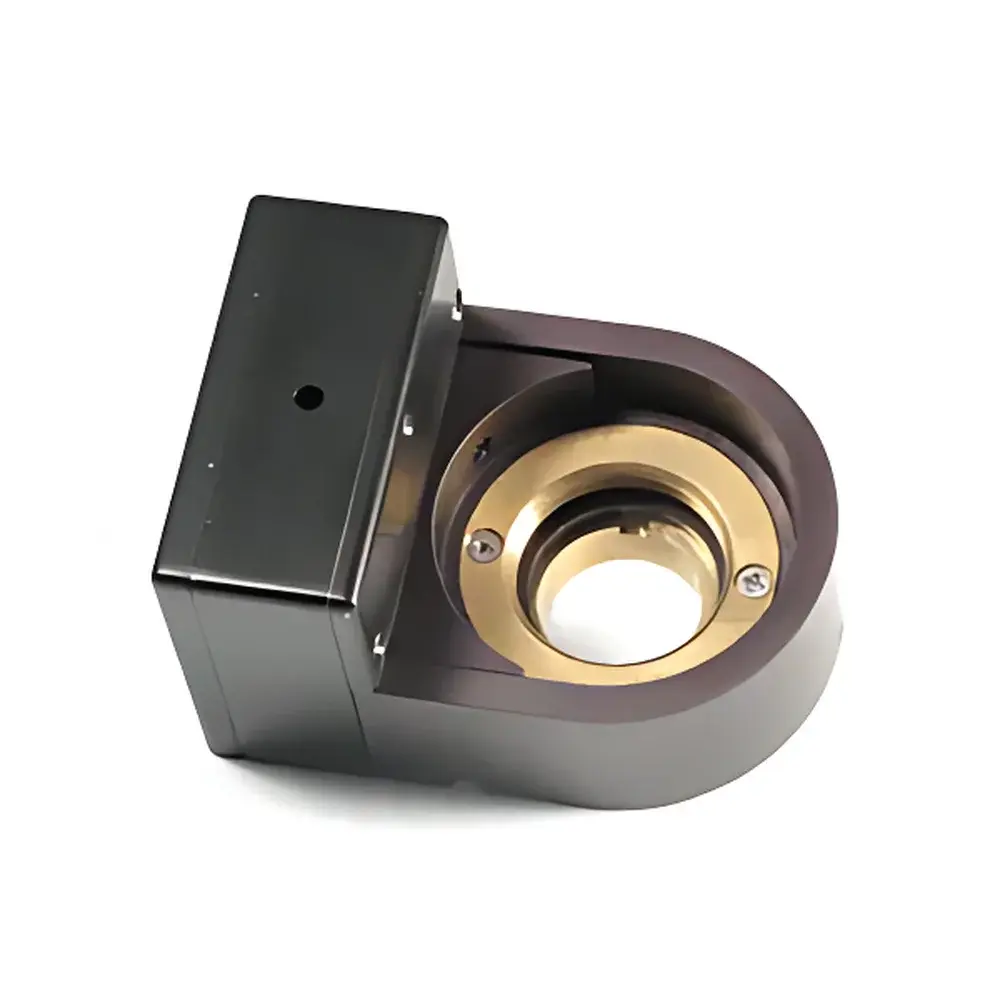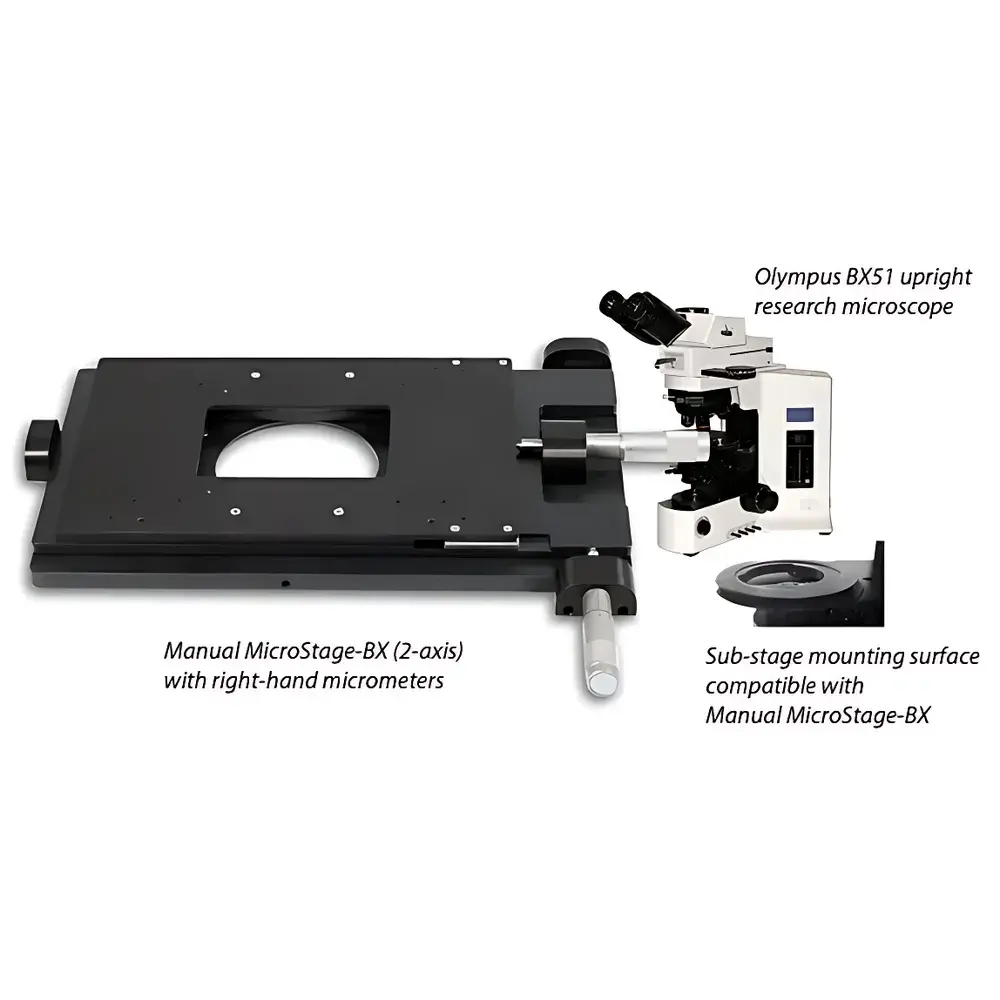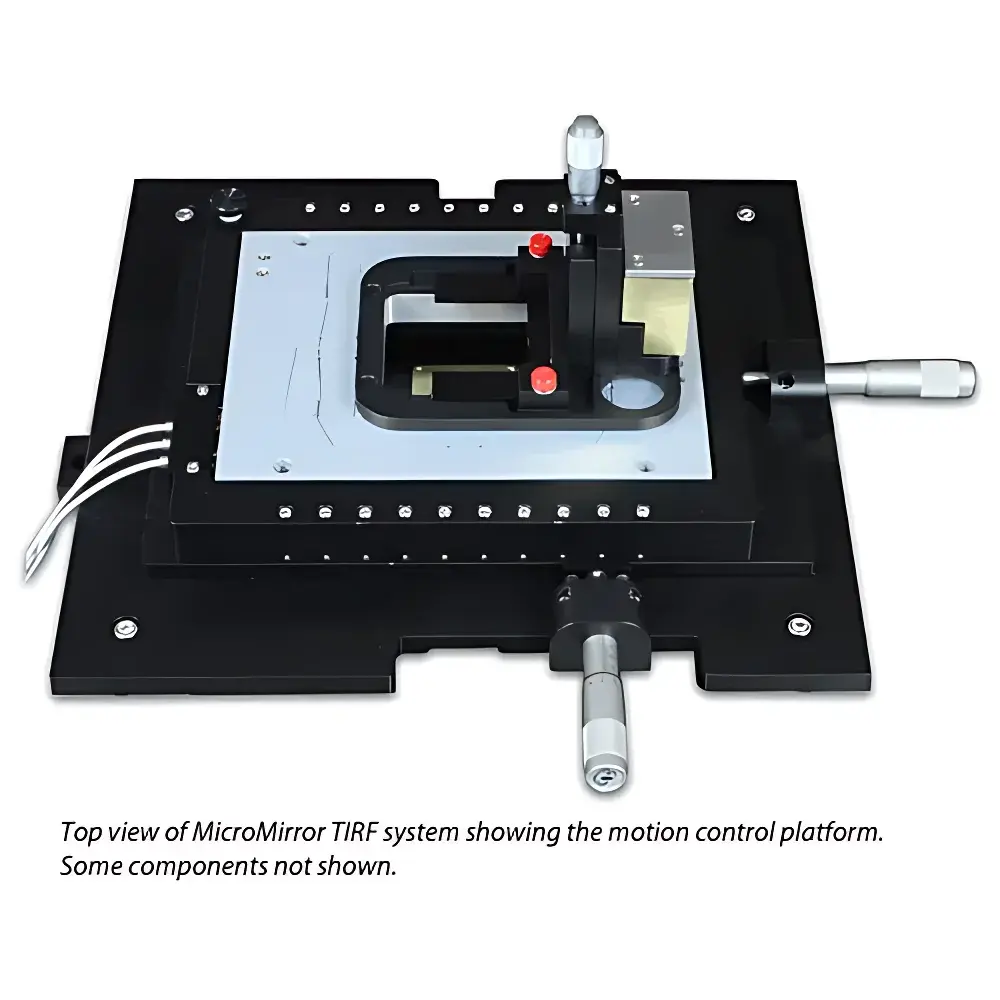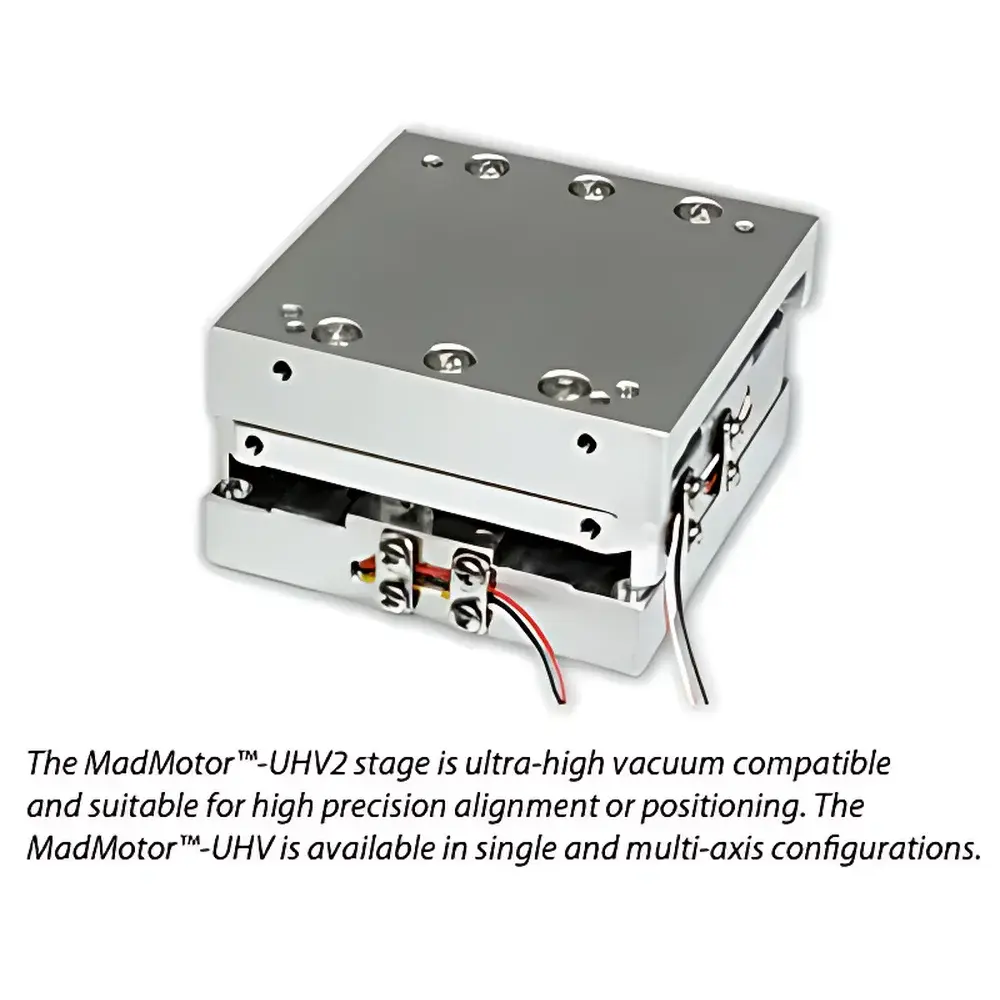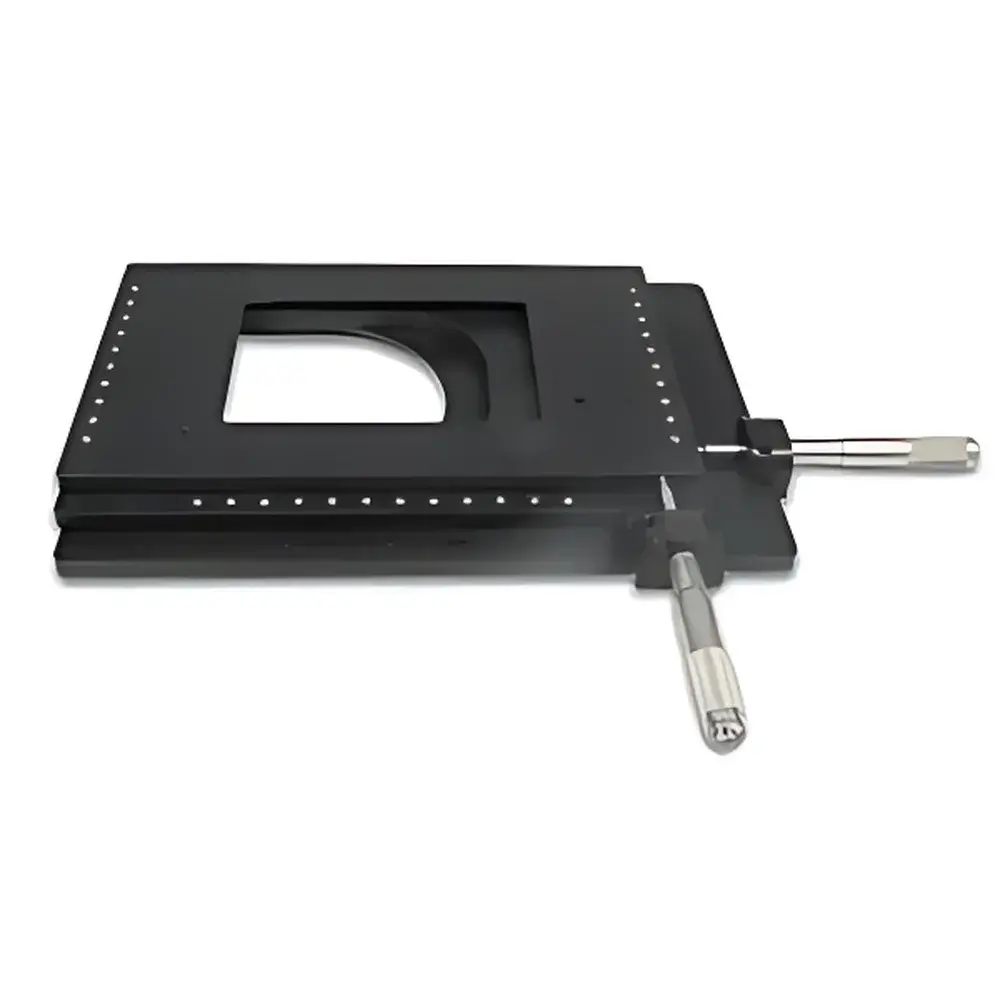
Mad City Labs Manual MicroStage-LT Series Long-Travel Manual Translation Stage

| Brand | Mad City Labs (MCL Think Nano) |
|---|---|
| Origin | USA |
| Manufacturer Type | Authorized Distributor |
| Product Category | Imported Optical Instrument |
| Model | Manual MicroStage-LT Series |
| Type | Manual Translation Stage |
| Travel Range (XY) | Up to 50 mm |
| Graduation | 10 µm |
| Vernier Scale Resolution | 1 µm |
| Body Material | Aluminum |
| Compatibility | Inverted Research Microscopes (e.g., RM21™ Platform), Objective Nosepiece Rotation Enabled |
| Position Locking | Integrated Continuous Internal Locking |
| Profile Optimization | Top Surface Aligned Within Standard Microscope Focal Range |
Ask about pricing, availability and specifications.
Overview
The Mad City Labs Manual MicroStage-LT Series is a precision-engineered, long-travel manual translation stage designed specifically for demanding optical microscopy applications requiring coarse positioning with mechanical stability and optical compatibility. Built upon Mad City Labs’ established micrometer-driven coarse positioning architecture, the LT (Long Travel) variant extends XY displacement capability to 50 mm while preserving sub-micrometer readout fidelity via dual-scale vernier adjustment. Its operational principle relies on high-backlash-free brass-on-brass micrometer drives coupled with low-hysteresis linear motion guides—ensuring repeatable, drift-free positioning over extended travel without compromising rigidity. Unlike standard microscope stages, the LT Series incorporates a strategically apertured base plate that permits full 360° rotation of the objective nosepiece without mechanical interference—a critical design feature for multi-objective, high-magnification workflows on inverted platforms. The stage’s aluminum construction provides optimal stiffness-to-weight ratio and thermal stability, minimizing thermal drift during prolonged imaging sessions.
Key Features
- 50 mm total travel range along both X and Y axes—enabling wide-field sample navigation without stage repositioning
- Vernier scale resolution of 1 µm with 10 µm main graduation—supporting precise manual alignment prior to nanopositioner integration
- Integrated continuous internal position locking mechanism—eliminates creep or slippage under static load or vibration
- Optimized vertical profile: top mounting surface positioned within standard microscope focal working distance (typically 45–65 mm from objective front lens)
- Nosepiece-compatible aperture cutout—allows unobstructed rotation of objectives ranging from 2× to 100×, including oil-immersion and long-working-distance lenses
- Modular mounting interface—directly compatible with Mad City Labs’ RM21™ Microscope Platform and standardized kinematic mounts for Nikon Eclipse Ti, Zeiss Axio Observer, and Leica DMi8 inverted systems
- Non-magnetic, anodized aluminum body—resistant to oxidation and compatible with EM-clean environments and vacuum-adjacent optical enclosures
Sample Compatibility & Compliance
The Manual MicroStage-LT serves as a foundational platform—not a standalone measurement instrument—and therefore does not carry metrological certification per ISO/IEC 17025. However, its mechanical design adheres to dimensional and functional standards referenced in ASTM E2924 (Standard Guide for Microscopy Stage Performance Evaluation) and supports GLP-compliant experimental setups when integrated into validated imaging workflows. The stage accommodates standard 25 mm × 75 mm glass slides, 35 mm petri dishes, and custom substrates up to 120 mm in width. Re-entrant nanopositioner mounts (e.g., MCL-Nano-LPQ, Nano-ZL) attach seamlessly to the top plate using M3 threaded holes spaced on 25 mm grids—preserving Z-axis accessibility and objective exchange capability. All materials comply with RoHS Directive 2011/65/EU and are free of SVHC substances per REACH Annex XIV.
Software & Data Management
As a fully manual, non-motorized stage, the Manual MicroStage-LT requires no firmware, drivers, or software integration. Position data is recorded manually via vernier scale reading and logged in lab notebooks or LIMS-compatible spreadsheets. For traceability in regulated environments (e.g., ISO 13485 medical device R&D or FDA-regulated preclinical imaging), users may document stage coordinates alongside image metadata using third-party acquisition software (e.g., MetaMorph, NIS-Elements, or μManager) that supports user-defined annotation fields. Audit trails remain under investigator control; no electronic record generation or 21 CFR Part 11 compliance features are embedded—consistent with its classification as a Class I laboratory accessory under FDA guidance.
Applications
- Coarse positioning substrate for hybrid coarse/fine positioning systems—e.g., pairing with MCL Nano-Z series piezoelectric Z-stages or Nano-LPQ XY nanopositioners
- Direct drop-in replacement for non-locking OEM microscope stages on inverted platforms requiring enhanced travel and mechanical stability
- Alignment fixture for multi-color TIRF, STORM, or PALM super-resolution experiments where repeated objective switching and lateral registration are routine
- Platform for microfluidic chip mounting and manual XY registration relative to laser excitation paths or detection apertures
- Stable base for correlative light-electron microscopy (CLEM) workflows where mechanical reproducibility between LM and EM sample handling is essential
- Education and training labs—demonstrating fundamental concepts of mechanical resolution, hysteresis, and thermal drift in precision motion systems
FAQ
Is the Manual MicroStage-LT compatible with upright microscopes?
No—it is engineered exclusively for inverted configurations due to its aperture geometry and mounting interface. Upright compatibility would require custom adapter plates and is not supported by standard accessories.
Can I mount a motorized nanopositioner directly onto the LT stage?
Yes. The top plate includes a 25 mm grid of M3 tapped holes compatible with MCL’s Nano-View®/M Series and Nano-BioS Series nanopositioners. Ensure Z-clearance is verified against your objective’s working distance.
Does the 1 µm vernier resolution reflect actual positional accuracy?
The 1 µm vernier enables consistent visual interpolation under 10× magnification; however, absolute accuracy depends on micrometer calibration, thermal equilibrium, and mounting surface flatness—typical system-level repeatability is ±2.5 µm over full travel.
Are replacement micrometer knobs or locking levers available as spare parts?
Yes. All mechanical components—including brass micrometer barrels, aluminum vernier dials, and stainless steel locking cams—are available through MCL’s authorized distributor network with documented part numbers and calibration certificates.
What is the maximum load capacity at full 50 mm extension?
The stage maintains ≤0.5 arcsec angular deviation under 2.5 kg centered load at mid-travel; maximum recommended dynamic load is 1.8 kg to preserve vernier readability and locking integrity across full range.