
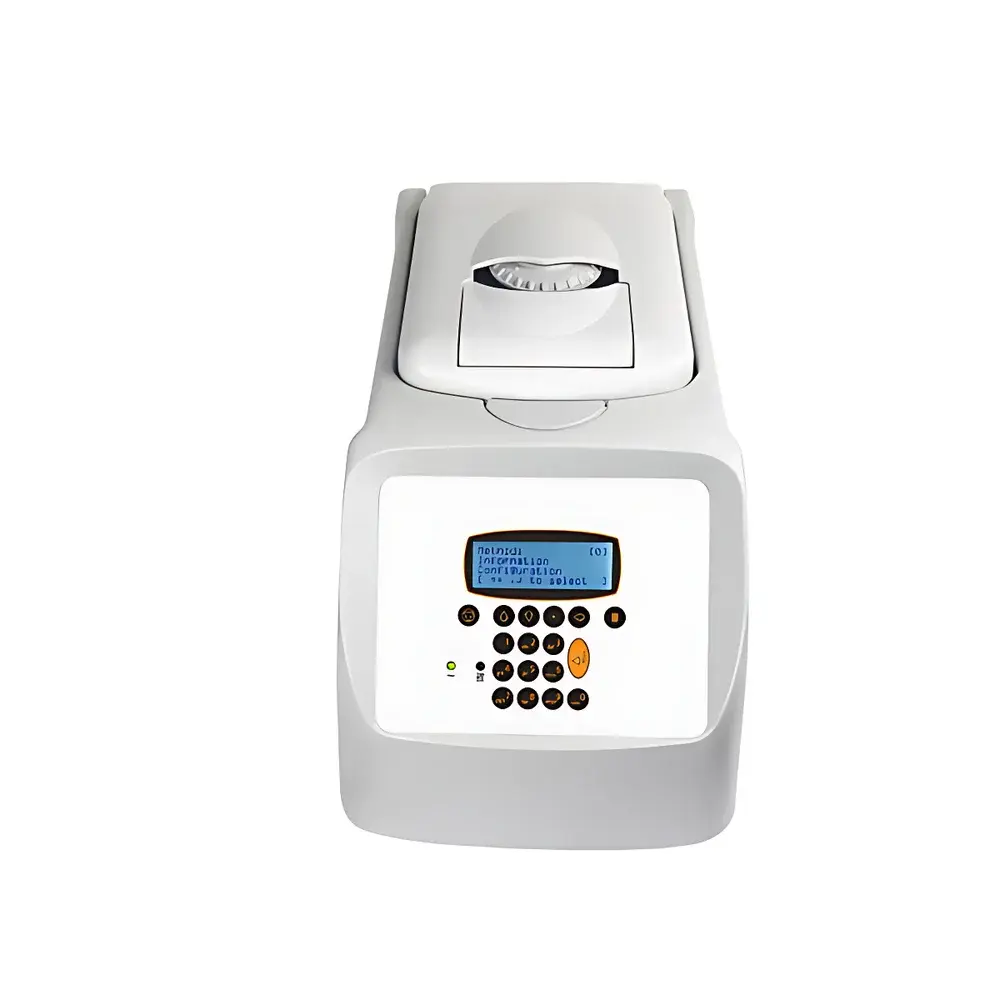
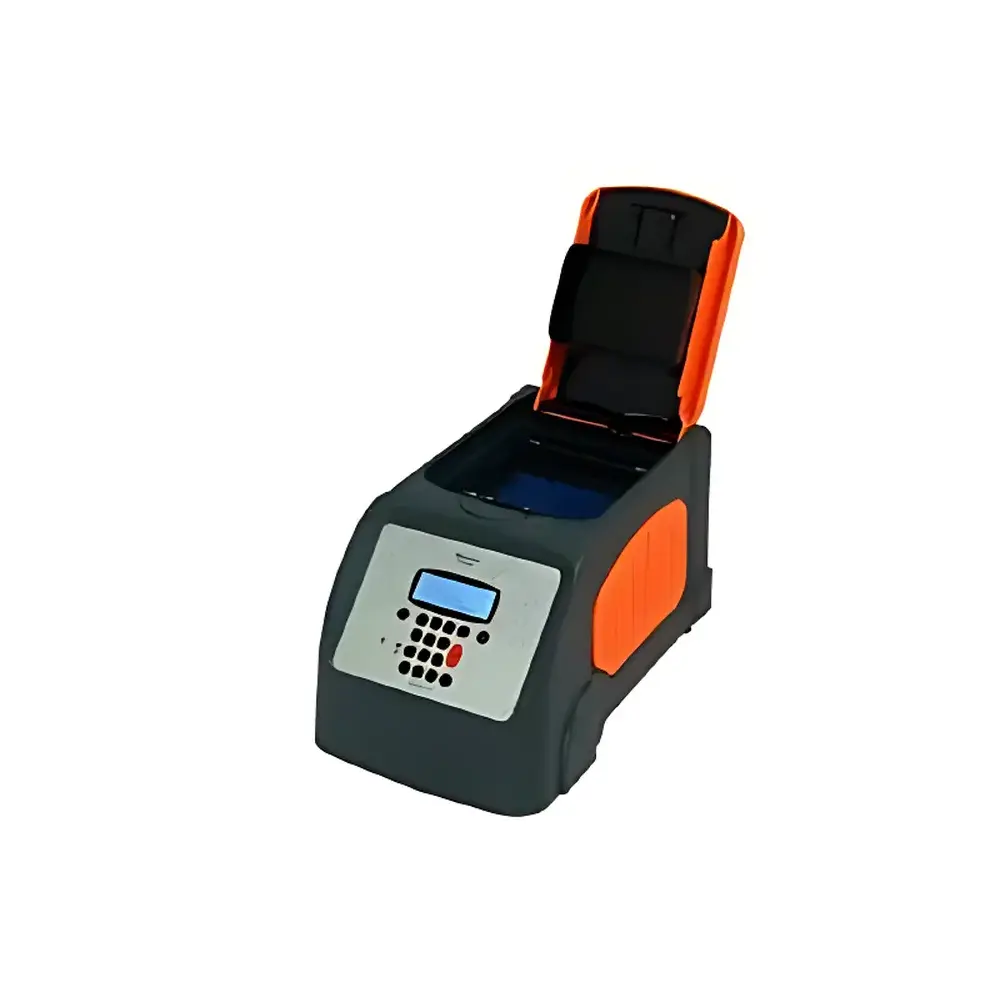
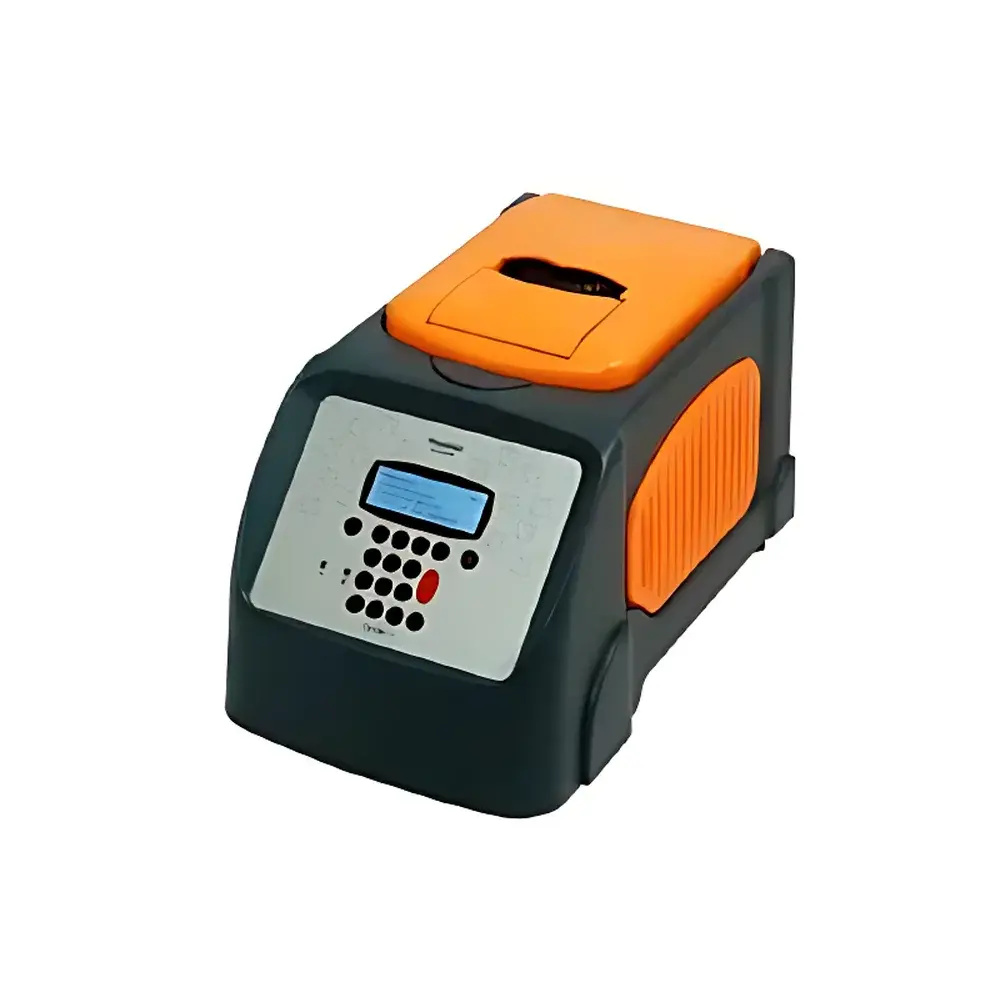
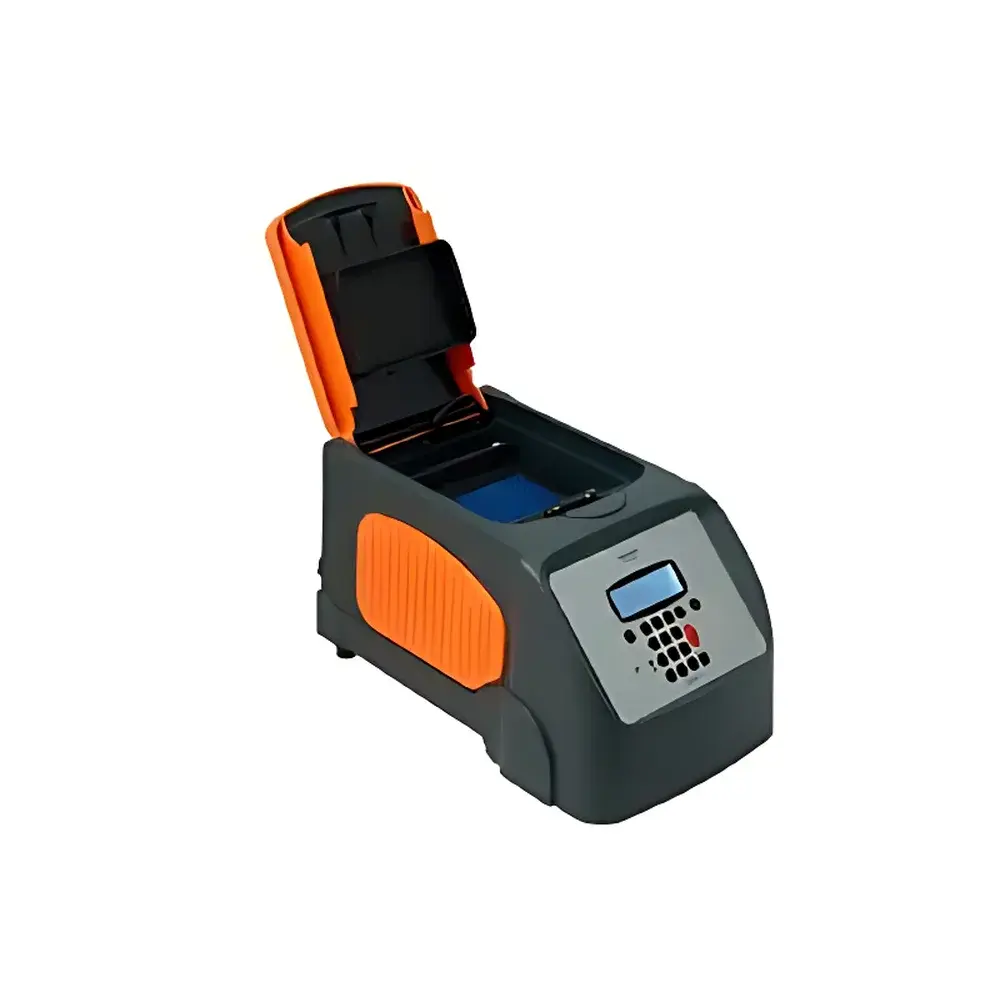
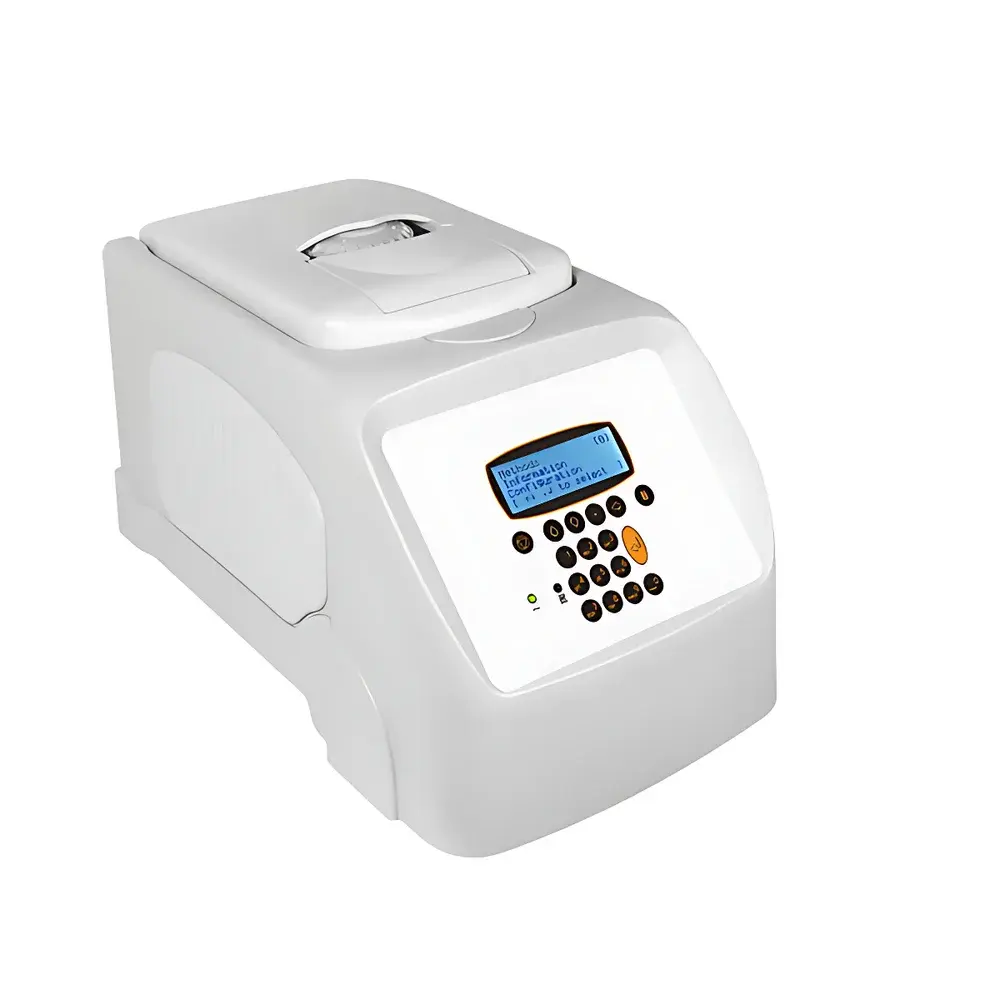
Maplelab Cycler V Gradient Thermal Cycler
| Brand | Maplelab |
|---|---|
| Origin | Guangdong, China |
| Model | Cycler V |
| Instrument Type | Gradient PCR Thermal Cycler |
| Sample Capacity | 96-well (0.2 mL) or 60-well (0.5 mL) |
| Max Heating Rate | 3.5 °C/s |
| Max Cooling Rate | 2.5 °C/s |
| Temperature Range | 4–99 °C |
| Temperature Accuracy | ±0.5 °C |
| Block Uniformity | ±0.5 °C |
| Gradient Range | 20–70 °C |
| Max Gradient Span | 30 °C |
| Heat Lid Temperature | 100–115 °C |
| Programmable Heat Lid | Yes |
| Program Storage Capacity | 37 protocols (3-step) |
| Password Protection | Yes |
| Dimensions (H×W×L) | 260 × 220 × 420 mm |
| Weight | 12 kg |
| Power Supply | 120 V / 230 V AC |
Overview
The Maplelab Cycler V is a full-size, high-performance gradient thermal cycler engineered for precise and reproducible polymerase chain reaction (PCR) amplification in academic, clinical, and industrial molecular biology laboratories. Utilizing Peltier-based thermoelectric heating and cooling technology, the Cycler V delivers rapid and accurate thermal transitions across its aluminum heating block—critical for optimizing primer annealing, extension fidelity, and cycle-to-cycle consistency. Its integrated gradient algorithm enables users to define and execute linear temperature gradients across the block (20–70 °C, up to 30 °C span), allowing empirical determination of optimal annealing temperatures without serial instrument runs. The system operates within a validated temperature range of 4–99 °C, with real-time block monitoring ensuring compliance with standard PCR protocol requirements per ISO 13485–aligned quality systems and CLIA-recognized laboratory practices.
Key Features
- Intelligent Gradient Engine: Built-in gradient calculation module predicts temperature distribution across the block prior to run initiation; measured gradient profiles demonstrate high linearity and close correlation between computed and actual values (R² > 0.998 under standardized validation conditions).
- Adaptive Heat Lid: Programmable heated lid (100–115 °C), automatically activated only when block setpoint exceeds 35 °C, minimizing sample evaporation in low-volume reactions (e.g., 10–25 µL). Lid engagement/disengagement is user-configurable per protocol.
- Thermal Performance: Maximum heating rate of 3.5 °C/s and cooling rate of 2.5 °C/s enable shortened cycle times while maintaining nucleic acid integrity—particularly beneficial for fast-cycling protocols and high-throughput screening applications.
- Robust Block Architecture: Precision-machined aluminum block ensures ±0.5 °C uniformity across all wells (96 × 0.2 mL or 60 × 0.5 mL configurations), supporting consistent amplification efficiency regardless of well position.
- Secure & Traceable Operation: Password-protected program editing, 37-user-storable 3-step protocols, and non-volatile memory retention safeguard method integrity and support audit readiness under GLP/GMP environments.
Sample Compatibility & Compliance
The Cycler V accommodates standard microplate formats including 96-well 0.2 mL skirted/unskirted PCR plates and 60-well 0.5 mL tube strips, compatible with common master mixes, hot-start polymerases, and probe-based chemistries (e.g., TaqMan®, SYBR® Green I). It meets electromagnetic compatibility (EMC) requirements per IEC 61326-1 and safety standards per IEC 61010-1. While not FDA 510(k)-cleared, the instrument supports laboratory-developed test (LDT) workflows compliant with CAP/CLIA pre-analytical controls and is routinely deployed in ISO/IEC 17025-accredited facilities for nucleic acid quantification, genotyping, and pathogen detection assay development.
Software & Data Management
The Cycler V features an intuitive alphanumeric keypad interface with contextual on-screen prompts and real-time status feedback—including elapsed time, remaining cycles, current step, and block/lid temperature. No external PC is required for routine operation; however, optional USB data export enables transfer of run logs (start/end timestamps, temperature profiles, error codes) for integration into LIMS or ELN platforms. All stored protocols retain metadata (user ID, date/time of creation/modification), satisfying traceability requirements outlined in FDA 21 CFR Part 11 for electronic records where local validation protocols are implemented.
Applications
- Optimization of primer annealing temperature via gradient PCR
- Routine DNA amplification for cloning, sequencing library prep, and qPCR template generation
- High-fidelity amplification of GC-rich or long amplicons (>5 kb) using touchdown or slow-ramp protocols
- Expression profiling and SNP genotyping in research and diagnostic development settings
- Validation of extraction efficiency and inhibition testing in environmental or clinical sample matrices
FAQ
Does the Cycler V support post-run hold at 4 °C?
Yes—the instrument can be programmed to maintain the block at 4 °C after protocol completion, preserving amplicon stability for downstream processing.
Can the heat lid be disabled during operation?
Yes—lid activation is conditional and programmable; it remains inactive if the block setpoint is ≤35 °C, and may be manually overridden via system settings.
What calibration reference is used for thermal verification?
The Cycler V follows the same metrological traceability framework as the Maplelab Cycler III series, supporting NIST-traceable calibration using Class A platinum resistance thermometers (PRTs) per ASTM E2234 guidelines.
Is firmware upgrade capability available?
Firmware updates are delivered via USB flash drive and require authorized service technician access to ensure integrity and version control in regulated environments.
What warranty and service coverage is provided?
Maplelab offers a four-year limited hardware warranty, including parts and labor, with extended service plans available for preventive maintenance and on-site technical support in select regions.






