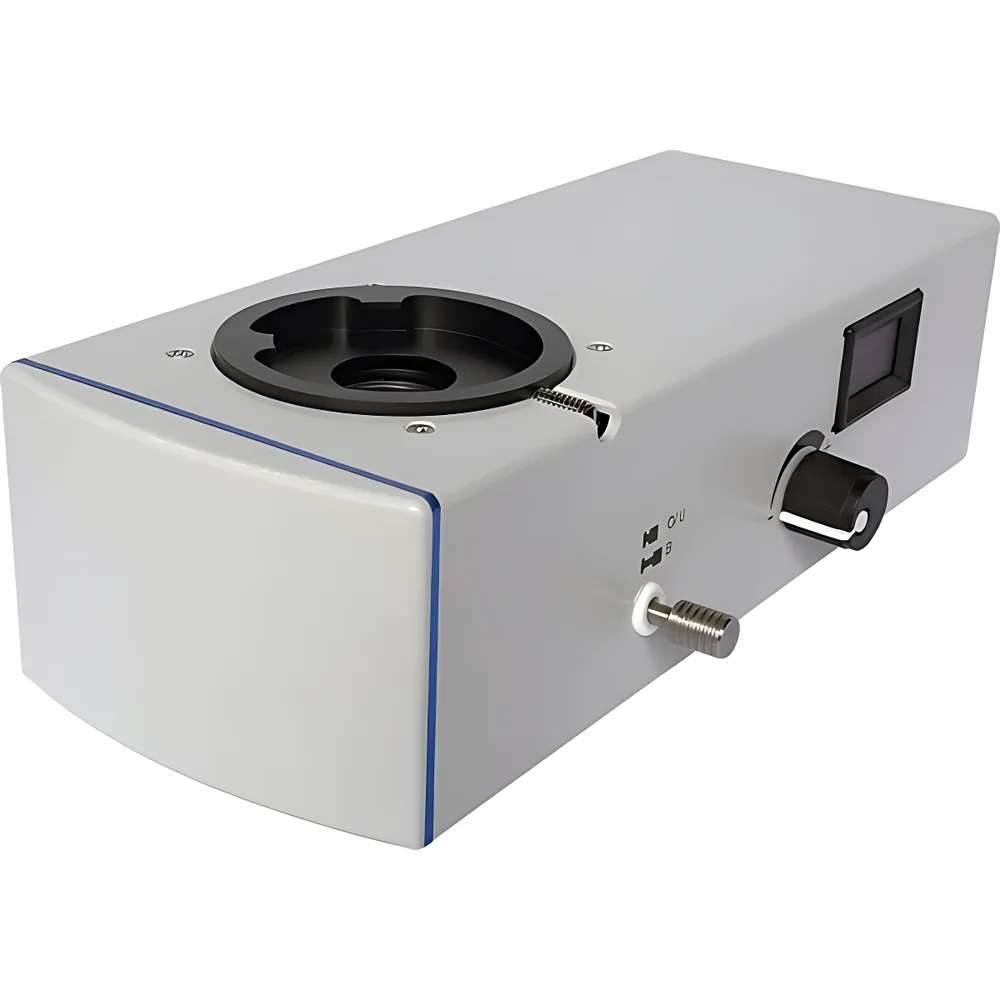
MingHui BU-LED-MH Upright Microscope LED Fluorescence Attachment

| Brand | MingHui |
|---|---|
| Origin | Guangdong, China |
| Manufacturer Type | OEM/ODM Producer |
| Product Category | Domestic |
| Model | BU-LED-MH |
| Light Source Type | High-Power Narrowband LED |
| Illumination Mode | Internal (Built-in Epi-Illumination) |
| Excitation Channels | Dual-Channel (B & UV) |
| LED Lifetime | ≥20,000 h |
| Intensity Control | 0–100% Linear Dimming |
| Excitation Filters | B: 475 nm ±35 nm |
| UV | 360 nm ±50 nm |
| Emission Cutoffs | 500 nm (B), 400 nm (UV) |
| Center Wavelengths | 365 nm (UV), 475 nm (Blue) |
| Channel Switching | Manual Slide Mechanism |
| Observation Modes | Brightfield & Fluorescence |
| Compatibility | Universal Mount for Olympus, Nikon, Zeiss, Leica, Nicon, Motic, Phoenix, Keyence, and Most Chinese Upright Microscopes |
Ask about pricing, availability and specifications.
Overview
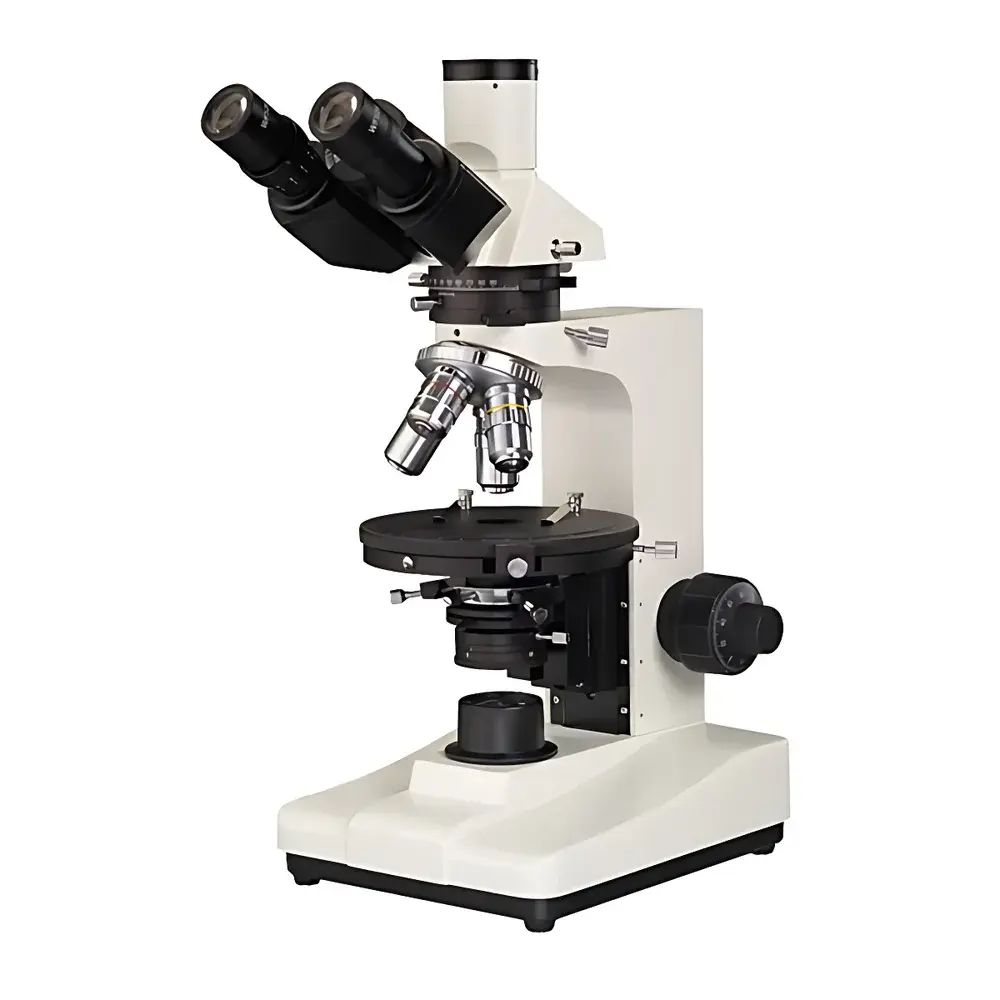
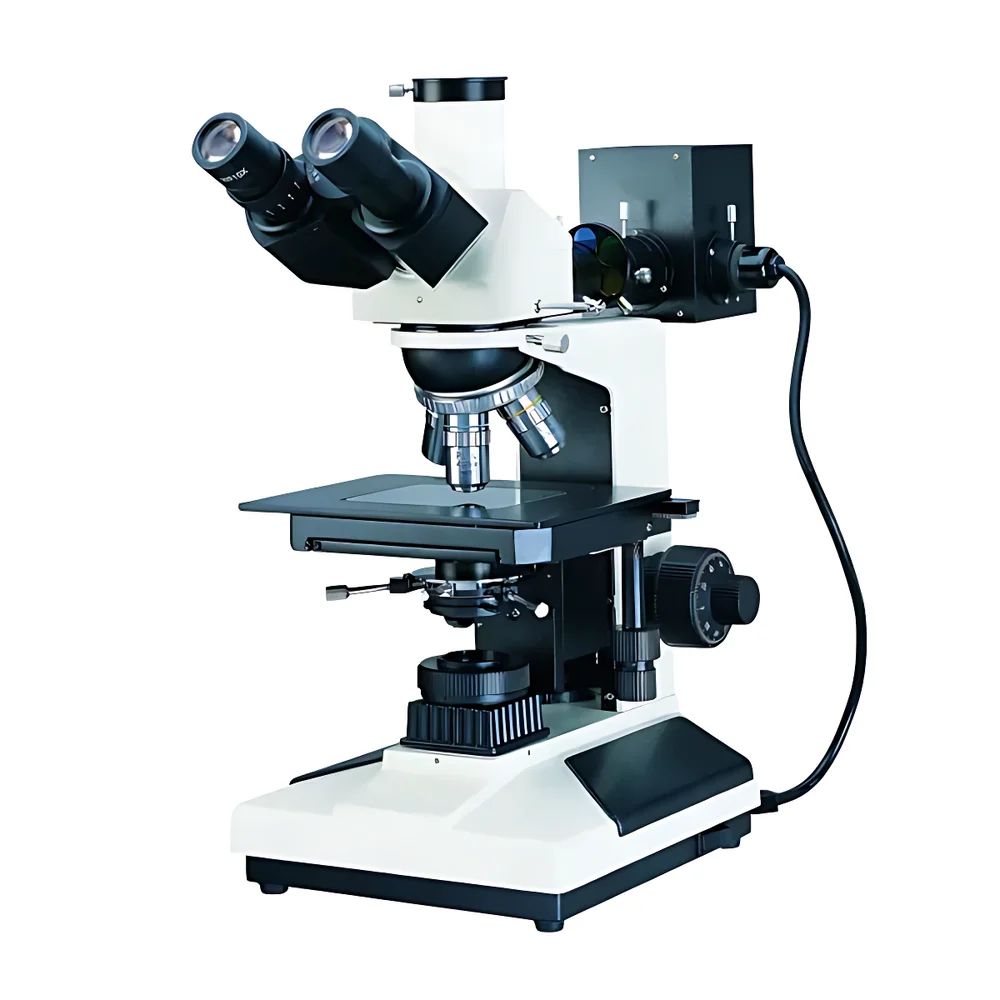
The MingHui BU-LED-MH is a modular, internally mounted LED fluorescence attachment engineered for upright optical microscopes. It operates on the principle of epi-fluorescence illumination—where narrowband LED light is directed through the objective lens onto the specimen, and emitted fluorescence is collected along the same optical path. Unlike traditional mercury or xenon arc lamps, this system employs solid-state LEDs with precisely defined center wavelengths (365 nm for UV and 475 nm for blue excitation), delivering stable, cool, and repeatable excitation without thermal drift or bulb aging artifacts. Designed as a non-invasive retrofit solution, the BU-LED-MH preserves the host microscope’s native Köhler illumination geometry and optical train integrity—requiring no mechanical modification, alignment recalibration, or replacement of existing condensers or objectives. Its internal illumination architecture ensures uniform field coverage and eliminates external light coupling losses, making it suitable for quantitative fluorescence applications in regulated laboratory environments.
Key Features
- True dual-channel epi-illumination: Independent UV (360 nm ±50 nm) and blue (475 nm ±35 nm) LED modules with discrete excitation filters and dichroic mirrors optimized for DAPI and FITC fluorophore families.
- Linear 0–100% intensity dimming via analog control—enabling precise photostimulation dosing and minimizing photobleaching during time-lapse or live-cell imaging.
- Manual slide-based channel selection mechanism—robust, backlash-free, and compatible with glove-box or biosafety cabinet workflows where motorized components are restricted.
- ≥20,000-hour LED lifetime at rated output—reducing maintenance intervals and eliminating hazardous lamp disposal requirements associated with mercury vapor sources.
- Thermally passive design with aluminum heat-sink integration—no active cooling fans, ensuring silent operation and vibration-free imaging critical for high-magnification or long-exposure acquisition.
- Universal C-mount and standardized dovetail interface—mechanically and optically aligned to meet ISO 8578-compliant microscope port specifications across major OEM platforms.
Sample Compatibility & Compliance
The BU-LED-MH supports standard 24 × 60 mm and 25 mm round fluorescence filter sets, accommodating both commercial and custom-cut interference filters. It is validated for use with fixed and live biological specimens—including cultured mammalian cells, sputum smears (for acid-fast bacilli detection), cervical cytology preparations, and autoantibody-stained tissue sections. The system complies with IEC 61000-6-3 (EMC emission limits) and IEC 62471 (photobiological safety classification—Risk Group 1 for both channels under normal operating conditions). While not FDA-cleared as a diagnostic device, its optical performance meets ASTM E2915-22 guidelines for fluorescence microscopy system verification and supports GLP-aligned documentation when integrated into validated laboratory workflows per ISO/IEC 17025.
Software & Data Management
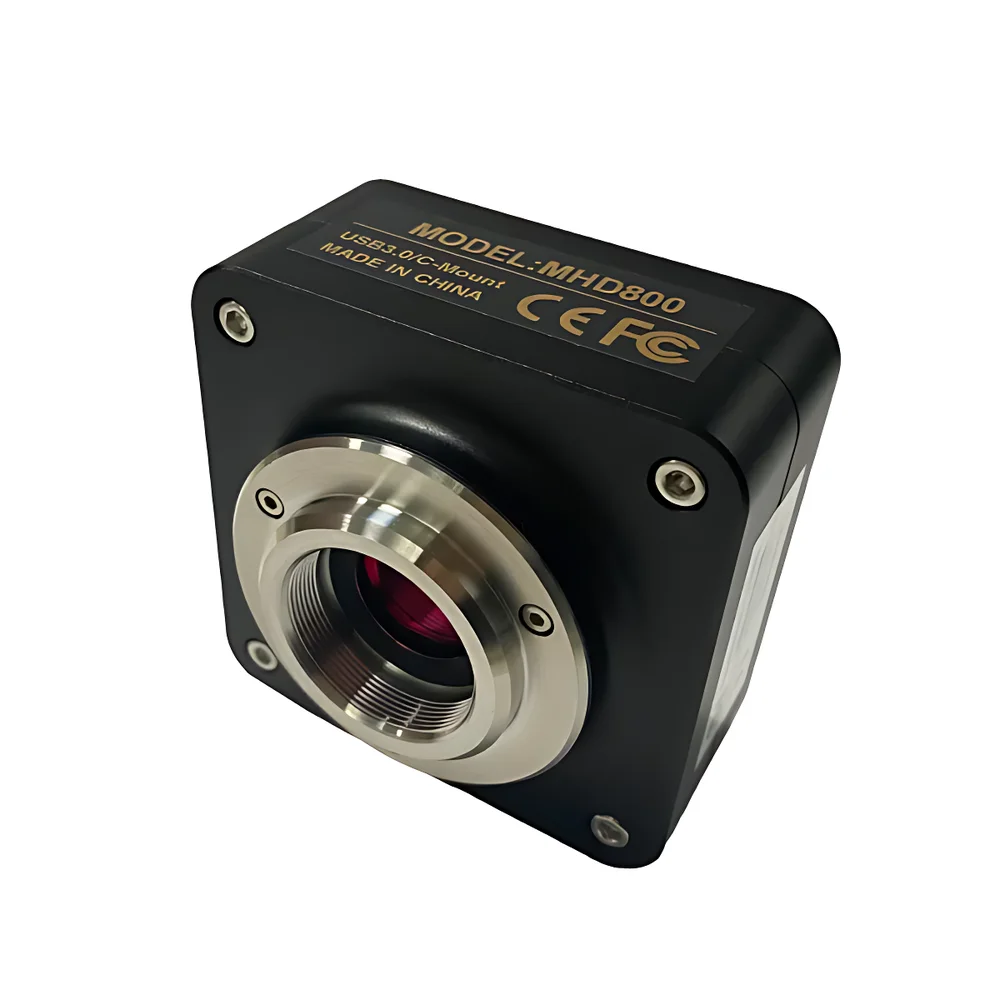
As a hardware-only illumination module, the BU-LED-MH does not include proprietary software but interfaces seamlessly with third-party imaging platforms—including NIS-Elements (Nikon), ZEN (Zeiss), LAS X (Leica), and open-source tools such as Micro-Manager and Fiji/ImageJ. Its analog dimming input accepts 0–5 V or 0–10 V TTL-compatible signals, enabling synchronization with shutter controllers, stage encoders, or automated exposure scripts. Audit-trail-capable systems (e.g., those compliant with FDA 21 CFR Part 11) can log LED intensity settings alongside image metadata when paired with timestamped acquisition software—supporting traceability for QC/QA reporting in clinical microbiology or biopharmaceutical development labs.
Applications
- Fluorescent in situ hybridization (FISH) and immunofluorescence (IF) screening for respiratory pathogens (e.g., Mycobacterium tuberculosis) and reproductive tract infections (e.g., Chlamydia trachomatis).
- Transfection efficiency quantification in adherent cell lines using GFP/RFP co-expression constructs—leveraging low-phototoxicity LED excitation to maintain viability over serial passages.
- Autoimmune serology validation via indirect immunofluorescence assay (IFA) on HEp-2 or gastric mucosa substrates—meeting CLSI EP25-A2 recommendations for pattern recognition consistency.
- Teaching laboratories requiring cost-effective, maintenance-free fluorescence capability without compromising optical fidelity or regulatory readiness.
- Field-deployable diagnostics support—when mounted on ruggedized upright microscopes used in mobile TB testing units or regional reference labs with limited infrastructure.
FAQ
Is the BU-LED-MH compatible with infinity-corrected microscope objectives?
Yes—it maintains telecentric illumination geometry and does not introduce spherical or chromatic aberration, preserving manufacturer-specified resolution and flatness across all infinity-corrected objective classes (e.g., Plan Apo, Fluor, and Phases).
Can custom excitation wavelengths be integrated?
Yes—MingHui offers OEM engineering services for wavelength-specific LED modules (e.g., 561 nm for TRITC, 640 nm for Cy5), subject to minimum order quantity and spectral bandwidth validation per ISO 10110-7.
Does the module require external power conditioning?
No—it operates from a single 12 V DC input with integrated current regulation and surge protection; no external driver or ballast is needed.
How is alignment verified after installation?
A collimation test slide with crosshair etchings and a certified reference graticule (NIST-traceable) is included for centering and focus verification per ISO 9345-2 Annex B.
What maintenance is required during routine operation?
None beyond periodic cleaning of the front optical window with spectroscopic-grade methanol and lint-free wipes—no recalibration or lamp replacement is necessary within the 20,000-hour service life.