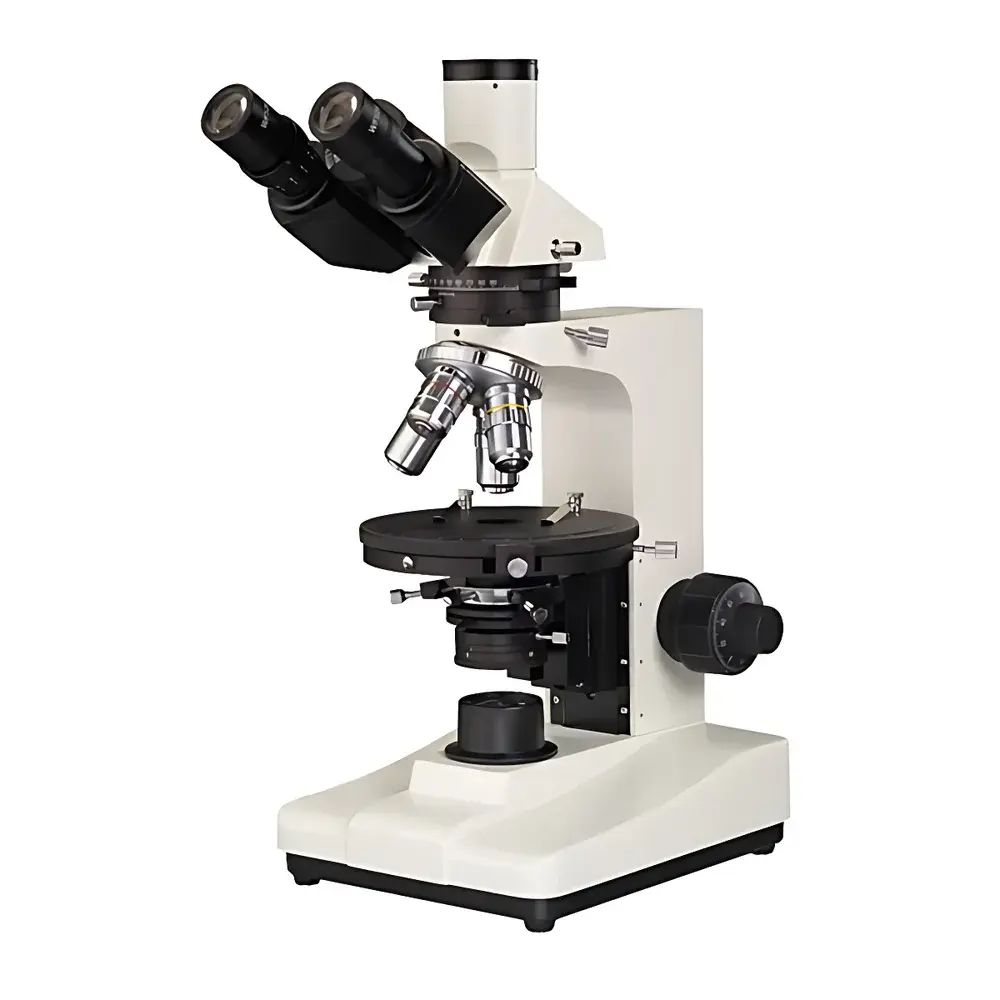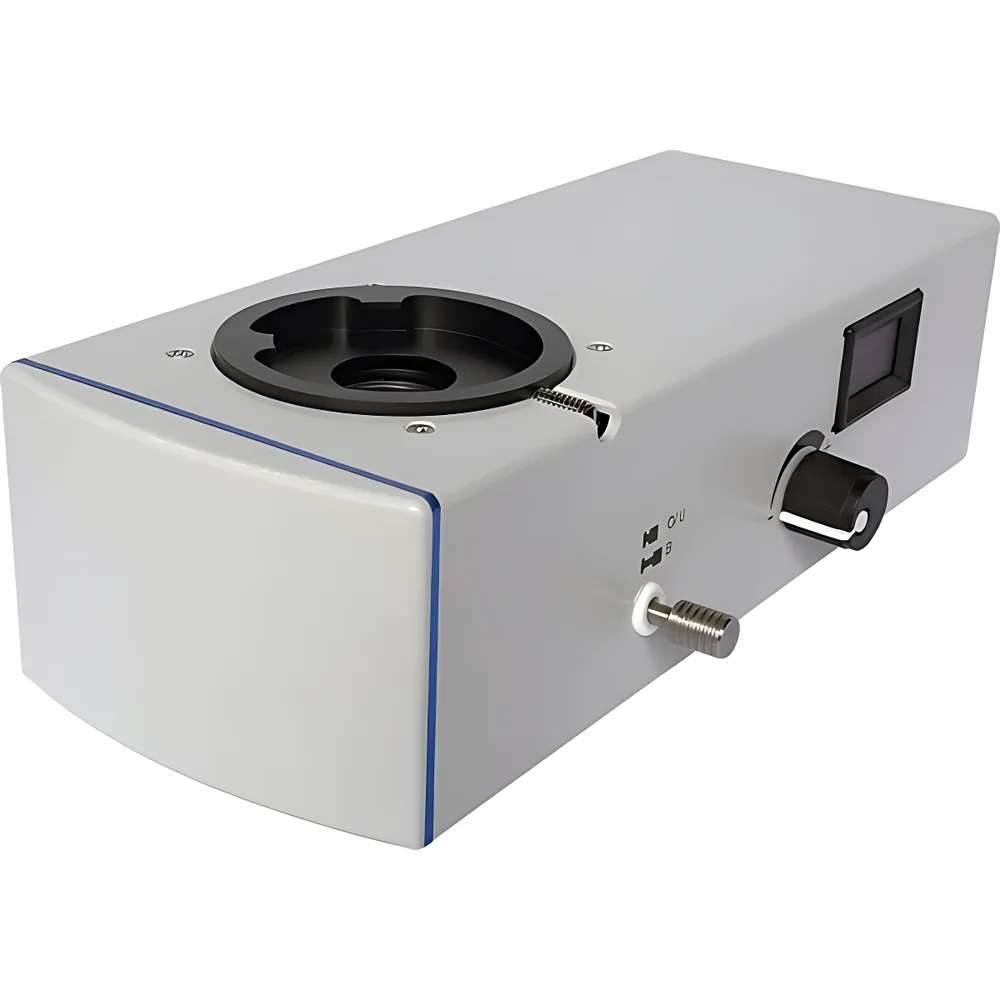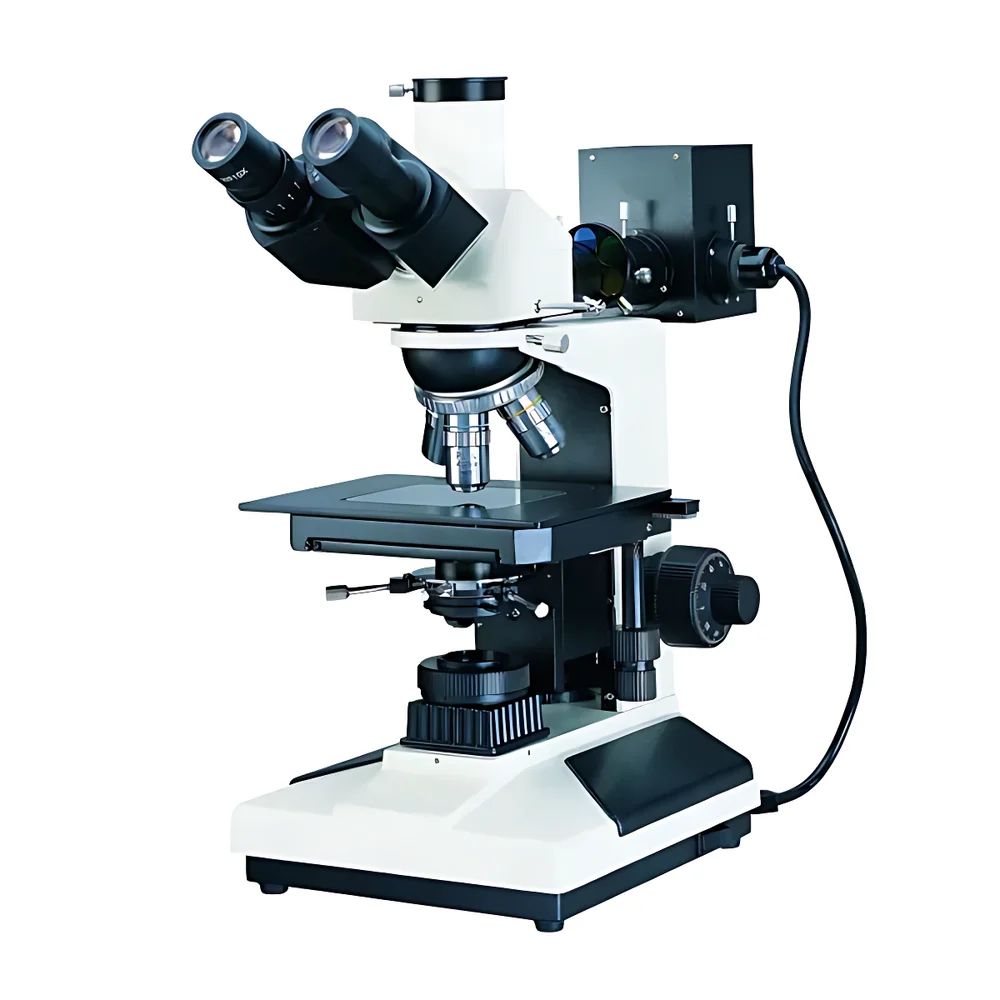
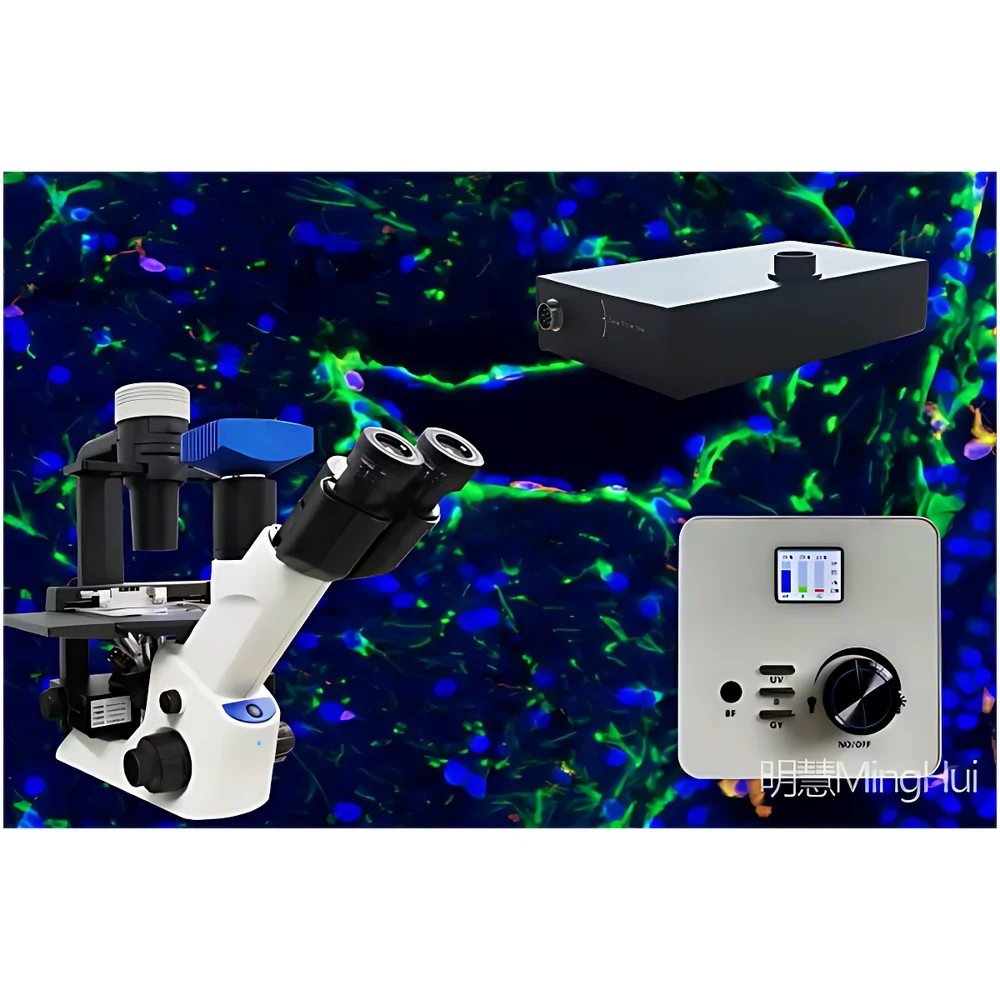
MingHui FL4-LED-DIMH Motorized Inverted Fluorescence Attachment for Olympus CKX53

| Brand | MingHui |
|---|---|
| Origin | Guangdong, China |
| Manufacturer Type | Original Equipment Manufacturer (OEM) |
| Product Category | Domestic |
| Model | FL4-LED-DIMH |
| Light Source Type | High-Power LED (UV/Blue/Green) |
| Illumination Mode | Internal (Epi-Illumination) |
| Excitation Filter Options | UV LP (365/30 nm), Blue BP (470/30 nm), Green LP (530/30 nm), Optional Channels: UV BP (365/30 nm), Blue LP (470/30 nm), Green BP (530/30 nm), Yellow BP (565/40 nm) |
| Dichroic Mirrors | 405 nm, 505 nm, 565 nm, 595 nm |
| Emission Filters | 425 nm LP, 535/35 nm, 575 nm LP, etc. |
| LED Lifetime | ≥20,000 h |
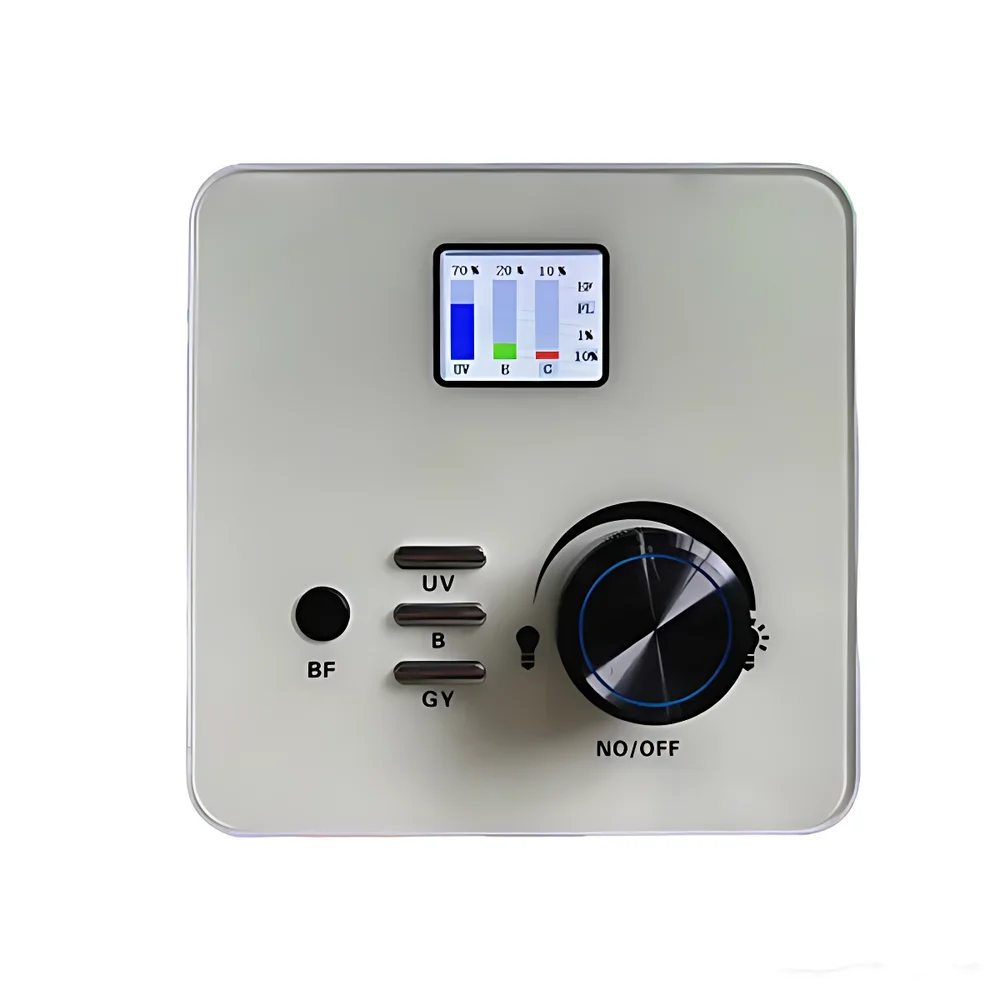
| Control Interface | Dedicated Motorized Controller with 1.8″ Color LCD Display & PC Software API Support |
| Power Input | DC 12 V |
| Compatibility | Designed exclusively for Olympus CKX53 inverted microscope platform |
Ask about pricing, availability and specifications.
Overview
The MingHui FL4-LED-DIMH is a precision-engineered motorized fluorescence attachment engineered specifically for the Olympus CKX53 inverted microscope platform. It transforms standard brightfield observation into a flexible, multi-channel epi-fluorescence imaging system without requiring microscope replacement or major optical reconfiguration. Based on solid-state LED excitation technology, the FL4-LED-DIMH employs a four-position filter wheel architecture supporting up to three simultaneous fluorescence channels plus one dedicated brightfield position—enabling rapid, repeatable switching between modalities via motorized actuation. Its internal epi-illumination design ensures optimal light path alignment with the CKX53’s optical train, minimizing vignetting and maximizing signal-to-noise ratio across all configured bands. The system operates on a stable DC 12 V power supply and integrates seamlessly with existing CKX53 mechanical and optical interfaces, preserving native focus stability, stage travel, and objective compatibility.
Key Features
- Four-position motorized filter wheel with precise positional encoding: supports ≤3 fluorescence channels + 1 brightfield position; each position is mechanically registered and optically isolated to prevent cross-talk.
- Dedicated high-efficiency LED light engine: includes UV (365/30 nm), blue (470/30 nm), and green (530/30 nm) excitation modules with integrated thermal management and constant-current drivers—ensuring spectral stability and intensity reproducibility over time.
- Independent channel brightness memory: each excitation channel stores user-defined intensity levels; eliminates manual recalibration between sessions and reduces phototoxicity during live-cell imaging.
- 1.8-inch full-color LCD control panel: displays real-time status including active channel, LED output level (%), motor position, and system voltage; enables tactile and visual confirmation of operational parameters.
- Bi-directional software integration: supports RS-232 or TTL-level communication protocols for third-party microscopy acquisition platforms (e.g., MicroManager, NIS-Elements, MetaMorph); allows synchronized channel switching, intensity ramping, and exposure-triggered illumination control.
- Modular filter cartridge design: standardized M25.5 × 0.75 threaded mounts enable field-replaceable excitation/emission/dichroic sets; optional configurations include Cy5 (640/30 nm ex, 690/40 nm em), yellow (565/40 nm ex), and custom bandpass combinations upon request.
Sample Compatibility & Compliance
The FL4-LED-DIMH is validated for use with standard tissue culture vessels—including 35 mm, 60 mm, and 100 mm Petri dishes, multi-well plates (6–96-well), and chambered coverslips—without requiring adapter modifications. Its compact profile maintains full Z-axis clearance for objectives up to 60×/0.95 NA. All optical components comply with ISO 10110-7 surface quality standards (scratch-dig 60–40), and emission filters meet OD ≥6 blocking specifications at adjacent excitation wavelengths. While not certified to IEC 61000-6-3 EMC or UL 61010-1 out-of-the-box, the unit meets CE marking requirements for laboratory equipment when installed per manufacturer instructions and operated within specified ambient conditions (15–30 °C, <70% RH non-condensing). For GLP/GMP-regulated environments, audit-ready operation logs can be generated via software API integration.
Software & Data Management
The FL4-LED-DIMH provides open communication protocols (ASCII-based command set over serial interface) enabling deterministic control from custom or commercial image acquisition software. Supported functions include channel selection (by index or name), absolute/intensity-relative LED dimming (0–100% in 0.1% increments), motor homing, and status polling. Firmware supports timestamped event logging for traceability in regulated workflows. When paired with compliant imaging software, the system satisfies core requirements of FDA 21 CFR Part 11 for electronic records—provided that the host application implements appropriate user authentication, audit trail generation, and electronic signature controls. No proprietary cloud service or vendor-hosted platform is required or embedded.
Applications
This attachment is routinely deployed in academic and industrial life science laboratories for routine fluorescence-based assays including: live/dead cell viability assessment (Calcein AM/PI), subcellular organelle tracking (MitoTracker, LysoTracker), immunofluorescent detection of fixed monolayers, GFP/RFP transfection monitoring, calcium flux imaging (Fluo-4, Fura-2), and co-localization studies requiring sequential multi-channel acquisition. Its robust mechanical indexing and low-drift LED output make it suitable for time-lapse experiments spanning several hours. The modular filter architecture also supports method development for novel fluorophore pairs, especially where conventional mercury/xenon arc sources introduce excessive heat or spectral instability.
FAQ
Is the FL4-LED-DIMH compatible with microscopes other than the Olympus CKX53?
No—the mechanical housing, turret interface, and illumination coupling are dimensionally and optically optimized exclusively for the CKX53. Interchangeability with other inverted platforms (e.g., Nikon Ti, Zeiss Axiovert) is not supported without custom mechanical adapters, which are not supplied or validated by MingHui.
Can I add a fourth fluorescence channel beyond the standard three?
Yes—the filter wheel accommodates four positions; however, the default configuration reserves one slot for brightfield. A fourth fluorescence channel may be installed by replacing the brightfield position, provided the corresponding excitation/emission/dichroic triplet is physically compatible and spectrally non-interfering.
Does the system support TTL triggering for synchronization with camera exposure?
Yes—TTL input/output ports are available on the controller for hardware-level shutter synchronization, enabling precise temporal alignment of illumination onset with frame acquisition.
What maintenance is required for long-term performance?
No periodic lamp replacement is needed due to LED architecture. Annual verification of filter wheel positional accuracy and LED output stability (using a calibrated photodiode sensor) is recommended for quantitative applications.
Is technical documentation—including electrical schematics and communication protocol details—available to end users?
Yes—full integration manuals, ASCII command reference guides, mechanical drawings (STEP format), and firmware update procedures are provided under NDA to qualified institutional purchasers and OEM partners.