MingHui H6-LED-IMH Inverted Six-Position LED Fluorescence Attachment

| Brand | MingHui |
|---|---|
| Origin | Guangdong, China |
| Manufacturer Type | OEM/ODM Manufacturer |
| Country of Origin | China |
| Model | H6-LED-IMH |
| Light Source Type | High-Power Monochromatic LED Array |
| Illumination Mode | Internal (Built-in) Excitation |
| Max. LED Channels | 6 |
| LED Power | 10 W per channel |
| LED Lifetime | ≥20,000 h |
| Excitation Filter Options | UV (360/50 nm), Blue (475/35 nm), Green (530/40 nm) |
| Dichroic Mirrors | 400 nm, 500 nm, 560 nm |
| Emission Filters | 460/50 nm, 530/50 nm, 575LP |
| Power Supply | 12 V / 3 A Adapter |
| Control Interface | 3.5″ LCD Touch Panel with Channel Switching, Intensity Adjustment & Intensity Memory Function |
| Switching Mechanism | Manual Rotating Filter Turret |
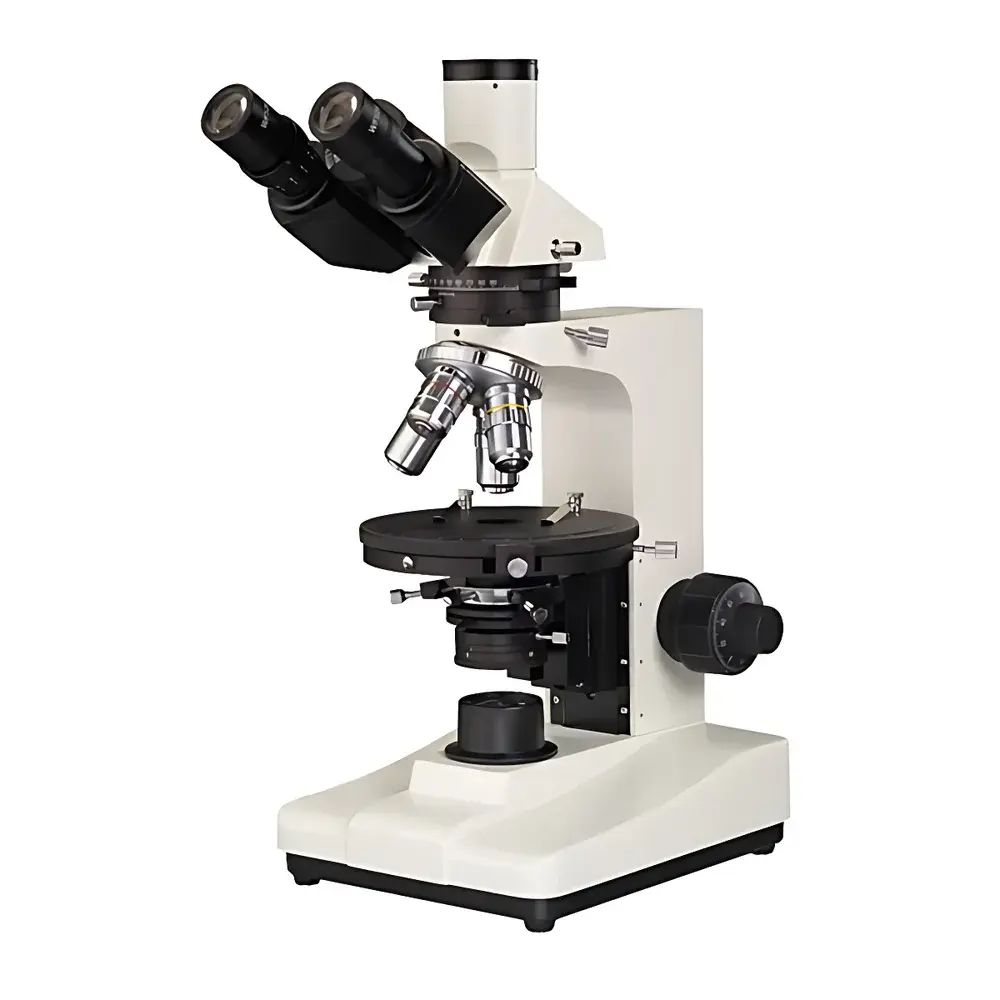
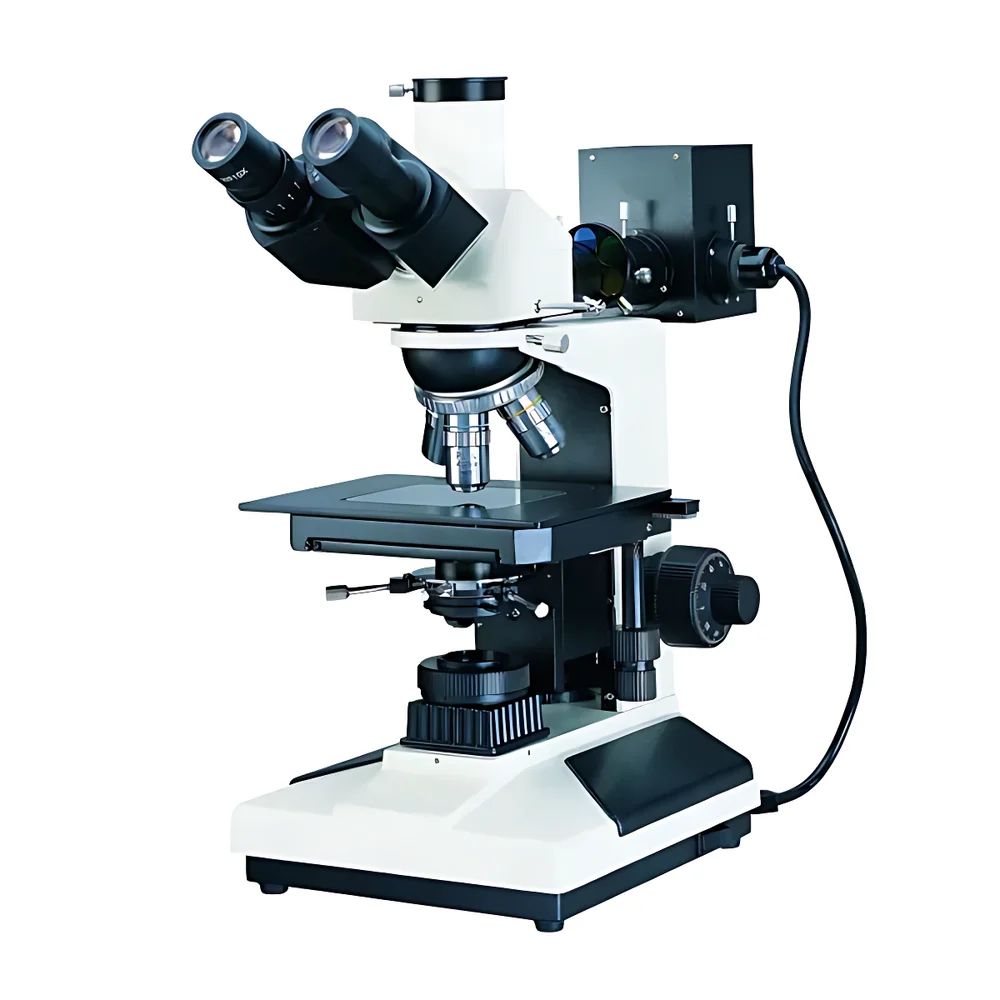
| Compatibility | Standard Inverted Microscopes with OEM-Compatible Fluorescence Port (e.g., Nikon Eclipse Ti, Olympus IX series, Leica DMI) |
Ask about pricing, availability and specifications.
Overview
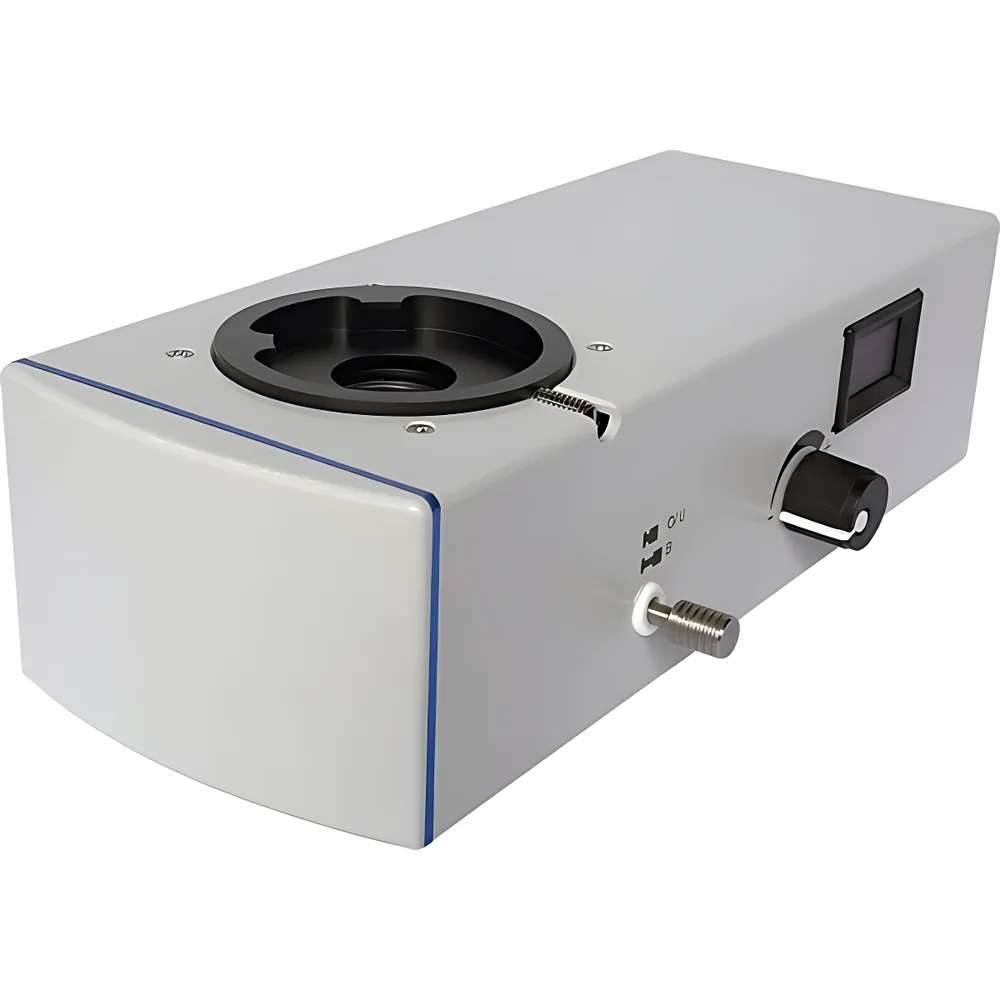
The MingHui H6-LED-IMH is an engineered six-position LED fluorescence attachment designed for integration with standard inverted research-grade microscopes. It replaces traditional mercury and xenon arc lamps with a solid-state, multi-channel LED excitation system based on narrow-band, high-intensity monochromatic LEDs. Each channel delivers spectrally defined excitation light—optimized for common fluorophores including DAPI, FITC, TRITC, and mCherry—without broadband UV exposure or thermal load to live specimens. The system operates on the principle of selective excitation and barrier-filtered emission detection, enabling precise spectral separation between excitation and emission pathways. Its internal illumination architecture ensures minimal stray light, stable intensity output, and compatibility with both widefield epifluorescence and transmitted-light brightfield observation modes. Designed for routine cell culture imaging, live-cell time-lapse studies, and routine QC in academic core facilities and biomanufacturing labs, the H6-LED-IMH meets fundamental requirements for reproducibility, operator safety, and long-term system stability.
Key Features
- Six independently addressable LED channels, each equipped with a 10 W high-efficiency monochromatic LED and matched excitation/emission filter set
- Manual rotating turret mechanism for rapid, backlash-free switching between brightfield and up to six fluorescence modalities
- Integrated 3.5-inch LCD control panel supporting real-time channel activation, analog intensity adjustment (0–100%), and per-channel brightness memory retention
- No warm-up time required; full-intensity output achieved instantaneously at power-on
- Optical path pre-aligned during factory assembly—no post-installation collimation or alignment needed
- Modular filter carrier design allows user-level replacement of excitation/emission/dichroic sets without tools or optical recalibration
- Low-heat operation reduces thermal drift in stage-mounted samples and minimizes phototoxicity during extended imaging sessions
- External 12 V / 3 A regulated power supply isolates electrical noise from microscope electronics and enhances ESD protection
Sample Compatibility & Compliance
The H6-LED-IMH supports standard glass-bottom culture dishes (e.g., MatTek P35G-1.5-14-C), chambered coverslips, and multi-well plates compatible with inverted microscope stages. Its excitation spectra align with ISO 10934-1 (fluorescence microscopy terminology) and ASTM E2877-18 (standard guide for fluorescence instrument calibration). While not certified to IEC 61000-6-3 (EMC) or UL 61010-1 out-of-the-box, the unit complies with CE marking requirements for laboratory equipment when used with CE-compliant host microscopes and power supplies. All LED drivers meet RoHS 2 directives. Filter sets are specified per ISO 12233 Annex D for bandpass center wavelength tolerance (±3 nm) and blocking depth (>OD6 beyond passband edges).
Software & Data Management
The H6-LED-IMH operates as a hardware-controlled peripheral without proprietary software dependency. It interfaces via TTL-compatible trigger lines and analog 0–5 V intensity modulation inputs, enabling native integration with third-party acquisition platforms including MetaMorph, NIS-Elements, μManager, and HALCON-based custom scripts. Intensity memory settings persist across power cycles and are retained independent of host software state. For GLP/GMP environments, audit trails for intensity changes can be logged externally through microscope control software that supports timestamped command logging (e.g., NIS-Elements AR v5.21+ with FDA 21 CFR Part 11 add-on enabled). No firmware updates are field-serviceable; all configuration resides in hardware logic.
Applications
- Live-cell imaging of GFP/RFP-tagged proteins under physiological conditions with reduced photobleaching
- Routine nuclear morphology assessment using DAPI-stained adherent cultures
- Multi-color co-localization studies requiring sequential excitation without mechanical filter cube repositioning
- Quality control of monoclonal antibody production batches via immunofluorescent staining of CHO or HEK293 cells
- Time-lapse monitoring of calcium flux using Fura-2 or Fluo-4 AM dyes
- Teaching laboratories requiring robust, low-maintenance fluorescence capability for undergraduate microscopy courses
FAQ
Is the H6-LED-IMH compatible with non-MingHui inverted microscopes?
Yes—it is mechanically and optically engineered to interface with standard C-mount or M27 × 0.75 fluorescence ports found on Nikon Eclipse Ti, Olympus IX73/IX83, Leica DMI6000/DMI8, and Zeiss Axio Observer platforms.
Can excitation filter sets be customized beyond the standard UV/B/G configurations?
Yes—custom excitation/emission combinations (e.g., Cy5, Alexa Fluor 647, or far-red dyes) are available upon request; lead time is typically 4–6 weeks.
Does the system support automated filter switching via software?
No—the turret is manually rotated; however, optional motorized turret upgrade (H6-MOT-IMH) is available for full software synchronization.
What is the maximum permissible ambient temperature for continuous operation?
Rated for continuous duty at 15–30 °C ambient; derating applies above 30 °C per IEC 60068-2-14.
Are service manuals and spare parts available to end users?
Yes—technical documentation, exploded diagrams, and LED module replacements are provided under NDA to qualified institutional service engineers.