MolTech THz Crystals (ZnGeP₂, GaSe, AgGaS₂, KTP, GaP, InP, ZnTe, CdZnTe & Related Nonlinear Optical Substrates)

| Origin | Germany |
|---|---|
| Manufacturer Type | Authorized Distributor |
| Origin Category | Imported |
| Model | THz Crystals |
| Price Range | USD 1,400 – 7,000 |
| Component Category | Nonlinear Optical Crystals |
Ask about pricing, availability and specifications.
Overview
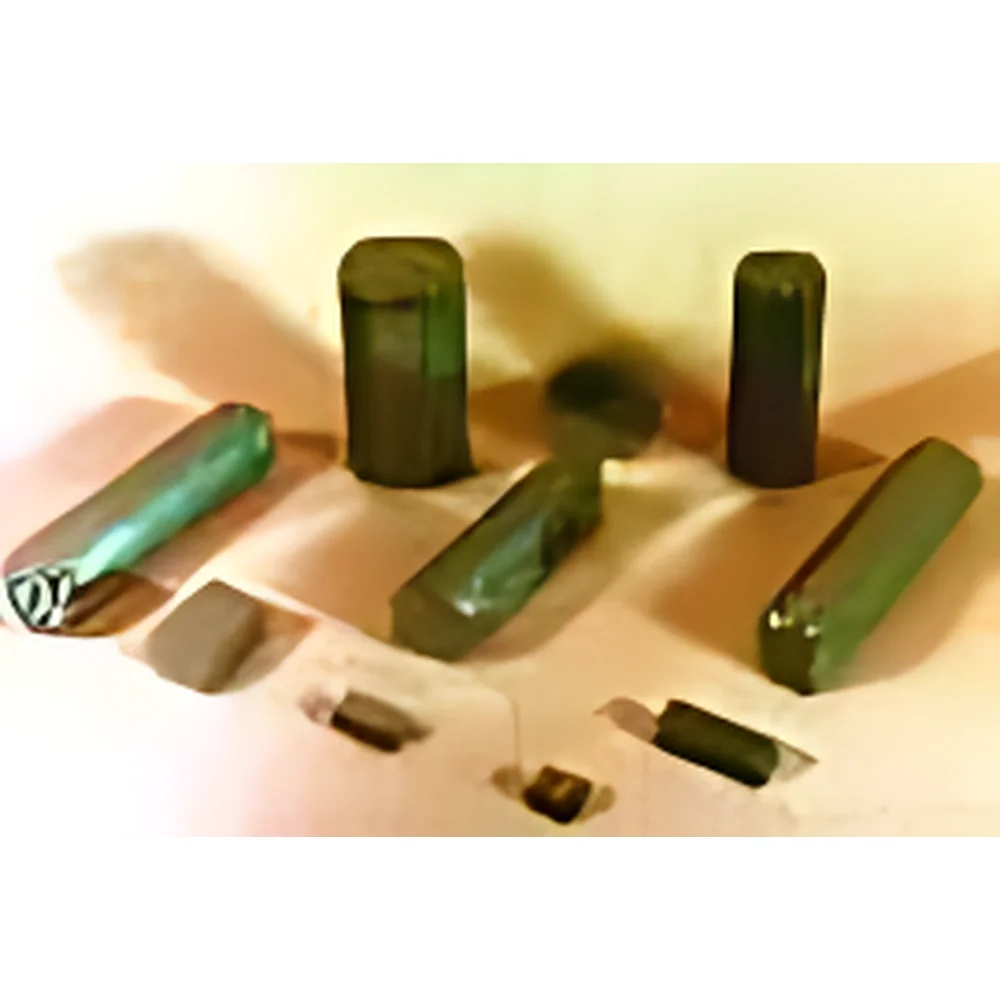
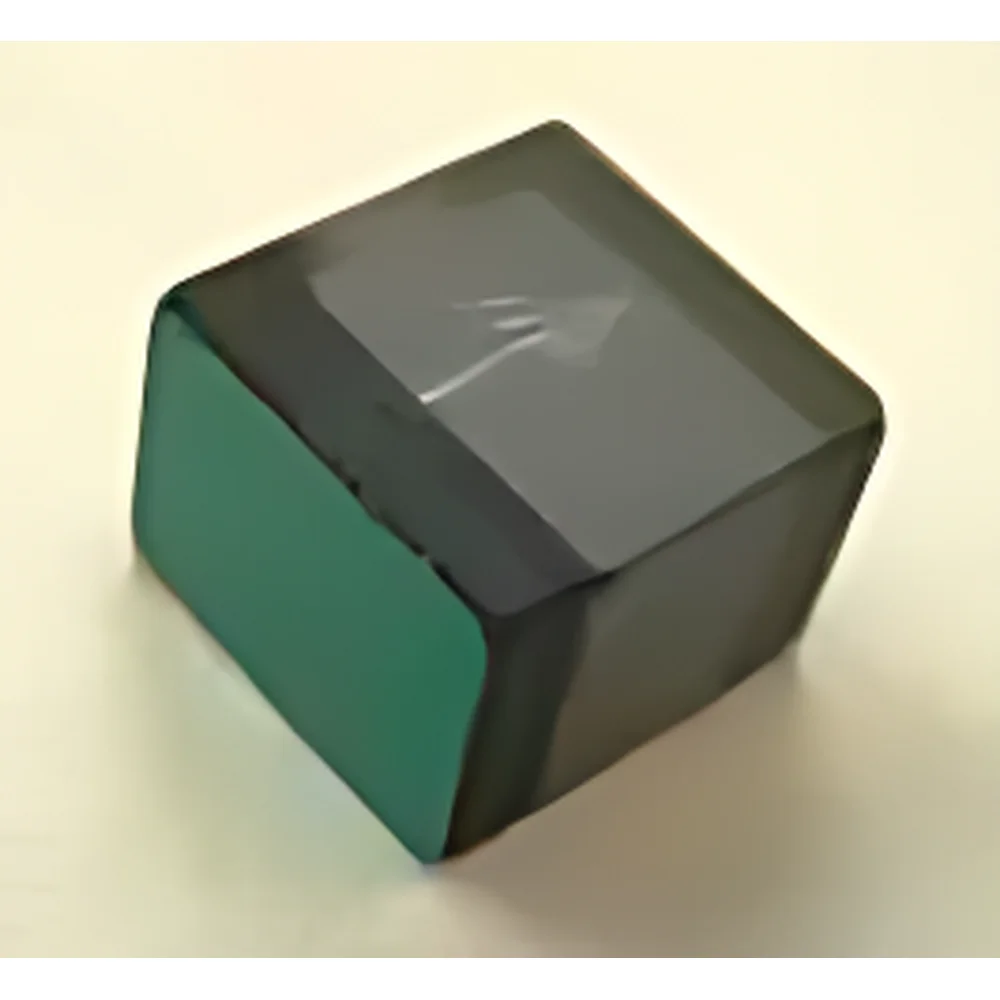
MolTech THz Crystals are a family of high-purity, orientation-controlled nonlinear optical (NLO) and electro-optic (EO) single crystals engineered for efficient generation, detection, and manipulation of terahertz (THz) radiation in time-domain spectroscopy (TDS), pump-probe experiments, and frequency conversion systems. Sourced from MolTech GmbH—Berlin-based specialists in laser and THz materials—the portfolio includes ZnGeP₂ (ZGP), GaSe, AgGaS₂ (AGS), KTiOPO₄ (KTP), GaP, InP, ZnTe, CdZnTe (CZT), and related compound semiconductors. These crystals operate via optical rectification (e.g., ZnTe, GaP under femtosecond excitation) or difference-frequency generation (DFG) in mid-IR pumped configurations (e.g., ZGP, GaSe, AGS). Their performance is governed by second-order nonlinear susceptibility (χ⁽²⁾), phase-matching bandwidth, absorption edge, carrier lifetime (for photoconductive antennas), and thermal/mechanical stability—parameters rigorously validated per ISO 10110-3 for surface quality and ASTM F1529 for crystallographic orientation.
Key Features
- Material-specific phase-matching capability across 0.6–20 µm input range, enabling broadband THz emission (0.1–7 THz) and detection with sub-picosecond temporal resolution.
- ZnGeP₂: Highest d₃₆ coefficient (≥68.9 pm/V at 10.6 µm) and laser-induced damage threshold (60 MW/cm², 150 ns pulse), optimized for CO₂-pumped DFG.
- GaSe: Broad transmission (0.62–20 µm), large d₂₂ (54 pm/V), and low walk-off angle (4.1° at 5.3 µm), suitable for mid-IR harmonic generation and THz upconversion.
- ZnTe: High EO coefficient (r₄₁ ≈ 4 pm/V), ultrafast carrier lifetime (<1 ps), and (110) orientation standard for THz-TDS emitters/detectors.
- CdZnTe (CZT): Wide bandgap (1.4–2.2 eV), high resistivity (>1×10⁹ Ω·cm), and room-temperature operability—critical for THz photoconductive switches and radiation-hardened detectors.
- All crystals undergo precision orientation verification via X-ray Laue diffraction (±0.1° accuracy), double-side polishing (λ/10 surface flatness), and optional anti-reflection coating (R < 0.25% @ design wavelength).
Sample Compatibility & Compliance
These crystals are compatible with standard THz-TDS platforms (e.g., Menlo Systems TeraSmart, TOPTICA TeraScan), OPO/OPA pump sources (1–12 µm), and fiber-coupled fs-laser systems (Ti:sapphire, Yb-fiber). Each batch is supplied with a certificate of conformance detailing crystallographic orientation ((100), (110), or (111)), surface finish (scratch-dig per MIL-PRF-13830B), and refractive index data (nₒ, nₑ) referenced to ISO 7944 and IEC 61290-1-3. Materials comply with RoHS Directive 2011/65/EU and are traceable to raw-material lot numbers. For regulated environments (GMP/GLP labs), full documentation supports FDA 21 CFR Part 11 audit readiness—including electronic signatures on calibration reports and material safety data sheets (MSDS).
Software & Data Management
While MolTech THz Crystals are passive optical components, their integration into automated THz systems benefits from standardized metadata tagging in LabVIEW™, MATLAB® THz Toolbox, and Python-based packages (e.g., scikit-terahertz). Orientation, thickness, and coating specifications are encoded in JSON-formatted device descriptors compliant with IEEE 1851-2017 (Standard for Device Description Language). Raw spectral response data (transmission, reflectance, EO sampling efficiency) can be imported into commercial simulation tools (Lumerical MODE, COMSOL Multiphysics® Wave Optics Module) for phase-matching angle optimization and dispersion compensation modeling.
Applications
- Time-domain THz spectroscopy (THz-TDS) using ZnTe (110) or GaP (100) as emitter/detector substrates.
- Difference-frequency generation (DFG) of tunable THz waves from dual-wavelength mid-IR sources (e.g., ZGP pumped at 2.09 µm + 2.26 µm → 1–3 THz).
- Optical rectification in large-aperture ZnTe for high-field (>100 kV/cm) THz pulse generation.
- Mid-IR parametric down-conversion in AGS and GaSe for quantum cascade laser (QCL) seeding and heterodyne detection.
- Photoconductive antenna fabrication on semi-insulating InP and low-temperature-grown GaAs (LT-GaAs) for >5 THz bandwidth receivers.
- Room-temperature γ/X-ray detection using CZT wafers in compact THz-driven Compton scattering diagnostics.
FAQ
What crystal orientation is recommended for ZnTe-based THz emitters?
(110) orientation is standard for optimal electro-optic sampling efficiency and minimal birefringent distortion in collinear geometry.
Can GaSe be used for continuous-wave (CW) THz generation?
No—GaSe exhibits thermal lensing and low CW damage threshold (0.5 MW/cm² at 10.6 µm); it is strictly intended for pulsed operation (ns–ps regime).
Is anti-reflection coating available for InP substrates used in photoconductive antennas?
Yes—single-layer MgF₂ or multi-layer quarter-wave stacks (e.g., TiO₂/SiO₂) are offered for 800 nm or 1550 nm pump wavelengths.
How is crystal homogeneity verified prior to shipment?
Each wafer undergoes full-field interferometric mapping (Zygo Verifire™) and photoluminescence lifetime imaging (PLIM) to confirm dopant uniformity and absence of micro-defects.
Do you provide custom cutting or metallization services?
Yes—custom dimensions (down to 2 × 2 × 0.1 mm³), beveled edges (30°–45°), and Au/Ti contact deposition (e-beam evaporation, 100 nm thickness) are available upon request with NDA-compliant handling.