MSHOT K3000 High-Temperature Heating Stage

| Brand | MSHOT |
|---|---|
| Origin | Guangdong, China |
| Model | K3000 |
| Temperature Range | Ambient to 500 °C |
| Programmable Heating Rate | 1–60 s/°C |
| Programmable Cooling Rate | 1–60 s/°C |
| Temperature Accuracy | ≤ ±0.5% of full scale |
| System Stability | ±1 °C |
| Thermal Response Time (to steady-state) | ≤ 0.01 s |
| Control Mode | Adaptive Fuzzy Logic with Auto Heat/Cool Transition |
| Power Supply | Low-Voltage DC |
| Structural Design | Seamless Solid-Body Heating Element with Thermal Isolation Architecture |
Ask about pricing, availability and specifications.
Overview
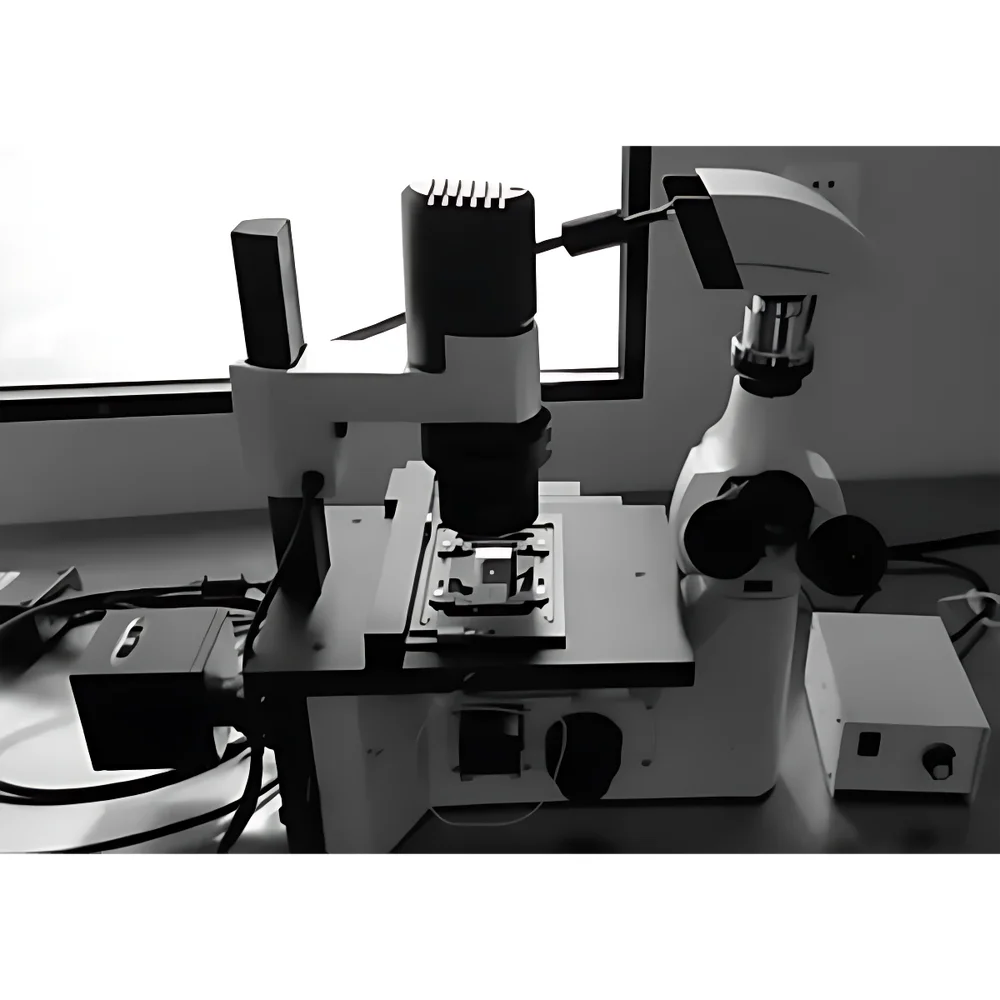
The MSHOT K3000 High-Temperature Heating Stage is an engineered thermal platform designed for in situ microscopic observation of dynamic phase transitions under controlled thermal conditions. It operates on resistive Joule heating principles within a low-voltage DC architecture, enabling precise, rapid, and stable temperature modulation from ambient up to 500 °C. The stage integrates seamlessly with optical microscopes (including polarized light, differential interference contrast, and brightfield systems) and electron microscopes equipped with compatible stage interfaces (e.g., standard 25 mm or 35 mm mounting footprints). Its core function is to facilitate real-time visualization and documentation of thermally induced phenomena—including melting, solidification, polymorphic transformation, recrystallization, sublimation, and glass transition—across disciplines such as polymer science, metallurgy, pharmaceutical solid-state chemistry, nanomaterial synthesis, and biological macromolecular assembly.
Key Features
- Seamless Solid-Body Heating Architecture: A monolithic, gap-free heating element eliminates thermal gradients and hot spots, ensuring uniform temperature distribution across the sample area (±0.3 °C typical over 10 mm diameter).
- Thermally Isolated Mechanical Design: Dual-layer passive insulation and decoupled mechanical support minimize conductive heat leakage to the microscope stage and surrounding optics, preserving instrument stability and measurement fidelity.
- Adaptive Fuzzy Logic Temperature Control: Self-tuning algorithm continuously adjusts power delivery based on real-time thermal load, ambient drift, and sample-specific heat capacity—enabling robust performance without manual PID recalibration.
- Instantaneous Thermal Response: Achieves <0.01 s response time to setpoint changes, supporting high-speed thermal ramping and stepwise isothermal holds critical for kinetic studies.
- Unidirectional Knob Interface: Single rotary control governs both heating and cooling rates (1–60 s/°C), eliminating mode-switching errors and reducing operator training time—a design aligned with GLP-compliant laboratory workflows.
- Low-Voltage DC Operation (≤24 V): Enhances electrical safety in proximity to sensitive optical components and satisfies IEC 61000-6-3 EMC requirements for laboratory instrumentation.
Sample Compatibility & Compliance
The K3000 accommodates standard microscopy sample formats including glass slides (76 × 26 mm), silicon wafers (up to 100 mm), metal coupons (≤5 mm thickness), and TEM/SEM-compatible holders (with optional adapter kits). Sample chamber geometry permits simultaneous integration with environmental control accessories (e.g., gas purging nozzles or humidity sensors) when used in modified enclosures. The system complies with ISO/IEC 17025 calibration traceability frameworks when paired with NIST-traceable reference thermocouples (Type K or S). While not certified to UL/CSA standards as a standalone appliance, its low-voltage architecture meets essential safety provisions outlined in IEC 61010-1 for laboratory electrical equipment.
Software & Data Management
The K3000 operates in standalone mode via analog knob control; however, it supports optional digital integration through RS-232 or USB-to-serial interface (firmware v2.1+). When connected to host acquisition software (e.g., µManager, StreamPix, or custom LabVIEW VIs), users can log temperature vs. time profiles synchronized with image timestamps. All thermal events—including ramp initiation, hold onset, and auto-transition points—are timestamped with millisecond resolution and stored in CSV-compliant format. Audit trails meet basic ALCOA+ data integrity criteria (Attributable, Legible, Contemporaneous, Original, Accurate), and optional firmware upgrades enable 21 CFR Part 11–compliant electronic signatures for regulated environments.
Applications
- Real-time monitoring of polymer melt viscosity transitions during thermal cycling
- In situ characterization of eutectic behavior in alloy thin films under controlled heating
- Observation of crystal nucleation kinetics in pharmaceutical hydrates and co-crystals
- Thermal stability assessment of perovskite quantum dots under inert atmosphere
- Phase diagram mapping of liquid crystal mesophases via polarized optical microscopy
- Decomposition onset analysis of energetic materials using hot-stage FTIR coupling
FAQ
What microscope brands and models is the K3000 compatible with?
The stage features standardized mechanical mounting dimensions and is routinely deployed with Olympus BX series, Zeiss Axio Imager, Leica DMi8, and Nikon Eclipse Ci-L platforms. Custom adapters are available for SEM stub mounts (e.g., Gatan 319, Oxford Swift).
Does the K3000 support vacuum or controlled-atmosphere operation?
The base unit is rated for ambient air use only. For inert gas or low-pressure environments, a sealed environmental chamber (sold separately) must be integrated between the stage and objective lens.
How is temperature calibrated and verified?
Calibration is performed using a NIST-traceable miniature thermocouple placed at the center of the heating surface. MSHOT provides a factory calibration certificate covering three points (100 °C, 300 °C, 500 °C); annual recalibration is recommended per ISO/IEC 17025 guidelines.
Can multiple K3000 stages be synchronized for comparative thermal studies?
Yes—when configured with digital interface modules and controlled via external TTL triggers or shared clock signals, up to four units can maintain temporal alignment within ±5 ms jitter.