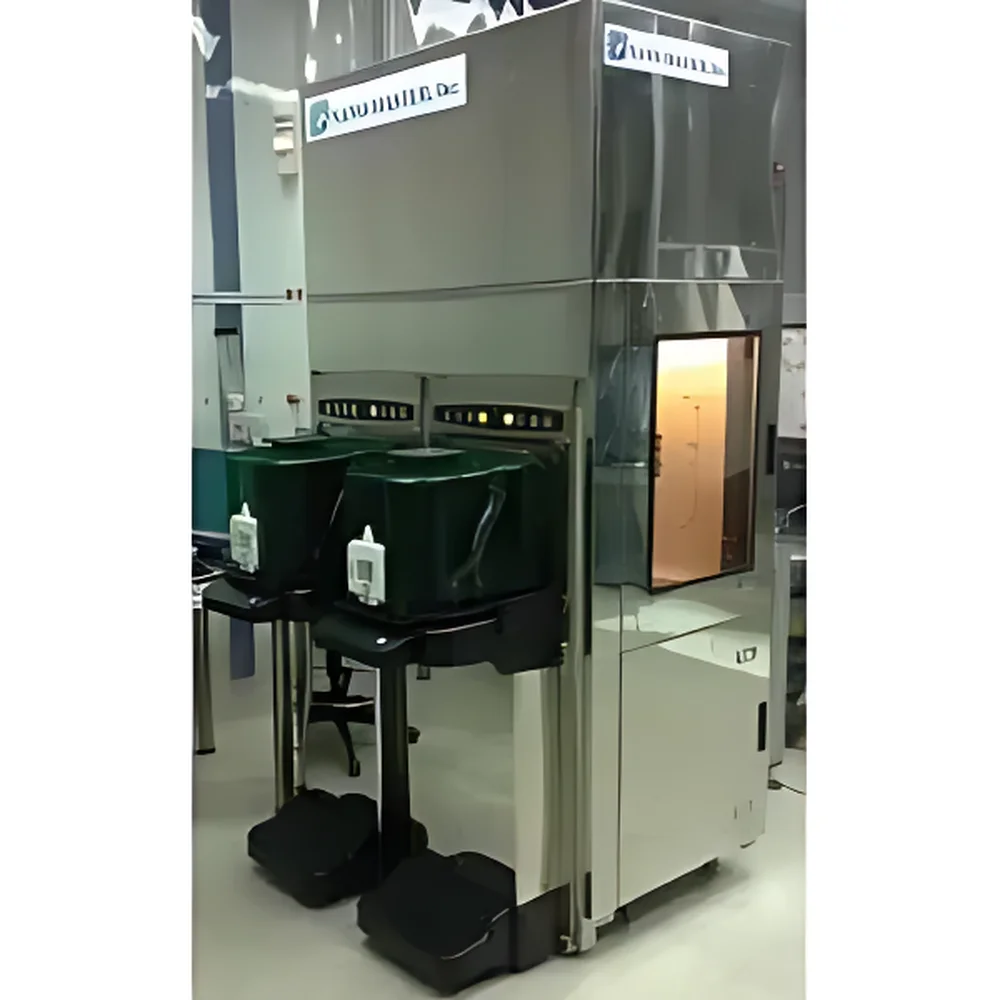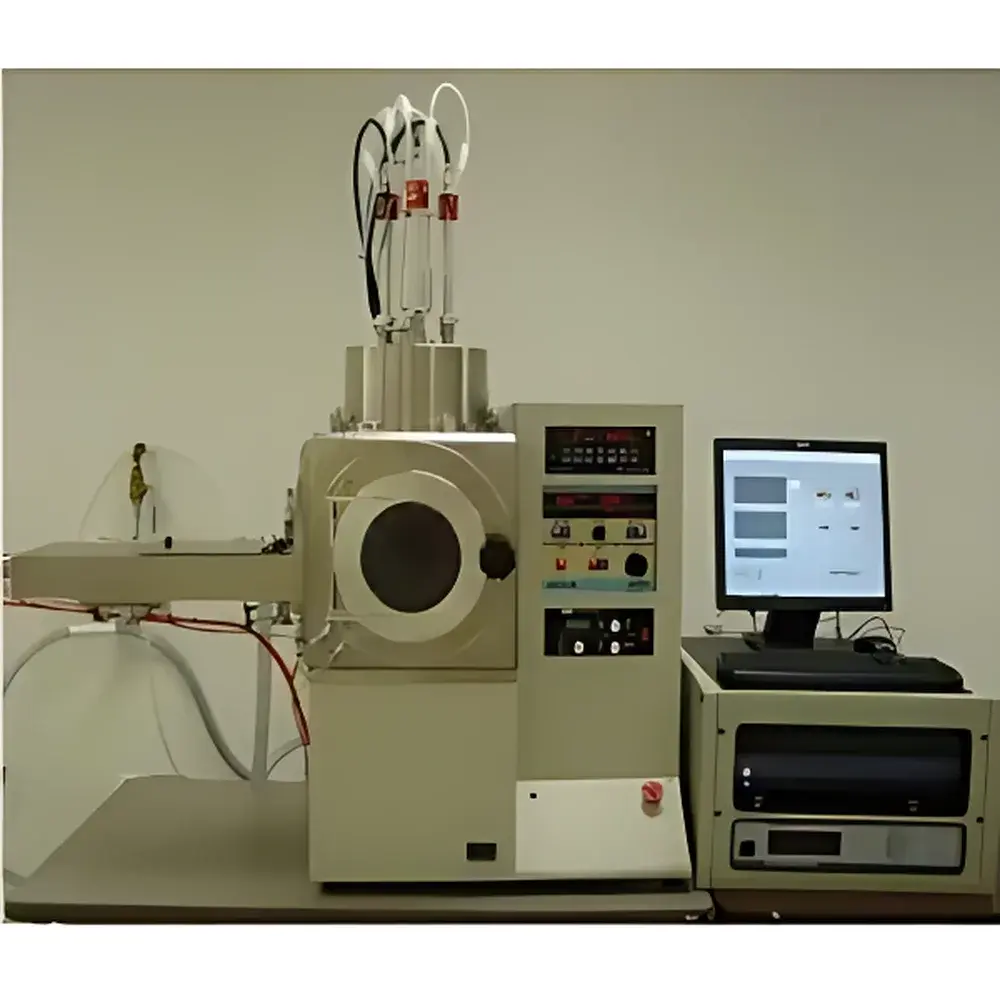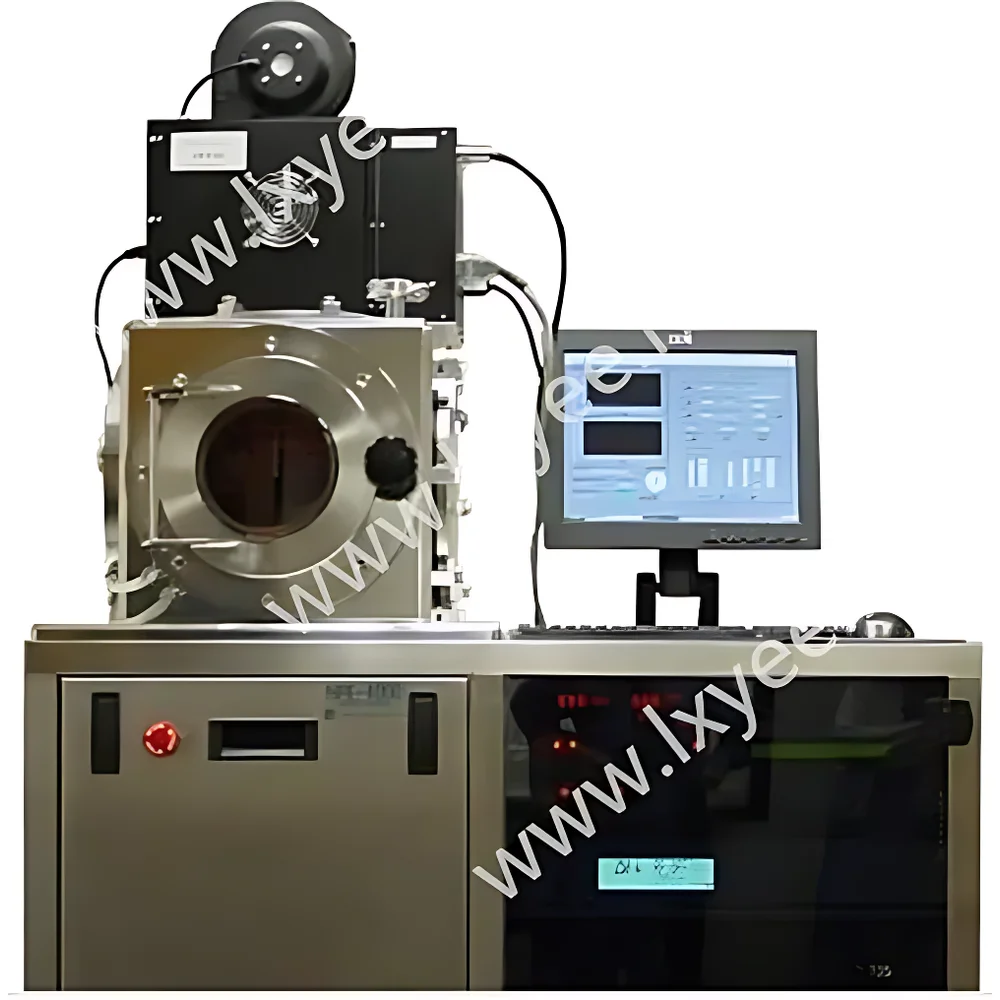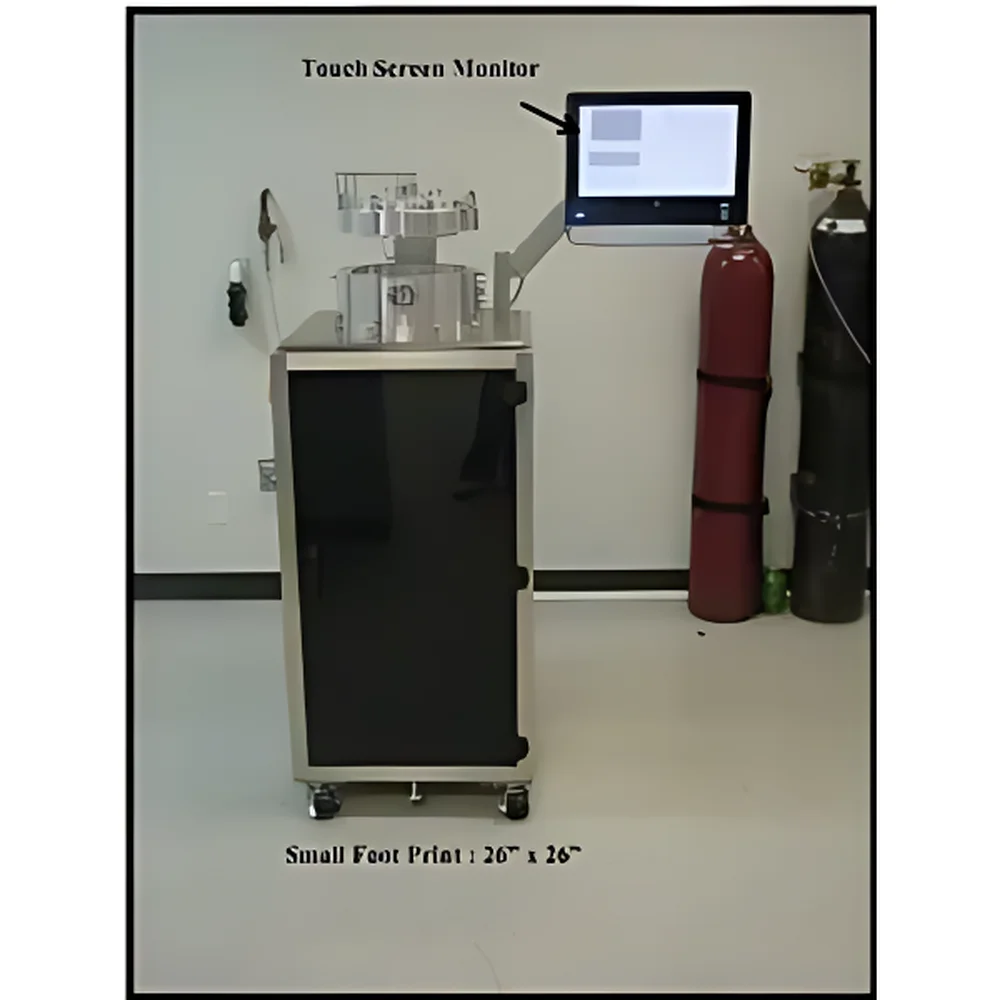
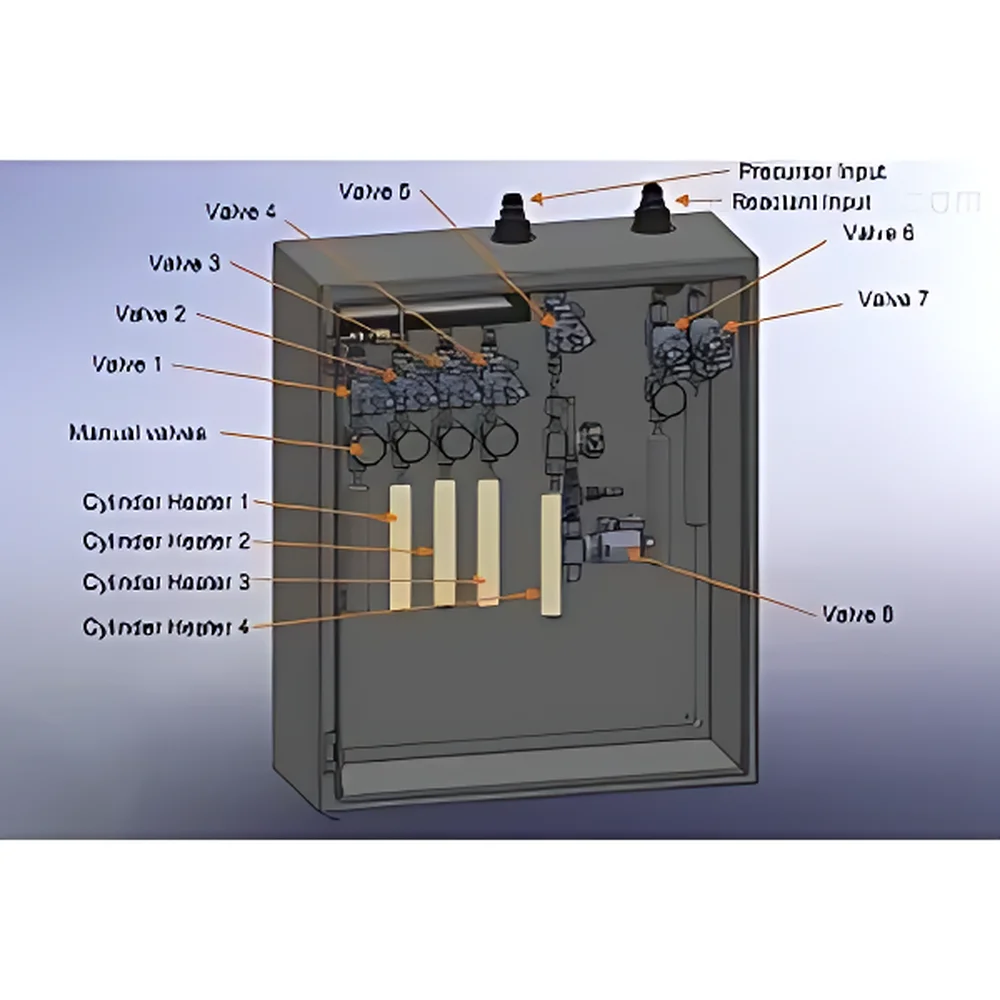
Nano-Master NLD-3500 (A) Fully Automated Atomic Layer Deposition System

| Brand | Nano-Master |
|---|---|
| Origin | USA |
| Manufacturer Type | Authorized Distributor |
| Product Origin | Imported |
| Model | NLD-3500 (A) |
| Substrate Size | Up to 300 mm (12-inch) |
| Process Temperature Range | Ambient to 400 °C (configurable) |
| Precursor Channels | Up to 7 heated precursor sources (50 mL each) |
| Chamber Material | Anodized aluminum |
| Chamber Configuration | Heated wall, pneumatically actuated top-lift lid |
| Carrier Gas | High-purity N₂ or Ar with fast-pulsed heated delivery valves |
| Uniformity | ≤±1.5% across 300 mm wafers (typical, SiO₂ on Si) |
| Software Platform | LabVIEW-based control with audit-trail-capable user management |
Ask about pricing, availability and specifications.
Overview
The Nano-Master NLD-3500 (A) is a fully automated, PC-controlled atomic layer deposition (ALD) system engineered for high-precision, reproducible thin-film synthesis in research and pilot-line semiconductor environments. ALD operates on the principle of sequential, self-limiting surface reactions—each cycle deposits precisely one atomic monolayer via alternating pulses of gaseous precursors and reactants, separated by inert gas purges. This mechanism ensures exceptional thickness control at sub-angstrom resolution, near-perfect conformality on high-aspect-ratio nanostructures (e.g., trenches >50:1), and intrinsic film continuity without pinholes or grain boundaries. Unlike CVD or PVD, ALD kinetics are insensitive to precursor flow rate fluctuations; growth rate is determined solely by reaction thermodynamics and surface site availability—enabling stoichiometric accuracy, low impurity incorporation, and outstanding inter-run repeatability. The NLD-3500 (A) implements this process within a rigorously engineered 12-inch (300 mm) anodized aluminum reaction chamber featuring uniform wall heating, rapid thermal response, and full-access top-lift architecture for routine maintenance and contamination control.
Key Features
- Fully automated operation via LabVIEW-based control software with real-time parameter logging, recipe management, and event-driven sequencing
- Four-tier password-protected user authorization system compliant with GLP/GMP documentation requirements and FDA 21 CFR Part 11 audit trail capabilities
- Integrated safety interlock network including chamber pressure monitoring, temperature fault detection, gas leak sensors, and emergency venting protocols
- Seven independently heated (up to 200 °C) 50 mL precursor reservoirs with precision mass-flow-controlled carrier gas (N₂/Ar) delivery and fast-response heated pulse valves
- Configurable chamber wall heating (ambient to 400 °C) and substrate temperature control (optional integrated heater chuck)
- Modular design supporting optional plasma-enhanced ALD (PEALD) integration via ICP source or ozone-assisted oxidation modules
Sample Compatibility & Compliance
The NLD-3500 (A) accommodates substrates up to 300 mm in diameter—including silicon wafers, sapphire, quartz, glass, and flexible polymer foils—with compatibility for both planar and 3D nanostructured templates. It supports industry-standard cassette and robotic load-lock interfaces (optional). All wetted materials meet SEMI F57 purity specifications; chamber surfaces undergo electropolished finishing and passivation to minimize metallic contamination. The system complies with ISO 14644-1 Class 5 cleanroom operational guidelines when installed in controlled environments and meets CE electromagnetic compatibility (EMC) and low-voltage directives. Process recipes can be validated per ASTM F3011 (Standard Guide for ALD Process Characterization) and aligned with JEDEC JESD22-A108 for reliability testing preparation.
Software & Data Management
The embedded LabVIEW control suite provides deterministic timing control (<10 ms valve actuation resolution), synchronized data acquisition from thermocouples, pressure transducers, and mass flow controllers, and export-ready CSV/TXT reporting. All user actions—including login/logout, parameter changes, and run initiation—are timestamped and logged with operator ID, forming a complete electronic batch record (EBR). Data integrity safeguards include write-protected archive storage, automatic backup to network drives, and configurable retention policies. Optional integration with enterprise MES or LIMS systems is supported via OPC UA or RESTful API endpoints.
Applications
- Oxide dielectrics: Al₂O₃ (gate stacks, encapsulation), HfO₂ (high-k), La₂O₃ (interface engineering), SiO₂ (conformal liners), TiO₂ (photocatalytic layers), ZnO (transparent electrodes)
- Nitride barriers and conductors: AlN (acoustic MEMS), TiN (diffusion barriers), TaN (cap layers), Si₃N₄ (etch stops)
- Photovoltaics: Al₂O₃ passivation for PERC solar cells, Zn(O,S) buffer layers for CIGS
- MEMS/NEMS: Wear-resistant Al₂O₃ coatings, piezoelectric AlN thin films, hermetic sealing layers
- Nano-laminates: (Al₂O₃/ZrO₂)ₙ superlattices for tunable dielectric constant, (TiN/AlN)ₙ multilayers for thermal barrier optimization
FAQ
What substrate sizes does the NLD-3500 (A) support?
The standard configuration accommodates wafers up to 300 mm (12 inches); smaller formats (100–200 mm) are supported using compatible carrier fixtures.
Is the system compatible with corrosive precursors such as TMA or TiCl₄?
Yes—the fluidic path employs chemically resistant stainless steel, VCR fittings, and Kalrez® seals; optional quartz-lined precursor lines are available for highly aggressive chemistries.
Can process data be exported for regulatory submission?
All raw sensor data, event logs, and metadata are exportable in ASCII-compliant formats suitable for inclusion in FDA eCTD submissions or ISO 9001 audits.
Does the system support remote monitoring and troubleshooting?
Remote desktop access and secure VPN-enabled diagnostics are enabled via IT-administrable network settings, subject to customer firewall policies.
What maintenance intervals are recommended for long-term stability?
Preventive maintenance—including O-ring replacement, valve calibration, and chamber cleaning—is scheduled every 500 cycles or 6 months, whichever occurs first, per the Nano-Master Maintenance Manual Rev. 4.2.
More from Nano-Master
View all Nano-Master products → Nano-Master LSC-5000 (AD) Fully Automated Megasonic Wet-Strip System for Large-Format Substrates
- Nano-Master NRE-3500 (A) Fully Automated Reactive Ion Etcher
- Nano-Master NSC-3000 (A) Fully Automated Magnetron Sputtering System
- Nano-Master NPE-4000 / NRP-4000 Plasma-Enhanced Chemical Vapor Deposition (PECVD) Systems