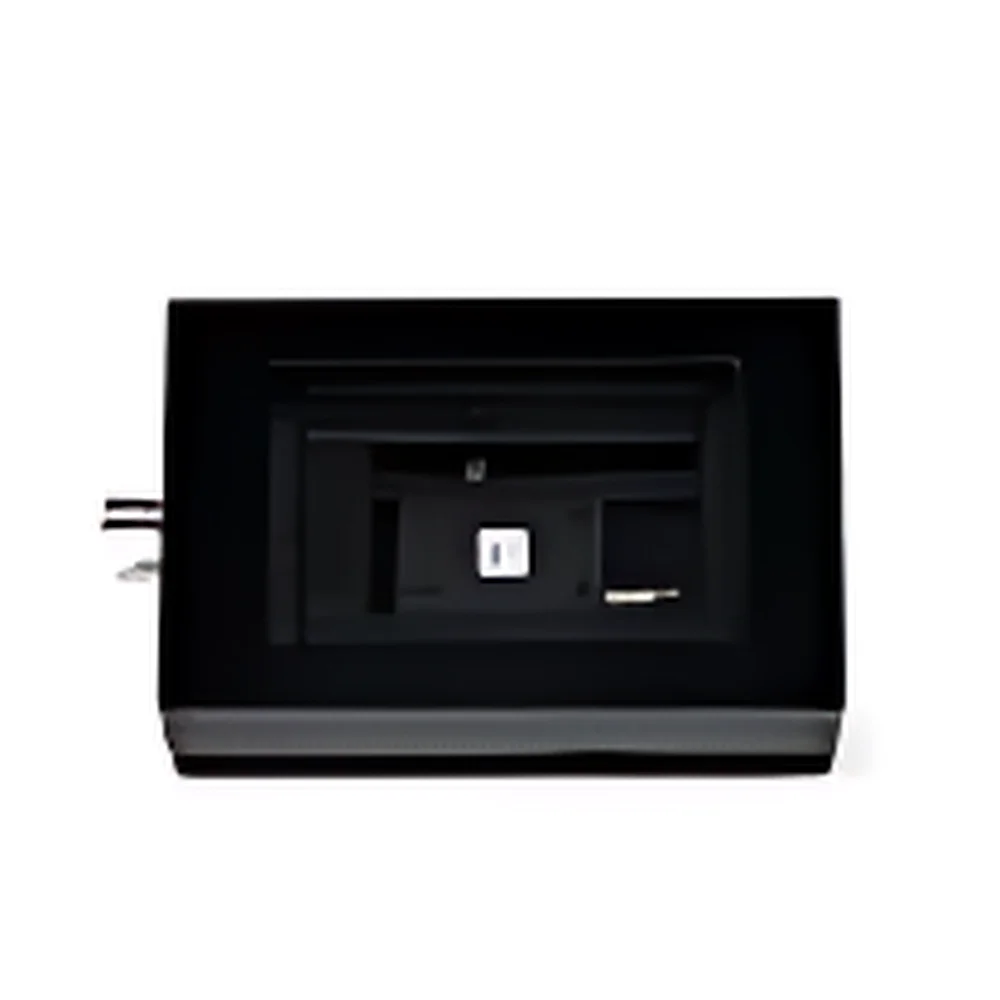
Organ Mini Ultra-Fast High-Cell-Viability Volumetric Bioprinter by NewtonOptic

| Brand | NewtonOptic |
|---|---|
| Origin | Guangdong, China |
| Model | Organ Mini |
| Printing Layer Thickness | 35–50 µm (Resolution) |
| Printable Biomaterial | GelMA-based bioink |
| Light Source | Visible-light LED (405–450 nm) |
| Printing Technology | Contactless, Support-Free Volumetric Photopolymerization |
| Software Platform | X-Tomer v2.x (Windows 10/11) |
| Temporal Resolution | Adjustable exposure time down to 10 ms |
| Spatial Resolution | Dimensional scaling accuracy ±0.015 mm |
| Light Intensity Control | 150–500 mW output power range |
| Cell Viability Post-Print | >95% |
| Sterility | Fully aseptic printing environment compliant with ISO 13485-aligned lab protocols |
| Biocompatibility | GelMA bioink certified per ISO 10993-5 cytotoxicity testing |
Ask about pricing, availability and specifications.
Overview
The Organ Mini is a benchtop volumetric bioprinter engineered for high-fidelity, contactless 3D fabrication of centimeter-scale biological constructs in seconds. Unlike layer-by-layer extrusion or stereolithography systems, it employs dynamic light-field projection within a rotating photocurable hydrogel volume—leveraging the principles of tomographic reconstruction and inverse Radon transform to simultaneously polymerize an entire 3D structure from multiple angular exposures. This volumetric approach eliminates mechanical shear stress, thermal gradients, and interfacial tension associated with nozzle-based or scanning-laser methods, thereby preserving native cell morphology, membrane integrity, and metabolic activity. Designed for academic core facilities, translational tissue engineering labs, and preclinical biomaterial development units, the Organ Mini delivers reproducible fabrication under ambient temperature and visible-light illumination—avoiding UV-induced DNA damage or phototoxicity while maintaining compatibility with standard biosafety level 2 (BSL-2) workflows.
Key Features
- Contactless volumetric printing: No physical contact between print head, stage, or substrate—eliminating cross-contamination risk and enabling sterile operation inside laminar flow hoods.
- Visible-light photopolymerization: 405–450 nm LED array enables rapid gelation of methacrylated gelatin (GelMA) without cytotoxic UV exposure; compatible with standard fluorescence microscopy and live-cell imaging setups.
- X-Tomer software suite: Native Windows 10/11 application supporting STL import, real-time parameter tuning (exposure time: 10 ms resolution; spatial scaling: ±0.015 mm precision; irradiance: 150–500 mW), orientation optimization, and batch parameter templating for GLP-compliant experimental repeatability.
- GelMA bioink formulation: Proprietary, lot-controlled GelMA with tunable degree of substitution (DS = 65–75%) and rheological profile (storage modulus G′ = 0.8–2.5 kPa at 10 Hz), validated for human mesenchymal stem cells (hMSCs), hepatocytes, and neural progenitor cells.
- Integrated environmental control: Optional humidity and CO₂ stabilization module (not included) supports extended print sessions for sensitive primary cultures; base system operates stably at 20–25°C and 40–60% RH.
Sample Compatibility & Compliance
The Organ Mini accommodates a broad spectrum of cell-laden bioinks beyond GelMA—including hyaluronic acid methacrylate (HAMA), PEGDA-based blends, and decellularized extracellular matrix (dECM) suspensions—provided they meet minimum optical attenuation thresholds (<0.3 cm⁻¹ at 420 nm) and photoreaction kinetics suitable for sub-second exposure regimes. All hardware components comply with IEC 61000-6-3 (EMC emissions) and IEC 61000-6-2 (immunity). The GelMA bioink is manufactured under ISO 13485-certified conditions and tested per ISO 10993-5 (cytotoxicity), ISO 10993-10 (irritation/sensitization), and USP (in vitro reactivity). System validation documentation supports audit readiness for FDA-regulated pre-IND studies and ISO/IEC 17025-accredited testing laboratories.
Software & Data Management
X-Tomer provides full traceability through embedded metadata logging: timestamped STL source path, exposure sequence log, irradiance calibration history, and user-defined annotation fields. Export formats include CSV (parameter sets), TIFF (reconstruction slices), and HDF5 (volumetric voxel data) for downstream analysis in MATLAB, Python (SciPy/Nibabel), or commercial image-processing platforms. Audit trail functionality meets ALCOA+ principles—ensuring Attributable, Legible, Contemporaneous, Original, Accurate, Complete, Consistent, Enduring, and Available records. Software updates are delivered via secure HTTPS endpoint with SHA-256 signature verification; no cloud dependency or telemetry collection.
Applications
- Rapid prototyping of perfusable vascularized tissue analogs (e.g., branched microchannel networks embedded in liver or cardiac mimics).
- High-throughput screening of bioink formulations using standardized geometric fidelity metrics (e.g., strut deviation ≤ ±8 µm, pore interconnectivity ≥ 92%).
- Biomanufacturing of immunomodulatory scaffolds for adoptive T-cell therapy support matrices.
- Development of 3D neuronal co-cultures with spatially resolved synaptic density mapping via post-print immunostaining and light-sheet microscopy.
- Regulatory-grade bioprinting validation studies aligned with ASTM F3304-22 (Standard Guide for Characterizing Volumetric Bioprinters).
FAQ
What is the maximum printable volume dimension supported by the Organ Mini?
The system supports cylindrical build volumes up to Ø25 mm × 25 mm height (4.9 mL), optimized for organoid-scale constructs and multiwell plate-compatible geometries.
Can the Organ Mini be integrated into automated cell culture workflows?
Yes—RS-232 and Ethernet TCP/IP interfaces enable bidirectional communication with liquid handlers and incubator systems; API documentation is provided under NDA for OEM integration.
Is sterilization of the resin chamber required between prints?
The chamber uses disposable, gamma-irradiated, pyrogen-free quartz cuvettes (Cat. #OM-CUV-01); no autoclaving or chemical sterilization is needed.
Does the system support multi-material printing?
Not natively; however, sequential printing with manual bioink exchange and chamber rinsing (using sterile PBS + 70% ethanol) has been validated for two-material constructs with interfacial stability ≥ 72 h.
How is print resolution verified and maintained over time?
A traceable NIST-traceable resolution test target (ISO 12233-based) is supplied with each unit; quarterly recalibration is recommended using the built-in auto-alignment routine and reference photodiode feedback loop.