
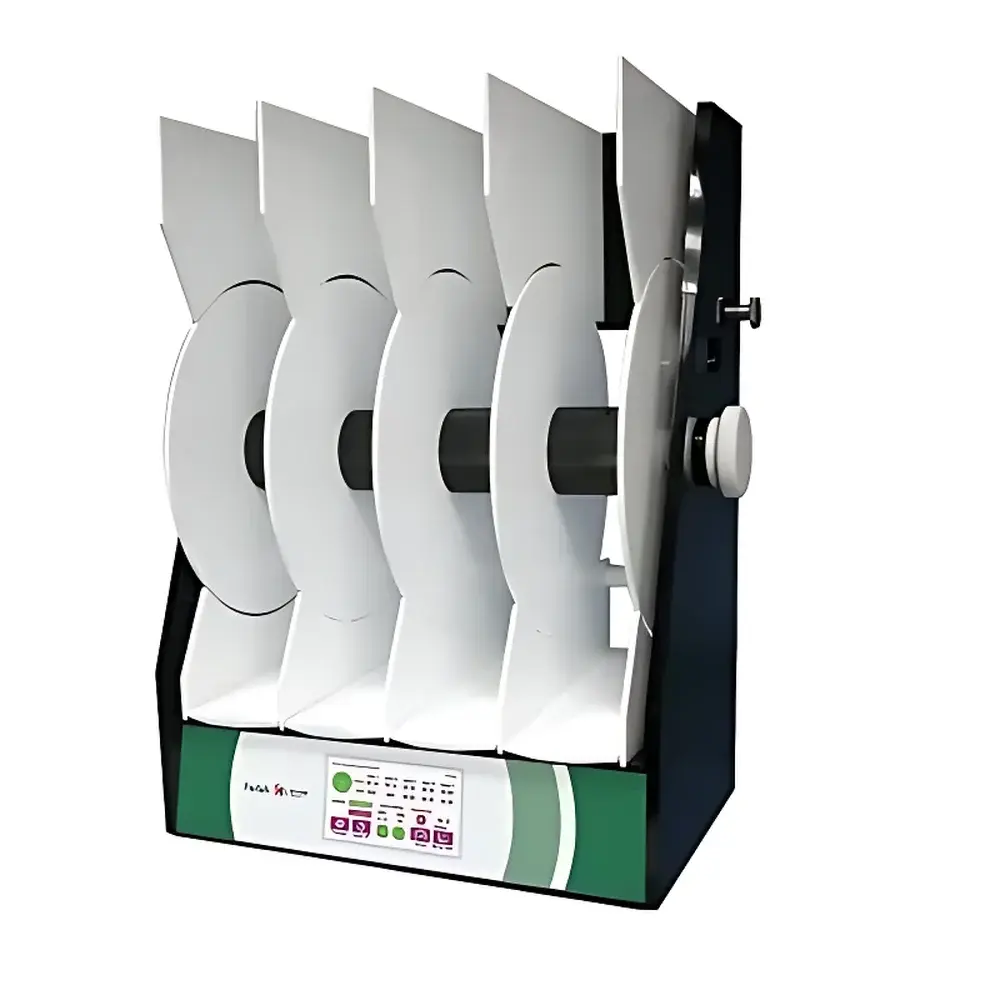
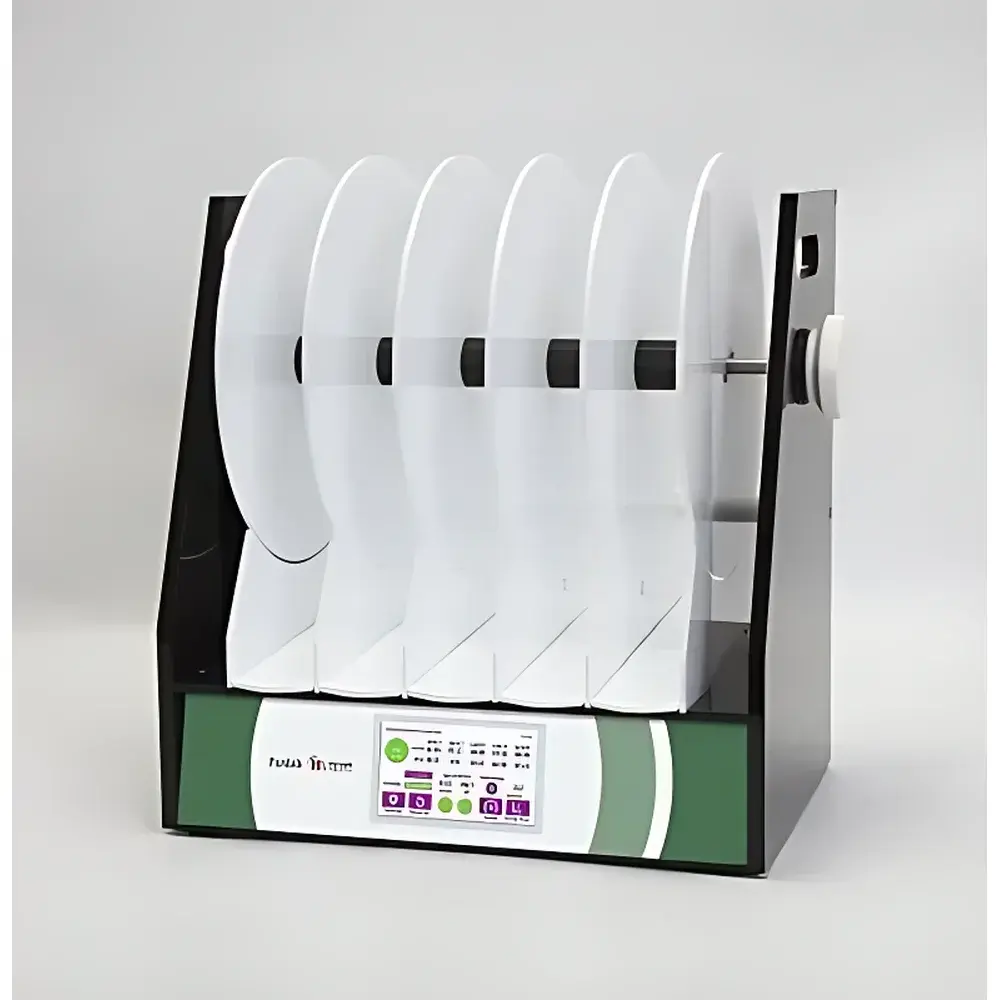
Panlab LE8205/LE8305/LE8355/LE8505 Rotarod Test System
| Brand | Panlab |
|---|---|
| Origin | Spain |
| Model Variants | LE8205, LE8305, LE8355, LE8505 |
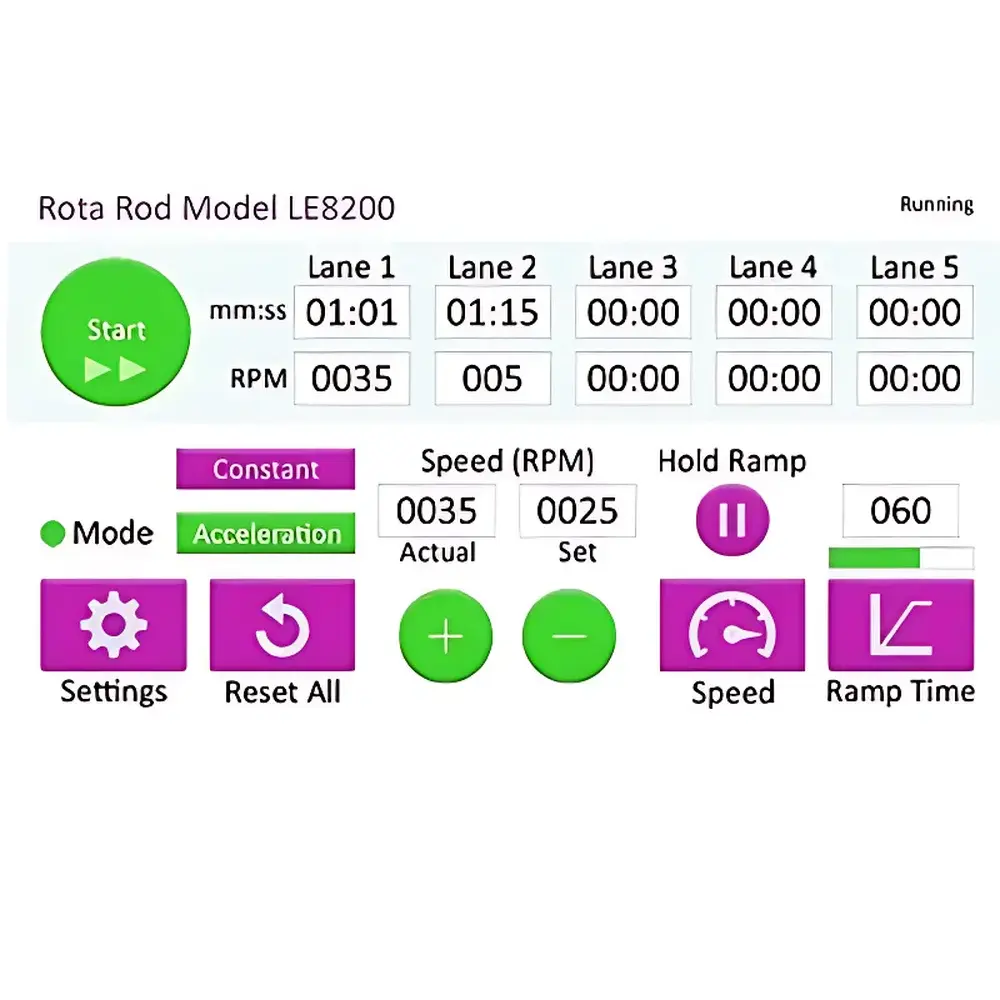
| Control Interface | Touchscreen GUI |
| Rotation Modes | Constant Speed (4–40 rpm) and Linear Acceleration (programmable ramp: 30 s to 10 min, 1 s increment) |
| Animal Compatibility | Mice and Rats (with optional rat extension hood for LE8305/LE8355/LE8505) |
| Data Output | Fall latency (s), rotational speed at fall (rpm), per-channel timestamped trials |
| Compliance | CE-marked, GLP-ready architecture, FDA 21 CFR Part 11–compatible with SEDACOM software |
| Warranty | 2 years |
Overview
The Panlab Rotarod Test System (models LE8205, LE8305, LE8355, and LE8505) is a microprocessor-controlled behavioral phenotyping instrument engineered for quantitative assessment of motor coordination, balance, endurance, and fatigue resistance in rodent models. Based on the principle of forced locomotion on a rotating cylindrical drum, the system applies controlled centrifugal force as rotation speed increases—eliciting natural compensatory ambulation until neuromuscular failure results in voluntary disengagement or passive slip-off. This objective endpoint—fall latency—is a validated, reproducible metric widely accepted in preclinical neuroscience and pharmacology research. The device operates under standardized biomechanical conditions, enabling cross-study comparability essential for longitudinal disease modeling and compound screening.
Key Features
- Intuitive 7-inch capacitive touchscreen interface with real-time graphical display of speed profile and channel-specific timer status
- Dual-mode operation: constant-speed mode (4–40 rpm, adjustable in 0.1-rpm increments) and programmable linear acceleration mode (ramp duration: 30 s to 10 min; acceleration step resolution: 1 s)
- Modular drum design supporting interchangeable cylinders optimized for mice (standard) and rats (with optional extension hood for LE8305/LE8355/LE8505)
- Independent per-channel timing circuitry ensures precise fall detection and latency recording without inter-channel interference
- Integrated mechanical fall sensor eliminates reliance on optical or video-based detection—ensuring robustness across lighting conditions and fur pigmentation
- CE-certified hardware architecture with isolated power supply and thermal management compliant with IEC 61000-6-2/6-4 electromagnetic compatibility standards
Sample Compatibility & Compliance
The Rotarod system accommodates C57BL/6, BALB/c, CD-1, and Sprague-Dawley rodents (body weight range: 18–500 g). Drum surface texture and diameter are calibrated per ASTM E2923-22 guidelines for rodent behavioral testing equipment. All models meet ISO 13485–aligned manufacturing controls and include traceable calibration certificates (NIST-traceable tachometer verification). When paired with SEDACOM software, the system supports audit trails, electronic signatures, and data integrity features required under FDA 21 CFR Part 11 and EU Annex 11 for regulated GLP/GCP studies. Optional rat extension hoods provide physical channel isolation to prevent olfactory or visual cross-contamination during multi-animal trials.
Software & Data Management
SEDACOM software (v5.2+) provides full experimental control, real-time visualization, and structured data export. It enables protocol templating, batch trial scheduling, and automated metadata tagging (operator ID, animal ID, dose group, date/time stamp). Raw datasets are stored in encrypted SQLite databases with SHA-256 checksum validation. Export formats include CSV (for statistical packages such as GraphPad Prism and R), PDF reports (with embedded speed-time curves), and XML (for LIMS integration). Audit logs record all parameter modifications, user logins, and data exports—supporting full traceability during regulatory inspections.
Applications
- Neurodegenerative disease modeling: Quantification of motor deficits in transgenic Parkinson’s (e.g., α-synuclein overexpression), Huntington’s (R6/2), and Alzheimer’s (5xFAD) mouse models
- Neuropharmacology: Dose-response evaluation of dopaminergic agents, GABA modulators, NMDA antagonists, and novel neuroprotective compounds
- Toxicology: Detection of subtle motor impairment following subchronic exposure to environmental neurotoxins (e.g., rotenone, MPTP, organophosphates)
- Developmental neurobiology: Assessment of sensorimotor maturation in postnatal pups and adolescent rodents
- Alcohol and substance use disorder research: Evaluation of acute intoxication, withdrawal-induced ataxia, and long-term motor recovery
- Stroke and traumatic brain injury models: Longitudinal tracking of functional recovery kinetics post-lesion
FAQ
What is the minimum and maximum rotational speed range?
Constant-speed mode supports 4–40 rpm in 0.1-rpm increments. Acceleration mode allows user-defined ramp profiles from initial to final speed over durations between 30 seconds and 10 minutes.
Is the system compatible with third-party data acquisition platforms?
Yes—via TTL-compatible digital output ports (BNC) and RS-232 serial interface, enabling synchronization with electrophysiology rigs, video tracking systems (e.g., EthoVision XT), or metabolic cages.
How is animal safety ensured during testing?
The drum surface features non-slip textured polymer coating; fall height is limited to ≤15 cm above padded landing surface. Automatic shutdown triggers after 3 consecutive falls within 60 seconds to prevent stress accumulation.
Can multiple animals be tested simultaneously?
Each model supports up to 4 independent channels (LE8205: 1 channel; LE8305: 2 channels; LE8355: 3 channels; LE8505: 4 channels), with fully isolated timing and speed control per channel.
Does the system support Good Laboratory Practice (GLP) documentation requirements?
When used with SEDACOM software, the system complies with ALCOA+ principles (Attributable, Legible, Contemporaneous, Original, Accurate, Complete, Consistent, Enduring, Available) and generates compliant audit trails, electronic signatures, and version-controlled protocols.





