
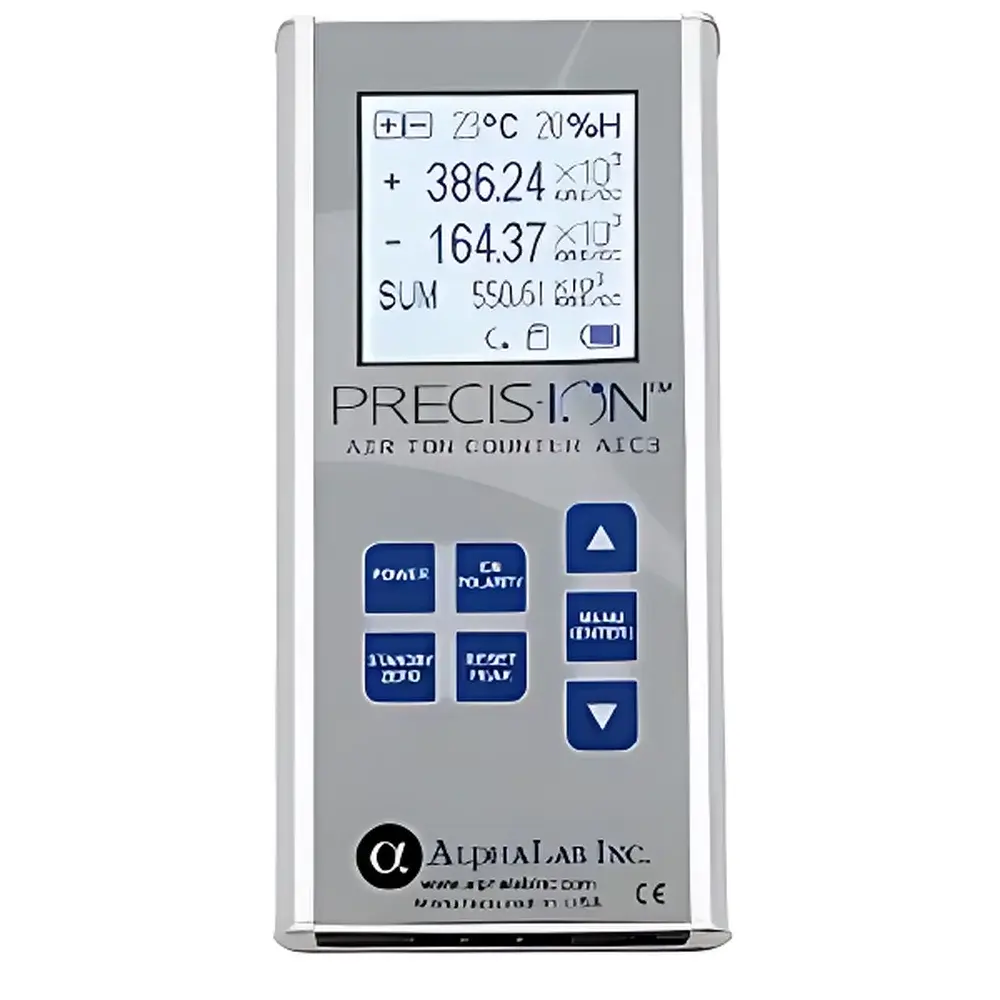
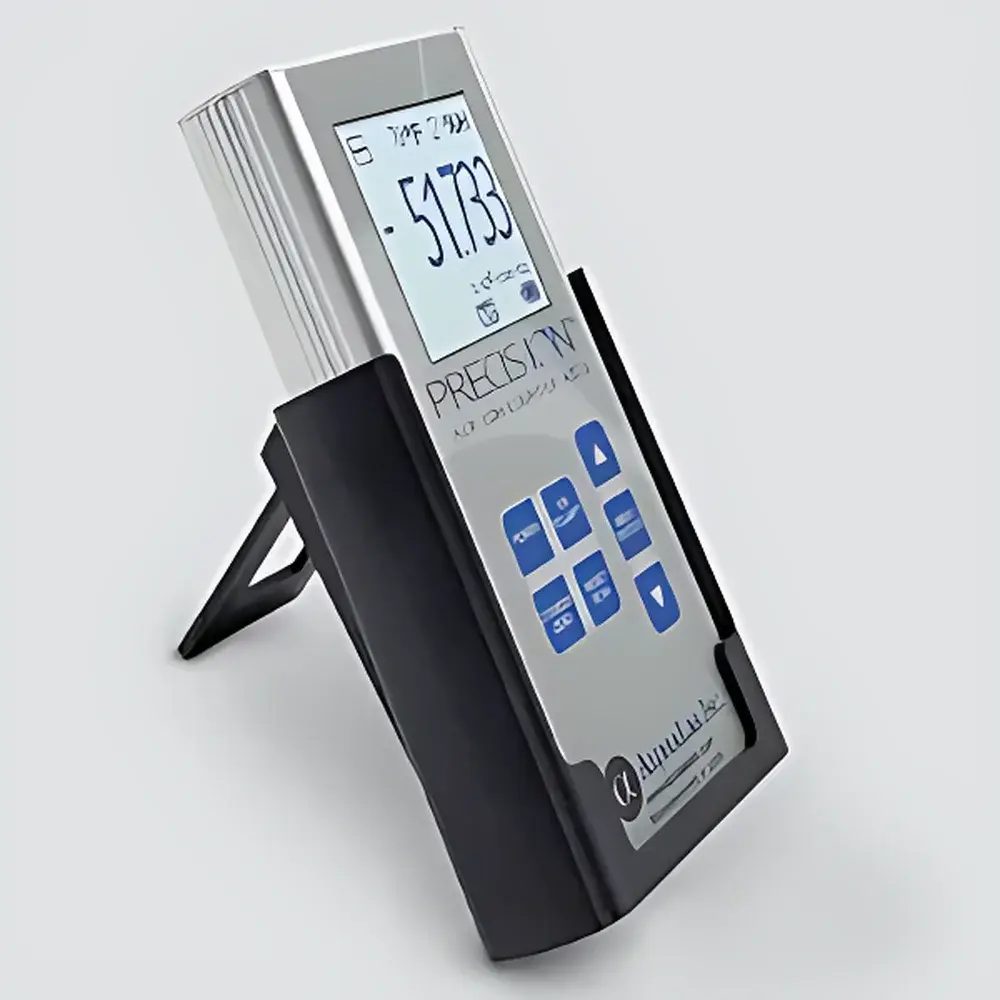
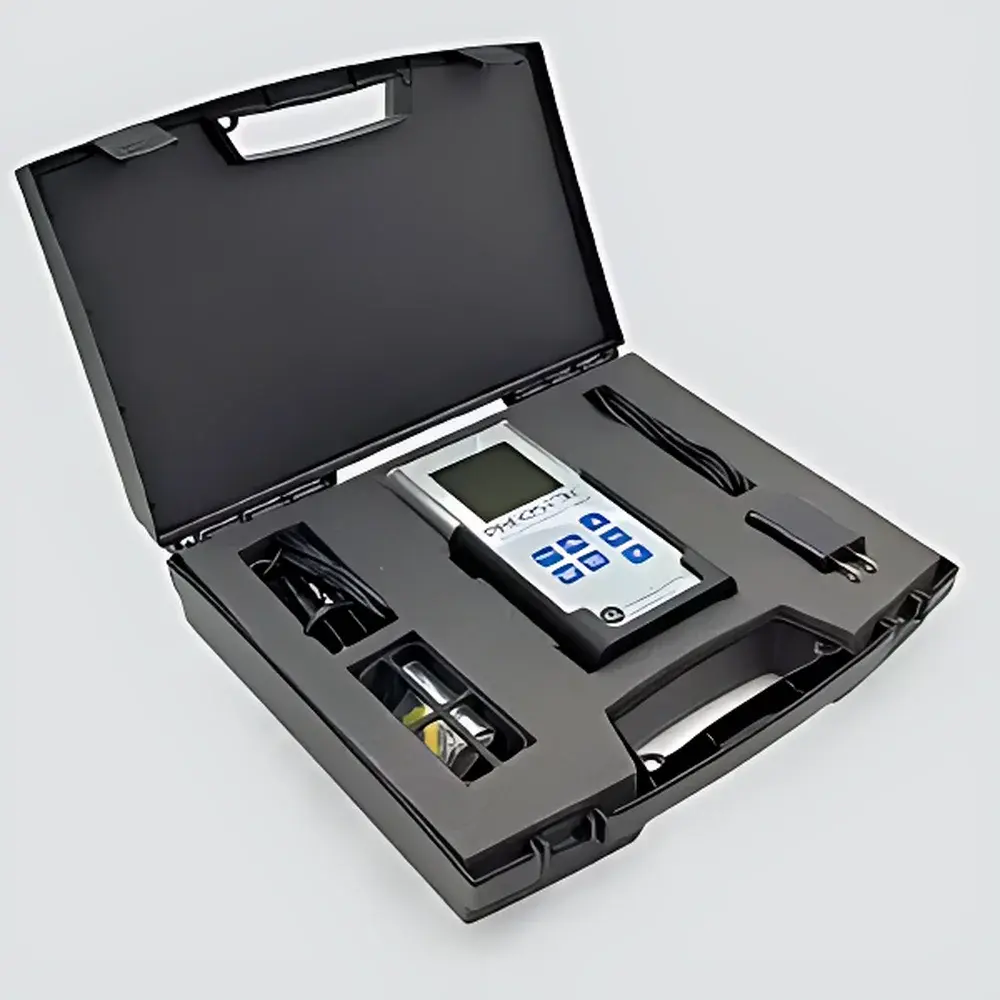
PKSAIR AIC3Pro Air Negative Ion Detector
| Brand | PKSAIR |
|---|---|
| Origin | USA |
| Manufacturer Type | Authorized Distributor |
| Origin Category | Imported |
| Model | AIC3Pro |
| Pricing | Upon Request |
Overview
The PKSAIR AIC3Pro Air Negative Ion Detector is a precision-engineered, portable atmospheric ion counter designed for quantitative measurement of unipolar and bipolar air ion concentrations in ambient environments. It operates on the Gerdien tube principle—a well-established electrostatic collection method where airborne ions are drawn into a cylindrical capacitor under a controlled voltage gradient, inducing a measurable current proportional to ion flux. This physics-based detection architecture ensures traceable, field-deployable performance across research laboratories, indoor air quality (IAQ) assessments, forest ecology studies, and occupational hygiene monitoring. Unlike passive or corona-based sensors, the AIC3Pro delivers direct, charge-sensitive quantification of both positive and negative ions—enabling evaluation of ion balance, atmospheric electrical conductivity, and localized ion generation/depletion dynamics.
Key Features
- Gerdien-type aspiration ion collector with dual-polarity capability—simultaneously measures positive ions, negative ions, and their algebraic sum
- Two selectable concentration ranges: 10–2×10⁶ ions/cm³ (low range) and 1×10³–2×10⁸ ions/cm³ (high range), optimized for both natural background and high-emission environments
- Real-time display with 128×128-pixel backlit LCD; user-adjustable backlight intensity for low-light field use
- Integrated rechargeable 2000 mAh Li-ion battery (UN38.3 certified), delivering 6–7 hours of continuous operation; USB-C charging compatible with standard 5 VDC power sources
- Automatic zeroing function configurable for unattended deployments—intervals: 3, 6, 12, or 24 hours—or disabled for manual calibration control
- Configurable averaging window (1–15 s) and peak-hold mode (unipolar only); real-time, average, and peak values displayed concurrently
- Robust mechanical design: compact form factor (166.7 × 76.2 × 38.1 mm), 366 g weight, ESD-shielded sampling cap, and grounding cable included for electrostatic noise suppression
- Mounting versatility: tripod-compatible thread (¼”-20), wall-mount bracket, and integrated kickstand for hands-free operation
Sample Compatibility & Compliance
The AIC3Pro is validated for use in non-condensing ambient air environments within –20 °C to +43 °C and 0–85 % RH. Wind velocity must remain below 15 km/h (9 mph) during sampling to maintain laminar aspiration flow through the Gerdien tube. The instrument incorporates an onboard capacitive humidity sensor (±2 % RH accuracy) and temperature sensor, enabling concurrent environmental metadata logging. Regulatory compliance includes FCC Part 15 (Class B), CE marking per EMC Directive (EN 55032:2015/Cor1:2016, EN 61000-3-2:2019, EN 61000-3-3:2013+A1:2017, EN 55035:2017/A11:2020), and RoHS (EN 50581:2012). While not certified for clinical or pharmaceutical cleanroom validation per ISO 14644 or USP , its data integrity features—including timestamped CSV output and deterministic sampling intervals—support GLP-aligned documentation practices.
Software & Data Management
Data is stored in industry-standard CSV format on removable MicroSD cards (up to 32 GB capacity), with each record containing ion concentration (positive/negative/sum), temperature, relative humidity, date, and time stamp. The AlphaAPP desktop software (Windows/macOS) enables visualization, statistical analysis (e.g., time-series trend, histogram distribution), and export to Excel or MATLAB-compatible formats. All logged parameters are stored with millisecond-level temporal resolution, supporting longitudinal IAQ correlation studies. No proprietary binary formats or cloud lock-in: raw files are fully accessible and editable using common spreadsheet tools. Audit trail functionality is not embedded, but file timestamps and sequential naming conventions support basic traceability in regulated workflows.
Applications
- Environmental science: quantifying ion production in forests, waterfalls, coastal zones, and urban canyons
- Indoor air quality audits: evaluating ionizer efficacy, HVAC system impact, and electrostatic discharge (ESD) risk mitigation
- Materials science labs: characterizing ion emission from functional surfaces, photocatalytic coatings, and piezoelectric materials
- Occupational health: monitoring ion exposure near high-voltage equipment, laser printers, and plasma generators
- Educational use: teaching atmospheric electricity principles, charge transport phenomena, and sensor metrology fundamentals
FAQ
What physical principle does the AIC3Pro use to detect air ions?
It employs the Gerdien condenser method: ions are drawn into a cylindrical electrode assembly by a fixed bias voltage, generating a current linearly proportional to ion concentration.
Can the device measure ions in moving air or outdoors?
Yes—provided wind speed remains below 15 km/h (9 mph) to preserve laminar aspiration flow and avoid turbulent dilution errors.
Is the humidity sensor factory-calibrated and traceable?
The capacitive RH sensor is pre-calibrated at time of manufacture per manufacturer specifications; no user-accessible recalibration procedure is provided.
Does the AIC3Pro meet FDA 21 CFR Part 11 requirements?
No—it lacks electronic signature, audit trail, and role-based access controls required for Part 11 compliance; it is intended for non-GxP research and monitoring applications.
How frequently should the instrument be zeroed in field deployment?
For stable ambient conditions, automatic zeroing every 12–24 hours is typical; for high-dust or high-humidity settings, more frequent intervals (e.g., every 3–6 hours) may improve baseline stability.







