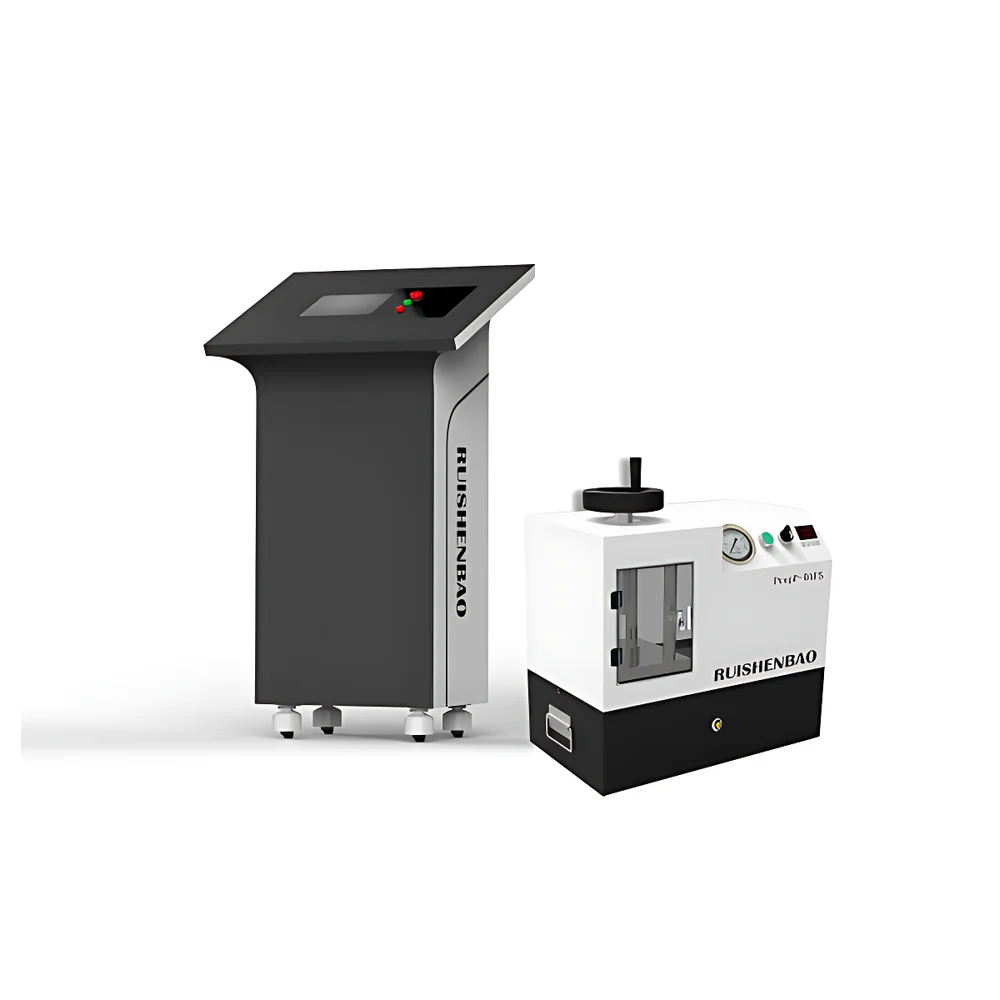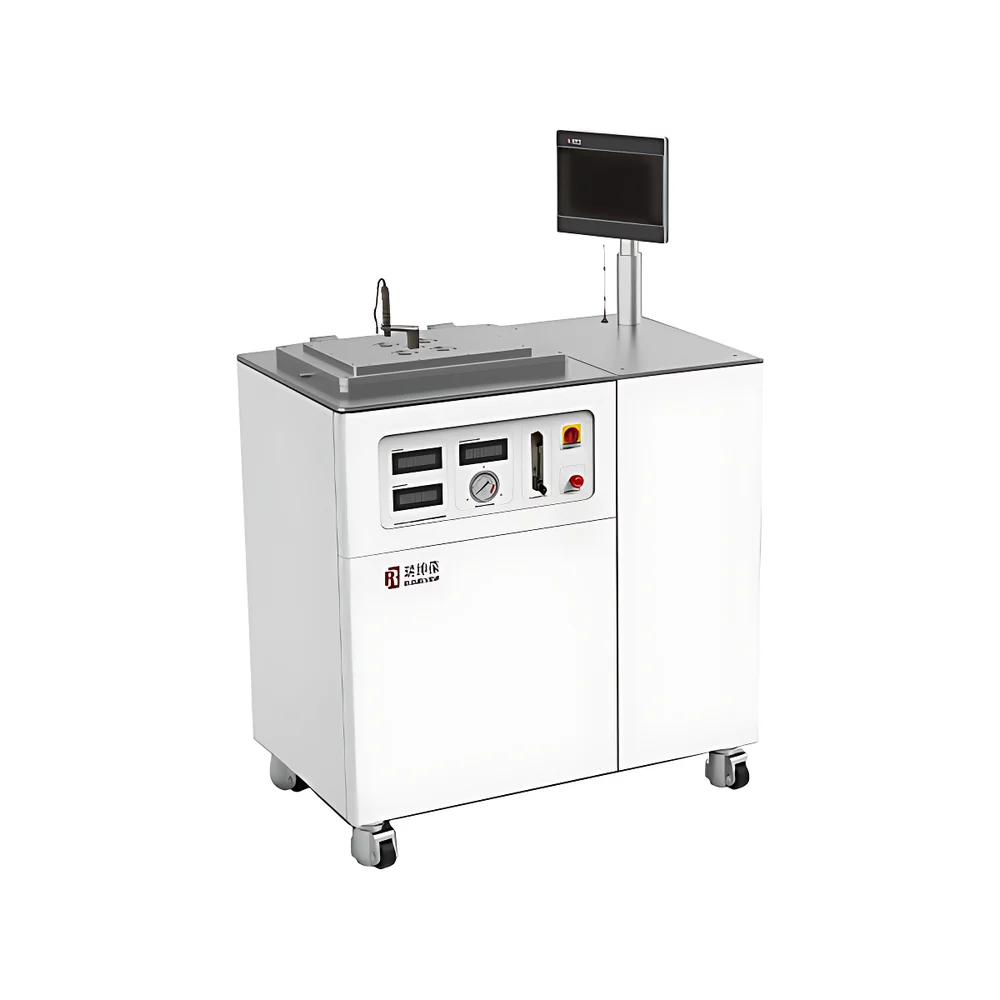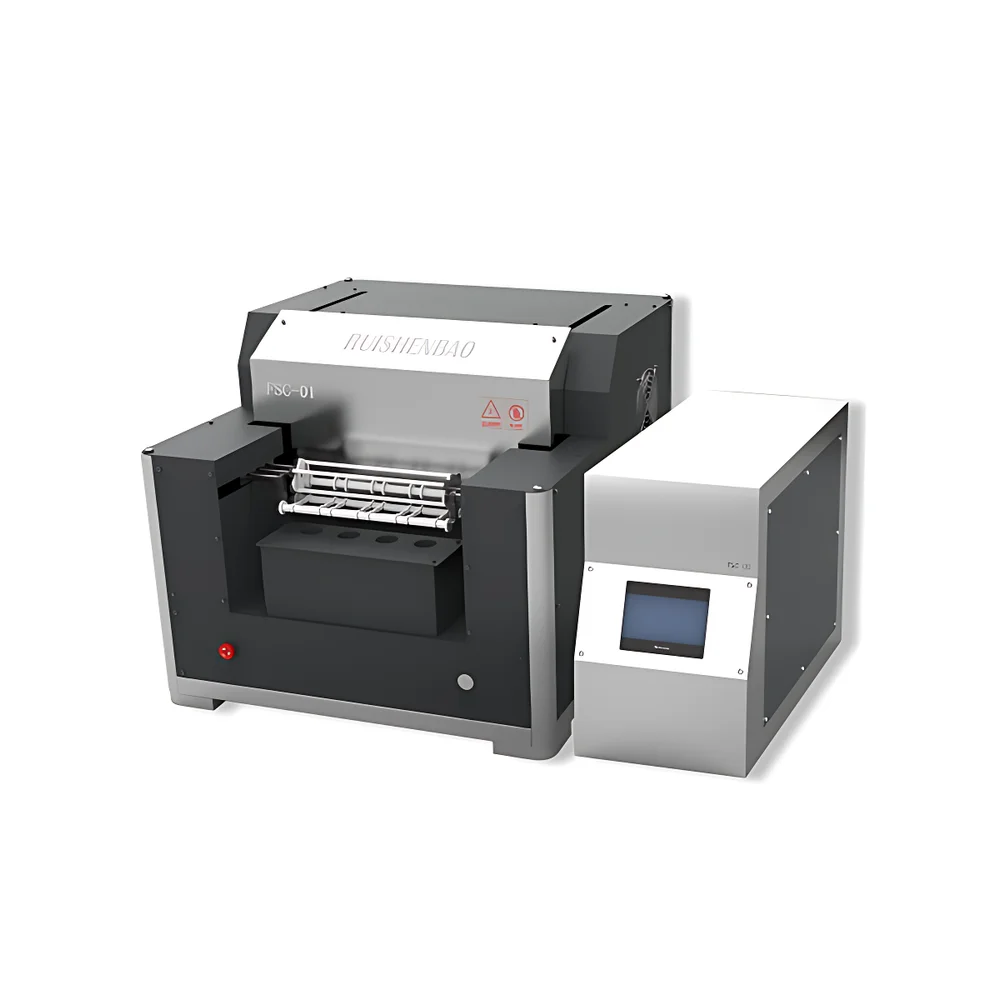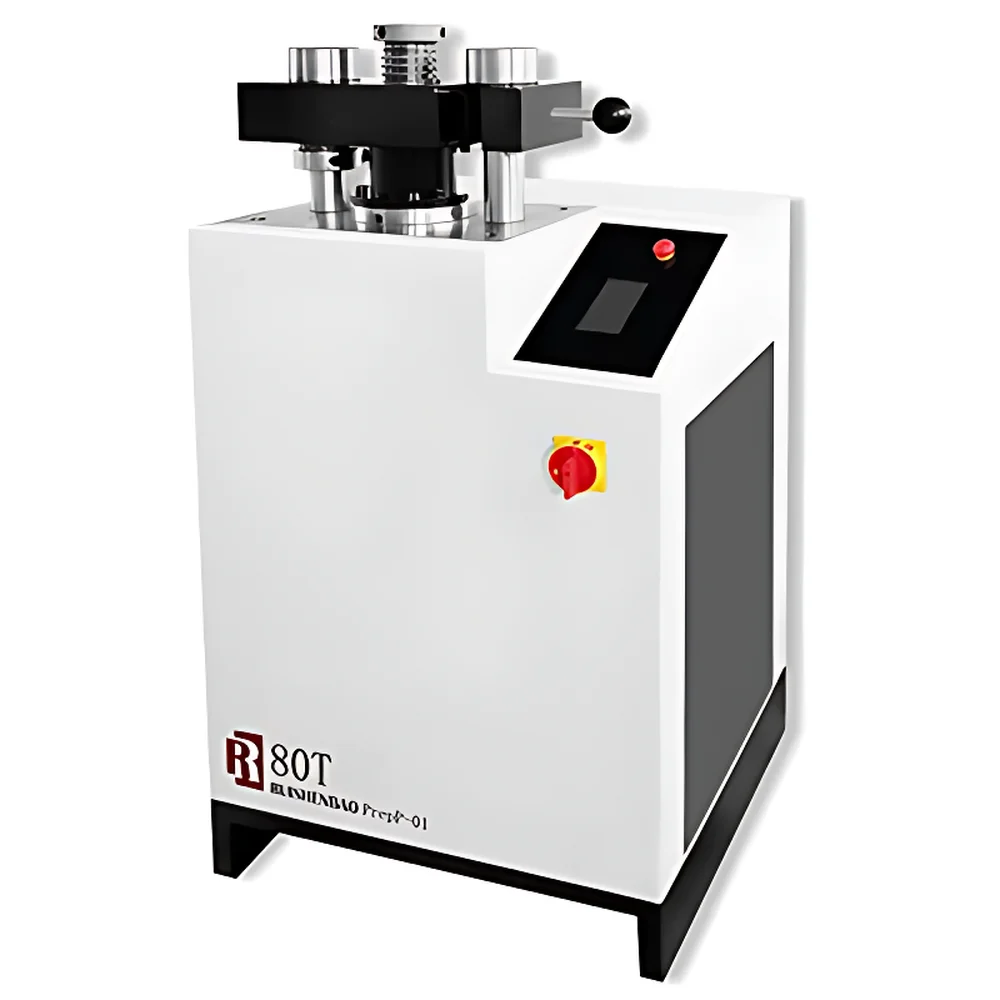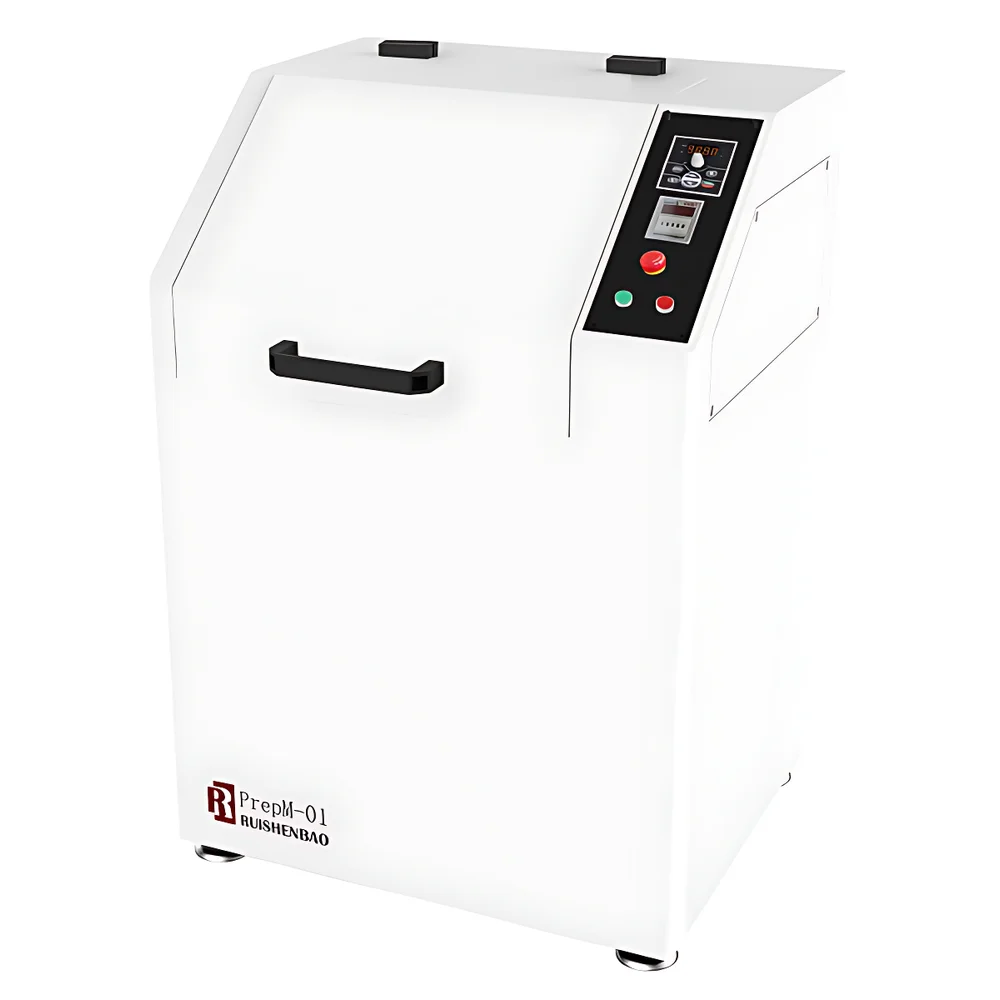
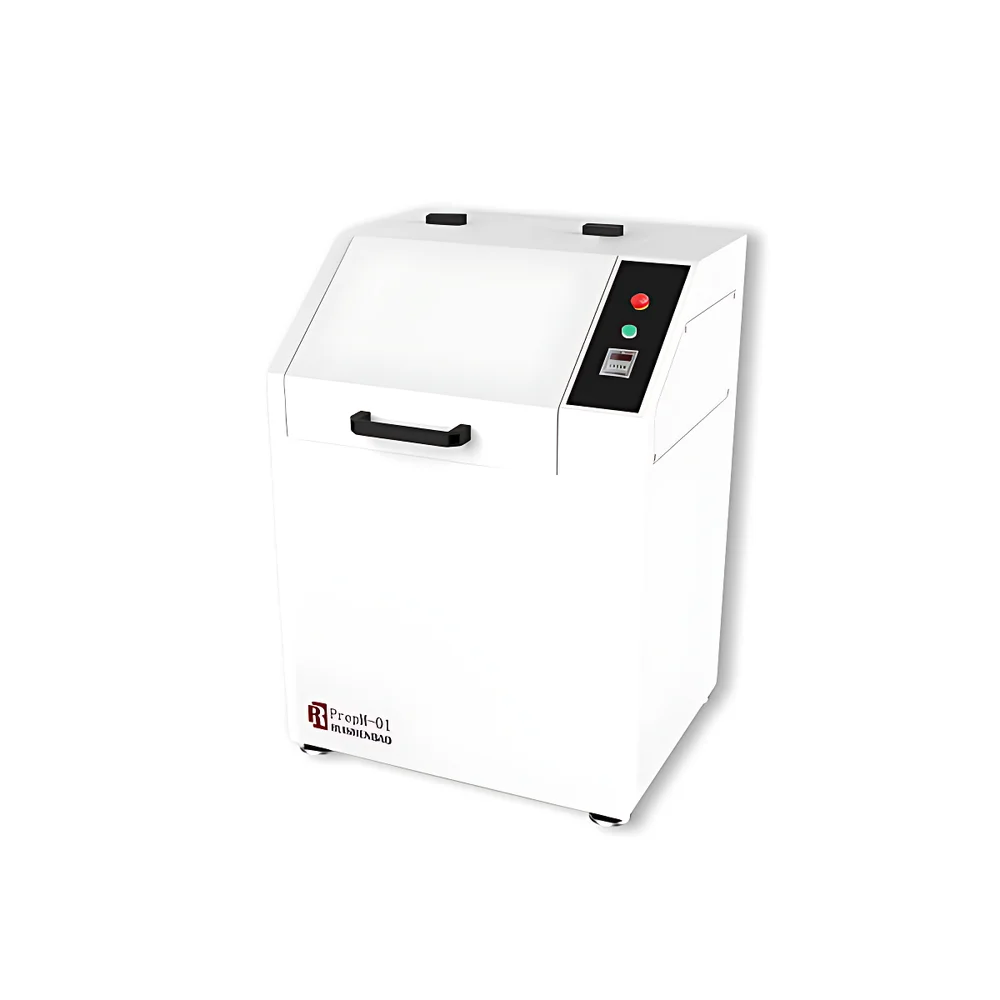
Ruishenbao PrepM-01 Series Disc Vibratory Grinder

| Brand | Ruishenbao |
|---|---|
| Origin | Beijing, China |
| Model | PrepM-01 |
| Instrument Type | Vibratory Disc Grinder |
| Sample Applicability | Hard, brittle, and dry fibrous materials |
| Feed Size | < 10 mm |
| Output Particle Size | ≤ 75 µm (200 mesh) |
| Batch Grinding Capacity | 20–50 g (material-dependent) |
| Operating Speed Options | Fixed-speed (960 or 1400 rpm), dual-speed (960/1400 rpm), or variable-frequency (750–1400 rpm) |
| Grinding Chamber Volume Options | 50–400 mL |
| Power Supply | AC 380 V ±10%, 50 Hz, 3-phase 5-wire, 10 A |
| Dimensions (L×W×H) | 650 × 600 × 960 mm |
| Net Weight | ~220 kg |
| Grinding Media Materials | Chrome steel, tungsten carbide, manganese steel (customizable) |
| Compliance | Designed for ISO/IEC 17025-compliant sample preparation workflows |
Ask about pricing, availability and specifications.
Overview
The Ruishenbao PrepM-01 Series Disc Vibratory Grinder is an engineered laboratory sample preparation system designed for rapid, high-fidelity pulverization of hard, brittle, and dry-fibrous solid materials prior to elemental analysis—particularly X-ray fluorescence (XRF), inductively coupled plasma (ICP), and wet-chemistry techniques. It operates on the principle of controlled horizontal circular vibration induced by an eccentric rotating mechanism, generating simultaneous compressive, impact, and shear forces between the grinding media and sample within a sealed chamber. Unlike planetary or ball mills, this disc-type vibratory grinder delivers consistent mechanical energy input across the entire grinding volume without rotational inertia losses, enabling reproducible sub-75 µm particle size distribution in 60–180 seconds. Its architecture prioritizes metrological integrity: the absence of sample loss, dust leakage, or cross-contamination is ensured via hermetic grinding chamber sealing and tool-free quick-clamp assembly. The system meets core requirements for analytical sample homogenization as defined in ISO 12885 (Sampling and sample preparation for XRF analysis) and supports traceable, auditable preparation under GLP/GMP environments.
Key Features
- Horizontal circular vibration driven by precision-engineered eccentric shaft—optimized for uniform force transmission and minimal harmonic resonance.
- Spring-suspended base with eight-directional lateral restraint ensures stable orbital trajectory and eliminates vertical displacement during operation.
- Quick-lock grinding chamber assembly based on six-point mechanical positioning principle—prevents misalignment and rotational coupling between inner grinding insert and outer housing.
- Airtight grinding chamber with integrated pneumatic support and safety interlock door switch—operation disabled unless door is fully closed and latched.
- Acoustic enclosure lined with multi-layer vibration-damping composite material—reduces operational noise to ≤62 dB(A) at 1 m distance.
- Modular grinding components: interchangeable inserts in chrome steel (high hardness, wear resistance), tungsten carbide (ultra-high density, low mass loading), or manganese steel (impact-toughness optimized); custom alloys available upon specification.
- Intuitive control interface: digital timer (0–999 s), start/stop button, and optional speed selector (dual-speed or 750–1400 rpm continuous frequency inverter).
Sample Compatibility & Compliance
The PrepM-01 accommodates diverse geological, metallurgical, industrial, and regulatory-grade samples—including ores, slags, ceramics, catalysts, pharmaceutical tablets, and certified reference materials (CRMs). Its ability to achieve ≤75 µm (200 mesh) particle size with narrow distribution supports method validation per ASTM E1779 (Standard Guide for Preparation of Solid Samples for Spectrochemical Analysis) and ISO 12885 Annex B (Grinding Efficiency Assessment). The sealed grinding process complies with OSHA PEL and EU Directive 2004/37/EC exposure limits for respirable crystalline silica. For regulated laboratories, the system’s repeatable timing, fixed amplitude, and non-programmable firmware (in base models) simplify 21 CFR Part 11 compliance when paired with validated electronic lab notebooks (ELNs) or LIMS-integrated audit trails.
Software & Data Management
Base PrepM-01 models feature hardware-only controls with no embedded software—minimizing validation burden and eliminating cybersecurity risks associated with networked instruments. Optional variable-frequency drive (VFD) units include RS-485 Modbus RTU output for integration into centralized facility monitoring systems. Time-stamped grinding logs (duration, speed setpoint, cycle count) can be captured externally via PLC or SCADA interfaces. All models support full documentation of maintenance history, calibration checks (vibration amplitude verification using ISO 20816-1 compliant accelerometers), and preventive service intervals aligned with ISO/IEC 17025 Clause 6.4.2.
Applications
- Mining & Geochemistry: Pulverization of iron ore, bauxite, copper concentrates, rock cores, and soil samples for major/minor element quantification.
- Cement & Construction Materials: Homogenization of clinker, limestone, fly ash, and refractory bricks prior to XRF fusion bead preparation.
- Metallurgy: Grinding of slag fractions, alloy chips, and oxide scale for slag chemistry modeling and furnace optimization studies.
- Petrochemicals & Catalysts: Size reduction of zeolites, FCC catalysts, and polymer pellets without thermal degradation or static charge buildup.
- Pharmaceuticals & Food: Controlled comminution of tablets, powders, and botanical matrices for dissolution testing or heavy metal screening (USP /).
- Reference Material Production: Certified homogenization of CRM batches under ISO Guide 35 requirements, including statistical evaluation of particle size distribution (PSD) repeatability.
FAQ
What particle size distribution can be achieved with the PrepM-01?
Typical D90 values fall between 45–75 µm depending on feed hardness and grinding duration; repeated runs demonstrate RSD <3% for D50 under identical parameters.
Is the system suitable for moisture-sensitive samples?
Yes—the hermetically sealed grinding chamber prevents ambient humidity ingress and allows optional inert gas purging (N₂ or Ar) for oxidation-prone materials.
How is calibration and performance verification performed?
Vibration amplitude is verified annually using ISO 20816-1 Class 1 accelerometers; grinding efficiency is confirmed via laser diffraction (e.g., Malvern Mastersizer) against pre-defined PSD acceptance criteria.
Can multiple samples be processed simultaneously?
Standard configuration supports single-chamber operation; multi-chamber variants (3–6 stations) are available as OEM-configured systems with synchronized vibration control.
Does the PrepM-01 meet FDA or EU regulatory requirements for QC labs?
While the instrument itself is not “FDA-certified,” its design, documentation package, and validation support materials align with FDA 21 CFR Part 11, EU GMP Annex 11, and ISO/IEC 17025 clause 6.4 for equipment qualification (IQ/OQ/PQ).