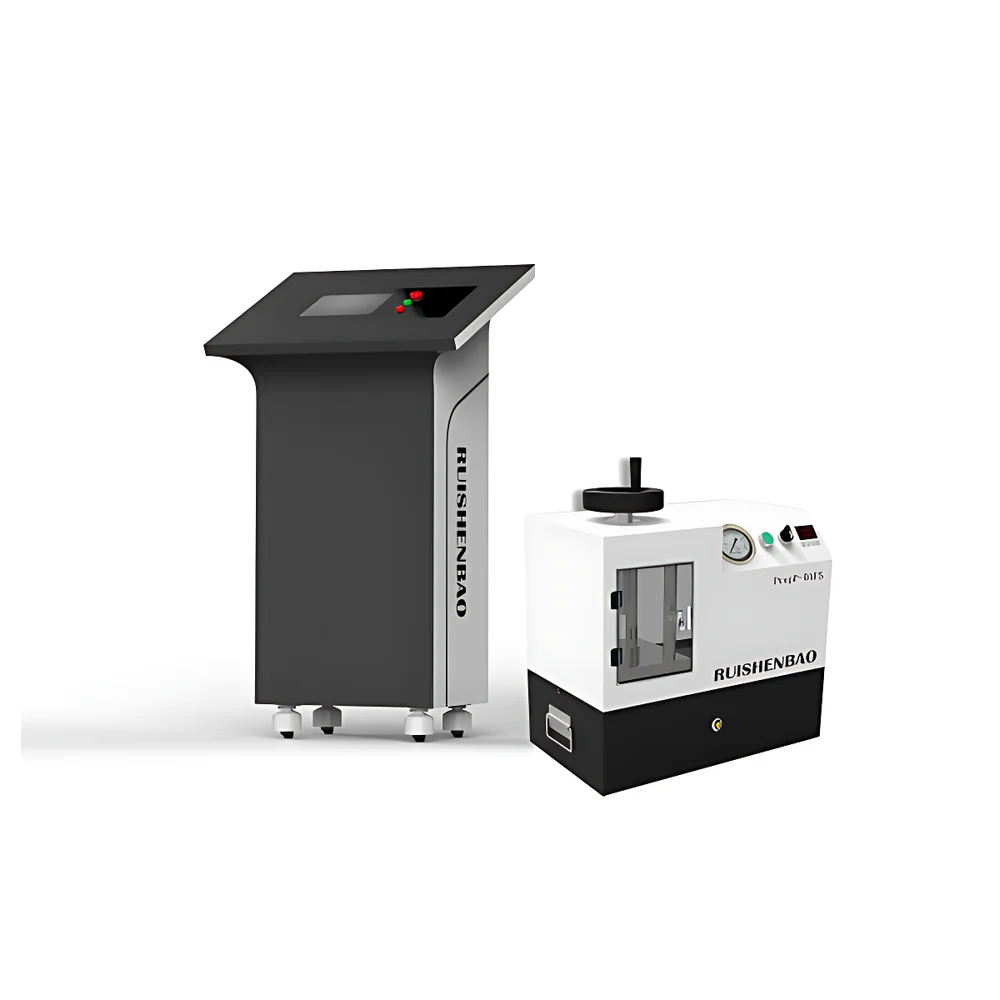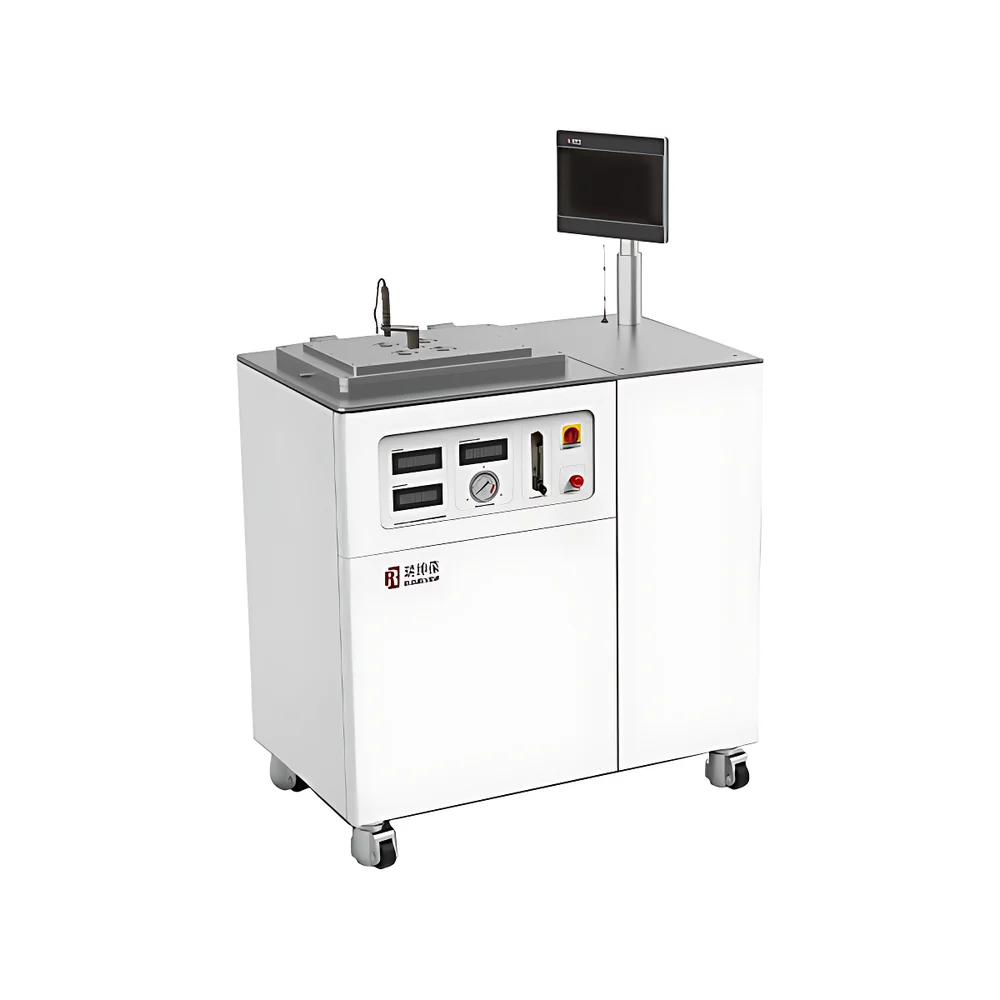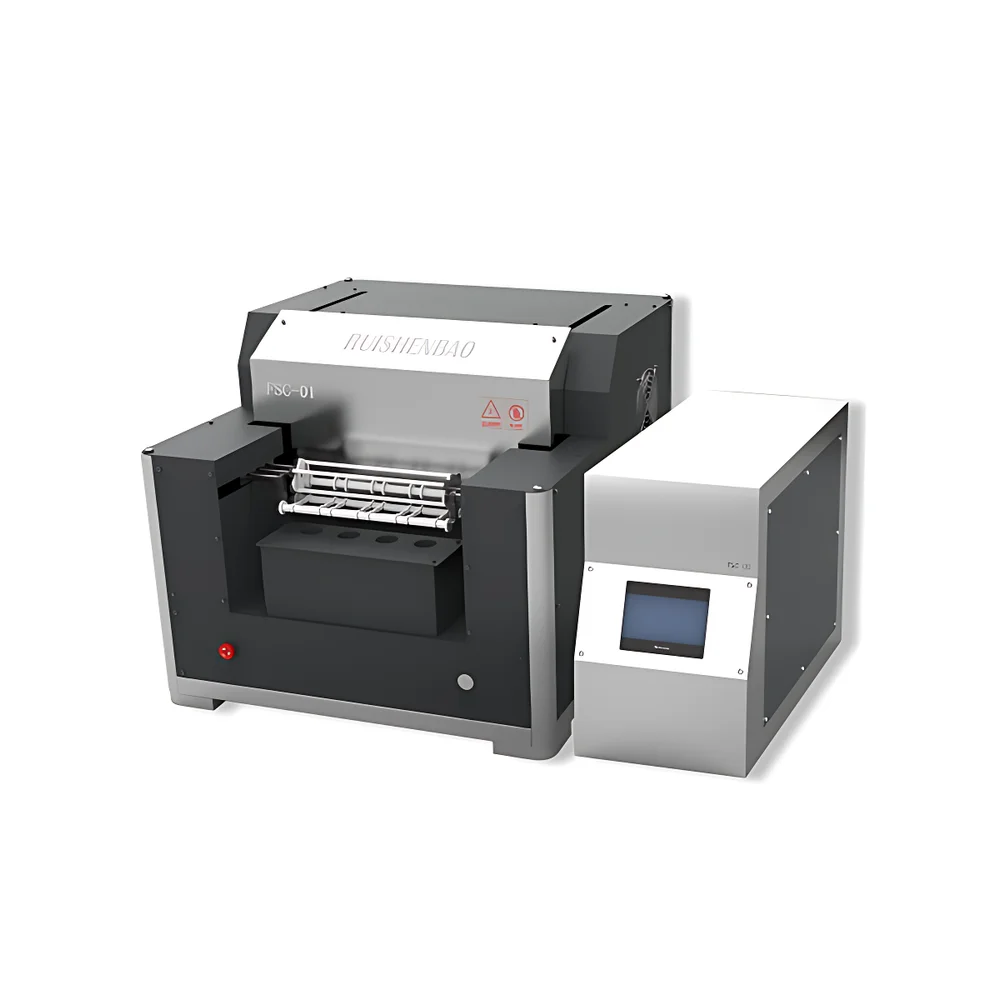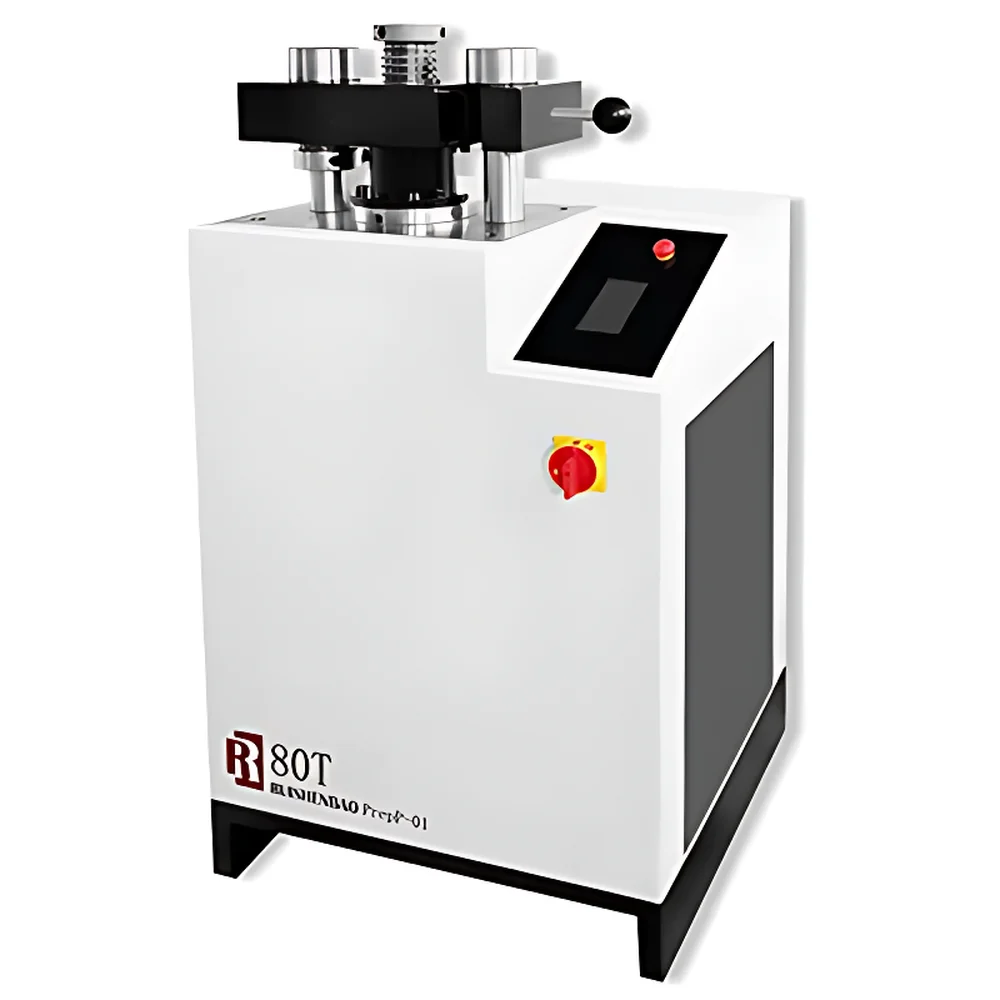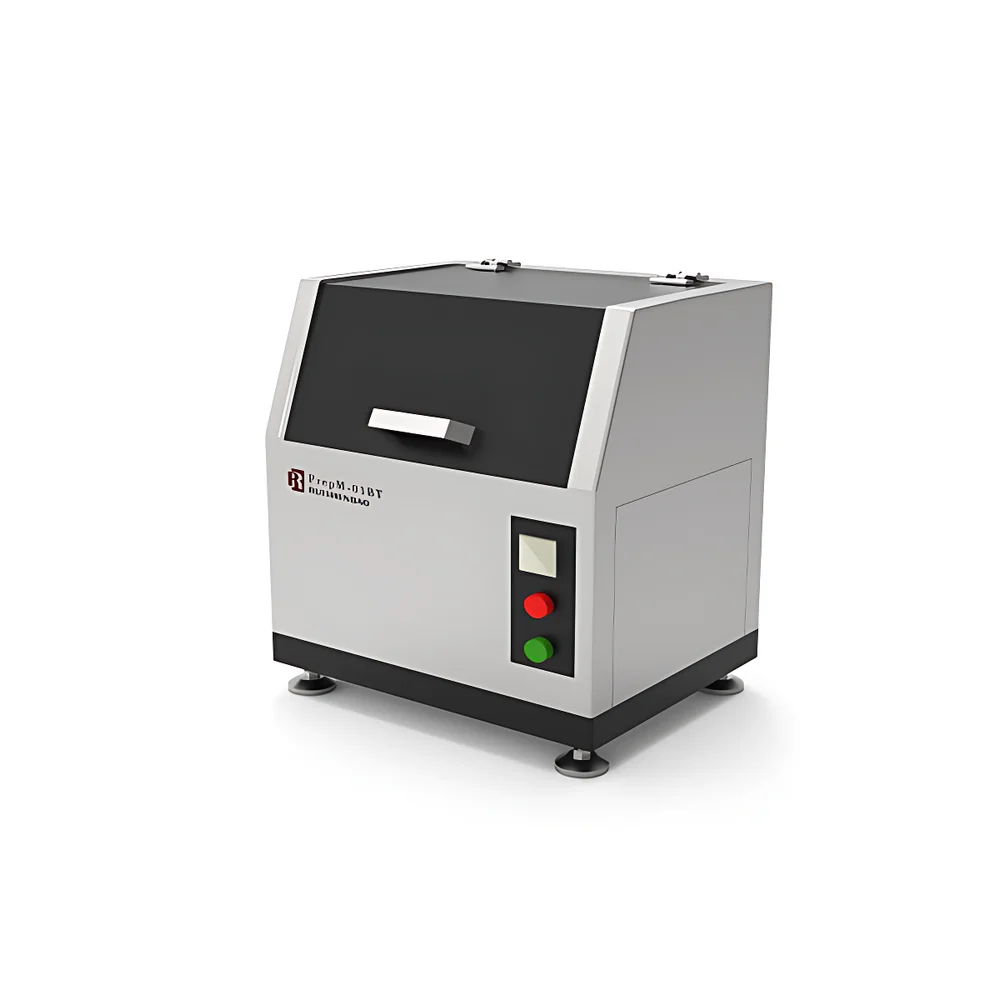
Ruishenbao PrepM-01BT Benchtop Vibratory Grinder

| Brand | Ruishenbao |
|---|---|
| Origin | Tianjin, China |
| Model | PrepM-01BT |
| Instrument Type | Vibratory Grinder |
| Sample Suitability | Hard, brittle, and dry fibrous materials |
| Feed Size | < 10 mm |
| Output Particle Size | ≤ 75 µm (200 mesh) |
| Standard Batch Capacity | 50 mL |
| No-Load Speed Range | 960–3000 rpm |
| Power Supply | AC 220 V / 50 Hz |
| Rated Power | 750 W |
| Dimensions (L×W×H) | 395 × 480 × 625 mm |
| Net Weight | 45 kg |
| Grinding Vial Materials | Chrome Steel / Tungsten Carbide / Manganese Steel / Agate (custom materials available) |
| Fill Ratio | 30–50% of effective vial volume (material-dependent) |
Ask about pricing, availability and specifications.
Overview
The Ruishenbao PrepM-01BT Benchtop Vibratory Grinder is an engineered solution for rapid, reproducible sample comminution in analytical laboratories. It operates on the principle of high-frequency eccentric circular vibration—generated by a precisely balanced eccentric drive mechanism—to induce intense mechanical energy transfer within sealed grinding vials. As the vial undergoes controlled horizontal orbital motion, samples experience simultaneous compression, impact, shear, and abrasive friction against grinding media (e.g., balls or rods), resulting in efficient size reduction without thermal degradation or cross-contamination. Designed specifically for X-ray fluorescence (XRF), elemental analysis, and homogeneity-critical applications, the PrepM-01BT delivers sub-75 µm particle distributions with exceptional batch-to-batch repeatability. Its compact footprint and benchtop form factor align with modern laboratory space optimization requirements while maintaining performance parity with larger floor-standing vibratory mills.
Key Features
- Eccentric Drive System: A dynamically balanced eccentric block serves as the primary vibration source, delivering consistent kinetic energy across the full speed range (960–3000 rpm, no-load). This architecture ensures uniform force distribution and minimizes mechanical resonance.
- Spring-Suspended Platform: Eight-directional lateral tension springs combined with vertical coil supports generate a stable, planar circular trajectory—critical for homogeneous energy input and minimal vial wear.
- Integrated Safety Interlock: Pneumatically assisted safety door with dual-position limit switches prevents operation unless fully closed and latched, complying with IEC 61000-6-2 electromagnetic compatibility and basic functional safety expectations for lab equipment.
- Acoustic Damping Enclosure: Internally lined with multi-layer sound-absorbing composite material, the grinding chamber attenuates operational noise to <65 dB(A) at 1 m distance—enabling continuous use in shared analytical workspaces.
- Modular Vial Compatibility: Standard 50 mL grinding vials are available in chrome steel, tungsten carbide, manganese steel, and agate; custom geometries and materials (e.g., zirconia, PTFE-lined) can be specified to prevent analyte adsorption or metallic interference.
- Energy-Efficient Operation: 750 W rated power draw allows direct connection to standard laboratory AC 220 V / 50 Hz circuits—no dedicated line or cooling infrastructure required.
Sample Compatibility & Compliance
The PrepM-01BT accommodates hard, brittle, and dry fibrous matrices—including ores, slags, ceramics, polymers, pharmaceutical tablets, and geological specimens—with feed sizes up to 10 mm. Final particle size distribution consistently achieves ≤75 µm (200 mesh), meeting ISO 12885:2002 (sampling and preparation of test portions for XRF analysis) and ASTM E1772–22 (standard guide for preparation of pulverized rock samples). When used with inert vial materials and validated protocols, it supports GLP-compliant workflows for certified reference material (CRM) homogenization and QC sample preparation. Trace metal analysis workflows benefit from low-background vial options (e.g., agate, high-purity tungsten carbide) minimizing contamination risk per USP and .
Software & Data Management
The PrepM-01BT operates via a front-panel digital interface with programmable time (1–999 s), speed (960–3000 rpm), and pause-interval settings. While not equipped with embedded data logging or network connectivity, its parameter stability and mechanical repeatability enable integration into LIMS-controlled environments through external timer relays or PLC-triggered start/stop signals. All operational parameters—including cycle count, duration, and speed—are manually recorded in lab notebooks or electronic lab journals (ELN) to satisfy FDA 21 CFR Part 11 audit trail requirements when paired with appropriate documentation practices.
Applications
- Mining & Metallurgy: Preparation of iron ore, bauxite, copper concentrates, furnace slags, and refractory materials for elemental quantification.
- Cement & Construction Materials: Homogenization of clinker, limestone, fly ash, silica fume, and ceramic powders prior to XRF or XRD analysis.
- Environmental Testing: Grinding of soil, sediment, and airborne particulate filters for heavy metal screening (e.g., Pb, Cd, As).
- Pharmaceutical & Food: Milling of tablets, excipients, and grain samples for content uniformity testing and nutritional profiling.
- Research & Standards Development: Production of certified homogeneous reference materials (CRMs) and inter-laboratory comparison samples under ISO/IEC 17043 guidelines.
FAQ
What is the recommended fill level for optimal grinding efficiency?
For most hard materials, a 30–50% fill ratio (by effective vial volume) is empirically validated to balance impact frequency and media mobility—excessive loading reduces kinetic transfer and increases heat generation.
Can the PrepM-01BT be used for cryogenic grinding?
No—the device lacks integrated cooling capability or liquid nitrogen ports; ambient-temperature operation only. Cryo-compatible alternatives require specialized jacketed vials and external cold traps.
Is validation documentation available for GMP environments?
Ruishenbao provides factory calibration certificates and mechanical verification reports. Full IQ/OQ documentation must be generated onsite per user-specific SOPs and regulatory requirements (e.g., EU Annex 15, ASTM E2500).
How often should the suspension springs be inspected?
Visual inspection is recommended every 500 operating hours; replacement is advised after 2,000 hours or if visible deformation, cracking, or loss of tension is observed.
Does the device meet CE or UL certification standards?
The PrepM-01BT complies with GB/T 13306–2011 (Chinese national standard for lab equipment safety) and carries CCC mark. CE marking is not applicable for export outside EU markets unless modified for EN 61000-6-2/6-3 and EN 61000-3-2 compliance.