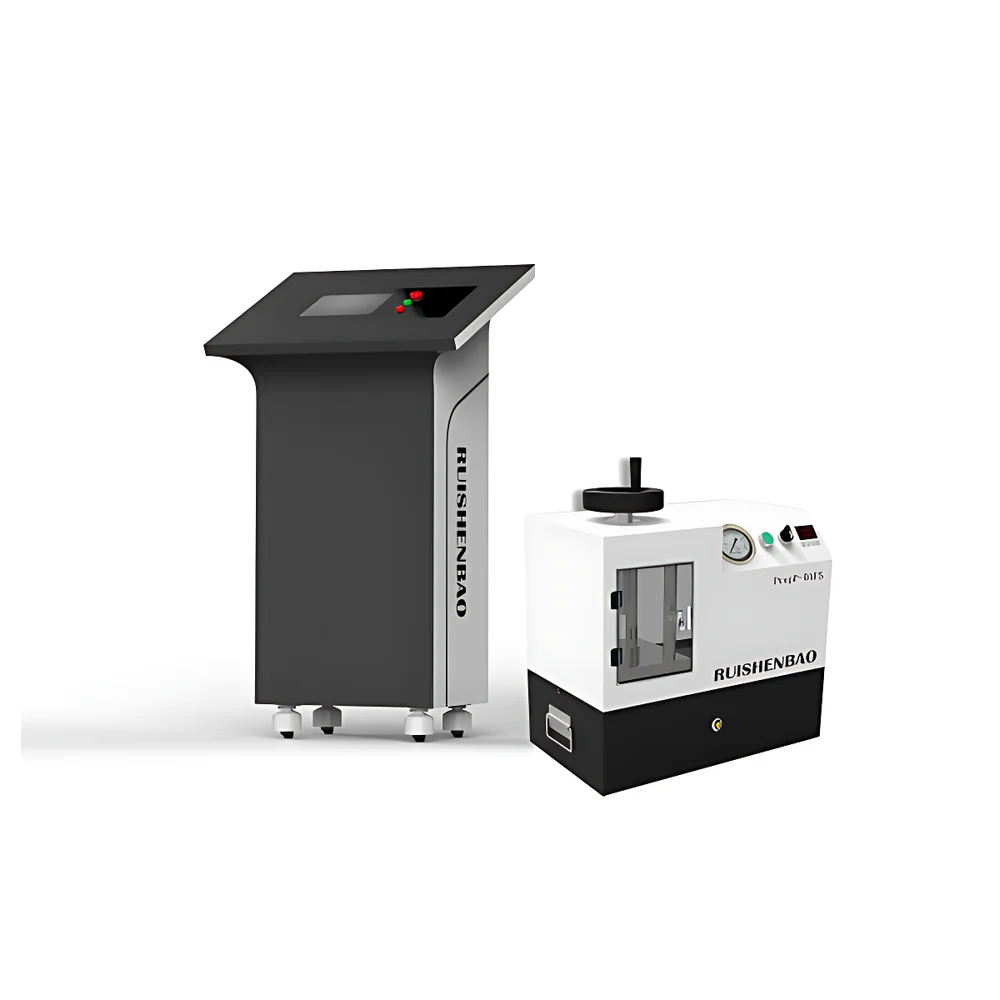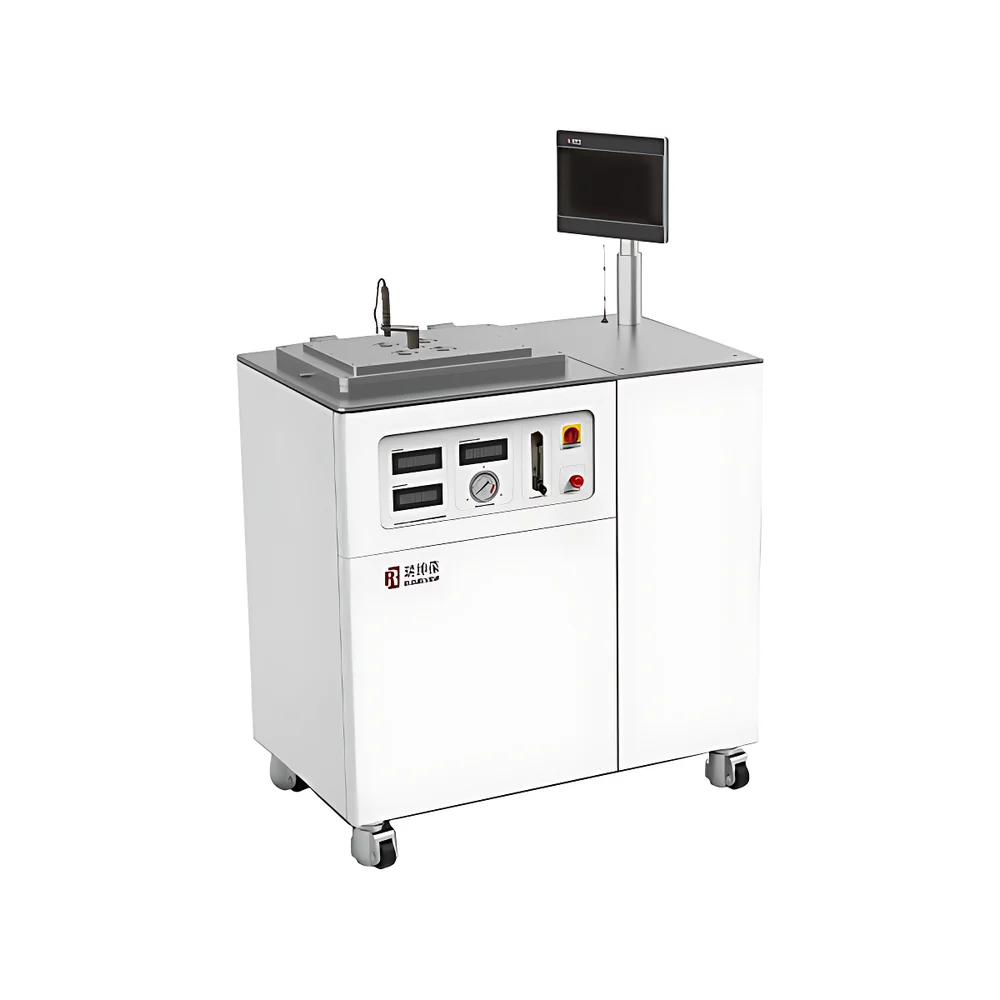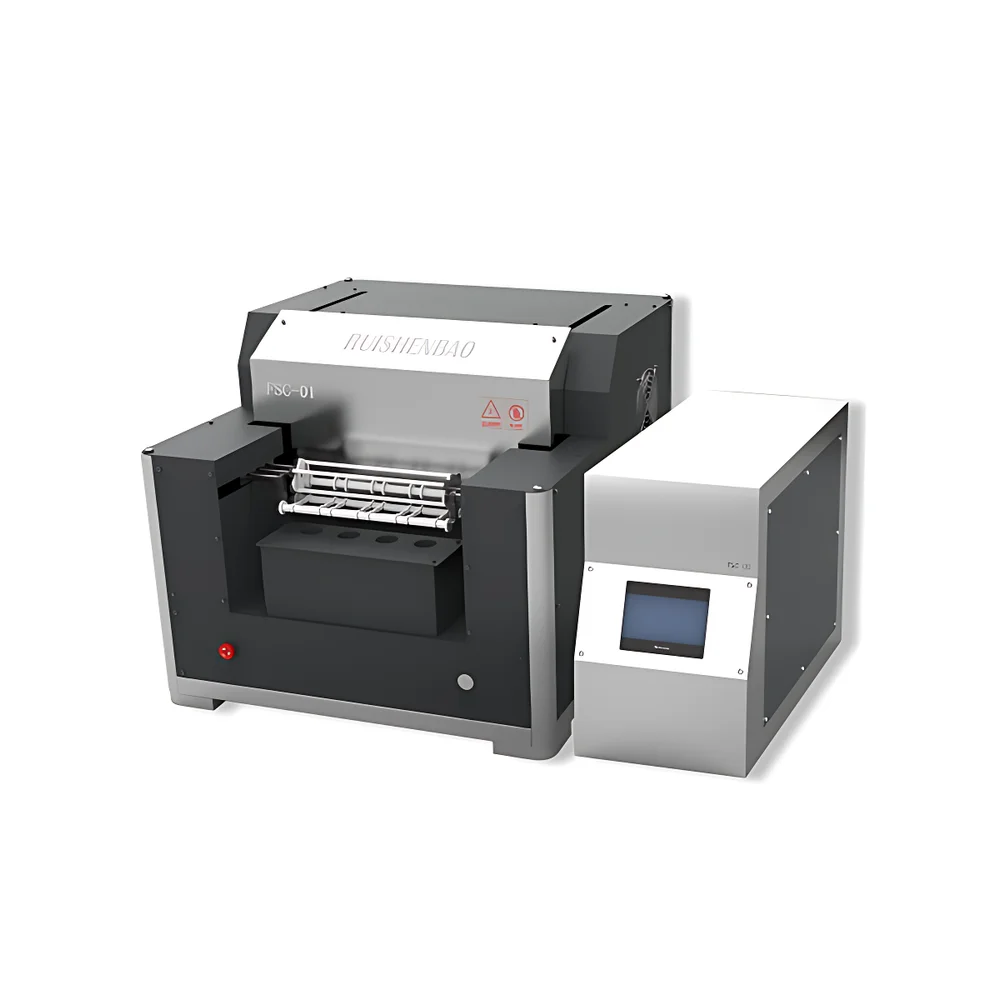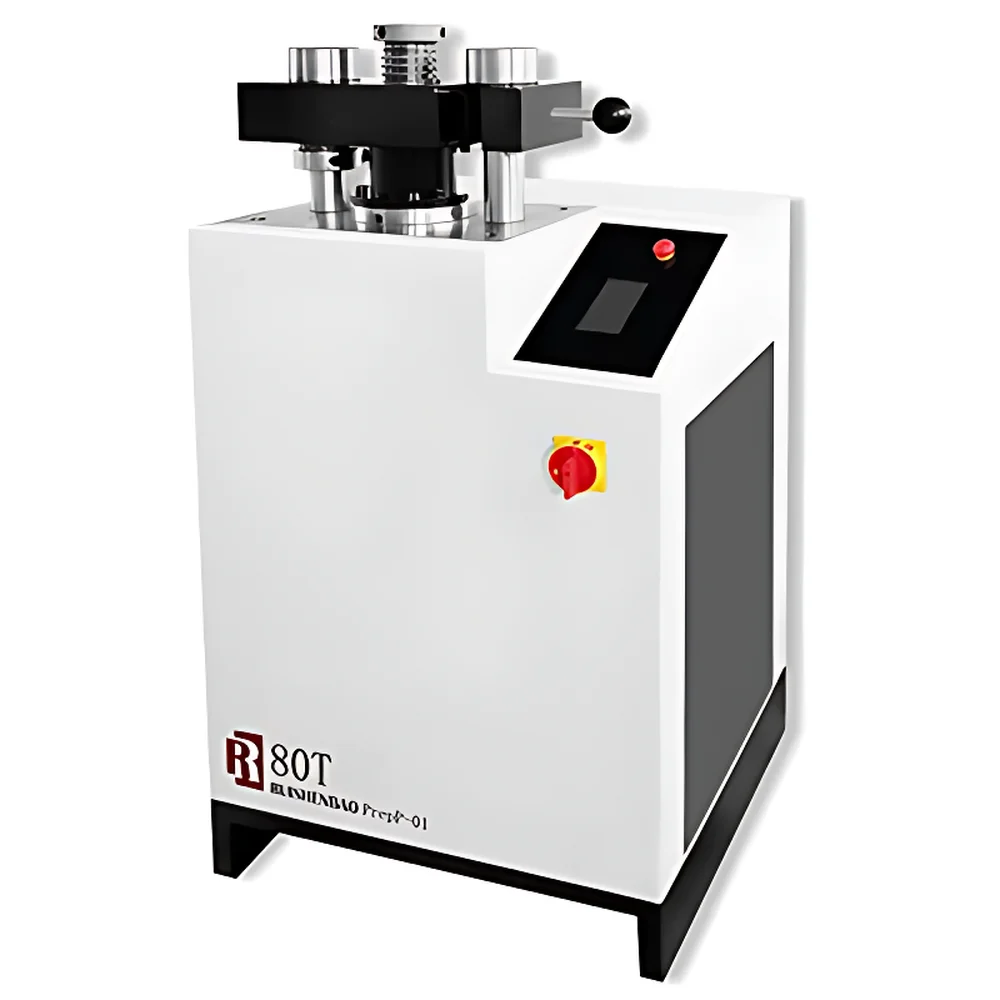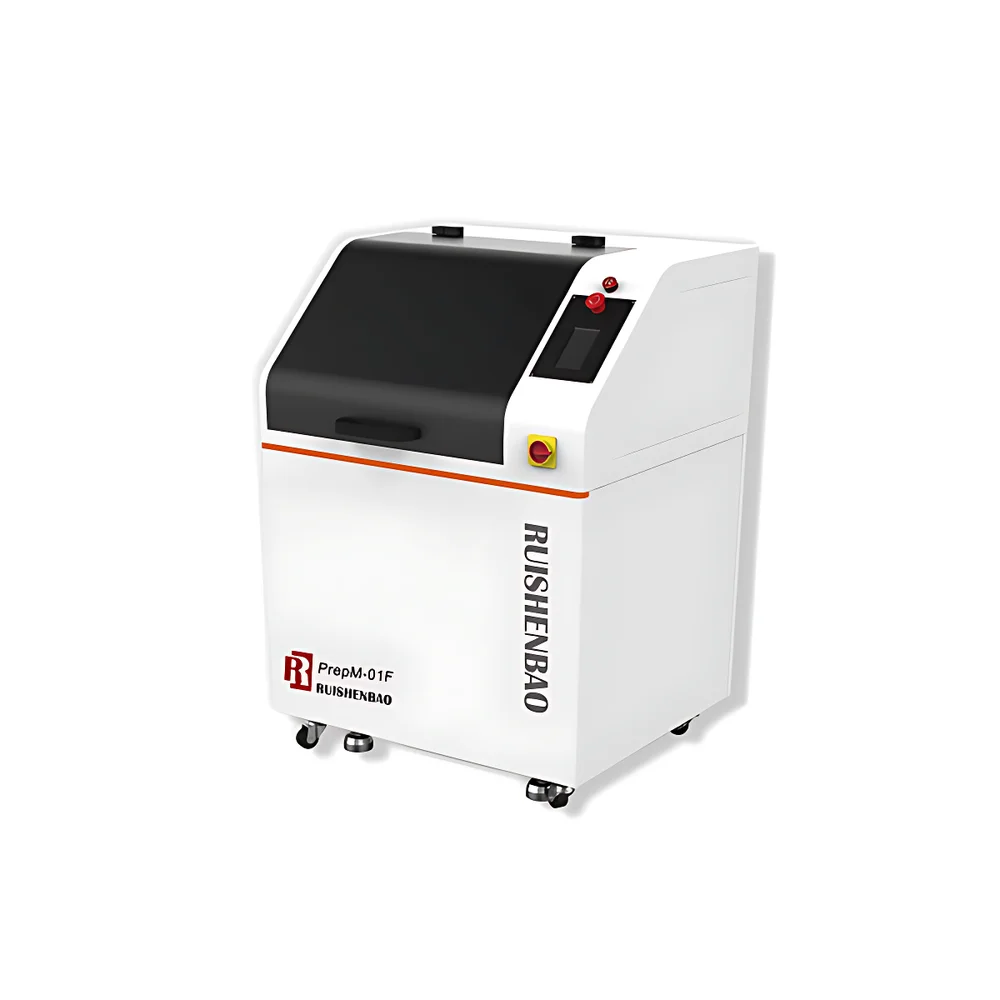
Ruishenbao PrepM-01F Four-Station Disc Vibratory Grinder

| Brand | Ruishenbao |
|---|---|
| Origin | Tianjin, China |
| Manufacturer Type | Authorized Distributor |
| Country of Origin | China |
| Model | PrepM-01F |
| Instrument Type | Vibratory Disc Grinder |
| Sample Applicability | Hard, brittle, and dry fibrous materials |
| Feed Size | < 10 mm |
| Final Particle Size | ≤ 75 µm (200 mesh) |
| Batch Grinding Capacity | 20–60% of effective grinding chamber volume |
| Motor Speed | Variable Frequency Drive, 0–960 rpm |
| Power | 3 kW |
| Chamber Quantity | 4 independent grinding stations |
| Chamber Volume Options | 50 mL, 100 mL (standard), 150 mL, 200 mL (customizable) |
| Chamber Liner Materials | Chrome steel, tungsten carbide, manganese steel (other materials available on request) |
| Dimensions (L×W×H) | 1100 × 960 × 1120 mm |
| Net Weight | ~300 kg |
| Electrical Supply | AC 380 V, 50 Hz, 3-phase |
| Noise Reduction | >60% via integrated acoustic enclosure |
| Safety System | Pneumatically assisted safety lid with interlocked door switch and automatic motor cutoff |
Ask about pricing, availability and specifications.
Overview
The Ruishenbao PrepM-01F Four-Station Disc Vibratory Grinder is an engineered solution for high-throughput, reproducible sample comminution in analytical laboratories—specifically optimized for X-ray fluorescence (XRF) spectroscopy, inductively coupled plasma (ICP) analysis, and other elemental characterization workflows requiring strict particle size control and homogeneity. It operates on the principle of high-frequency oscillatory impact: a precisely balanced eccentric drive system transmits controlled vibrational energy to four independent grinding chambers simultaneously. This design eliminates cross-contamination while maintaining identical mechanical input across all stations—critical for comparative multi-sample studies or quality control batch processing. Unlike planetary ball mills or jaw crushers, the PrepM-01F achieves sub-75 µm final particle size without thermal degradation or phase transformation, preserving sample integrity for trace-level quantification.
Key Features
- Four independent grinding stations with pneumatically actuated, interlocked chamber lids—ensuring full isolation and eliminating cross-contamination during parallel processing.
- Variable-frequency motor (0–960 rpm) coupled with an enlarged eccentric mass for tunable impact intensity; enables optimization for hard ores, brittle ceramics, or fibrous biomass without manual recalibration.
- Touchscreen HMI integrated with industrial-grade PLC control—supporting both continuous and programmable intermittent grinding modes with real-time RPM, time, and cycle monitoring.
- Preloaded memory for up to ten user-defined grinding protocols—including speed ramp profiles, dwell times, and pause intervals—facilitating GLP-compliant method reproducibility across shifts and operators.
- Acoustically damped structural housing lined with vibration-absorbing composite material, reducing operational noise to <65 dB(A) at 1 m distance—suitable for shared laboratory environments.
- Active safety architecture: lid position sensors disable motor operation upon opening; pneumatic gas struts ensure stable, hands-free access; emergency stop circuit meets IEC 60204-1 requirements.
- Modular grinding chamber system—standard 100 mL capacity with optional 50/150/200 mL variants and liner materials including chrome steel (general purpose), tungsten carbide (ultra-hard abrasives), and manganese steel (high-impact wear resistance).
Sample Compatibility & Compliance
The PrepM-01F accommodates diverse feedstock geometries and mechanical properties: ore pellets (<10 mm), sintered oxides, metallurgical slags, ceramic shards, pharmaceutical tablets, and dried botanical matrices. Its non-rotational, impact-driven mechanism avoids heat accumulation—preventing volatile loss or polymorphic transition in thermolabile compounds. Chambers are compatible with ISO 8502-3 and ASTM D5630 sample preparation guidelines for XRF pelletization. The instrument’s electrical architecture complies with CE marking requirements (2014/30/EU EMC Directive and 2014/35/EU Low Voltage Directive). Optional audit trail logging (via external SCADA integration) supports 21 CFR Part 11 readiness for regulated QC labs.
Software & Data Management
While the PrepM-01F operates as a standalone unit, its PLC core supports RS-485 Modbus RTU communication for integration into centralized lab management systems (e.g., LabVantage, STARLIMS). All executed protocols—including start/stop timestamps, actual RPM deviation, total grinding duration, and chamber-specific error logs—are timestamped and exportable as CSV. Touchscreen firmware includes password-protected administrator mode for calibration parameter locking and user role assignment (operator, supervisor, engineer), aligning with ISO/IEC 17025 clause 7.7 on equipment management.
Applications
- Mining & Geochemistry: Homogenization of iron ore fines, bauxite, copper concentrates, and geological reference materials prior to fused bead or pressed pellet preparation.
- Cement & Construction Materials: Size reduction of clinker, limestone, fly ash, and refractory bricks to meet ASTM C114 and EN 196-2 particle size specifications.
- Metallurgy: Preparing slag samples (BOS, EAF, ladle furnace) for slag chemistry mapping and phase analysis by SEM-EDS.
- Pharmaceuticals & Food: Milling of coated tablets, powdered nutrients, or spice blends for heavy metal screening per USP / and EU Commission Regulation (EU) No 2023/915.
- Academic Research: Rapid generation of certified reference material (CRM) batches with documented repeatability (RSD <2.5% for d₅₀ across n=6 replicates, verified with Malvern Mastersizer 3000).
FAQ
What is the maximum recommended operating duty cycle for continuous use?
The PrepM-01F is rated for uninterrupted operation at full load (3 kW) for ≥8 hours/day, provided ambient temperature remains ≤30°C and ventilation clearance ≥150 mm on all sides.
Can grinding parameters be validated for regulatory submissions?
Yes—protocol execution logs, including speed stability (±2 rpm tolerance), total grinding time, and chamber temperature rise (<8°C above ambient), are retained for 90 days and exportable for audit review.
Is tungsten carbide chamber compatibility confirmed for silicon carbide abrasives?
Yes—tungsten carbide liners demonstrate >500 h service life under repeated grinding of SiC (Mohs 9.5) at 850 rpm, per internal wear testing per ISO 20475.
Does the system support remote diagnostics?
Via optional Ethernet-to-Modbus gateway, OEM engineers can perform firmware health checks and parameter verification—subject to customer-configured firewall rules and TLS 1.2 encryption.
How is cross-contamination prevented between dissimilar samples?
Each chamber features independent sealing gaskets, dedicated lid actuators, and physical separation exceeding 40 mm—validated by ATP bioluminescence swab testing post-grinding of high-Zn and high-Pb standards (detection limit <0.1 ppm).