
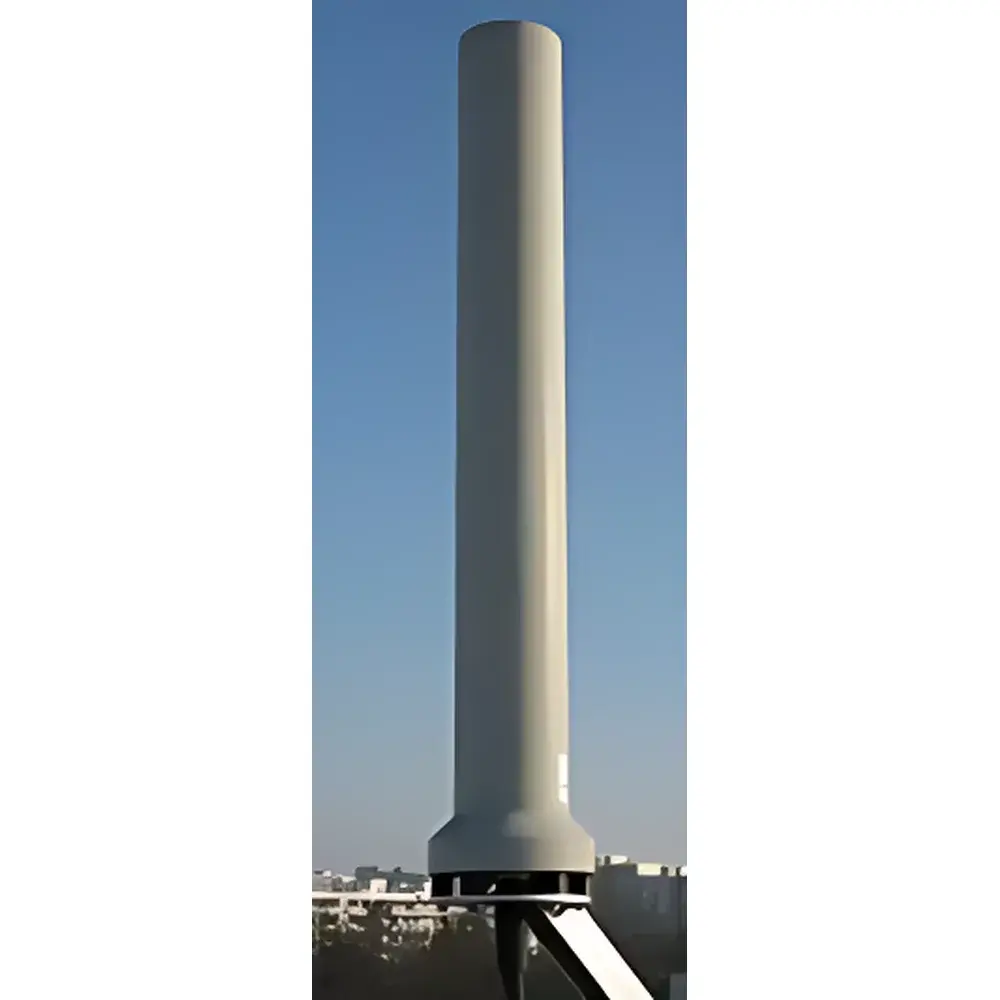
SARA Networked Regional Environmental Radiation Monitor
| Origin | Germany |
|---|---|
| Manufacturer Type | Authorized Distributor |
| Origin Category | Imported |
| Model | SARA |
| Instrument Type | Ambient Dose Equivalent Rate Meter & Gamma Spectrometer |
| Detector Options | Dual GM Tube (10 nSv/h – 10 Sv/h) / NaI(Tl) Scintillator (10 nSv/h – 100 mSv/h, 30 keV – 2 MeV, 6.9% @ 662 keV) |
| Accuracy | ±15% (GM), ±8% typical (NaI spectral calibration) |
| Operating Temperature | −40 °C to +60 °C |
| Power Consumption | 0.2 W (GM), 2.5 W (NaI) |
| Enclosure Rating | IP68 |
| Dimensions (GM) | Ø80 × 635 mm |
| Weight | 2.3 kg |
| Dimensions (NaI) | Ø80 × 455 mm |
| Weight | 2.7 kg |
Overview
The SARA Networked Regional Environmental Radiation Monitor is an engineered solution for continuous, autonomous monitoring of ambient gamma radiation dose rates and spectral composition across geographically distributed outdoor sites. Designed in accordance with IEC 60846-1:2014 (Radiation protection instrumentation — Ambient and/or directional dose equivalent (rate) meters and/or monitors for beta, X and gamma radiation) and compliant with ISO 4037-3:2019 reference radiation field requirements, the system implements dual-sensor architecture to support both regulatory-grade dose rate surveillance and nuclide-specific identification. Its core measurement principle relies on ionization detection (GM tubes) for high-dynamic-range dose rate quantification and scintillation spectroscopy (NaI(Tl)) for energy-resolved gamma-ray analysis. The modular design enables deployment in remote or climatically extreme locations—including arctic perimeters, coastal zones, nuclear facility perimeters, and post-industrial brownfield sites—where long-term stability, low power draw, and ingress protection are non-negotiable.
Key Features
- Dual-detector configuration: Interchangeable or co-deployed GM tube and NaI(Tl) scintillation modules, each independently calibrated and thermally stabilized.
- Wide dynamic range: GM-based dose rate measurement from 10 nSv/h to 10 Sv/h (eight decades), supporting both background-level surveillance and emergency response scenarios.
- Spectral acquisition capability: NaI(Tl) detector with 30 keV–2 MeV energy response, 6.9% energy resolution at 662 keV (¹³⁷Cs), enabling qualitative and semi-quantitative radionuclide identification via library-matched peak deconvolution.
- Environmental resilience: IP68-rated stainless-steel and polymer housing; operational integrity verified from −40 °C to +60 °C; minimal power consumption (0.2 W GM / 2.5 W NaI) compatible with solar-battery hybrid power systems.
- Open communication architecture: RS-232/RS-485 serial interface with Modbus RTU and ASCII protocol support; optional Ethernet/Wi-Fi/GSM telemetry modules for integration into centralized SCADA or cloud-based environmental data platforms.
- Mobile deployment readiness: Lightweight cylindrical form factor (≤2.7 kg), pole-mountable or tripod-compatible mechanical interface, and rapid-connect cabling for temporary or rotating monitoring networks.
Sample Compatibility & Compliance
The SARA system is validated for unattended operation in open-air, soil-surface, and near-ground-level configurations typical of national radiation monitoring networks (e.g., EURDEP, US RadNet). It meets EU Council Directive 2013/59/Euratom requirements for environmental dose rate monitoring infrastructure and supports traceability to national primary standards via factory calibration certificates accredited to ISO/IEC 17025. Spectral data output conforms to ANSI N42.42-2019 digital format specifications, ensuring interoperability with third-party nuclide identification software (e.g., Genie 2000, GammaVision). All firmware and configuration files maintain audit trails compliant with GLP principles; optional 21 CFR Part 11–enabled data logging modules available upon request.
Software & Data Management
The SARA platform integrates with the vendor’s SARA-Monitor Suite—a Windows-based desktop application and optional web dashboard—for real-time visualization, alarm threshold management (dose rate, count rate, spectral deviation), and automated report generation (daily/weekly/monthly dose summaries, nuclide contribution tables, trend plots). Raw spectral data is stored in standard .cnf and .spc formats; time-stamped dose rate logs export to CSV or XML with UTC synchronization via NTP or GPS timestamping. Remote firmware updates, detector bias voltage adjustment, and energy calibration verification are supported over secure TLS-encrypted connections. Data integrity safeguards include cyclic redundancy checks (CRC), write-once storage options, and configurable local buffering (up to 30 days at 1-min intervals) to accommodate intermittent network connectivity.
Applications
- National and regional environmental radiation monitoring networks requiring long-term, low-maintenance sensor nodes.
- Perimeter monitoring around nuclear power plants, research reactors, fuel cycle facilities, and radioactive waste repositories.
- Post-accident or post-decommissioning environmental baseline studies and long-term trend analysis.
- Emergency response coordination: Rapid deployment for radiological incident assessment, plume tracking, and source localization support.
- Scientific research in radioecology, atmospheric transport modeling, and natural background variation studies (e.g., radon progeny, ⁴⁰K, ²³⁸U series).
- Regulatory compliance reporting for licensing bodies including national radiation protection authorities and IAEA peer review frameworks.
FAQ
Is the SARA system certified for use in regulated nuclear facility monitoring programs?
Yes—the GM and NaI(Tl) modules are type-tested per IEC 60846-1 and carry CE marking under the EU Electromagnetic Compatibility and Radio Equipment Directives. Documentation packages include full test reports, calibration certificates, and conformity declarations suitable for licensing submissions.
Can spectral data be processed remotely without proprietary software?
Yes—raw spectrum files adhere to ANSI N42.42-2019, enabling import into open-source tools such as PyMCA or commercial platforms like Canberra’s Genie 2000. Energy calibration coefficients and detector efficiency curves are embedded in metadata headers.
What maintenance is required for unattended operation over five years?
No routine detector replacement is needed. GM tubes exhibit >10⁹ counts lifetime; NaI(Tl) crystals are hermetically sealed against hygroscopic degradation. Annual functional verification (source check using ¹³⁷Cs or ⁶⁰Co) and temperature-compensation validation are recommended per ISO/IEC 17025 quality assurance protocols.
Does the system support alarm notification via SMS or email?
Yes—when equipped with GSM or Ethernet telemetry modules, configurable thresholds trigger HTTP POST, SMTP, or MQTT alerts with payload including timestamp, location ID, measured value, and detector status flags.
How is detector energy calibration maintained across wide temperature ranges?
The NaI(Tl) module incorporates onboard temperature-compensated PMT gain stabilization and a built-in ²⁴¹Am reference peak (59.5 keV) for automatic energy scale correction at user-defined intervals (e.g., hourly or per acquisition cycle).







