
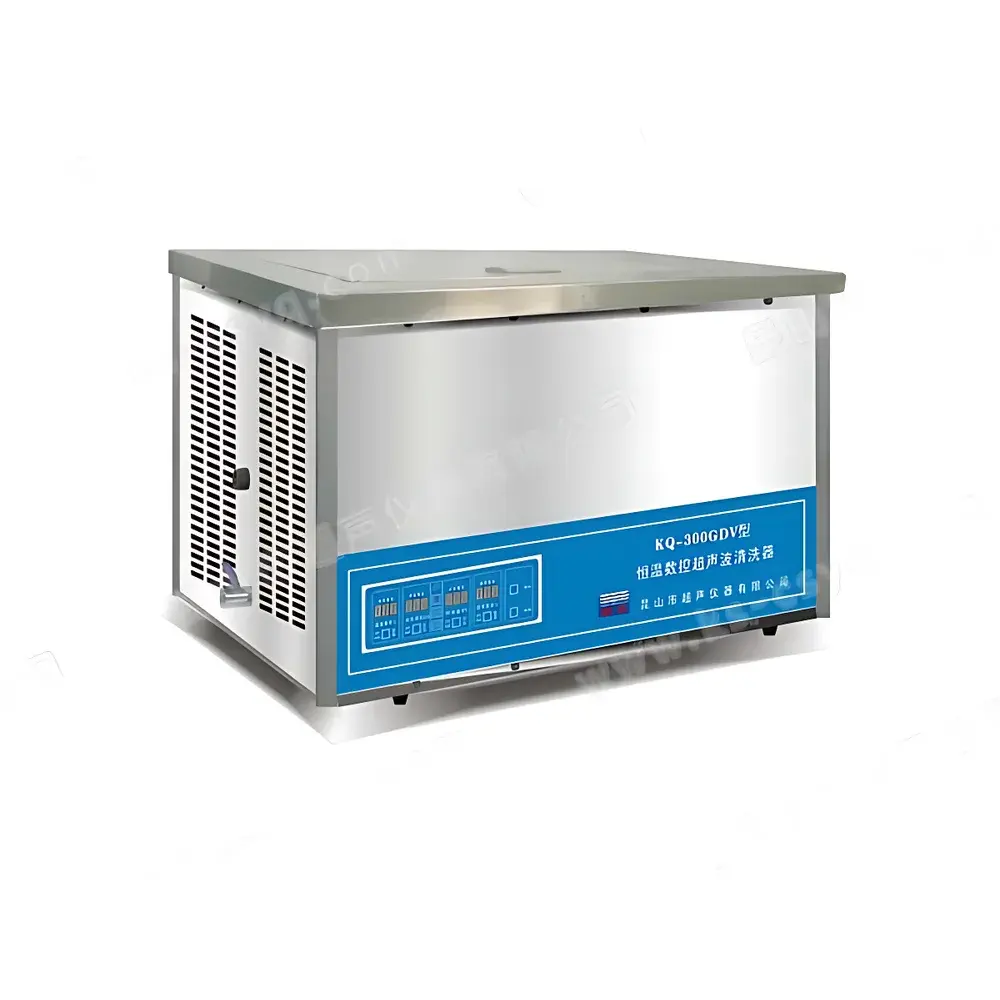
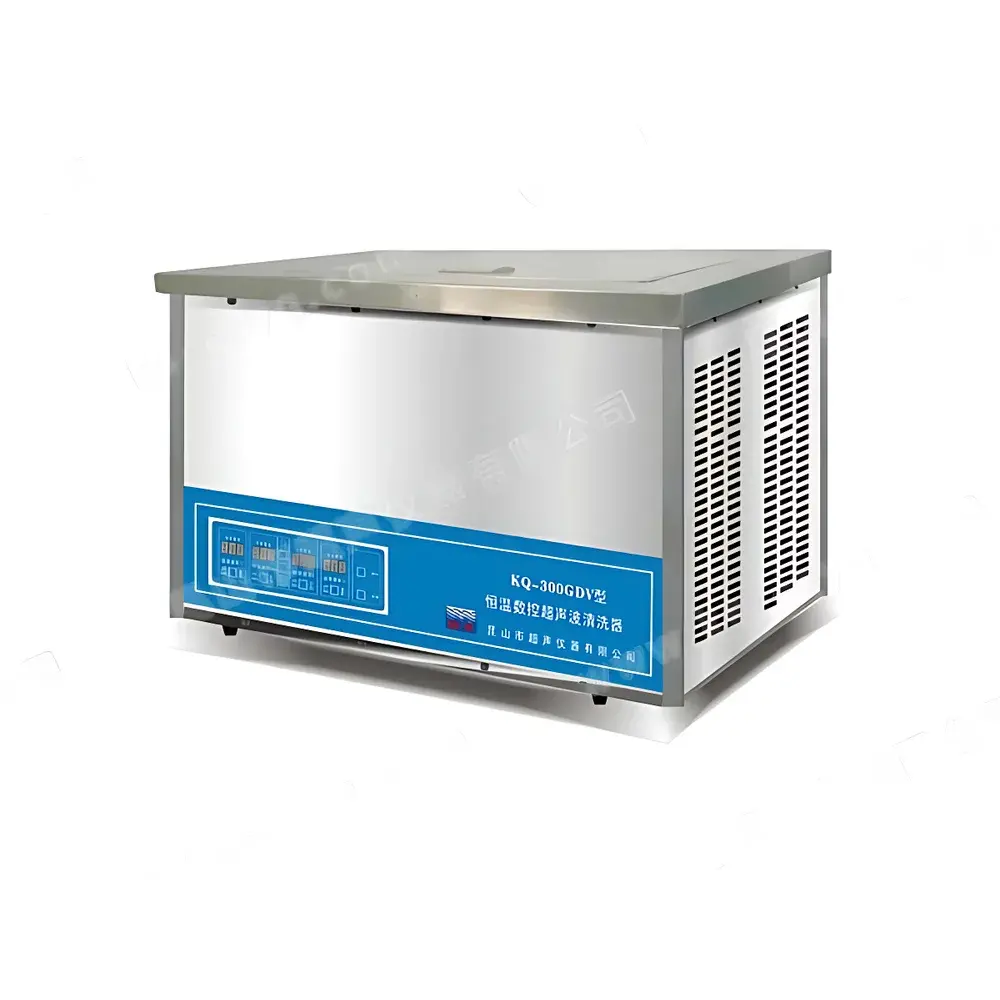
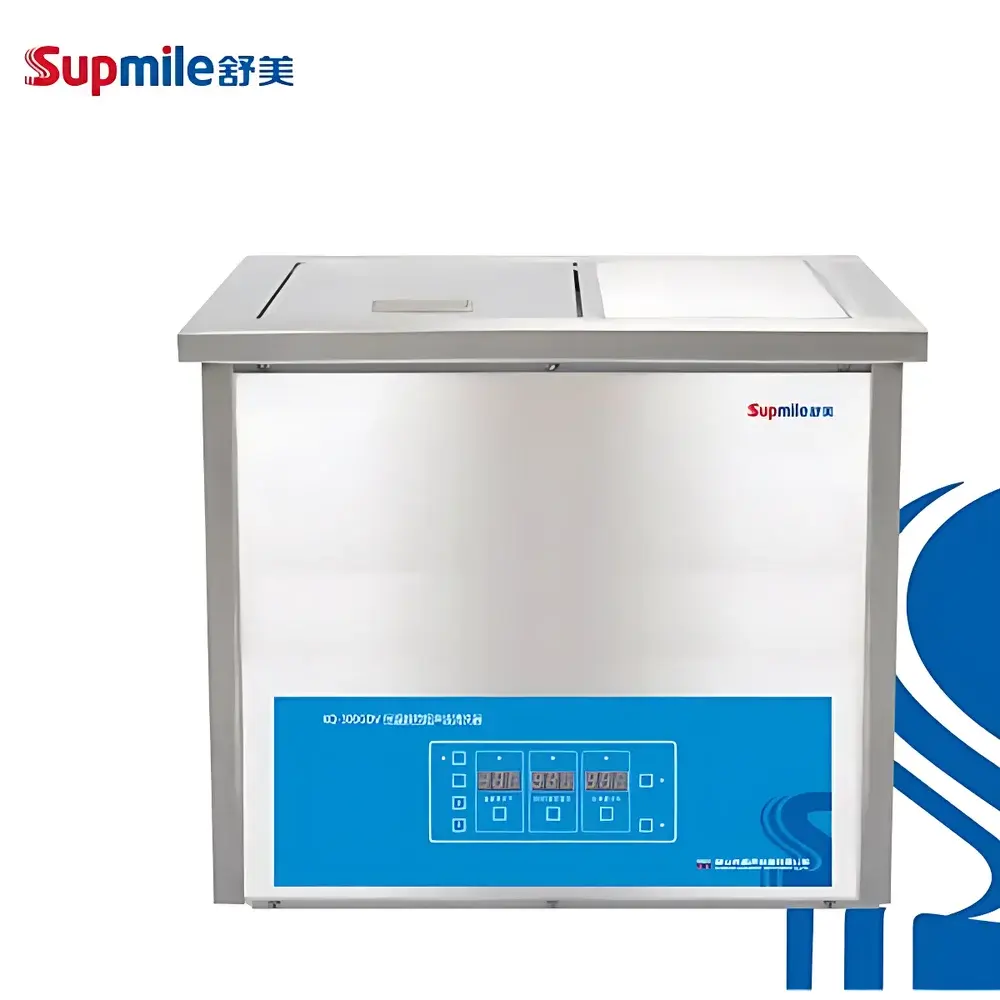
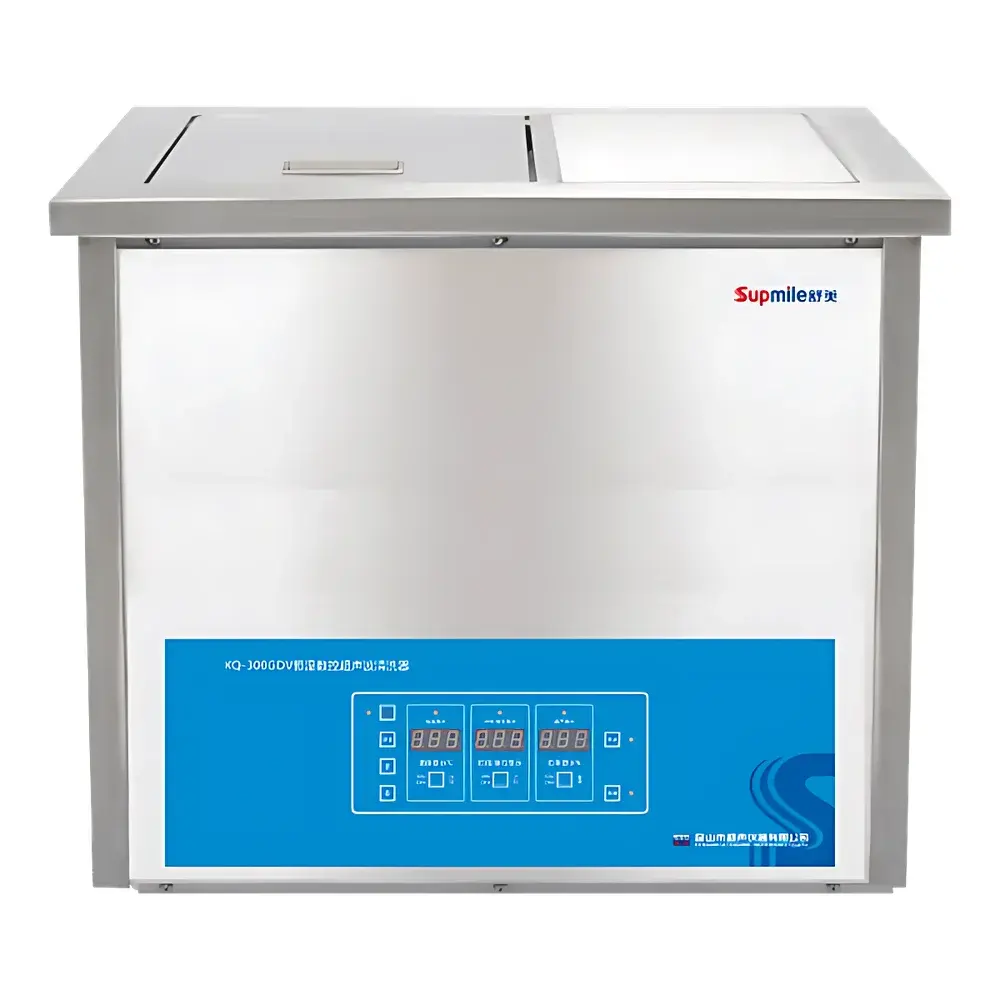
Shumei KQ-300GDV Benchtop Temperature-Controlled Digital Ultrasonic Cleaner
| Brand | Shumei |
|---|---|
| Origin | Jiangsu, China |
| Manufacturer Type | Direct Manufacturer |
| Equipment Type | General-Purpose Ultrasonic Cleaner |
| Capacity | 13 L |
| Ultrasonic Frequency | 40 kHz |
| Ultrasonic Power Output | 300 W (Adjustable 40–100%) |
| Heating Power | 400 W |
| Cooling Power | 350 W |
| Temperature Control Range | 0–80 °C (±2 °C accuracy) |
| Timer Range | 1–480 min |
| Sound-Dampening Lid | Yes |
| Electronic Inlet/Outlet Control | Yes |
| Internal Tank Dimensions | 300 × 240 × 180 mm |
| Overall Dimensions | 640 × 490 × 540 mm |
| Power Supply | AC 220 V / 50 Hz |
| Construction Material | 304 Stainless Steel |
| Standard Accessories | Stainless steel mesh basket, support rack, liquid level sensor with low-level protection |
Overview
The Shumei KQ-300GDV is a benchtop temperature-controlled digital ultrasonic cleaner engineered for precision cleaning of delicate laboratory components, optical elements, semiconductor wafers, medical instruments, and analytical sample preparation vessels. It operates on the principle of cavitation—generating high-frequency acoustic pressure waves at 40 kHz to induce microscopic bubble formation and collapse within the cleaning medium, delivering mechanical agitation that dislodges particulate contaminants, organic residues, and biofilms without surface abrasion. Unlike basic ultrasonic units, the KQ-300GDV integrates closed-loop thermal regulation, enabling stable temperature maintenance across extended cleaning cycles—a critical requirement for temperature-sensitive samples or solvents with narrow volatility windows. Its 13-liter stainless steel tank (304 grade) ensures corrosion resistance, structural integrity, and compatibility with aqueous and mild solvent-based cleaning solutions.
Key Features
- Microprocessor-based digital control system with real-time display of ultrasonic power (%), bath temperature (setpoint and actual), elapsed time, and liquid level status
- Adjustable ultrasonic output (40–100% of 300 W nominal power) to optimize energy delivery for varied sample loads and contamination types
- Precise thermostatic control (0–80 °C) with ±2 °C accuracy and integrated heating (400 W) and active cooling (350 W) modules for rapid thermal stabilization
- Robust 304 stainless steel construction throughout tank, housing, and internal fixtures—designed for long-term exposure to water, detergents, and mild alkaline or acidic solutions
- Integrated safety architecture: automatic shutdown triggered by low liquid level, overtemperature, overcurrent, or overvoltage conditions
- Acoustically insulated lid with sealing gasket minimizes airborne noise emission and reduces heat loss during heated operation
- Electrically actuated inlet and drain valves enable programmable fill-and-empty sequences, supporting unattended batch processing
Sample Compatibility & Compliance
The KQ-300GDV accommodates a wide range of labware including glassware (volumetric flasks, cuvettes, pipette tips), metal tools (tweezers, forceps, surgical blades), ceramic substrates, and polymer-based microfluidic devices. Its non-contact cleaning mechanism preserves dimensional stability and surface finish of precision-machined parts. The unit complies with IEC 61000-6-3 (EMC emissions) and IEC 61000-6-2 (immunity) standards. While not certified for sterile processing per ISO 13485 or FDA 21 CFR Part 820, its repeatable thermal and acoustic parameters support GLP-aligned documentation when paired with external validation protocols (e.g., thermocouple mapping, Alconox residue testing). All electrical components meet IP20 ingress protection requirements for indoor laboratory environments.
Software & Data Management
The embedded controller supports parameter retention across power cycles—user-defined settings for temperature, duration, and power level are stored in non-volatile memory. Though lacking Ethernet or USB data export, the unit provides visual traceability via dual-line LED display showing both setpoints and real-time measured values. For regulated environments, operators may log operational records manually or integrate the cleaner into broader facility monitoring systems using dry-contact relay outputs (optional accessory). The interface design aligns with human factors principles defined in ISO 9241-210, minimizing mode errors through dedicated physical buttons for timer, temperature, and power adjustment.
Applications
- Pre-analytical sample preparation: removal of residual proteins, lipids, or nucleic acid carryover from HPLC vials, autosampler needles, and electrophoresis combs
- Quality control in pharmaceutical manufacturing: cleaning of stainless steel contact parts prior to sterilization validation
- Maintenance of metrology equipment: contaminant-free servicing of interferometer mirrors, laser alignment optics, and AFM probe holders
- Electronics manufacturing: flux residue removal from PCB assemblies and SMT stencils prior to AOI inspection
- Research laboratories: solvent-assisted debubbling of PDMS molds, degassing of casting resins, and dispersion of nanoparticle suspensions
FAQ
What is the maximum allowable operating temperature for aqueous cleaning solutions?
The bath temperature can be set up to 80 °C; however, sustained operation above 60 °C with tap water is discouraged due to accelerated scale formation. Deionized or distilled water is recommended for temperatures >50 °C.
Can this unit be used with organic solvents such as acetone or isopropanol?
No. The KQ-300GDV is rated exclusively for aqueous and water-miscible detergent solutions. Flammable or chlorinated solvents pose fire, explosion, and material compatibility hazards and void warranty coverage.
Is calibration documentation provided with the unit?
Factory calibration certificates for temperature and timer functions are available upon request at time of order; traceability to national standards (e.g., CNAS-accredited labs) requires third-party verification.
How often should the transducer array be serviced?
Under normal use with deionized water and periodic descaling (every 200 hours), no routine transducer maintenance is required. Visual inspection for delamination or epoxy cracking is advised annually.
Does the unit support continuous operation mode?
Yes—timer can be set to 480 minutes (8 hours); for longer cycles, manual restart or external PLC sequencing is necessary, as auto-restart after timeout is not implemented.



