
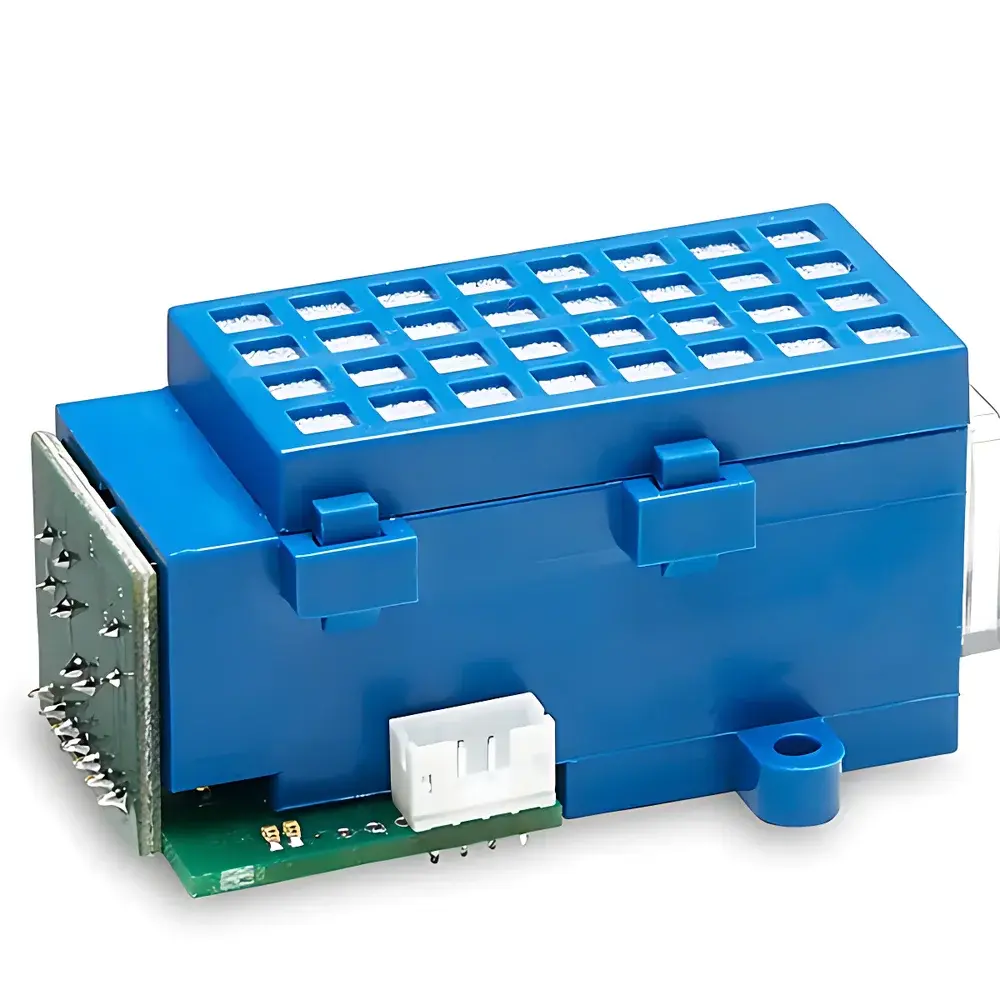
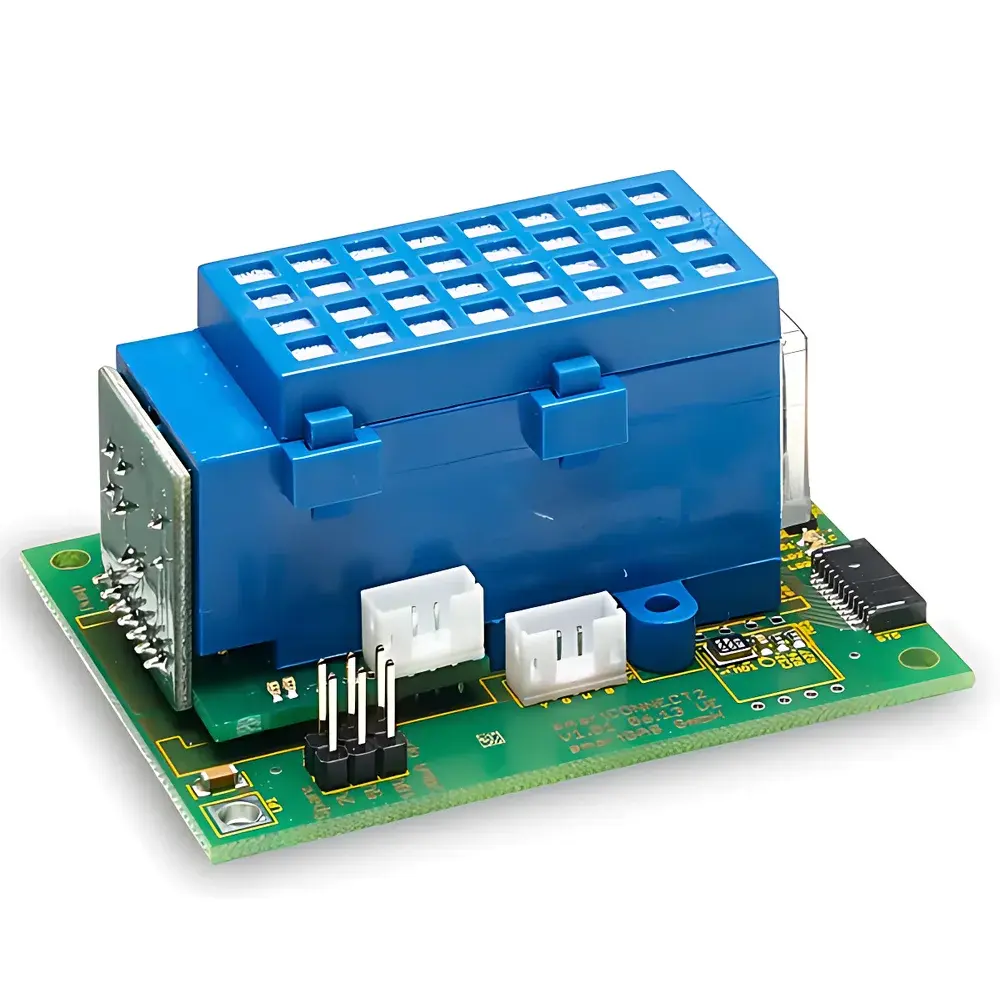
SIGAS S-MODULE BasicEVO Industrial-Grade Diffusion-Type Infrared Gas Sensor
| Brand | SIGAS |
|---|---|
| Origin | Germany |
| Model | S-MODULE BasicEVO |
| Detection Principle | Non-Dispersive Infrared (NDIR), Dual-Beam |
| Measurement Range | See Standard Model List |
| Sampling Method | Diffusion |
| Response Time (T90) | ≤30 s |
| Resolution (@zero) | 1 ppm to 0.1 vol.% |
| LOD (3σ) | ≤±1 % FS |
| Repeatability | ≤±1.5 % FS |
| Linearity Error | ≤±2 % FS |
| Zero Stability | ≤±3.0 % FS / 12 months (typ.) |
| Span Stability | ≤±2.5 % FS / 12 months (typ.) |
| Zero Temp. Drift | ≤±0.15 % FS / °C (typ.) |
| Span Temp. Drift | ≤±0.3 % FS / °C (typ.) |
| Pressure Drift | ±0.1–0.2 % of reading per mbar |
| Operating Temp. | –20 °C to +40 °C (model-dependent) |
| Storage Temp. | –20 °C to +60 °C |
| Humidity | 0–95 % RH (non-condensing) |
| Pressure Range | 800–1150 mbar |
| Warm-up Time | <2 min (cold start), <11 min (slow start), <30 min (full spec.) |
| Digital Output | Modbus ASCII/RTU over TTL, auto-baud (2400–115.2 kbps) |
| Analog Outputs | 0/4–20 mA (with S-Connect), 0/0.2–1 V (with S-Connect V), RS-232/RS-485 (with respective S-Connect modules) |
| Supply Voltage | 3.3–6 VDC ±5 % |
| Avg. Current Draw | 120 mA @5 VDC, peak <400 mA @3.3 VDC / <240 mA @5 VDC |
| Power Consumption | <0.8 W (avg.) |
Overview
The SIGAS S-MODULE BasicEVO is an industrial-grade, diffusion-mode infrared gas sensor engineered for continuous, maintenance-light detection of specific target gases—including sulfur hexafluoride (SF₆), carbon dioxide (CO₂), and methane (CH₄)—in ambient air or confined environments. It operates on the principle of non-dispersive infrared (NDIR) spectroscopy using a dual-beam optical architecture. This design actively compensates for optical path degradation, lamp aging, and environmental fluctuations by comparing signal intensity from a measurement channel against a reference channel at a non-absorbing wavelength. The result is high selectivity, long-term baseline stability, and immunity to common interferents such as water vapor and hydrocarbons—critical attributes for reliable operation in uncontrolled field deployments. Unlike catalytic bead or electrochemical sensors, the BasicEVO employs a solid-state optical path with no consumables or chemical reagents, eliminating drift-related recalibration overhead and enabling a functional lifetime exceeding 10 years under typical operating conditions.
Key Features
- Optically robust dual-beam NDIR architecture for enhanced zero and span stability
- Diffusion-based sampling—no external pump required; suitable for integration into enclosures, cabinets, or OEM equipment
- Fast T90 response time of ≤30 seconds—enabling timely alarm activation in leak detection scenarios
- Low cross-sensitivity profile: engineered spectral filtering minimizes interference from CO, NO₂, H₂O, and other ambient gases
- Modular interface support via optional S-Connect accessories: analog outputs (4–20 mA, 0.2–1 V), RS-232, RS-485, and TTL-level Modbus ASCII/RTU
- Low power consumption (<0.8 W avg.) and wide supply range (3.3–6 VDC) facilitate battery-backed or energy-constrained deployments
- Compact mechanical footprint with standardized mounting options per SIGAS mechanical drawings
- Pre-calibrated at factory; optional calibration cap enables periodic bump testing without disassembly
Sample Compatibility & Compliance
The S-MODULE BasicEVO is validated for use in ambient air monitoring, indoor air quality (IAQ) systems, SF₆ leak detection in high-voltage switchgear, CO₂ concentration tracking in greenhouses and HVAC ducts, and CH₄ monitoring in mining ventilation shafts or landfill perimeter stations. Its diffusion sampling mode requires unrestricted gas access to the optical chamber; installation orientation must avoid condensation pooling and particulate accumulation. The sensor complies with IEC 61000-6-2 (immunity) and IEC 61000-6-4 (emissions) standards. While not intrinsically safe certified out-of-box, it may be integrated into ATEX/IECEx-compliant enclosures when used with appropriate barrier circuits. All firmware and hardware revisions adhere to RoHS 2011/65/EU and REACH (EC 1907/2006) material restrictions.
Software & Data Management
Data acquisition is implemented via industry-standard Modbus ASCII/RTU protocol over TTL serial interface, supporting auto-baud rate negotiation (2400–115.2 kbps) and frame synchronization. This enables seamless integration with PLCs (e.g., Siemens S7, Allen-Bradley CompactLogix), SCADA systems, and edge gateways running Modbus TCP bridges. Optional S-Connect modules provide galvanically isolated 4–20 mA output with HART-compatible digital superimposition for legacy DCS compatibility. Firmware supports configurable averaging windows, alarm thresholds (high/low), and diagnostic flags (e.g., low signal strength, temperature out-of-range). Audit trails and configuration logs are maintained in non-volatile memory, supporting GLP-aligned operational documentation where required. No proprietary software is needed—configuration and readout are fully achievable via standard terminal emulators or Modbus master utilities.
Applications
- SF₆ leak detection in GIS substations and circuit breakers—meeting IEC 62271-1 requirements for gas density monitoring
- CO₂ concentration control in demand-controlled ventilation (DCV) systems per ASHRAE Standard 62.1
- Methane (CH₄) safety monitoring in coal mine return airways and biogas upgrading facilities
- Greenhouse climate management with real-time CO₂ feedback for optimized photosynthesis
- OEM integration into portable gas analyzers, environmental data loggers, and smart building controllers
- Continuous emissions monitoring support (CEMS adjunct) where regulatory-grade validation is performed externally
FAQ
What gases can the BasicEVO detect?
The S-MODULE BasicEVO is available in factory-configured variants for SF₆, CO₂, CH₄, and other IR-active gases; each variant uses dedicated optical filters and calibration curves. Multi-gas configurations require separate modules.
Is field calibration possible without specialized equipment?
Yes—using the optional calibration cap and certified span gas, users can perform functional verification (“bump tests”) in situ. Full two-point calibration requires traceable zero and span gases and is recommended annually or per site QA protocols.
Can the sensor operate in high-humidity environments?
It is rated for 0–95% RH non-condensing. Prolonged exposure to saturated conditions or liquid ingress will impair optical performance and is outside specification.
Does the sensor meet FDA 21 CFR Part 11 requirements?
As a standalone sensor module, it does not implement electronic signatures or audit trail encryption. However, when integrated into validated systems with compliant data handling layers, it supports Part 11-aligned workflows via timestamped Modbus registers and write-protected configuration memory.
What is the expected service life under continuous operation?
The optical source and detector are rated for >10 years MTBF under nominal thermal cycling (–20 °C to +40 °C) and stable power conditions. Mechanical housing and gasket integrity should be verified every 24 months in corrosive or abrasive atmospheres.







