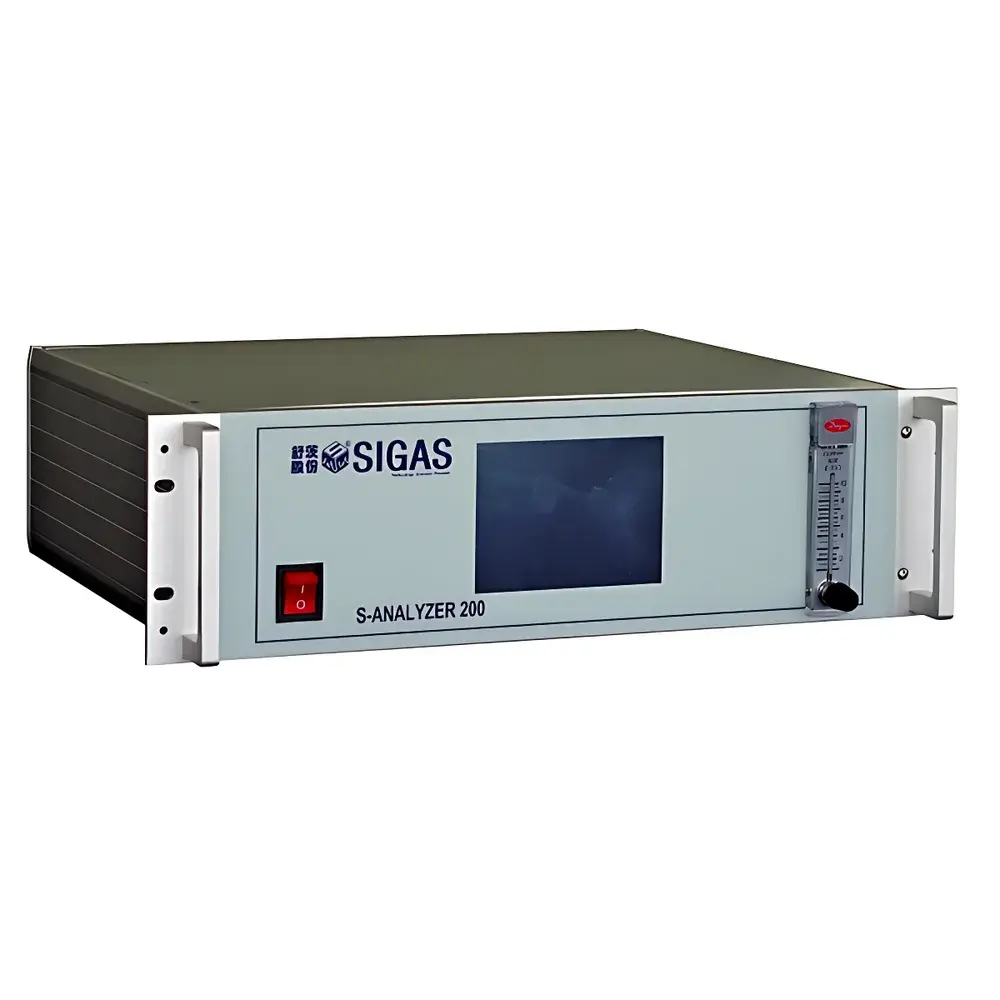
SIGAS SA-200 TCD Thermal Conductivity Hydrogen Analyzer
| Brand | SIGAS |
|---|---|
| Origin | Jiangsu, China |
| Model | SA-200 TCD |
| Detection Principle | Thermal Conductivity Detection (TCD) |
| Measuring Range | H₂ 0–99.999 vol% (configurable per background gas) |
| Accuracy | ±2% FS |
| Repeatability | ±1% FS |
| Stability | ±1% FS / 7 days |
| Response Time (T90) | <30 s |
| Display | 240×128 LCD |
| Data Storage | SD card (standard), USB flash drive (optional) |
| Output | 4–20 mA (default), configurable to 0–20 mA / 0–1 V / 0–5 V / 0–10 V / 1–5 V |
| Communication | RS485 (standard), RS232 (optional) |
| Power Supply | 85–264 VAC, 50/60 Hz |
| Power Consumption | <35 VA |
| Operating Temperature | –10 to +45 °C |
| Relative Humidity | <80% RH |
| Sample Flow Rate | 200–400 mL/min |
| Sample Pressure | Ambient ±10% (at outlet) |
| Inlet/Outlet Port | 1/4" NPT internal thread, stainless steel |
| Enclosure Dimensions | 483 × 300 × 177 mm (L×W×H) |
| Mounting | Panel mount, cutout 445 × 180 mm (rectangular), fixing holes Φ6 × 4 at 465 × 101.5 mm |
Overview
The SIGAS SA-200 TCD Thermal Conductivity Hydrogen Analyzer is an industrial-grade, continuous online gas analyzer engineered for precise volumetric concentration measurement of hydrogen (H₂) in binary gas mixtures. It operates on the principle of thermal conductivity detection—exploiting the significantly higher thermal conductivity of hydrogen (≈7 times that of nitrogen and ≈14 times that of argon) relative to common background gases such as air, N₂, O₂, CO, CO₂, Ar, He, and D₂. This differential thermal response enables stable, drift-resistant quantification without chemical reaction or consumable reagents. Designed for integration into process control loops, the SA-200 TCD delivers high reproducibility in demanding environments including hydrogen production plants, power station hydrogen-cooled turbine enclosures, ammonia synthesis loops, and argon purification units. Its microprocessor-based architecture ensures real-time diagnostics, self-monitoring of sensor health, and adaptive compensation for ambient temperature fluctuations and minor interfering gas effects.
Key Features
- Thermal conductivity sensor with extended operational lifetime (>2 years under typical industrial conditions)
- Configurable measurement range: 0–1% to 0–99.999 vol% H₂, optimized per specified background gas (e.g., H₂ in N₂, H₂ in air, Ar in NH₃ stream)
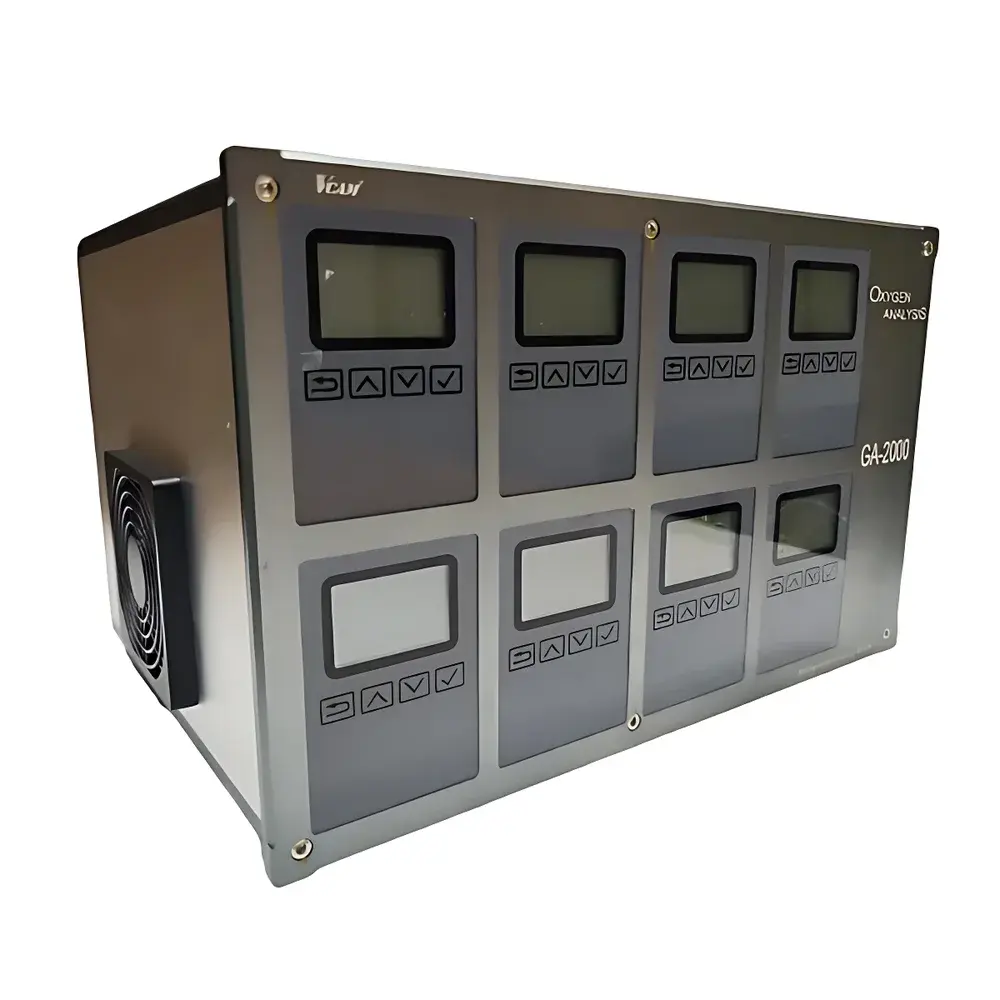
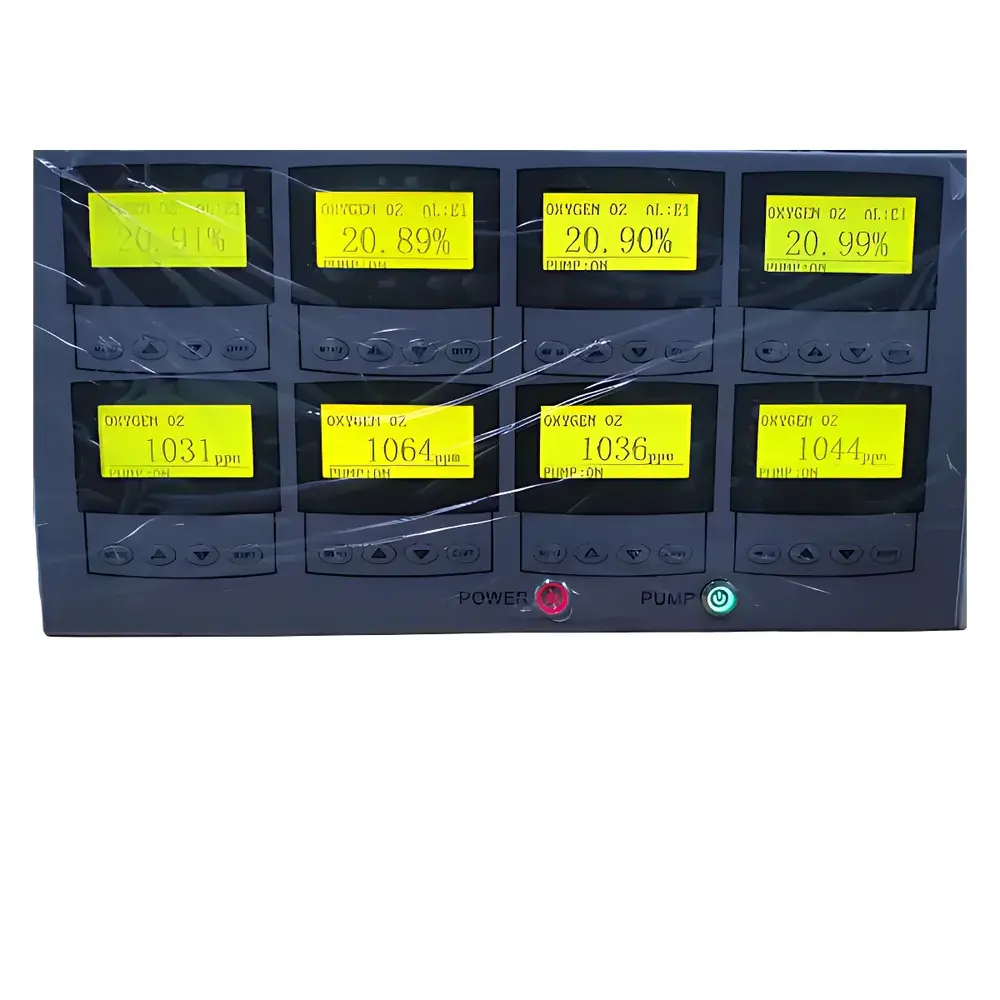
- 240×128 high-contrast monochrome LCD with intuitive menu navigation and full-system status visualization
- Capacitive touch-key interface (4-button layout) with >1 million actuation cycle rating and front-panel tempered glass overlay for mechanical and environmental protection
- Multi-point interference compensation algorithm to mitigate cross-sensitivity from co-present gases such as CO₂ or moisture within defined limits
- Programmable alarm outputs: six relay contacts (24 VDC, 0.2 A) with user-defined threshold levels across full scale
- Isolated analog output (1 channel), freely configurable via menu between 4–20 mA, 0–20 mA, 0–1 V, 0–5 V, 0–10 V, or 1–5 V (load <500 Ω)
- Standard RS485 Modbus RTU protocol support; optional RS232 interface for legacy SCADA or local PC connectivity
- Internal data logging to SD card (standard) and optional USB flash drive, supporting time-stamped storage of concentration values, system events, and calibration logs
Sample Compatibility & Compliance
The SA-200 TCD is validated for use with dry, non-corrosive, particle-free binary gas streams. Compatible background gases include nitrogen, oxygen, air, carbon monoxide, carbon dioxide, argon, helium, and deuterium. Sample conditioning—such as particulate filtration (≤1 µm), pressure regulation, and moisture removal (<100 ppmv H₂O)—is required upstream when inlet gas contains condensables or aerosols. While not certified to IEC 61508 SIL or ATEX directives out-of-the-box, the analyzer meets electromagnetic compatibility requirements per EN 61326-1 (industrial environment) and safety standards per EN 61010-1. Its design supports alignment with quality management frameworks including ISO 9001, ISO 17025 (when operated under documented calibration procedures), and GMP-relevant process analytical technology (PAT) principles. Calibration traceability is maintained through factory-certified reference gas standards (NIST-traceable where applicable).
Software & Data Management
No proprietary PC software is required for basic operation; all configuration, calibration, and diagnostics are performed locally via the front-panel interface. The embedded firmware supports password-protected parameter locking to prevent unauthorized changes during routine operation. Logged data files are stored in plain-text CSV format, enabling direct import into Excel, LabVIEW, or historian systems (e.g., OSIsoft PI, Ignition). Timestamps include date, time, and measurement value with optional event tagging (e.g., “Calibration Start”, “Alarm Triggered”). Remote monitoring and periodic data retrieval are achievable via Modbus polling over RS485, allowing integration into distributed control systems (DCS) or programmable logic controllers (PLCs) without middleware. Audit trail functionality—including operator ID (if assigned), timestamp, and action type—is retained in non-volatile memory for GLP/GMP-aligned recordkeeping.
Applications
- Real-time monitoring of excess H₂ concentration in PEM electrolyzer off-gas and purge streams
- Hydrogen purity verification in generator cooling circuits of thermal power plants (IEC 60034-27 compliance support)
- In-process analysis of H₂/N₂ ratio in ammonia synthesis loops (Haber process), including make-up gas and recycle gas streams
- Argon content determination in crude argon fractions downstream of cryogenic air separation units
- Safety-critical H₂ leak detection in battery manufacturing cleanrooms and fuel cell assembly lines
- Quality assurance of high-purity hydrogen supplied to semiconductor diffusion furnaces (per SEMI F57 specifications)
- Monitoring of hydrogen evolution during electrochemical corrosion testing in materials science laboratories
FAQ
What background gases are supported for H₂ measurement?
The SA-200 TCD supports H₂ quantification against air, N₂, O₂, CO, CO₂, Ar, He, and D₂. Specific range configurations must be declared at order entry.
Is field calibration possible without external gas standards?
Zero calibration can be performed using certified zero gas (e.g., pure N₂); span calibration requires a certified span gas matching the target measurement range and background composition.
Can the analyzer operate continuously in outdoor enclosures?
Yes, provided ambient temperature remains within –10 to +45 °C and relative humidity stays below 80% RH non-condensing; IP54-rated enclosure recommended for unsheltered installations.
What is the recommended calibration interval under continuous operation?
Annual calibration is advised per manufacturer guidelines; however, interval may be extended to 18 months if supported by trending data and internal diagnostic logs showing <±0.5% FS drift over 7-day intervals.
Does the device comply with FDA 21 CFR Part 11 for electronic records?
While the SA-200 TCD does not provide built-in electronic signature or audit trail encryption, its CSV-based data export and time-stamped event logging enable compliant implementation when paired with validated third-party data acquisition software meeting Part 11 requirements.