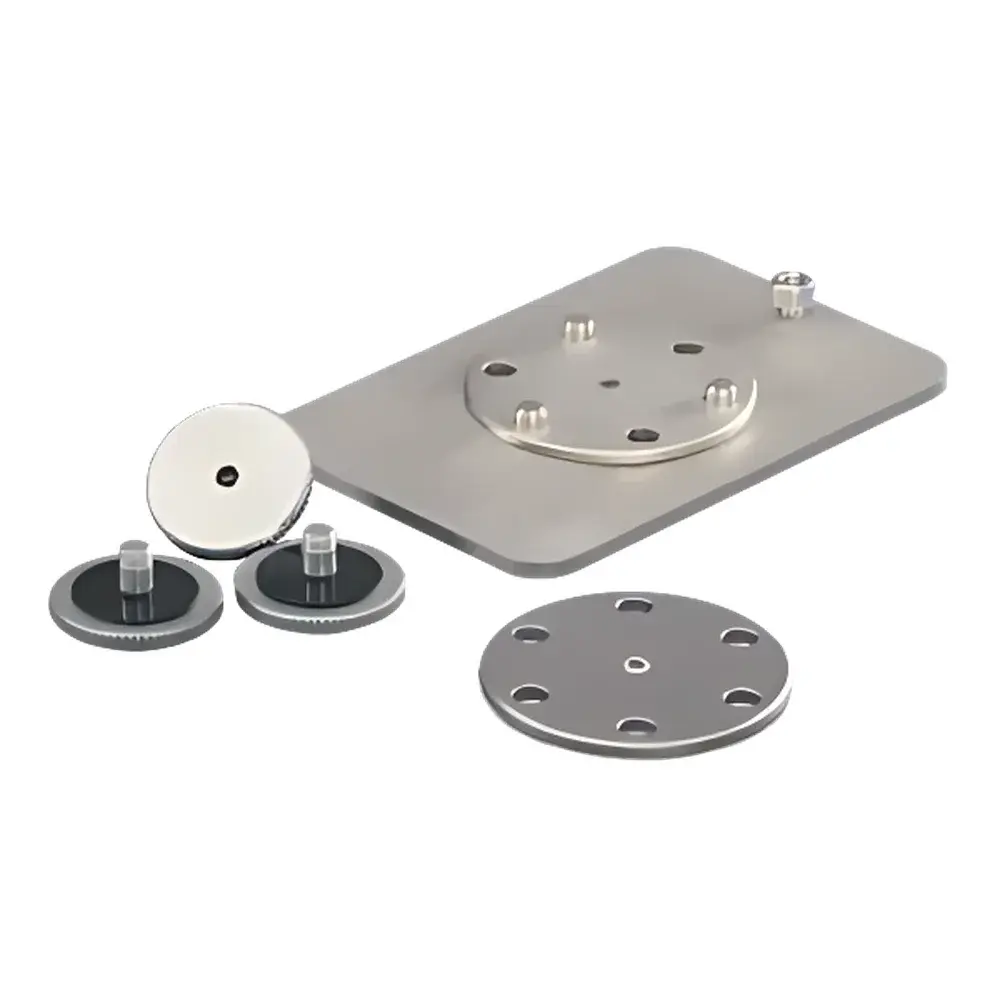
STJ Diamond Anvil Cell (DAC) for Microspectroscopy

| Brand | S.T. Japan |
|---|---|
| Origin | Japan |
| Model | STJ-0195 |
| Aperture Diameter | 1.6 mm or 2.0 mm |
| Mounting | Three-Screw Manual Compression Mechanism |
| Application | Transmission FTIR, Raman Microspectroscopy, Optical Microscopy Stage Integration |
| Pressure Capability | High-Pressure Configuration Available (for Hard/Incompressible Samples) |
| Compliance | Designed for ISO/IEC 17025-aligned laboratory environments |
Ask about pricing, availability and specifications.
Overview
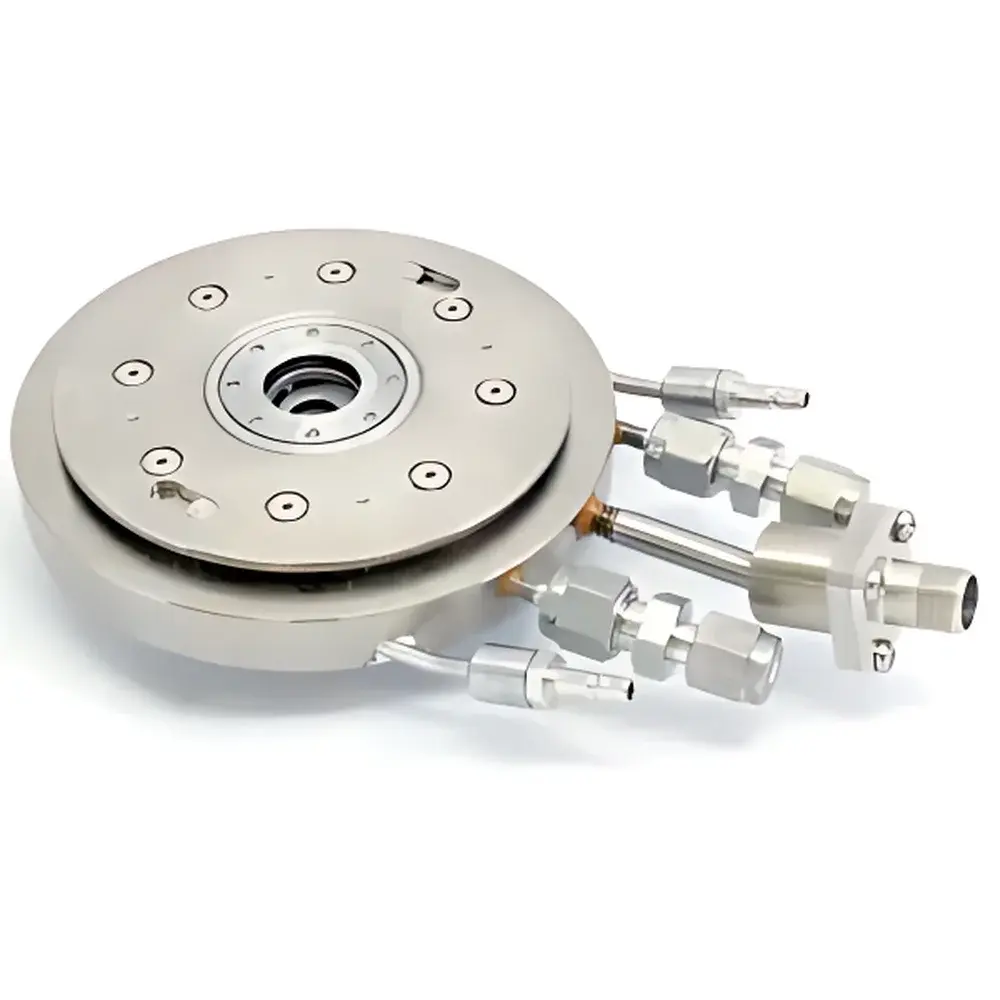
The STJ Diamond Anvil Cell (DAC) is a precision-engineered optical compression cell designed for high-fidelity microspectroscopic analysis under controlled mechanical stress. Based on the fundamental principle of diamond anvil cell technology—where two opposing single-crystal diamond anvils generate hydrostatic or quasi-hydrostatic pressure on a microsample confined within a gasketed chamber—the STJ-0195 model enables in situ transmission-mode spectroscopy without optical distortion. Its 1.6 mm or 2.0 mm central aperture ensures optimal light throughput while maintaining structural integrity across spectral ranges from mid-infrared (2.5–25 µm) to visible and near-UV (400–700 nm). Unlike polymer-based or CaF₂ windows, the type-IIa natural diamond anvils provide broadband transparency (>80% transmittance), negligible birefringence, and exceptional thermal and chemical stability—critical for long-duration FTIR mapping, confocal Raman imaging, and synchrotron-based microprobe experiments.
Key Features
- Manually actuated three-screw compression system enabling precise, repeatable force application without external hydraulic or piezoelectric drivers
- Interchangeable aperture inserts (1.6 mm and 2.0 mm) to balance spatial resolution against signal-to-noise ratio in microspectroscopic configurations
- Optimized for integration with standard inverted and upright optical microscope stages—compatible with XYZ translation stages, motorized focus units, and objective turrets (including 10×–100× dry and immersion objectives)
- High-pressure variant available with reinforced stainless-steel body, BeCu gasket seats, and calibrated torque screws—capable of generating pressures exceeding 10 GPa with appropriate sample geometry and pressure medium
- Diamond anvils polished to λ/10 surface flatness (RMS < 5 nm) and parallelism < 0.5 arcsec to minimize wavefront distortion and polarization artifacts
- Non-magnetic, vacuum-compatible construction suitable for cryogenic spectroscopy (down to 4 K) and UHV-compatible adaptations upon request
Sample Compatibility & Compliance
The STJ-0195 accommodates solid powders, thin films, single crystals, and fluid inclusions sealed in noble gas or silicone oil media. Its compact form factor (Ø25.4 mm × 12 mm height) allows direct mounting onto commercial FTIR spectrometers (e.g., Thermo Nicolet iS50, Bruker Vertex 80v), Raman microscopes (e.g., Horiba LabRAM HR Evolution, Renishaw inVia), and synchrotron beamline endstations. All materials comply with RoHS Directive 2011/65/EU and are traceably sourced per ISO 9001:2015 manufacturing protocols. The cell design adheres to ASTM E1421-22 guidelines for calibration of spectroscopic pressure standards and supports GLP-compliant documentation workflows when used with audit-trail-enabled acquisition software.
Software & Data Management
While the STJ-0195 is a passive optical component, its operation is fully compatible with industry-standard spectroscopic platforms including OMNIC, OPUS, Wire 6.0, and Renishaw WiRE. When paired with pressure-calibration routines (e.g., ruby fluorescence shift at 694.2 nm, R1 line), users can embed real-time pressure metadata directly into spectral headers (JCAMP-DX v6.00 compliant). All configuration parameters—including aperture size, screw torque sequence, and gasket thickness—are recordable in instrument log files to satisfy FDA 21 CFR Part 11 requirements for electronic records and signatures in regulated QC laboratories.
Applications
- In situ high-pressure FTIR studies of phase transitions in polymers, pharmaceutical co-crystals, and battery electrolytes
- Confocal Raman mapping of stress distribution in semiconductor heterostructures and 2D materials (e.g., MoS₂, h-BN)
- Micro-FTIR identification of mineral inclusions in geological samples under geologically relevant P–T conditions
- Time-resolved IR absorption kinetics of catalytic intermediates trapped in zeolite pores
- Correlative optical microscopy and vibrational spectroscopy of biological tissues under mechanical loading
FAQ
What is the maximum recommended pressure for the standard STJ-0195 configuration?
For routine transmission spectroscopy using the 1.6 mm aperture and standard 300 µm-thick rhenium gasket, nominal operating pressure is up to 5 GPa. Higher pressures require the high-pressure variant with hardened tool-steel housing and custom gasket geometry.
Can this cell be used with ATR accessories?
No—the STJ-0195 is designed exclusively for transmission geometry. For ATR applications, S.T. Japan offers complementary diamond ATR crystals (model STJ-ATR-100) with matching thermal expansion coefficients.
Is alignment assistance provided during installation?
Yes—each unit ships with a collimation target slide and alignment protocol document aligned with ISO 10110-8 for optical centering verification under 5× magnification.
Are replacement diamonds available as spare parts?
Yes—type-IIa diamond anvils (1.0 mm culet, 12° bevel) are supplied individually with certification of optical homogeneity and refractive index uniformity (n = 2.417 ± 0.002 at 589 nm).
Does the cell support cryogenic cooling stages?
Yes—its all-metal construction and absence of adhesives or epoxies allow direct mounting onto liquid-nitrogen or closed-cycle helium cold stages. Thermal contraction mismatch is mitigated via matched CTE design between diamond, stainless steel, and Inconel components.