
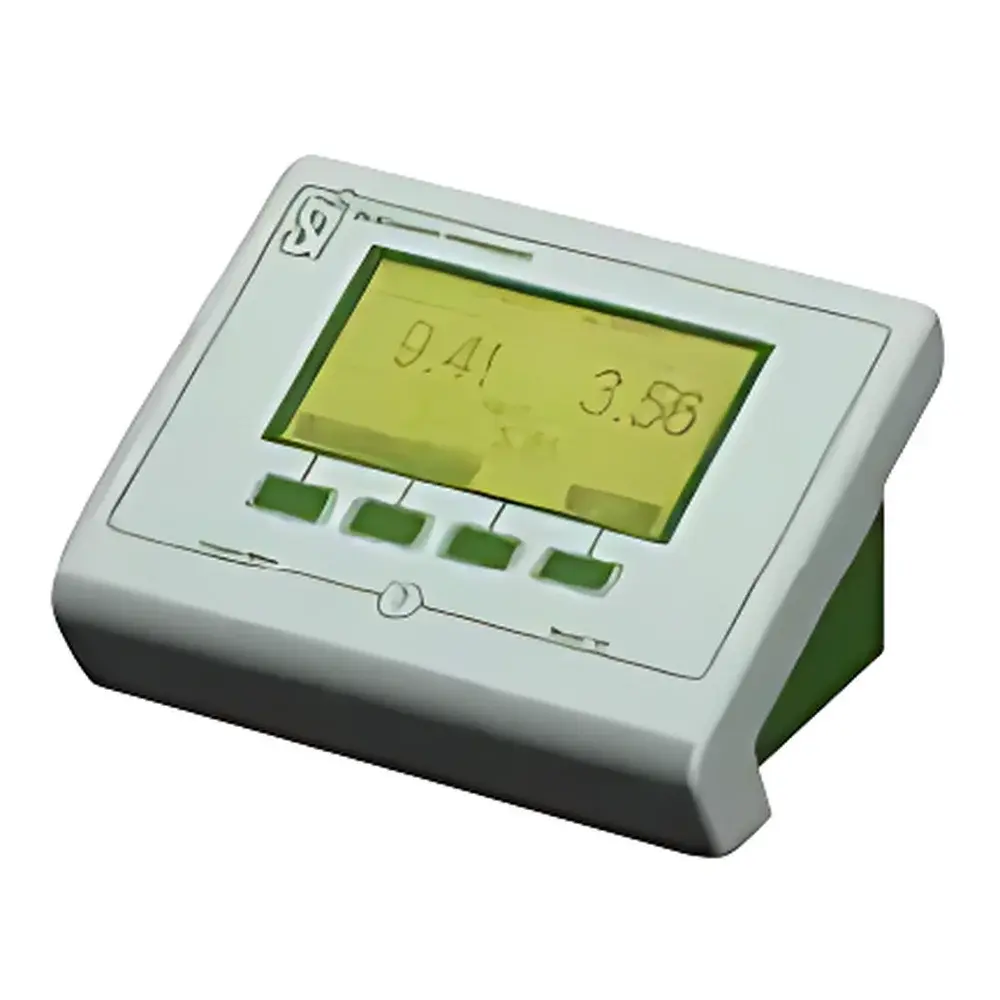
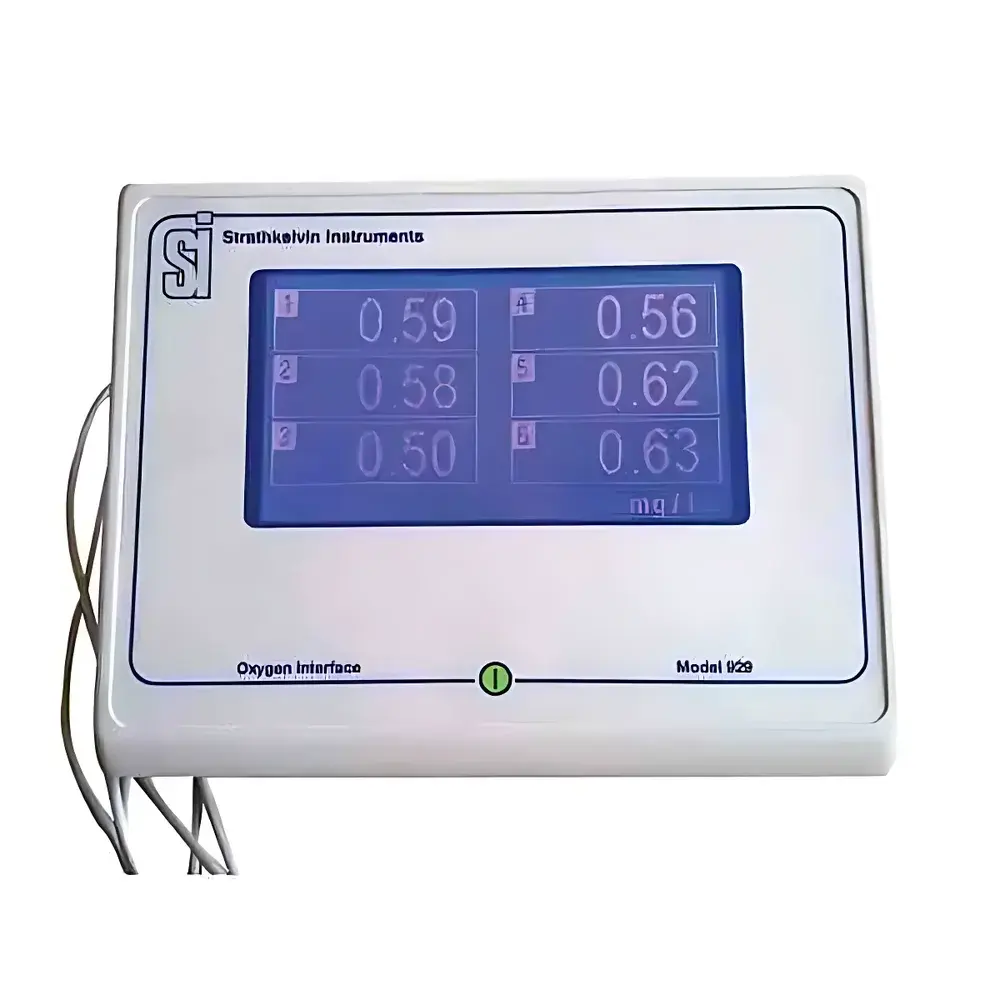
Strathkelvin 782 & 929 Polarographic Dissolved Oxygen Respirometry Systems
| Brand | Cole-Parmer |
|---|---|
| Origin | USA |
| Manufacturer Type | Authorized Distributor |
| Country of Origin | Imported |
| Model | 782 (2-channel), 929 (6-channel) |
| Instrument Type | Laboratory Benchtop |
| Measurement Principle | Clark-type Polarographic Electrode |
| Range | 0.00–80 mg/L |
| Accuracy | ±0.2 mg/L |
| Repeatability | ±0.05% |
| Detection Limit | ±2 ppb |
| Resolution | 0.001 mg/L |
| Polarization Voltage | 400–900 mV (anode grounded) |
| Power Supply | 230 V, 50/60 Hz |
| Dimensions (L×W×H) | 782: 15×15×13 cm |
| 929 | 28×26×12 cm |
Overview
The Strathkelvin 782 and 929 Polarographic Dissolved Oxygen Respirometry Systems are precision-engineered laboratory instruments designed for quantitative, real-time monitoring of dissolved oxygen (DO) consumption and production in biological and biochemical respiration studies. Based on the Clark-type polarographic principle, these systems employ micro-scale platinum cathodes (22 µm diameter) and Ag/AgCl anodes immersed in a buffered KCl electrolyte, enabling high-fidelity electrochemical detection of molecular oxygen diffusion across gas-permeable membranes (PP or FEP). The systems operate under strict thermal control (±0.05 °C required), as oxygen solubility and electrode kinetics exhibit a temperature coefficient of ~2% per °C — necessitating integration with thermostatically regulated water baths or incubation chambers. Unlike generic DO meters, the 782 and 929 are purpose-built virtual instruments: all operational functions — including polarization voltage application, signal amplification, analog-to-digital conversion, timestamped event annotation, and multi-channel synchronization — are managed exclusively via dedicated PC software. This architecture ensures traceability, eliminates front-panel variability, and supports GLP-compliant experimental workflows.
Key Features
- Two dedicated platform options: 782 (dual-channel) and 929 (hexa-channel), both compatible with Strathkelvin SI130/SI132 microelectrodes (1302 series)
- High-resolution DO quantification: 0.001 mg/L resolution over 0.00–80 mg/L range, with ±0.2 mg/L absolute accuracy and ≤0.05% repeatability
- Configurable output units: PO₂ (mmHg, Torr, kPa), concentration (µmol/L, µg/mL, mg/L, mL/L, % saturation), or volumetric flux
- Real-time event marking: Substrate/inhibitor additions annotated via on-screen cursors with metadata tagging (compound name, concentration, time)
- Software-controlled polarization: Adjustable 400–900 mV bias voltage applied directly to electrodes to optimize signal-to-noise ratio
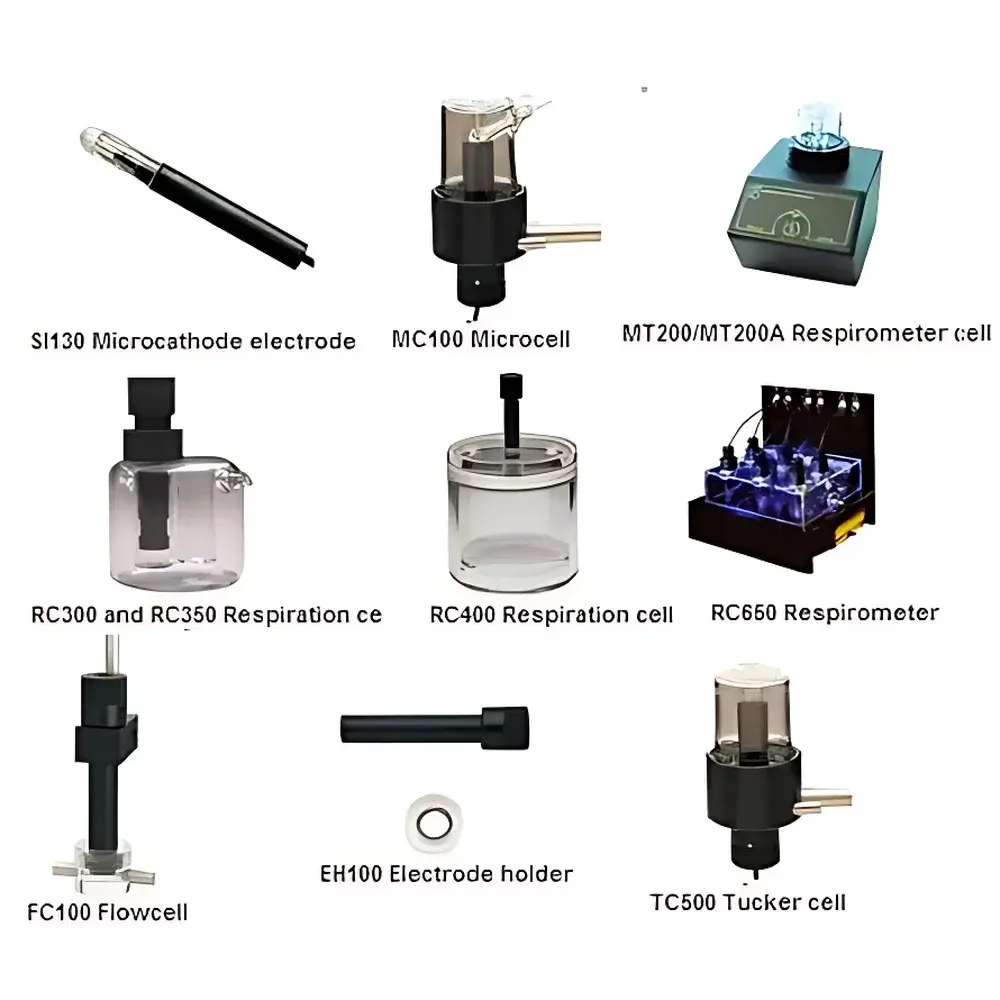
- Modular cell compatibility: Supports closed-chamber (MT200, RC300, RC350, RC650), flow-through (FC100), and micro-volume (MC100, TC500) respirometry configurations
- No front-panel controls: Fully computer-driven operation ensures protocol standardization and audit-ready execution logs
Sample Compatibility & Compliance
These systems are validated for use with diverse biological matrices requiring minimal sample volumes (as low as 10 µL in MC100 cells) and high temporal resolution. Applications include mitochondrial oxygen consumption assays (per ISO/IEC 17025-aligned protocols), microbial respiration kinetics, isolated organ viability testing (e.g., perfused heart or kidney slices), aquatic organism metabolism (closed-cell or flow-cell methods), and enzymatic O₂ turnover studies. All hardware and software components comply with general requirements for laboratory instrumentation under IEC 61010-1 (safety) and EN 61326-1 (EMC). While not certified as medical devices, the systems support FDA 21 CFR Part 11–ready data integrity practices when deployed with appropriate IT infrastructure — including electronic signatures, audit trails for calibration events and analysis parameters, and immutable raw data file archiving (.dat binary format with embedded metadata headers).
Software & Data Management
The proprietary respirometry software provides a three-phase workflow: Setup → Record → Analyze. During Setup, users define chamber volume, flow rate (for FC100), temperature, electrode positioning, and biological normalization factors (e.g., protein content, cell count). Record mode captures synchronized, timestamped DO traces at user-selectable sampling intervals (default: 1–5 s), with automatic insertion of annotated markers. In Analyze mode, users select arbitrary curve segments (e.g., pre- vs. post-inhibitor), apply linear or non-linear regression to compute respiratory rates (nmol O₂·min⁻¹·mg protein⁻¹), and export results to CSV, Excel, Word, or statistical packages (R, GraphPad Prism). Raw data files retain full acquisition metadata, enabling retrospective reprocessing without loss of provenance. System requirements: Windows 95 or later, Pentium-class CPU, 128 MB RAM, 4 MB free disk space, one available COM port.
Applications
- Mitochondrial bioenergetics: State 3/State 4 respiration, respiratory control ratio (RCR), P/O stoichiometry
- Microbial physiology: Aerobic growth kinetics, biodegradation rate profiling, wastewater treatment efficiency assessment
- Environmental toxicology: Biotic oxygen demand (BOD) and inhibition assays per ASTM D5210 and ISO 8192
- Pharmacology: Drug-induced mitochondrial uncoupling or complex inhibition screening
- Aquatic ecology: Primary productivity (photosynthesis-respiration balance) in phytoplankton or macrophytes
- Clinical research: Ex vivo tissue oxygenation dynamics (e.g., tumor slice respirometry, transplant organ preservation monitoring)
FAQ
What is the difference between PP and FEP membrane electrodes?
PP membranes provide enhanced stability for long-term measurements (>20 min), while FEP membranes offer faster response times (6 s to 90% step change at 37 °C) for rapid kinetic assays.
Is temperature compensation built into the instrument?
No — the system requires external thermal regulation within ±0.05 °C, as temperature drift directly affects both oxygen solubility and electrode sensitivity.
Can the 782 be upgraded to six channels?
No — channel count is hardware-defined; the 929 is a separate platform with dedicated 6-channel signal conditioning and firmware.
Which respirometry cells include integrated magnetic stirring?
MC100, MT200, MT200A, and RC650 incorporate stir bars; RC300, RC350, RC400, and FC100 require external stir plates.
Does the software support automated calibration routines?
Yes — two-point calibration (zero O₂ and air-saturated buffer) is guided stepwise, with slope and offset validation reported in real time.
Related Products







