
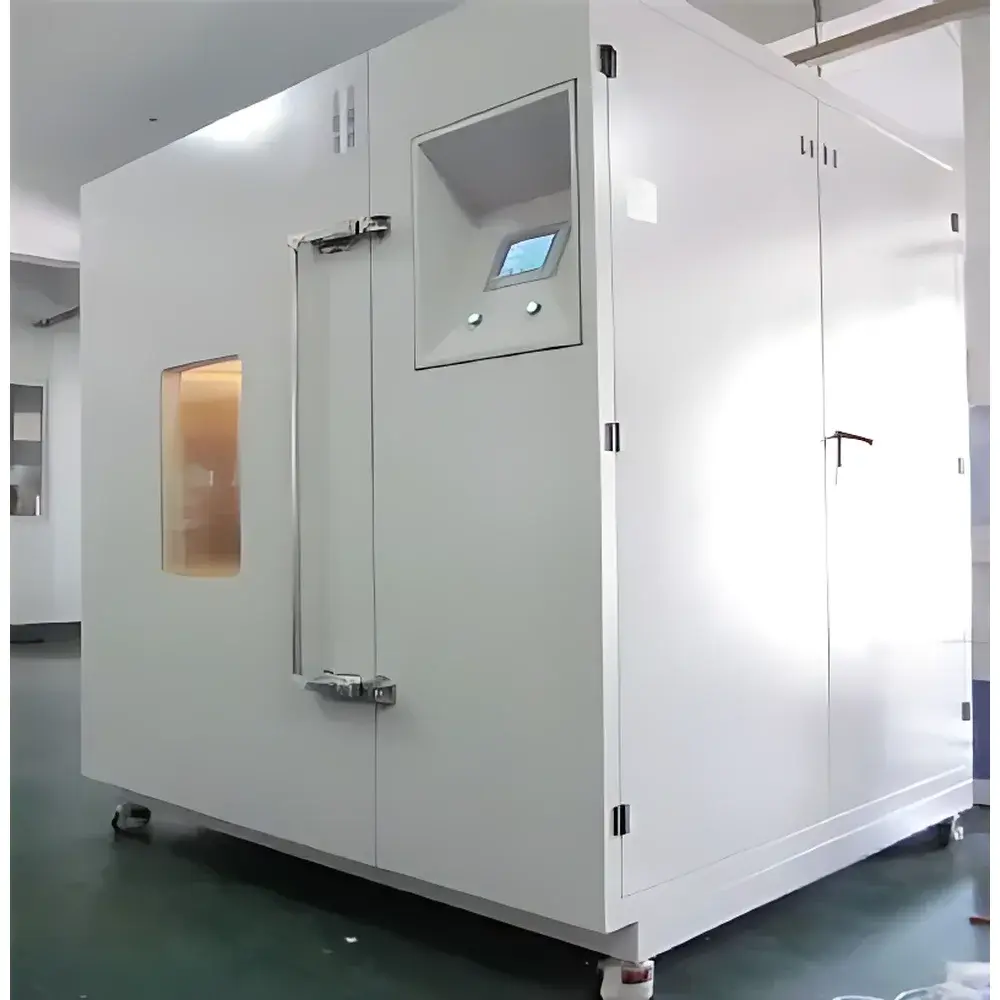
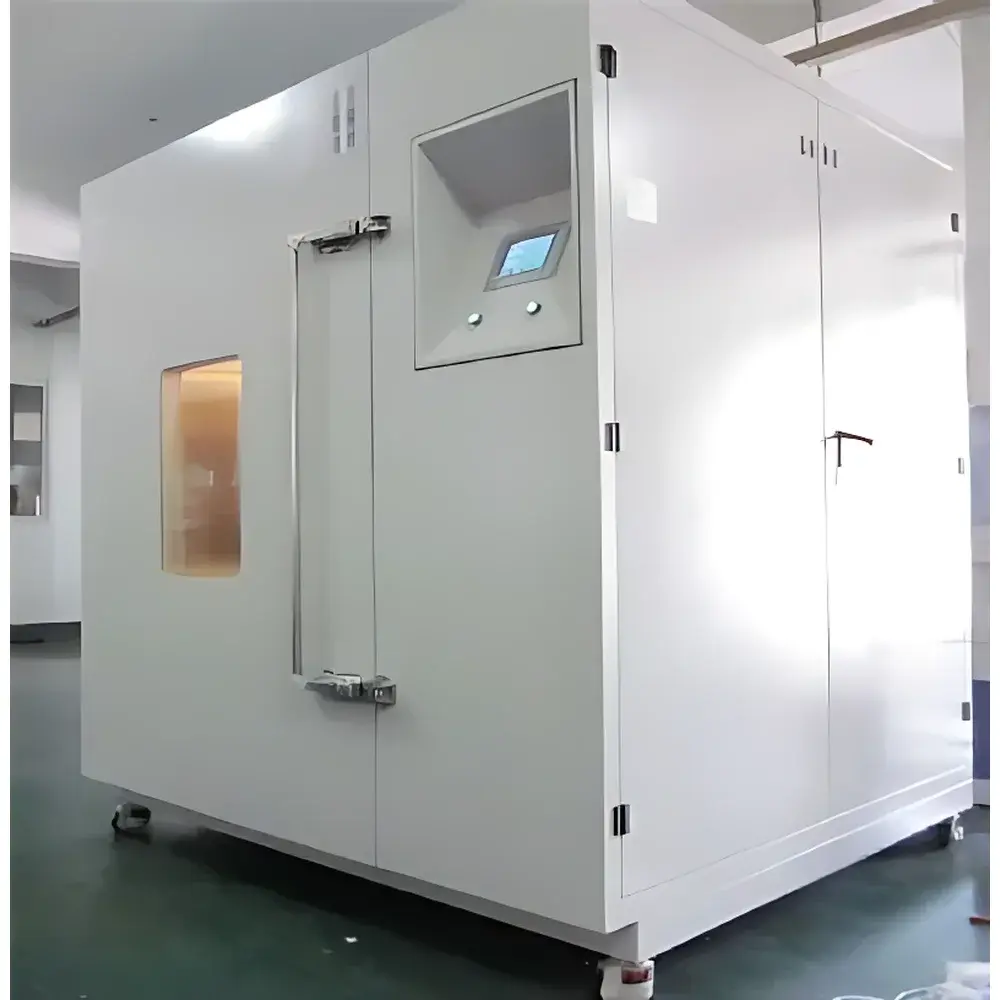
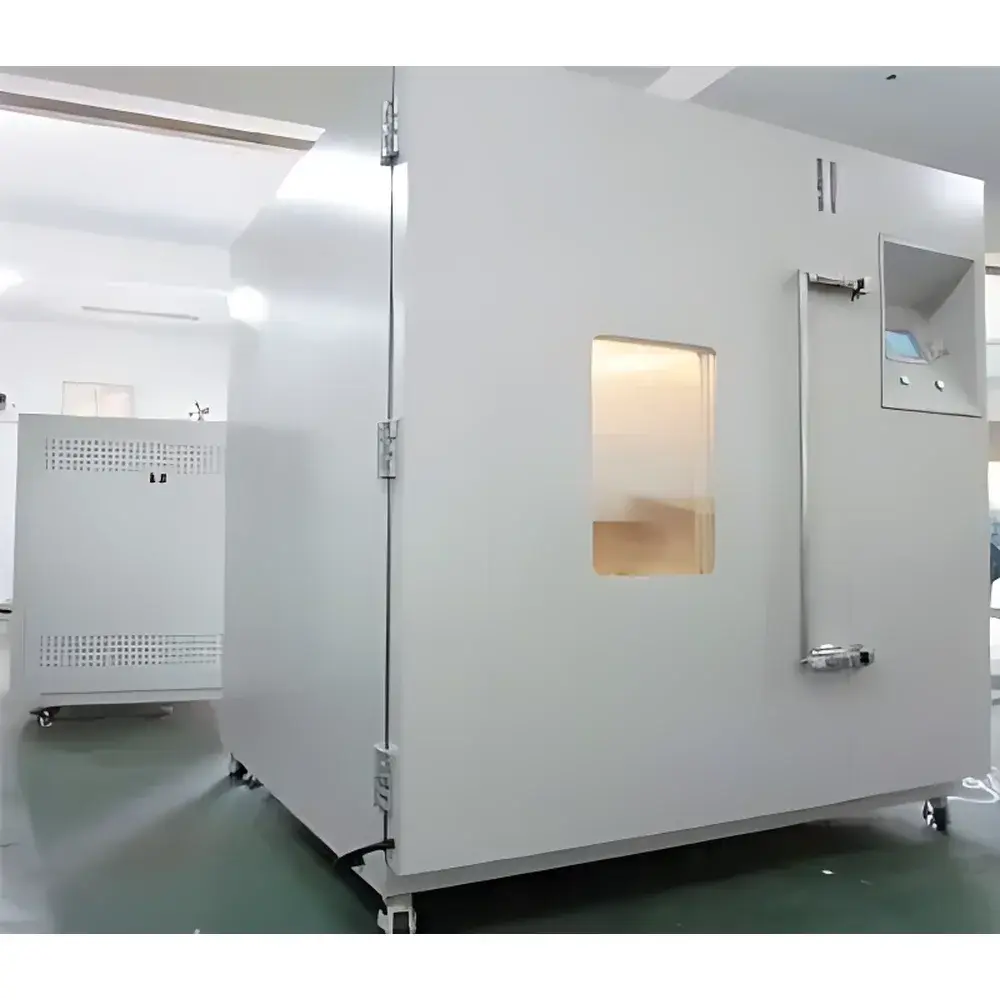
Suying GDS/GSJ Series Photovoltaic Module Environmental Test Chamber for Thermal Cycling, Damp Heat (85/85), and Humidity Freeze Testing
| Brand | Suying |
|---|---|
| Origin | Shanghai, China |
| Model | GDS/GSJ-100 / GDS/GSJ-250 / GDS/GSJ-500 / GDS/GSJ-800 / GDS/GSJ-1000 |
| Temperature Range | -40 °C to +150 °C |
| Humidity Range | 30–98 %RH |
| Temp. Uniformity | ≤ ±2 °C |
| Temp. Stability | ≤ ±0.5 °C |
| Heating Rate | -20 °C → 100 °C in ~35 min |
| Cooling Rate | 25 °C → -40 °C in ~50 min |
| Compliance | IEC 61215, IEC 61646, IEC 61701, IEC 61730-2, IEC 61370, GB/T 2423.1–2001, GB/T 2423.2–2001 |
Overview
The Suying GDS/GSJ Series Photovoltaic Module Environmental Test Chamber is a purpose-built climatic test system engineered for reliability validation of crystalline silicon (c-Si), thin-film, and emerging photovoltaic modules under accelerated stress conditions. It implements precise, programmable control of temperature and relative humidity to replicate field-relevant degradation mechanisms—including thermal expansion mismatch, moisture ingress, interfacial delamination, and electrochemical corrosion—per internationally recognized PV qualification protocols. The chamber operates on a dual-loop refrigeration architecture (single-stage or cascade configuration depending on model), enabling stable operation across the full IEC-specified thermal cycling range (-40 °C to +85 °C) and sustained damp heat exposure (85 °C / 85 %RH for up to 1000 hours). Its structural design conforms to ISO 17025-aligned metrological traceability requirements for environmental testing laboratories, with integrated sensor calibration interfaces and hardware-level redundancy for uninterrupted test integrity.
Key Features
- Robust chamber construction using SUS304 stainless steel interior (mirror finish) and A3 carbon steel exterior with electrostatic powder coating for long-term corrosion resistance and cleanroom-compatible surface hygiene.
- High-precision microprocessor-based controller with touch-sensitive interface, supporting multi-segment ramp-soak profiles, real-time data logging, and password-protected parameter locking for GLP/GMP-compliant operation.
- Imported French Tecumseh (Tecumseh) hermetic compressors paired with Italian CASTEL solenoid valves ensure low-noise, high-efficiency refrigeration performance across extended duty cycles.
- Double-layer silicone rubber door gasket and polyurethane rigid foam insulation (≥100 mm thickness) minimize thermal leakage and maintain uniform internal conditions per IEC 60068-3-5 requirements.
- Large observation window with embedded heating element prevents condensation, enabling continuous visual monitoring without compromising chamber integrity.
- Standardized 50 mm diameter cable port (with silicone plug) facilitates external electrical biasing, IV curve tracing, or real-time EL imaging during dynamic environmental stress testing.
Sample Compatibility & Compliance
The GDS/GSJ series accommodates standard PV module formats up to 1000 mm × 1000 mm × 1000 mm (W×D×H), supporting both framed and frameless modules with integrated junction boxes. Each unit is factory-verified against IEC 61215-2 (MQT 11 – Thermal Cycling), IEC 61215-2 (MQT 12 – Humidity Freeze), and IEC 61215-2 (MQT 21 – Damp Heat) test sequences. The system supports full-cycle automation—including automatic transition between high-humidity soak, rapid cooling, sub-zero dwell, and return-to-soak phases—with cycle timing accuracy within ±15 minutes per 24-hour sequence. All models meet national metrological verification standards GB/T 2423.1–2001 (cold) and GB/T 2423.2–2001 (dry heat), and are compatible with third-party audit documentation packages required for TÜV Rheinland, UL, and CSA certification workflows.
Software & Data Management
The embedded controller records time-stamped temperature and humidity values at user-defined intervals (1–60 seconds), storing up to 10,000 data points internally. Export is supported via USB flash drive in CSV format for post-test statistical analysis (e.g., Cpk calculation, Weibull lifetime modeling). Optional Ethernet-enabled firmware upgrade enables remote monitoring through secure HTTPS endpoints and integration with enterprise LIMS platforms. Audit trail functionality complies with FDA 21 CFR Part 11 requirements, including electronic signature capture, operator ID logging, and immutable record retention. Calibration certificates for PT100 sensors and humidity transducers are provided with each shipment, traceable to NIM (National Institute of Metrology, China).
Applications
- Accelerated lifetime assessment of encapsulant adhesion, backsheet hydrolysis, and solder joint fatigue in c-Si and PERC modules.
- Qualification testing of bifacial modules under asymmetric thermal gradients induced by albedo effects.
- Evaluation of moisture barrier performance in flexible CIGS and organic PV laminates.
- Pre-certification screening for IEC 61730-2 safety compliance prior to formal type testing.
- Root cause analysis of potential-induced degradation (PID) mechanisms under combined thermal-humidity bias stress.
- Material compatibility studies involving novel encapsulants, edge seals, and conductive adhesives exposed to cyclic hygrothermal loading.
FAQ
What IEC standards does this chamber fully support out-of-the-box?
It natively executes IEC 61215-2 MQT 11 (Thermal Cycling), MQT 12 (Humidity Freeze), and MQT 21 (Damp Heat), as well as IEC 61730-2 Annex A test sequences. Custom profile programming allows adaptation to IEC 61646 (thin-film) and IEC 62788 (encapsulant aging) protocols.
Is remote monitoring and data export possible without additional hardware?
Yes—the base controller includes USB data export. Remote access requires optional Ethernet module installation, which enables real-time web-based dashboard viewing and alarm notifications via SMTP or Modbus TCP.
Can the chamber maintain 85 °C / 85 %RH continuously for 1000 hours without drift?
All units undergo 72-hour stability validation at 85 °C / 85 %RH prior to shipment; typical deviation remains within ±0.8 °C and ±2.5 %RH over 1000 h, meeting IEC 61215-2 tolerance limits.
What maintenance intervals are recommended for compressor and sensor calibration?
Compressor oil and filter replacement every 18 months under continuous operation; PT100 and capacitive RH sensor recalibration annually or after 2000 operational hours—certified calibration services available through authorized Suying service centers.
Does the system support simultaneous electrical biasing during environmental stress?
Yes—standard 50 mm feedthrough port supports insulated high-voltage cables (up to 1500 V DC), enabling in-situ electroluminescence (EL) imaging, dark I-V characterization, or PID recovery testing under thermal-humidity load.



