
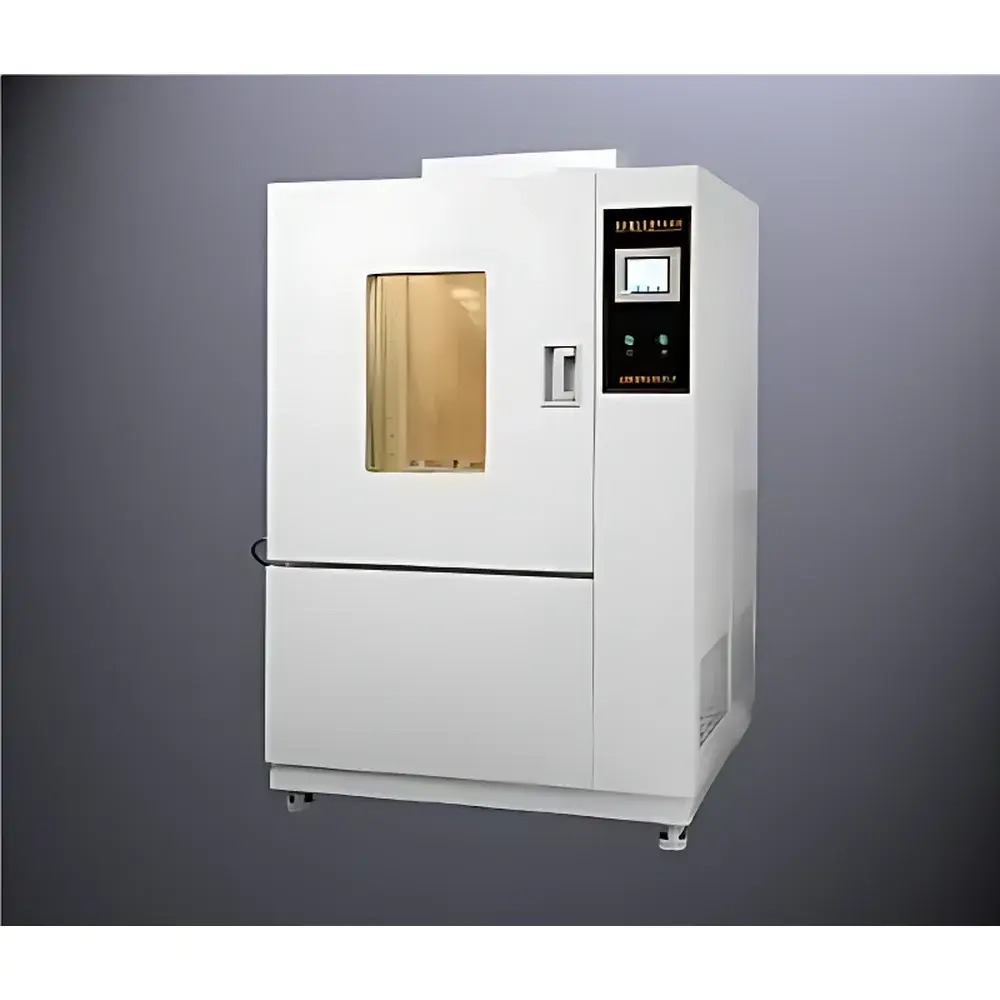
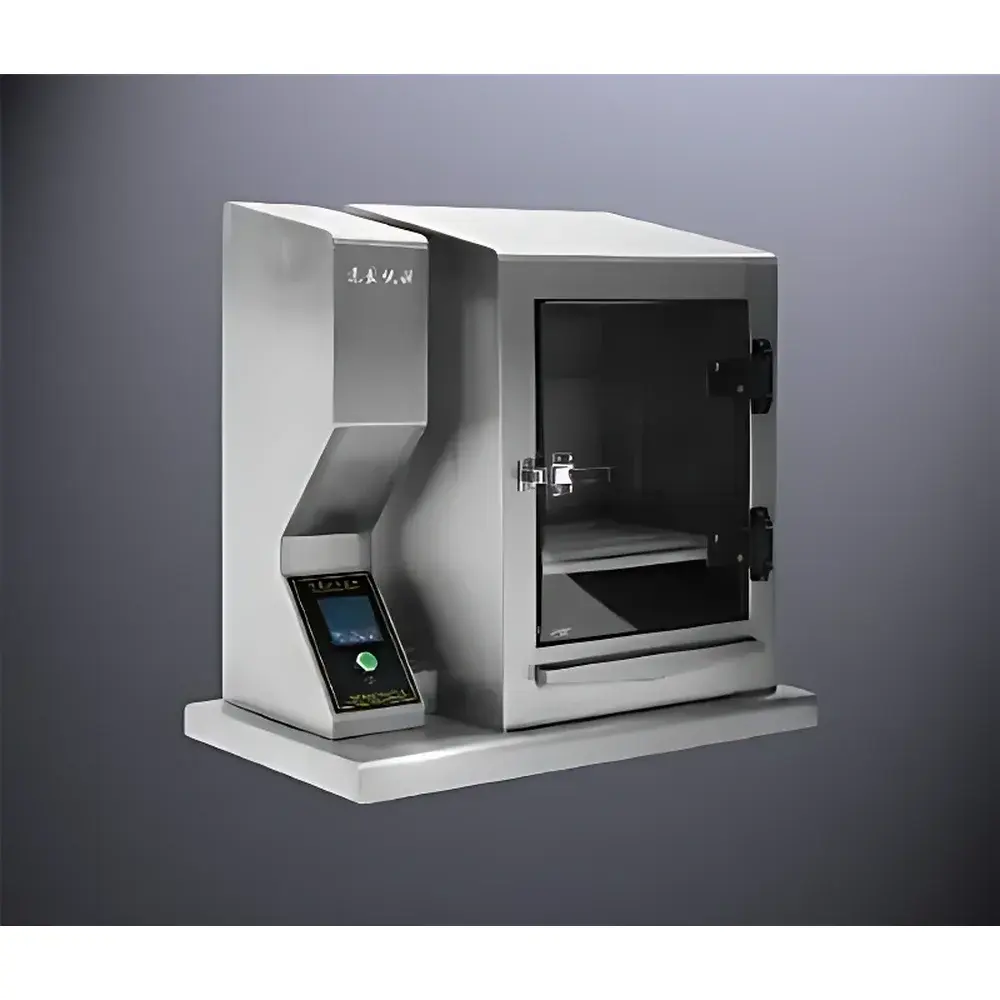
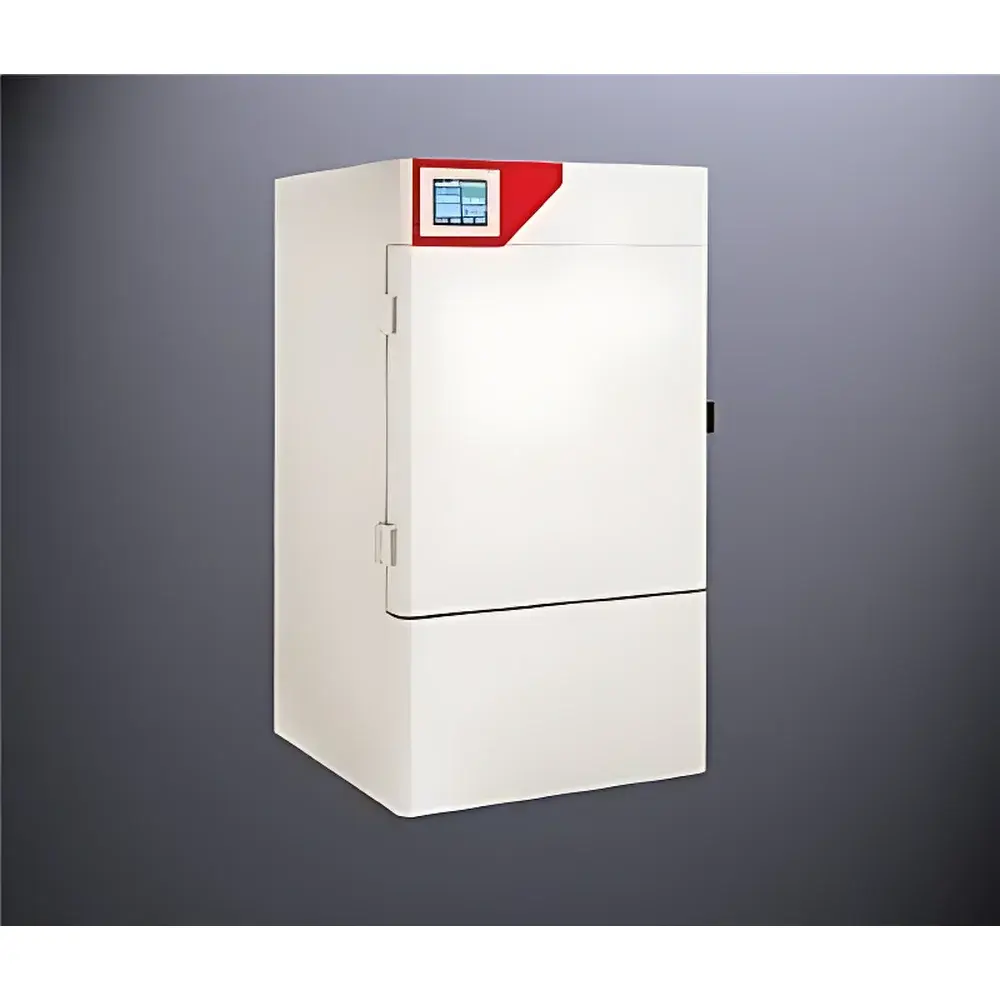
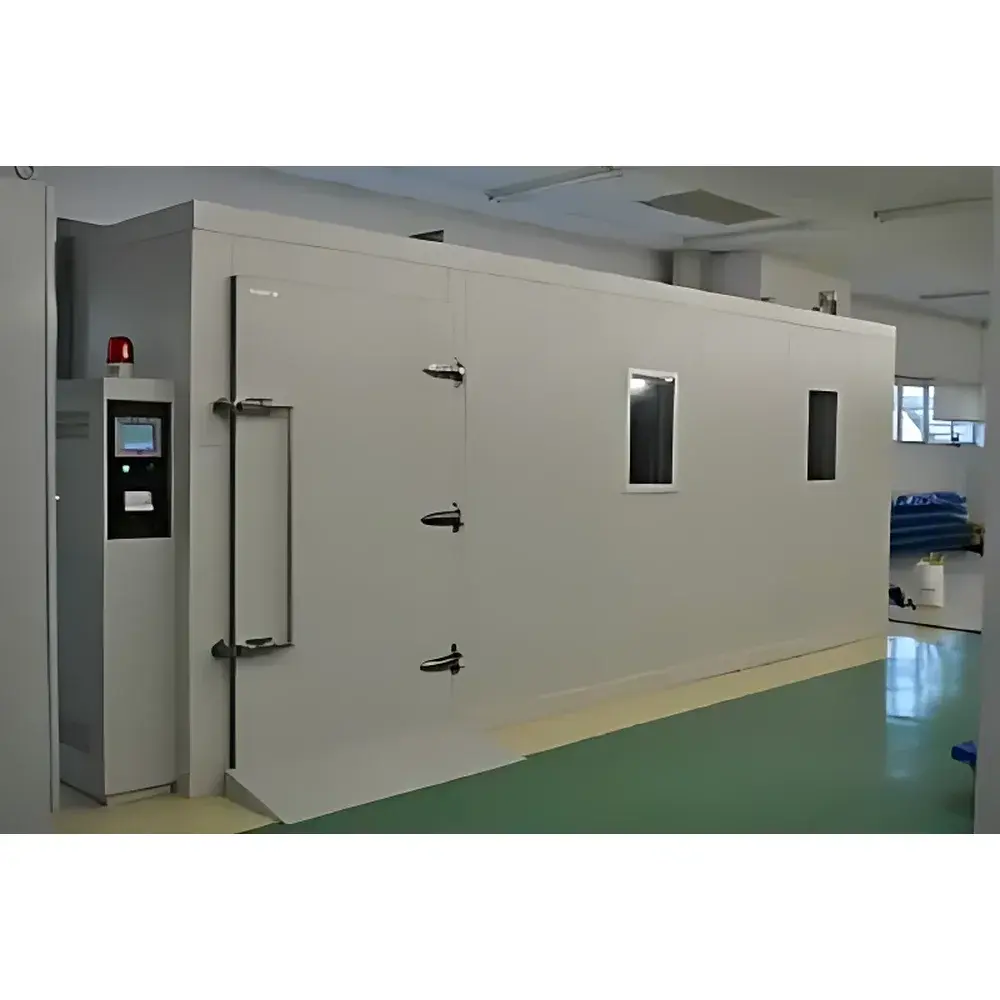
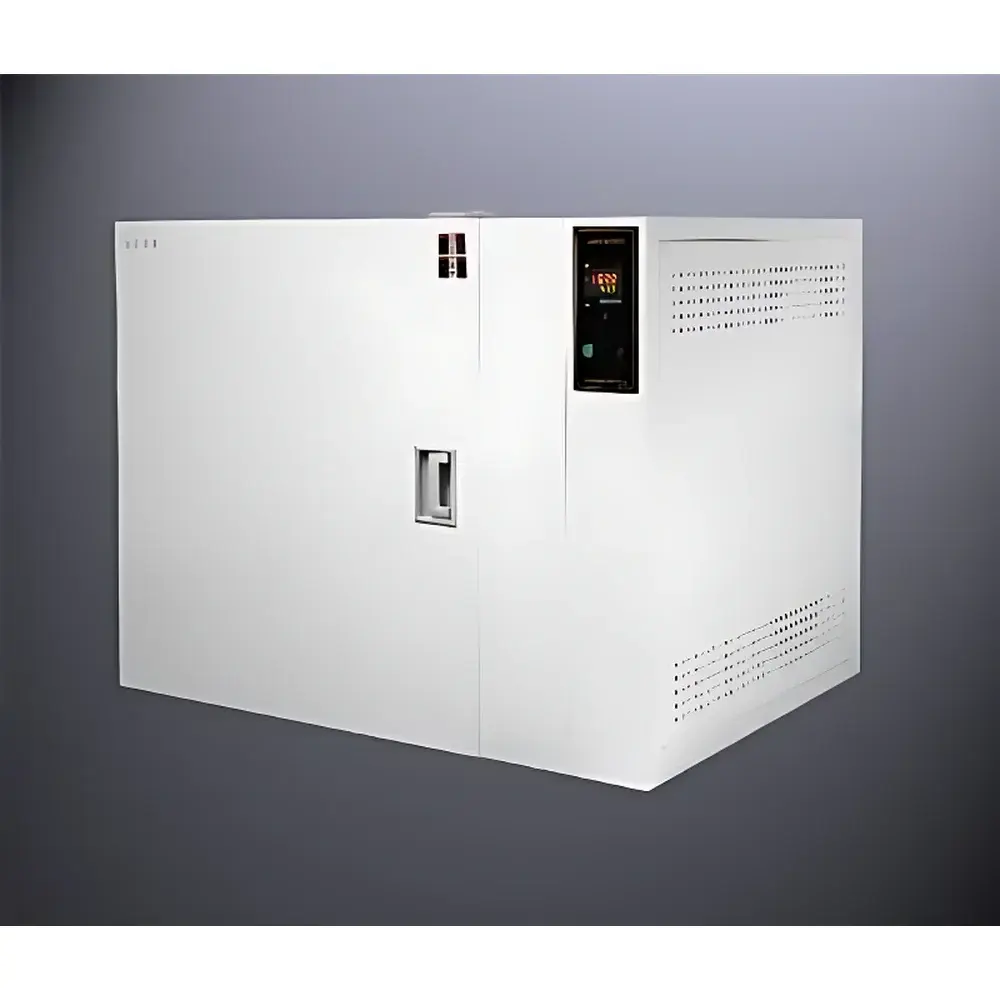
SuYing GDW Series High-Low Temperature Alternating Test Chamber
| Brand | SuYing |
|---|---|
| Model | GDW-100 / GDW-250 / GDW-500 / GDW-800 / GDW-1000 |
| Temperature Range | A: −20°C to +150°C |
| B | −40°C to +150°C |
| C | −60°C to +150°C |
| D | −70°C to +150°C |
| Temperature Uniformity | ≤ ±2°C |
| Temperature Fluctuation | ≤ ±0.5°C |
| Heating Rate | −20°C → +100°C in ≈35 min (A) |
| Cooling Rate | +25°C → −40°C in ≈50 min (B) |
| Internal Dimensions (D×W×H, mm) | 450×450×500 |
| External Dimensions (D×W×H, mm) | 1150×450×500 |
| Power Supply | AC 380 V ±10%, 50 ±0.5 Hz, 3-phase 5-wire |
| Safety Protection | Over-temperature, over-current, compressor high-pressure, motor overload, leakage, short-circuit, and phase-failure protection |
Overview
The SuYing GDW Series High-Low Temperature Alternating Test Chamber is an engineered environmental simulation system designed for rigorous thermal stress testing of industrial components and materials under controlled, programmable temperature profiles. Operating on the principle of forced-air convection with dual independent heating and refrigeration circuits, the chamber delivers precise, repeatable thermal cycling across wide operational ranges—from −70°C to +150°C—enabling accelerated reliability assessment per international environmental test standards. Its architecture supports both steady-state exposure and dynamic alternating cycles (e.g., ramp-hold-ramp sequences), making it suitable for qualification testing in electronics, automotive, aerospace, and polymer manufacturing sectors where thermal expansion mismatch, material embrittlement, solder joint fatigue, and seal integrity are critical failure modes.
Key Features
- Modular dual-stage refrigeration system: Options include single-stage air-cooled compressors (for −20°C/−40°C models) or cascade-type low-temperature refrigeration (for −60°C/−70°C variants), utilizing original Danfoss/Tecumseh or French Tecumseh “Tecumseh” hermetic compressors and Italian CASTEL solenoid valves for long-term stability and low maintenance.
- Precision temperature control: Equipped with imported microprocessor-based PID controllers featuring ±0.1°C setpoint resolution, real-time deviation compensation, and anti-intervention lockout to prevent unauthorized parameter modification during validation runs.
- Uniform thermal distribution: Optimized multi-blade centrifugal fan assembly with adjustable airflow ducts ensures ≤ ±2°C temperature uniformity and ≤ ±0.5°C fluctuation across the entire working volume, verified per GB/T 5170.2–2017 and IEC 60068-3-5.
- Robust chamber construction: Inner chamber fabricated from mirror-finish SUS304 stainless steel (1.5 mm thickness), outer shell from electrostatically coated cold-rolled carbon steel (A3 grade), and high-density polyurethane foam insulation (≥80 mm) with supplementary ultra-fine glass fiber layer for thermal efficiency and structural rigidity.
- Human-centric ergonomics: Large observation window with embedded heating element to prevent condensation, integrated LED interior lighting, adjustable sample shelves, left-side 50 mm diameter cable port with silicone gasket seal, and heavy-duty locking casters for facility mobility and leveling.
Sample Compatibility & Compliance
The GDW series accommodates diverse sample geometries and mass loads—up to 100 kg per shelf—with configurable internal dimensions spanning 100 L to 1000 L working volumes. It complies with core regulatory frameworks governing environmental testing: GB/T 2423.1–2021 (Cold Test), GB/T 2423.2–2021 (Dry Heat Test), GB/T 2424.1–2021 (Temperature Cycling Guidance), and ISO 16750-4:2010 (Road Vehicles – Environmental Conditions). While not inherently certified to IEC 61000-4-x or MIL-STD-810H without site-specific validation, its design aligns with the mechanical and thermal boundary conditions required for pre-compliance screening. All units undergo factory calibration traceable to national metrology institutes and support GLP/GMP audit readiness via optional data logging with time-stamped event records.
Software & Data Management
Standard configuration includes a touchscreen HMI controller with built-in cycle programming (up to 99 segments, 999 cycles), real-time curve display, and USB export capability for CSV-formatted temperature/time logs. Optional RS485/RS232 interfaces enable integration with SCADA systems or centralized lab management platforms. For regulated environments, the optional Ethernet-enabled controller supports FDA 21 CFR Part 11-compliant electronic signatures, audit trails, user access levels, and encrypted data archiving—meeting requirements for pharmaceutical stability chambers, QC labs, and automotive Tier-1 supplier validation protocols. No proprietary software installation is required; raw data exports are natively compatible with MATLAB, Python Pandas, and JMP for statistical process analysis.
Applications
- Electronics: Thermal cycling of PCB assemblies, semiconductor packages, and connectors to evaluate intermetallic growth, solder joint reliability (per IPC-9701), and coefficient-of-thermal-expansion (CTE) mismatch.
- Automotive: Testing of interior trim, battery modules, ADAS sensors, and fluid reservoirs under extreme ambient profiles simulating desert or arctic deployment conditions.
- Materials Science: Accelerated aging of elastomers, adhesives, and composites to assess glass transition shifts, oxidation kinetics, and dimensional stability.
- Quality Assurance: Final product verification against customer-specified thermal endurance specifications prior to shipment (e.g., AEC-Q200, JEDEC JESD22-A104).
- Research & Development: Parameter optimization for thermal interface materials (TIMs), encapsulation resins, and passive cooling architectures.
FAQ
What temperature ramp rates are achievable across the full range?
Ramp rates are dependent on model variant and load condition. Under no-load, nominal ramp rates range from 1.5°C/min (−20°C to +100°C) to 1.0°C/min (−70°C to +100°C), consistent with GB/T 2423.22–2012 Annex B guidelines for thermal shock profile definition.
Can the chamber be configured for humidity control?
The standard GDW series is a dry-temperature-only chamber. Humidity-capable variants (GDJ models) are available separately and require dedicated steam generator, dehumidification coil, and corrosion-resistant internal components.
Is third-party calibration documentation provided upon delivery?
Yes—each unit ships with a factory calibration certificate covering temperature uniformity, fluctuation, and sensor accuracy at three reference points (−40°C, +25°C, +100°C), traceable to CNAS-accredited standards.
What electrical infrastructure is required for installation?
Three-phase 380 V ±10%, 50 Hz supply with dedicated grounding and circuit breaker sizing per IEC 60204-1. Minimum ambient room temperature must be maintained between 5°C and 25°C with relative humidity ≤85% RH non-condensing.
Are custom chamber sizes or non-standard temperature ranges supported?
Yes—SuYing offers bespoke engineering services for walk-in chambers, extended low-temperature options (down to −85°C), and specialized configurations including inert gas purge, vacuum compatibility, or multi-zone differential thermal control.



