
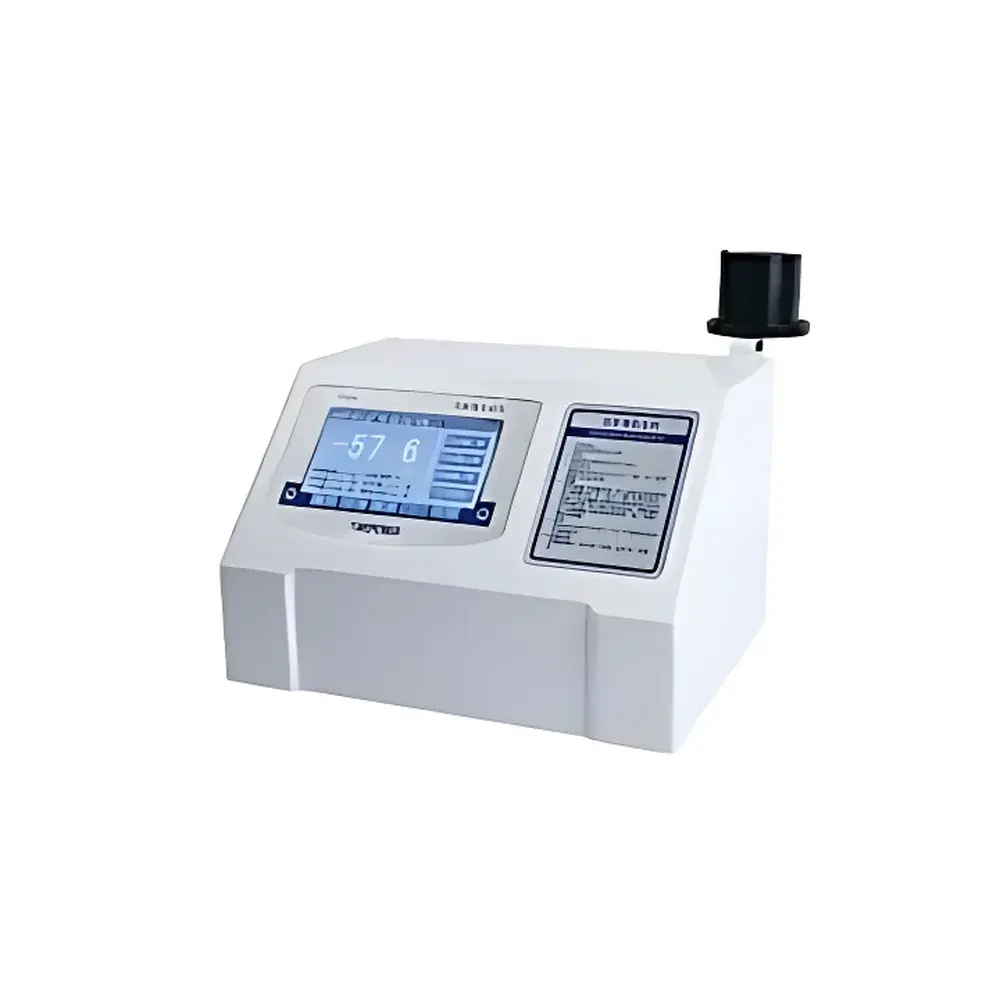
Timepower TP306 Silica Analyzer for Laboratory and Power Plant Water Quality Monitoring
| Brand | Timepower |
|---|---|
| Origin | Beijing, China |
| Manufacturer Type | OEM Manufacturer |
| Country of Origin | China |
| Model | TP306 |
| Pricing | Upon Request |
Overview
The Timepower TP306 Silica Analyzer is a benchtop photometric analyzer engineered for precise, routine quantification of dissolved silica (as SiO₂) and soluble silicates in ultra-pure water matrices. It operates on the standardized colorimetric molybdenum blue method—compliant with ASTM D859 and ISO 10574—where orthosilicic acid reacts with ammonium molybdate under controlled acidic conditions (pH 1.1–1.3) to form a yellow heteropoly acid complex. This intermediate is subsequently reduced by 1-amino-2-naphthol-4-sulfonic acid (1-2-4 acid) to yield the intensely colored silicon-molybdenum blue species. Absorbance is measured at 630 nm using a stable single-wavelength cold LED light source, and concentration is calculated via the Lambert–Beer law (A = ε·c·l), where absorbance (A) is linearly proportional to silica concentration (c) under fixed optical path length (l) and molar absorptivity (ε). Designed specifically for high-reliability operation in power generation chemistry labs, semiconductor fab QC environments, and pharmaceutical water system validation, the TP306 delivers trace-level sensitivity and long-term baseline stability required for monitoring boiler feedwater, condensate, and ultrapure process water per ASME PTC 19.11, EPRI guidelines, and USP .
Key Features
- Integrated opto-electronic architecture with surface-mount technology (SMT) PCBs for enhanced thermal stability and EMI resistance
- Dedicated low-power 8-bit microcontroller unit (MCU) enabling deterministic real-time control and low standby consumption (<1.2 W)
- Imported monochromatic cold LED light source (630 ± 2 nm), offering superior photometric repeatability (>99.7% signal stability over 8 h) and 10,000+ hour operational lifetime
- Dynamic zero-point compensation algorithm that corrects for cuvette blank variability and electronic drift during low-concentration measurement (0.0–20.0 μg/L range)
- Programmable auto-timing sequence for digestion and reduction steps, ensuring consistent reaction kinetics and minimizing operator-dependent variance
- Factory-calibrated dual-range photometric detection: 0.0–200.0 μg/L (high-sensitivity mode) and 0.0–2000 μg/L (broad-range mode), both with 0.1 μg/L digital resolution
- Onboard non-volatile memory storing up to 256 measurement records with timestamp, sample ID, and calibration status; automatic FIFO overwrite upon buffer saturation
Sample Compatibility & Compliance
The TP306 accepts standard 10-mm rectangular quartz or high-transmission optical plastic cuvettes (10 × 10 × 45 mm). It is validated for use with ASTM Type I reagent water (≥18.2 MΩ·cm resistivity), as specified in ASTM D1193. Sample matrices include demineralized water, steam condensate, boiler drum water, and ultrapure water (UPW) used in semiconductor wet benches and parenteral drug manufacturing. Instrument design and procedural workflow align with GLP documentation requirements, supporting audit-ready data integrity when paired with external LIMS integration. All reagents—including ammonium molybdate tetrahydrate, 1-2-4 acid, and sulfuric acid—must meet ACS or ISO 6353-2 analytical grade specifications and be stored in certified HDPE or fluorinated ethylene propylene (FEP) containers to prevent leaching-induced contamination.
Software & Data Management
The TP306 features an embedded 5.0-inch capacitive touchscreen interface with localized Chinese firmware (English UI optional via firmware update). Measurement data are timestamped and stored with full metadata: date/time, operator ID (manually entered), calibration reference values, and raw absorbance readings. Export is supported via USB 2.0 port (FAT32-formatted flash drive) in CSV format for traceable post-processing in Excel or statistical software (e.g., JMP, Minitab). While the device itself does not implement FDA 21 CFR Part 11 electronic signature controls, its output files are compatible with validated third-party data management systems that enforce audit trails, user access roles, and electronic record retention per GMP Annex 11 and ISO/IEC 17025.
Applications
- Monitoring silica breakthrough in mixed-bed ion exchange resins and electrodeionization (EDI) modules within power plant makeup water treatment trains
- Verification of silica removal efficiency in reverse osmosis (RO) pretreatment systems feeding high-pressure boilers
- QC release testing of purified water (PW) and water for injection (WFI) in pharmaceutical facilities operating under EU GMP and USP
- Trace silica surveillance in semiconductor process tool rinse tanks to prevent wafer surface defects and gate oxide contamination
- Calibration verification of online silica analyzers using laboratory-grade grab-sample analysis
FAQ
What is the recommended frequency for blank calibration?
Blank calibration must be performed daily prior to first sample analysis to compensate for cuvette imperfections and electronic zero drift.
Can the TP306 measure total silica (including colloidal forms)?
No—the TP306 quantifies only dissolved reactive silica (monomeric orthosilicic acid and hydrolyzable silicates); colloidal or particulate silica requires acid digestion pretreatment not supported by this instrument.
Is temperature compensation built into the photometric engine?
Yes—the internal thermistor monitors optical chamber temperature in real time and applies empirically derived correction coefficients to absorbance values across the 5–45 °C operating range.
What maintenance intervals are required for optimal performance?
Optical path cleaning every 72 hours of cumulative operation; LED intensity verification quarterly using NIST-traceable neutral density filters; full system verification against certified silica standards semiannually.
Does the instrument support external printer or network connectivity?
No native Ethernet or RS-232 ports are provided; hardcopy output requires manual CSV export and external printing. Network integration is achievable via USB-to-Ethernet adapters configured at the host PC level.





